
Pooja Room Door Design: Elegant Ideas to Enhance Your Sacred Space
15+ TV Unit Design for Living Room Ideas to Transform Modern Homes
When you enter a pooja room, the first thing you will see is the door, which is actually preparing you for the prayers, the rituals and the quiet time that you will be spending inside. It is as if you have a special road that you walk down in your daily life, and another road down where you walk to pray.
A pooja room door can be a very elegant addition to the decorating of the pooja room, as it can be done in several ways that will suit the rest of the house and the person’s beliefs. Carvings can be done on the door, jaali patterns or even modern glass designs. Make your pooja room door feel welcoming and connected to your beliefs. This is what makes your door special. To know more, keep reading…
AI Overview + -
Pooja room door design is one of the most important yet often overlooked elements in a home's spiritual space. More than simply marking an entrance, the door creates a transition from everyday life into a place of prayer, reflection, and peace. Whether crafted in richly carved wood, elegant jaali patterns, frosted glass, or contemporary CNC-cut designs, the right pooja room door can enhance both the sacred atmosphere and the overall character of your interiors. Whether you are designing a compact pooja unit in a Bangalore apartment or a dedicated prayer room in a spacious Hyderabad villa, this guide walks you through everything you need to know about choosing the perfect pooja room door design style by style, material by material, and budget by budget.
WHAT YOU WILL FIND IN THIS GUIDE
The importance of pooja room door design in modern homes
Wooden, plywood, glass, and mixed-material door options
Traditional and contemporary pooja room door design ideas
Latest design trends including jaali, mandala, and backlit concepts
Vastu considerations for pooja room entrances
How to choose the right door based on space, style, and budget
Common mistakes homeowners make and how to avoid them
Why Homzinterio creates thoughtfully designed pooja spaces across Bangalore, Chennai, Hyderabad, Pune, and Mumbai
THIS GUIDE IS PERFECT FOR
Homeowners planning a new pooja room or prayer corner
Apartment residents looking for space-efficient pooja room solutions
Families who want a balance between tradition and modern design
Homeowners exploring wooden, plywood, or glass pooja room doors
Anyone seeking a sacred space that feels connected to their home's interiors
Residents across major Indian cities looking for a trusted interior design partner
Homzinterio Design Insights
"Many homeowners focus on the pooja unit itself and treat the door as a secondary detail. In reality, the door is what sets the tone for the entire space. A well-designed pooja room door should feel inviting, meaningful, and connected to the rest of the home. Whether it features traditional carvings, elegant jaali work, or subtle glass detailing, the best designs create a sense of peace before you even step inside. We always remind our clients that a pooja room door should not simply separate spaces; it should prepare the mind for the space beyond."
Interior Design Team, Homzinterio, Bangalore
Why Your Pooja Room Door Design Matters?
The pooja room could be quite small, but its presence is felt to be larger. The door is a key element to that experience. It is one of the first impressions you get, and it affects the way the space resonates every time you enter it for prayer or meditation.
- Produces a sense of identity
A pooja room should be different from the rest of the house. That’s due in part to the door’s design. The proper design will add character and presence to a space, whether it’s traditional or modern.
- Increases the Overall Design
The little things can have a great impact. If attention is paid to designing the pooja room door, it can enhance the entire appearance of the adjoining area and the prayer space can look like a deliberate part of your home’s design story.
- Privacy at Comfortable Level
Sometimes you may need a more peaceful and concentrated area to pray. A properly designed door will provide a subtle barrier between the pooja room and the rest of the house for privacy.
- Adds balance to the interior spaces.
If the door on the pooja room fits with the decor of the home, the whole house looks more harmonious. Carved wooden design can complement traditional spaces, while clean lines and modern patterns effortlessly integrate into modern interior decor.
Wooden Pooja Room Door Design
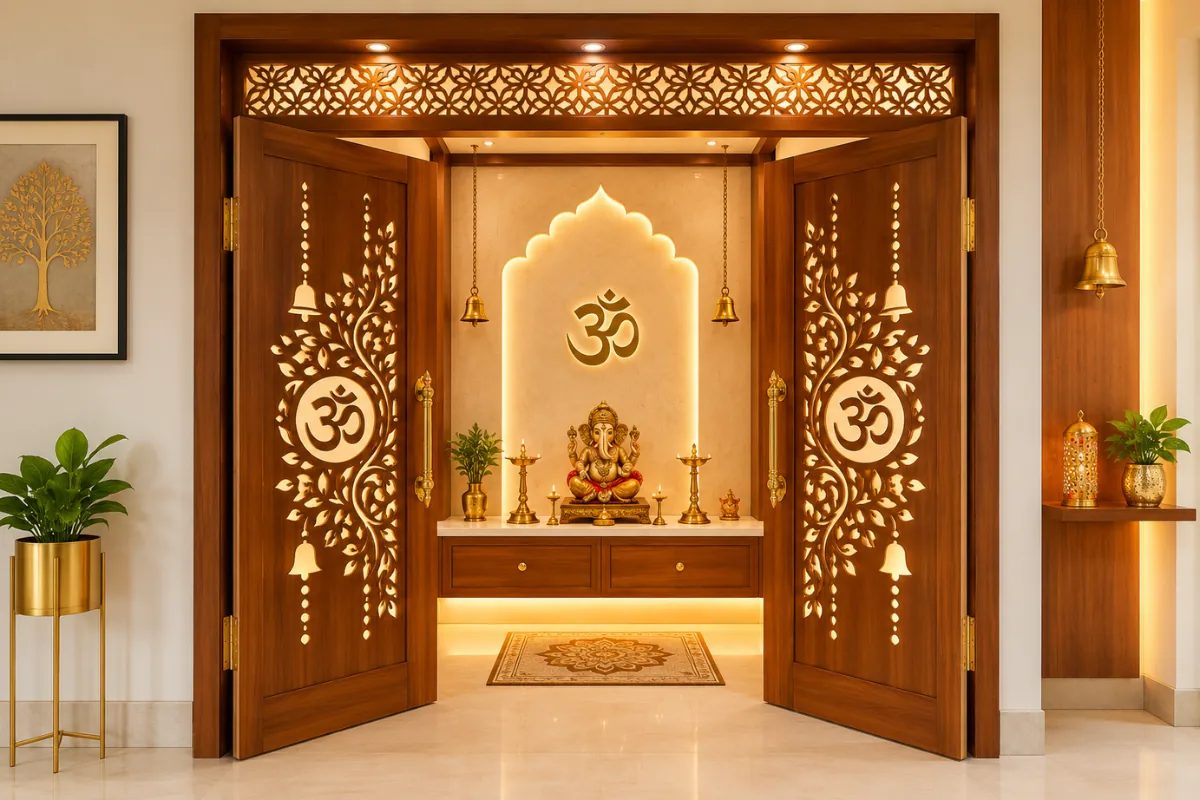
Wood is one of the most sought-after door materials for pooja room doors for obvious reasons. It has a natural warmth which is suitable for a place of prayer and devotion. From a traditional style to a modern interior, a wooden pooja room door design can be adapted in many ways to suit both styles.
Traditional Wooden Carved Doors
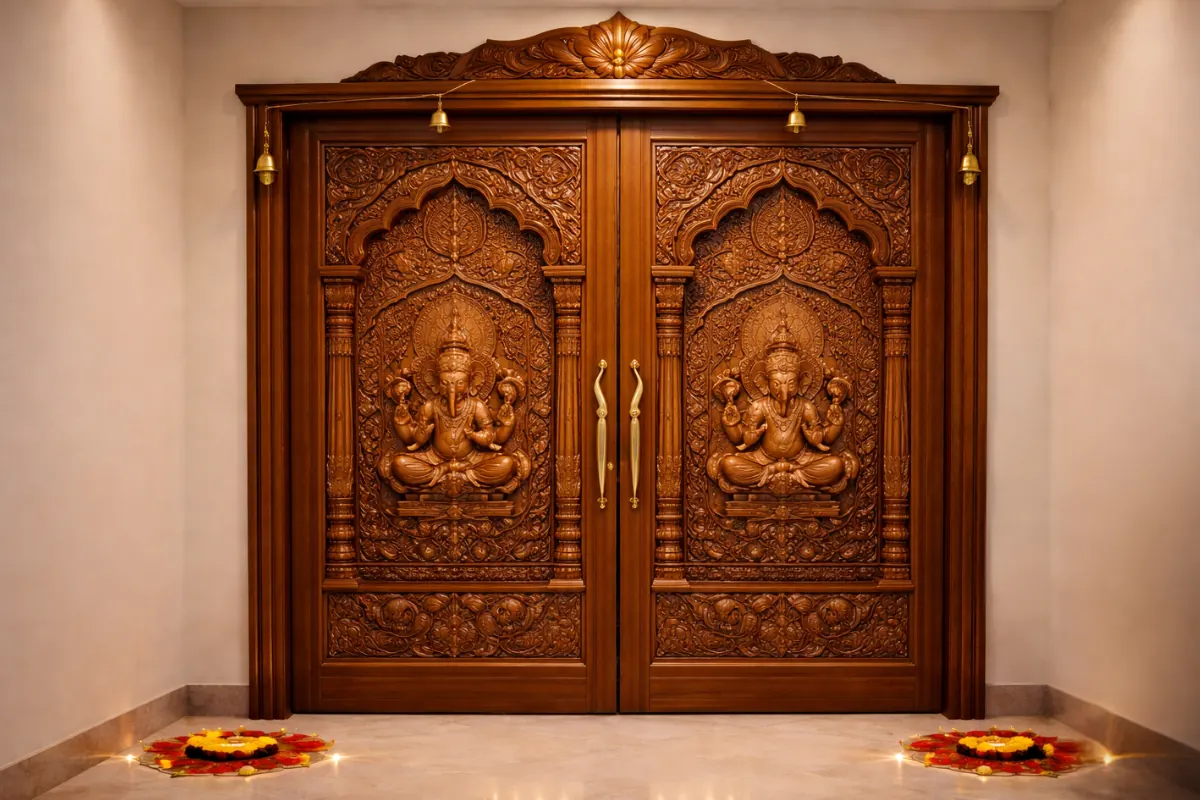
A nicely carved pooja room door is something which looks classical. If festivals, rituals and family traditions are important to you and your family, this design might seem like a logical one. Common carving motifs are:
- Lotus motifs
- Om symbols
- Temple-inspired patterns
- Traditional bells
- Mandala artwork
Such information establishes a better link to Indian traditions and allows the pooja room to be more unique in the house.
Teak Wood Pooja Room Doors
When it comes to investing in a room which is going to be for years to come, then it might be worth considering teak wood. It has a natural grain and is naturally a solid construction, and this gives it an element of quality that will always be attractive.
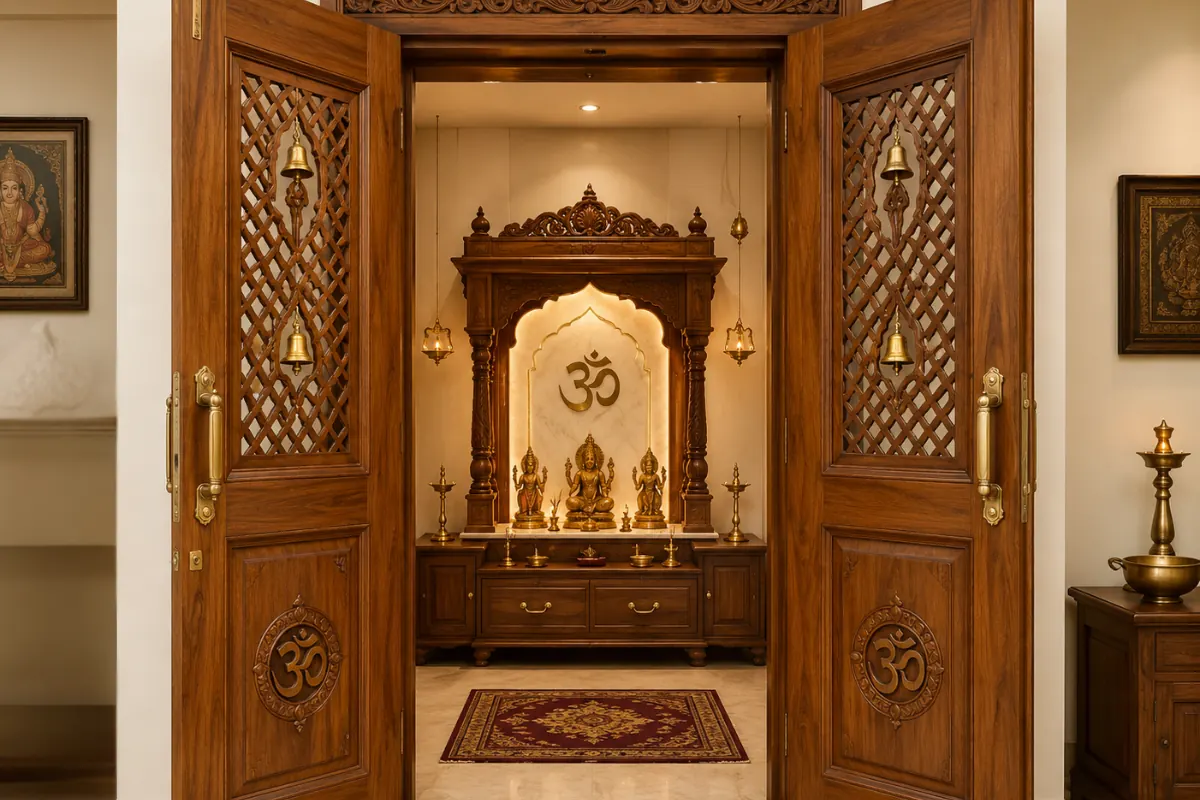
For many homeowners, teak wood is a choice of material due to the following reasons:
- Strong and durable
- Able to resist normal wear and tear.Resistant to wear and tear.
- Rich natural appearance
- Ideal for carvings and inlay work.It is suitable for detailed carvings.
- Needs to be replaced less often
- Teak wood is a sure choice for people who appreciate longevity and craftsmanship in their homes.
Wooden Jaali Door Designs
A pooja room doesn’t necessarily have to have a closed entrance. Wooden jaali designs provide a visual link with the other areas of the house and yet maintain the character of the prayer space.
A wooden Jaali Door can help:
- Let light get through
- Improve air circulation
- Use mirrors to make space appear larger.
- Decorate with decorative detail, but not heavily.
- Maintain partial privacy
When the pooja unit is located in a living room or open plan area, this style is very effective.
Plywood Pooja Room Door Design
An ornate wooden door doesn’t necessarily have to make a pooja room special. The designs of plywood pooja room doors are practical and can be used to make a space for prayer in many contemporary houses, particularly in apartments and small homes. Plywood doors can be designed and thoughtfully finished, with CNC-cut patterns, to be as welcoming and inviting as any other door, while being much more flexible to design.
CNC-Cut Plywood Doors
Pooja room doors crafted through the use of CNC cutting are growing in popularity due to the complex designs that can be generated with each door. When you put things like Om symbols, mandalas, lotus designs and jaali designs into the door, it makes the space feel unique. If you like this kind of thing, you might want to think about:
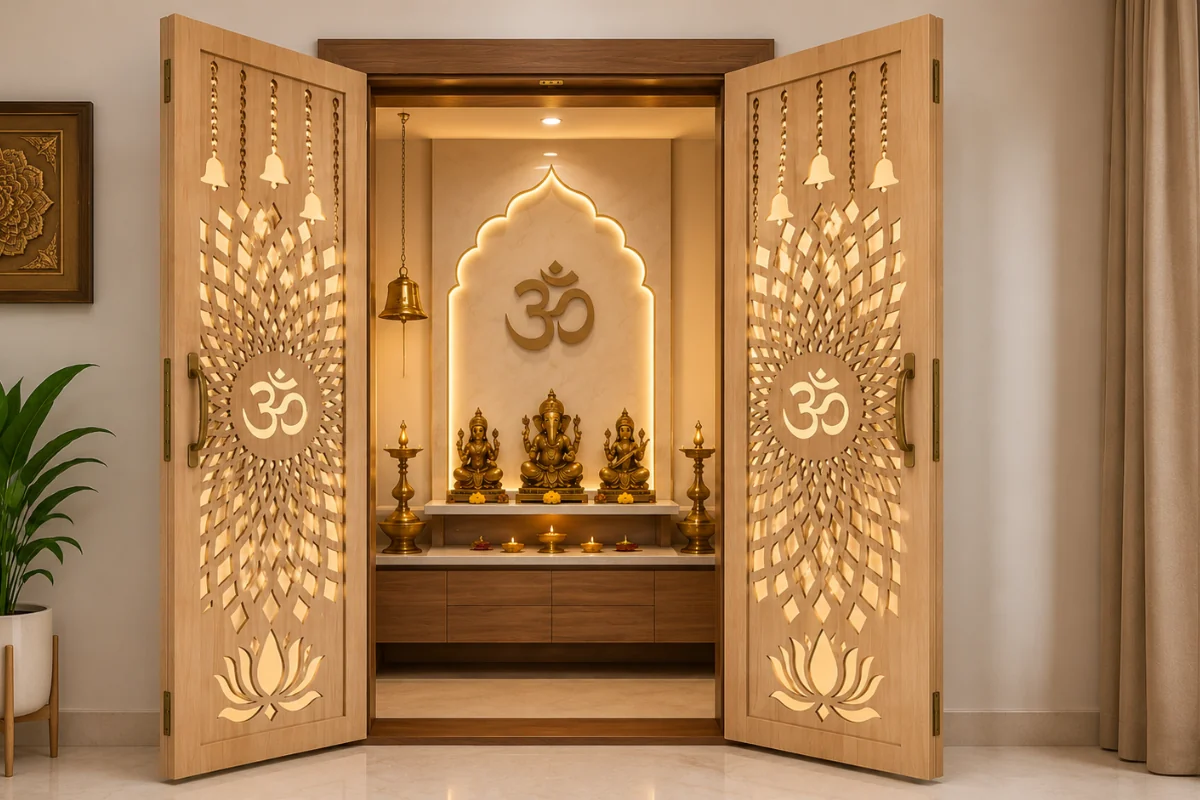
- Old-fashioned designs featuring a sleeker and more contemporary look
- Simple decorative patterns that do not have a lot of carvings
- Increased air/light circulation in the pooja area
- A design that stands out and is not too large.
- Many apartment houses are suitable for CNC-cut plywood doors, which are both spiritual and modern.
Decorative Laminated Plywood Doors
Occasionally, it’s best to be simple. Laminated plywood doors are easy to clean and provide a more finished look than many other finishes, and require less maintenance. They are available in different wood textures, colours, and patterns, which can be easily matched with the surrounding interiors.
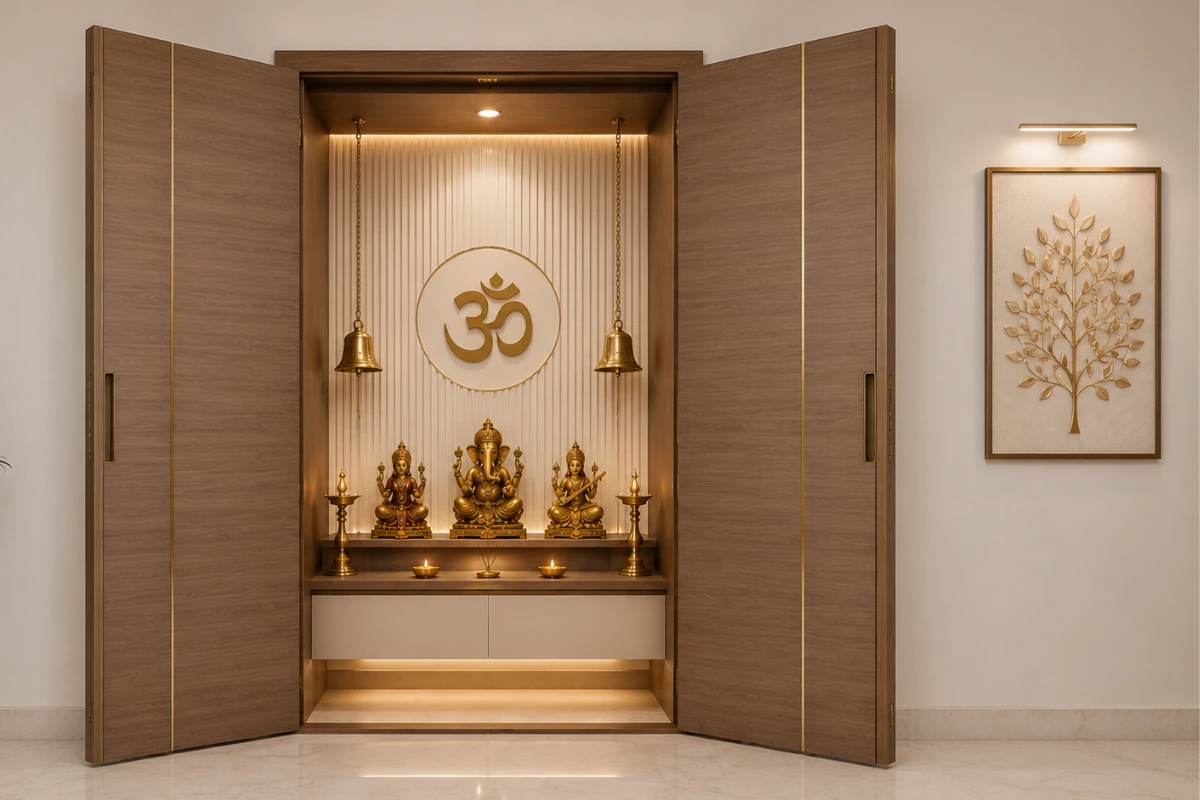
Use this option if:
- Pooja room is made a part of the living or dining area.
- A “seamless” appearance is preferred throughout the house
- Low-maintenance materials are important to consider
- The emphasis is on elegant design and not much detail.
- The outcome is a pooja space which is intentional and well designed, but does not distract from the rest of the interiors.
Budget-Friendly Pooja Room Door Options
The act of creating a sacred space does not depend on the amount of money that’s thrown at it; it’s about the thought and meaning behind it. Plywood doors are more affordable and provide design flexibility, giving homeowners the option to design a beautiful pooja room without sacrificing functionality. They are frequently selected since they:
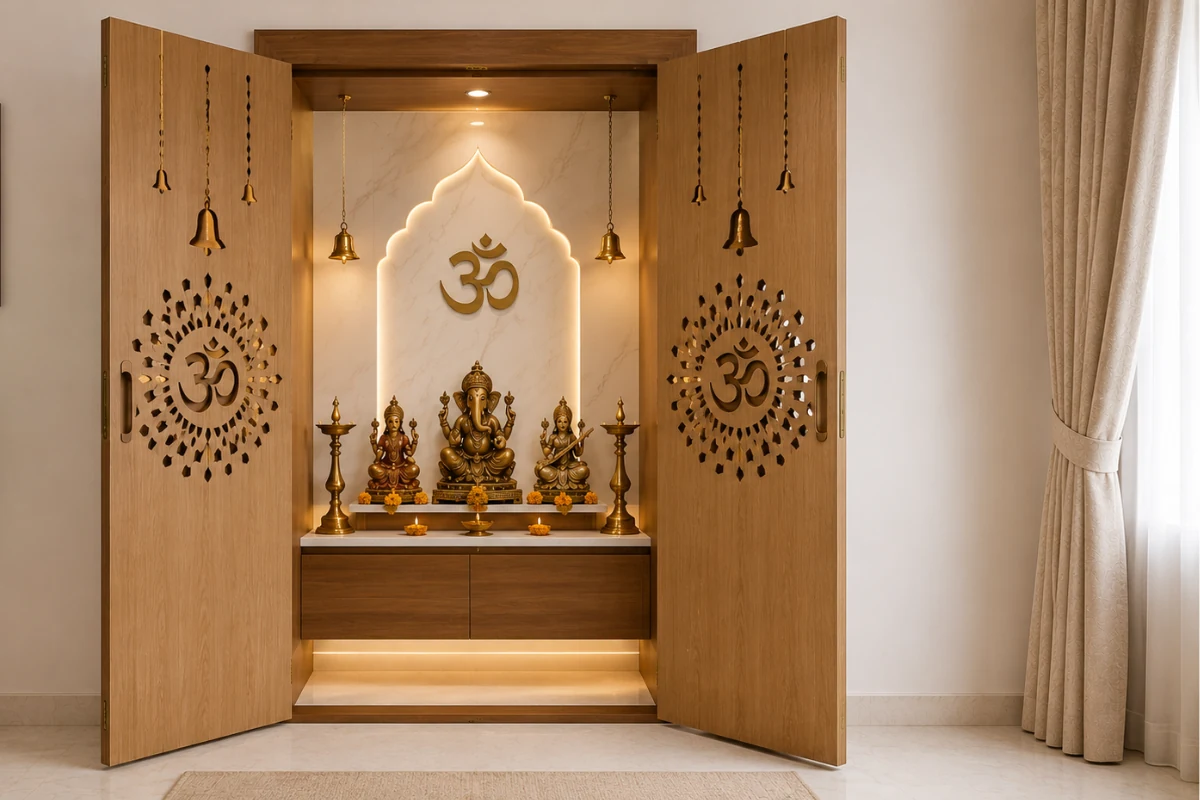
- Most cost-effective than many solid wood options
- Experience a sense of ease and lightness of use.
- May be adorned with decorative elements, designs and details.
- Do well in an apartment and a small house
- Easily able to adapt to traditional and modern interior designs.
A well-designed plywood door can serve to create definition and character to a pooja room, even if it is a part of a larger living space, while preserving the harmony of the design.
Latest Pooja Room Door Design Trends
Pooja rooms have been designed in line with the advancement of modern homes. Today’s homeowners want door designs that fit a modern home décor, optimize space and still maintain the divine aura of the prayer space.
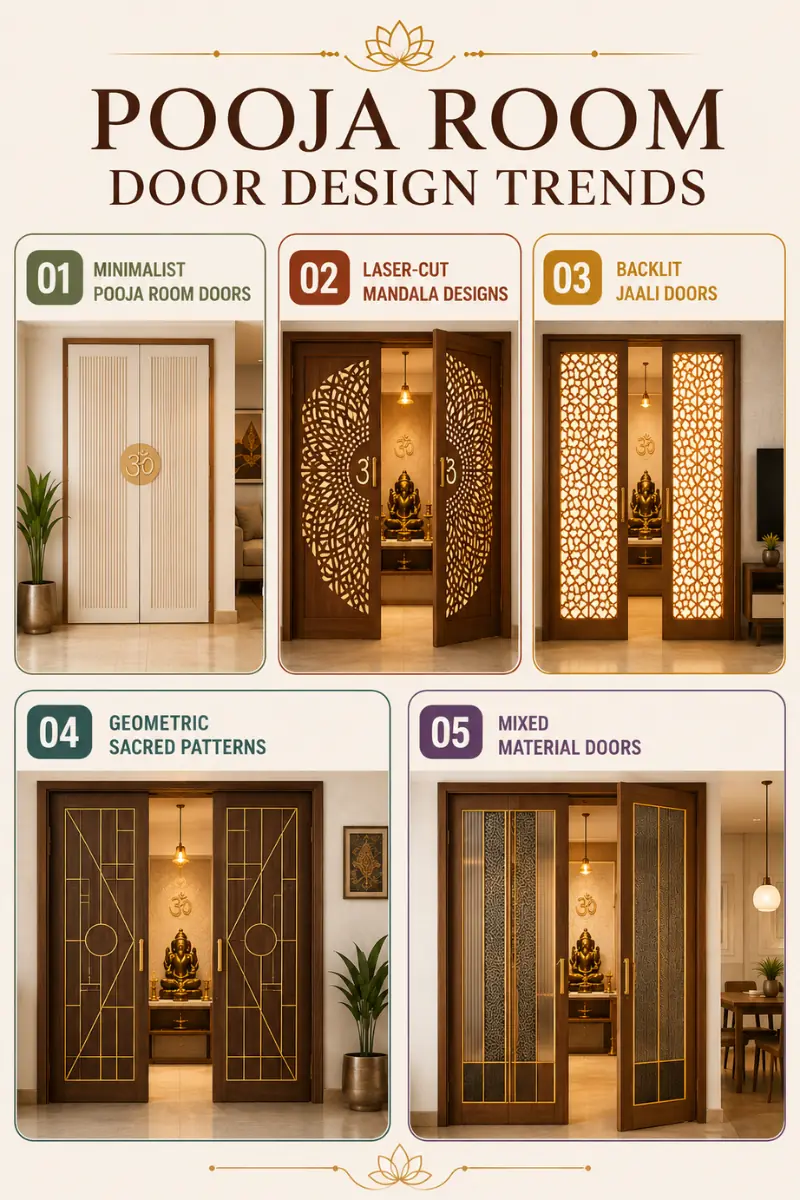
Minimalist Pooja Room Doors
Minimalist pooja room doors are really popular for homes. They have a look with clean lines and not too many details, which makes the pooja room feel peaceful and not cluttered. This style could be suitable when:
- The interior of your home has a contemporary feel.
- You like simple, no frills designs.
- The pooja room is built into the living or dining room.
- If you’re looking for a design that will be aesthetically current for years.
Laser-Cut Mandala Designs
The mandalas are still in vogue as they merge spirituality and craftsmanship. Complex details can be added to the door with great precision, with the door itself used as a design element. Many homeowners opt for this design because of its following features:
- Fills in the picture with detail but not overcarving.
- Suggests spiritual meaning in artwork design.
- Suitable for both old and modern houses.
- Assists in making the entrance to the pooja room more unique.
Backlit Jaali Doors
The Pooja space will also look deeper and warmer with the help of a backlit jaali door. When the patterned surface is located behind the prayer area, the soft light behind it will help direct attention towards the prayer area, particularly if it is an open-plan area. This design is well suited for when:
- The pooja unit can be seen from the living room.
- The space should be distinguishable in its natural state.
- More interior decoration is kept to a minimum.
- The house is designed in a modern style.
Geometric Sacred Patterns
Geometric sacred patterns are a contemporary take on sacred patterns. These designs are not made with finely-carved details; instead, they are based on symmetry and well-defined shapes to achieve a striking effect. This style might be favourable to you if:
- Traditional carvings feel too ornate for your interiors.
- You prefer a cleaner and more contemporary look.
- Your home features minimalist or modern décor.
- You want a subtle connection to spiritual symbolism.
Mixed Material Doors
Mixed material doors use wood and other things like glass, metal or pretty inserts. This is a way to make doors in modern homes where they use different textures all over the place. Many homeowners consider this option because it:
- Creates a more customised appearance.
- Helps the pooja room blend with modern interiors.
- Introduces visual contrast and texture.
- Allows natural light to pass through selected areas.
Choosing the Right Trend for Your Home
The latest trend is not always the best choice for every home. Before making a decision, consider:
- The overall style of your interiors.
- The location of the pooja room.
- Available space around the prayer area.
- The level of detailing you prefer.
- How prominent you want the pooja room to appear within the home.
The key is to make it feel like it fits in the room, matches your décor and exudes the significance of the room beyond the door itself.
Pooja Room Door Design With Glass
Since glass pooja room doors allow sunlight to penetrate the room, they are gaining popularity among homeowners who want to add weightlessness to their rooms without compromising their significance in the home. Glass can be used to provide privacy, spiritual detailing or practical functionality, and can be used in a variety of interior styles and layouts.
Pooja Doors are also available in Frosted Glass.
Frosted glass is also a great option if your pooja room is in proximity to the living room, dining area, or another area of the house that is used often, but not isolated. The soft finish will give privacy in prayer with a clean and fine look.
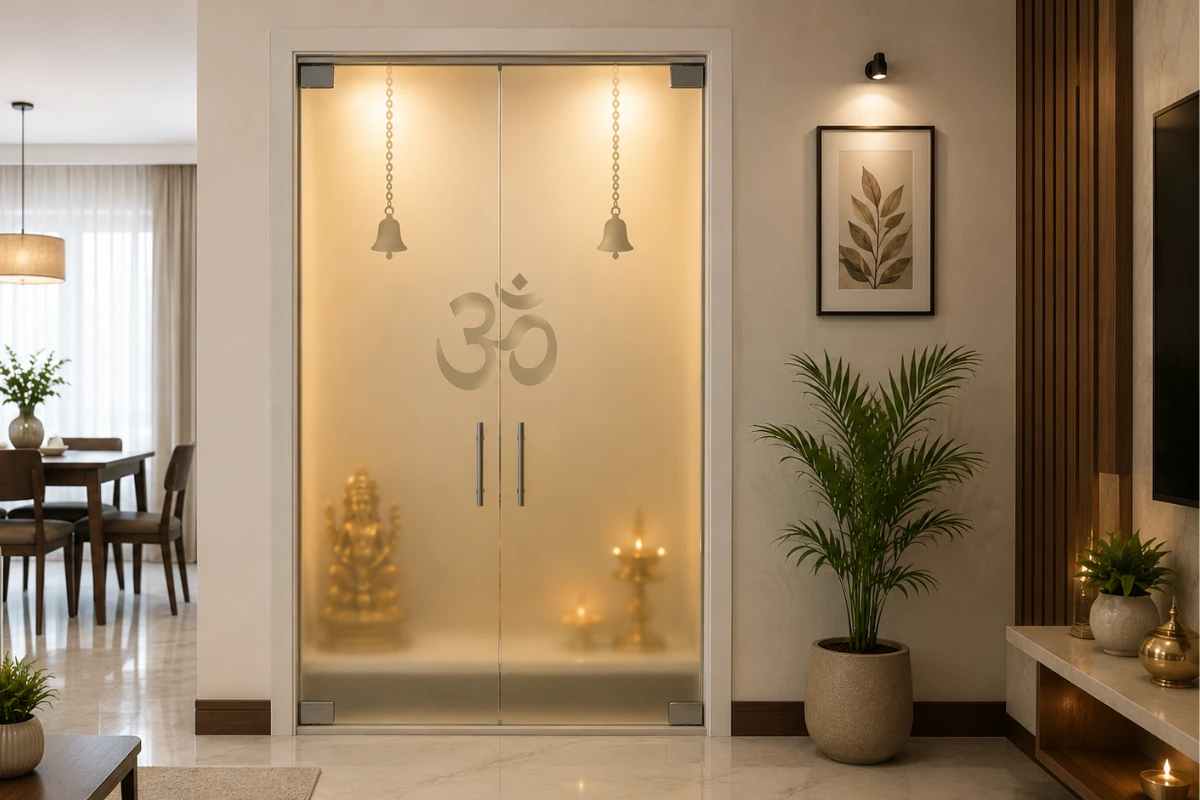
If you are looking for this design, you would be better off with:
- Valuing privacy during worship.
- Your pooja room is visible from the common areas.
- You prefer simple designs over decorative detailing.
Etched Religious Motifs on Glass
Some people think the door to the puja room should show what the room is for. ou can put things like Om symbols, lotus designs, bells or special art right into the glass, which makes a nice design.
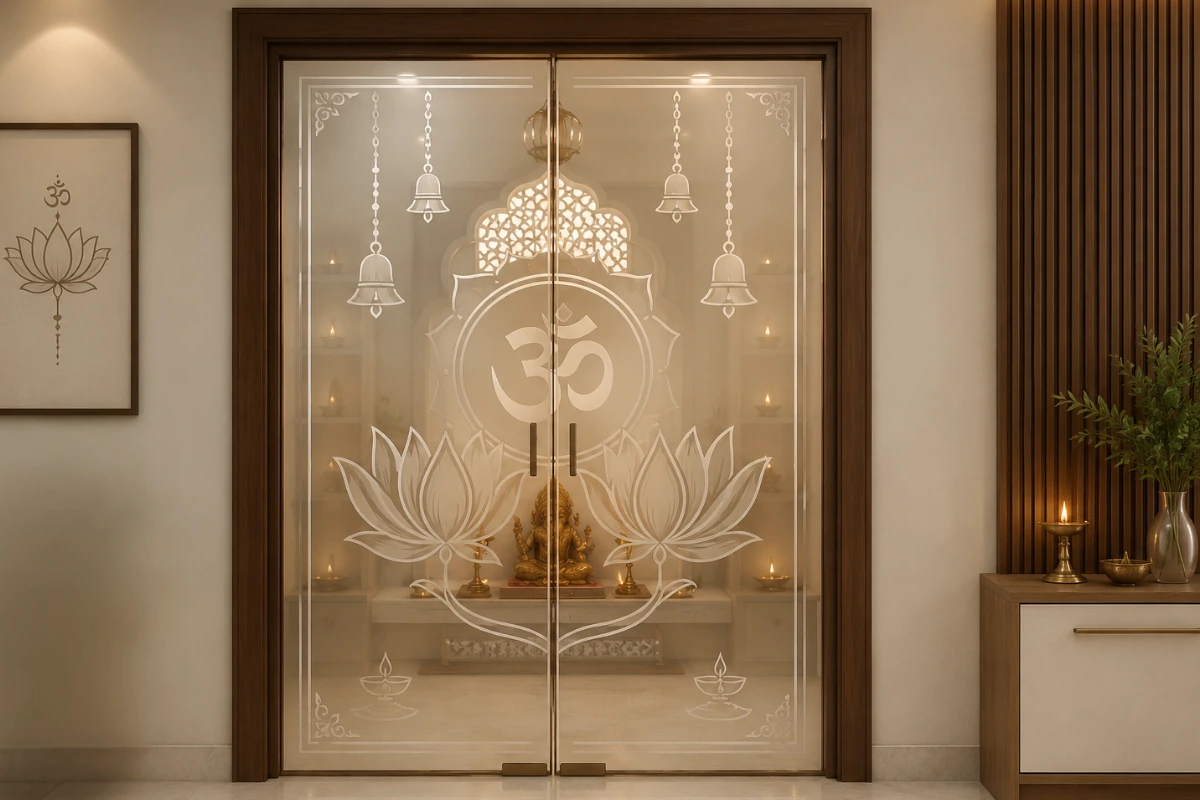
This style might be favourable to you if:
- You want the design to carry spiritual meaning.
- Decorative carvings feel too elaborate for your home.
- You prefer subtle details that still feel distinctive.
Wood and Glass Combo Doors
When you don’t wish to go all the way with traditional or contemporary designs, wood and glass can be a great combination. Wood provides a sense of warmth through familiarity and glass brings lightness in terms of visual character.
This is a good option if:
- Your interiors blend traditional and modern elements.
- A fully wooden door feels visually heavy.
- You want the pooja room to feel welcoming while remaining elegant.
Sliding Glass Pooja Doors
Many houses and particularly apartments may have constrained space around the pooja room. Sliding glass doors make the best use of space as they do not need to swing open.
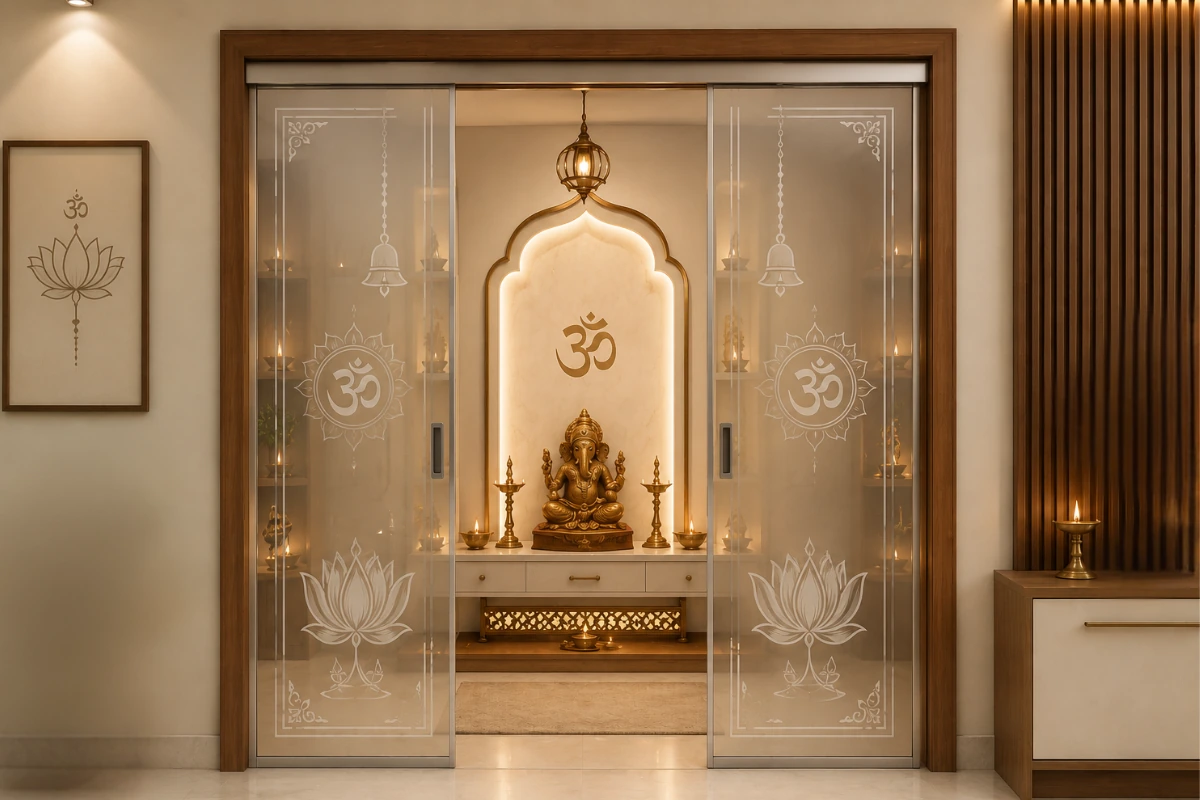
This is a design that would be useful if:
- Space around the entrance is limited.
- The pooja unit is integrated into another room.
- Convenience and functionality are important considerations.
Why Many Homeowners Choose Glass Pooja Room Doors
Glass doors continue to gain popularity because they adapt easily to different homes and personal preferences.
They are often chosen by homeowners who:
- Prefer a lighter visual appearance over solid doors.
- Want a design that feels clean.
- Appreciate subtle decorative details.
- Looking for options that suit contemporary interiors.
The best glass pooja room door is the one that works for how you use the room. Some people want privacy, others want things, and some just want a door that fits with their home’s style.
Traditional vs Modern Pooja Room Door Designs
| Traditional Designs | Modern Designs |
|---|---|
| Detailed Carvings | Minimal Patterns |
| Solid Wood Construction | Glass and Mixed Materials |
| Religious Motifs | Geometric Aesthetics |
| Rich Heritage Look | Contemporary Appearance |
Popular Design Elements for Pooja Room Doors
| Design Element | Best Suited for |
|---|---|
| Om Symbol Designs | Homeowners who want a simple yet spiritually meaningful design. |
| Bell-Inspired Designs | Homeowners looking to bring subtle temple-inspired elements into the pooja room. |
| Lotus Pattern Doors | Those who appreciate elegant detailing inspired by traditional symbolism. |
| Jaali Work Patterns | Pooja rooms require a balance between openness and privacy. |
| Mandala Art Designs | Homeowners who prefer intricate patterns with spiritual significance. |
| Temple-Style Door Frames | Those who want the pooja room to have a strong traditional presence. |
Vastu Tips for Pooja Room Door Design
| Vastu Aspect | Best Practice |
|---|---|
| Preferred Door Direction | Those who follow Vastu often prefer east or north-facing pooja room entrances. |
| Ideal Door Materials | Wooden doors are generally considered the most suitable choice for pooja rooms. |
| Recommended Colours | Light and soothing shades such as white, cream, beige, or natural wood tones are commonly preferred. |
| Two-Shutter Doors | Homeowners looking to follow traditional Vastu recommendations may consider double-door designs. |
| Door Condition | A well-maintained door is preferred; avoid damaged, chipped, or broken doors. |
| Entrance Cleanliness | Keeping the area around the pooja room clean and clutter-free is generally recommended. |
| Door Opening Guidelines | The door should open smoothly and comfortably without obstruction. |
How to Choose the Right Pooja Room Door Design
Based on Available Space
The size of your pooja room can influence the type of door that works best.
- If you have limited space, sliding or jaali doors can be a practical choice.
- Larger pooja rooms can comfortably accommodate more detailed and traditional designs.
Check Our recent blog about modern jaali door design ideas for pooja room
Based on Interior Style
The door should feel like a natural extension of your home’s interiors.
- If you prefer traditional décor, carved wooden doors can be a suitable option.
- Minimalist patterns and glass accents often complement contemporary interiors.
Based on Budget
A well-designed pooja room door can be achieved across different budget ranges.
- If you are looking for a cost-effective option, plywood designs are worth considering.
- Solid wood doors may be a better choice if durability and craftsmanship are priorities.
Based on Material Preference
The material you choose can influence both the appearance and functionality of the door.
- Wood is often preferred for its timeless and traditional appeal.
- Glass and mixed-material designs can suit homes that favour a lighter visual look.
Based on Maintenance Requirements
Consider how much upkeep you are comfortable with over time.
- Simpler designs are generally easier to clean and maintain.
- Intricate carvings may require more regular attention to preserve their appearance.
Common Mistakes to Avoid When Selecting a Pooja Room Door
Ignoring Ventilation
- A completely closed design can sometimes make the space feel restrictive.
- If ventilation is important to you, consider jaali patterns or partially open designs.
Choosing Overly Bulky Designs for Small Spaces
- Large and heavy doors can overwhelm compact pooja rooms.
- Choose a design that feels proportionate to the available space.
Compromising on Quality Materials
- Lower-quality materials may require frequent repairs or replacements.
- Investing in durable materials can help you achieve better long-term value.
Overlooking Vastu Preferences
- If Vastu principles matter to your family, it is best to consider them during the planning stage.
- This can help avoid unnecessary changes after installation.
Selecting Designs That Clash with Home Interiors
- A pooja room should have its own identity while still feeling connected to the rest of your home.
- Choosing a complementary design often creates a more balanced overall look.
Why Choose Homzinterio for Pooja Room Designs
Customized Designs
- Every pooja room is designed around your space, preferences, and lifestyle.
- Whether you have a compact apartment or a spacious home, the design is tailored to suit your needs.
Premium Materials
- Quality materials are selected to ensure durability and lasting appeal.
- You can choose from a wide range of finishes, textures, and design options.
Traditional and Modern Options
- Whether you prefer timeless carvings or contemporary patterns, there is a design to match your vision.
- Every option is planned to complement the overall style of your home.
Expert Craftsmanship
- Skilled craftsmanship ensures attention to detail at every stage.
- You benefit from designs that are thoughtfully executed and built to last.
End-to-End Interior Solutions
- From design consultation to installation, every step is managed by a dedicated team.
- This allows you to enjoy a smoother and more seamless interior design experience.
Conclusion
A thoughtfully designed pooja room door is more than just an entryway. Whether you prefer a wooden pooja room door design, a practical plywood pooja room door design, the latest pooja room door design trends, or a stylish pooja room door design with glass, choosing the right style can elevate the beauty and spiritual essence of your home.
FAQs
Q1. Which material is best for a pooja room door design?
Ans: Solid wood is often preferred for its durability, traditional appeal, and ability to accommodate intricate carvings, while plywood offers a budget-friendly alternative.
Q2. Is a wooden pooja room door design suitable for modern homes?
Ans: Yes. Wooden pooja room doors can be customized with minimalist patterns, sleek finishes, and contemporary detailing to complement modern interiors.
Q3. Are glass pooja room doors a good choice?
Ans: Yes. Frosted or etched glass doors allow natural light to pass through while maintaining privacy and creating an elegant appearance.
Q4. What is the latest pooja room door design trend?
Ans: Laser-cut jaali patterns, backlit mandala designs, wooden-glass combinations, and minimalist CNC-cut doors are among the latest trends.
Q5. Is plywood a good option for pooja room doors?
Ans: Plywood doors are lightweight, economical, and highly customizable, making them ideal for apartments and compact homes.
Q6. What symbols are commonly used in pooja room door designs?
Ans: Popular choices include Om symbols, lotus motifs, bells, temple-inspired patterns, mandalas, and traditional jaali designs.
Q7. How do I choose the right pooja room door design for my home?
Ans: Consider your available space, interior style, budget, material preference, maintenance needs, and any Vastu recommendations before making a decision.
Q8. Should pooja room doors be fully closed or partially open?
Ans: Many homeowners prefer jaali or glass designs that maintain a visual connection with the sacred space while still defining it as a separate area.





This is exactly the information I was searching for. Doctor this of decade hard guy.