Jali Reinvented: How Modern Jali Door Design is Blending Tradition with Timeless Style
Jali Reinvented: How Modern Jali Door Design is Blending Tradition with Timeless Style
When you hear the word “jali,” what comes to mind? For many, it evokes images of sun-drenched Mughal palaces, intricately hand-carved stone screens, and the romantic charm of centuries-old havelis. It’s a word steeped in history, a beautiful relic of a bygone era.
But what if we told you that jali is not a relic? What if we told you it’s one of the most exciting, versatile, and thoroughly modern elements in today’s interior design playbook?
In the world of contemporary home design, the humble jali has undergone a radical transformation. It has shed its “traditional-only” label and emerged as a sophisticated tool for architects and interior designers. Thanks to new materials, cutting-edge technology, and a fresh design perspective, the modern jali door is a masterpiece of form and function.
At Homzinterio, we believe the best designs are those that tell a story. And the story of the modern jali is one of an ancient concept proving its timelessness. Forget the idea that jali is heavy, dated, or fussy. Today, it is sleek, smart, and stunningly beautiful.
This comprehensive guide will explore how modern jali door design is making a massive comeback and how you can use it to add a “wow” factor to your own home.
The Enduring Genius of Jali door
Before we dive into the “modern,” let’s appreciate the “why.” Jali, which translates to “net” or “lattice,” was an architectural marvel invented for a purpose. Its intricate patterns weren’t just decorative; they were a brilliant, climate-conscious solution.
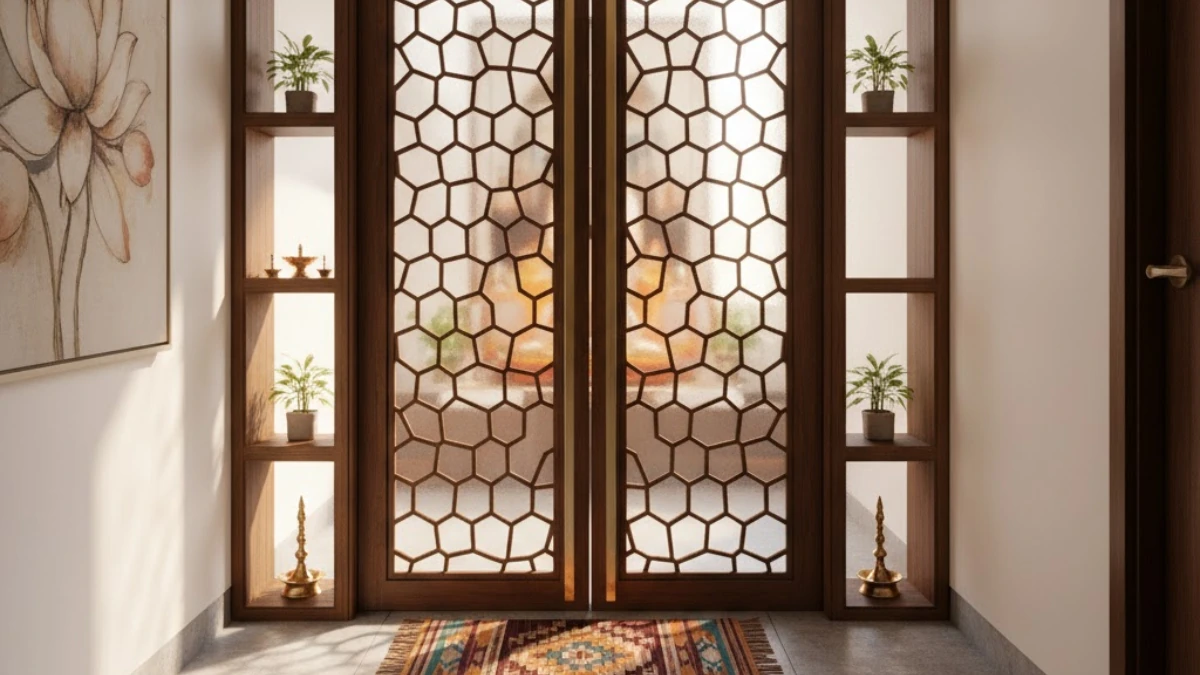
In a hot climate, a solid wall blocks air, and an open window invites harsh sun and compromises privacy. The jali screen solved all three problems at once:
- It permitted ventilation, allowing for cooling cross-breezes.
- It diffused harsh sunlight, scattering it into a soft, ambient glow while protecting from heat.
- It provided privacy, allowing those inside to see out without being clearly seen (the ‘purdah’ concept).
These core functions are just as relevant today. In a crowded city apartment, a modern jali door can create privacy, filter light, and add a decorative layer—all without making the space feel boxed in.
The Modern Makeover: From Hand-Carved to High-Tech
The biggest shift has been in how jali is made and what it’s made from. The laborious, time-consuming process of hand-carving stone or wood has been supplemented by the pinpoint precision of modern technology.
The Rise of the Machine: CNC and Laser Cutting
The true game-changer is CNC (Computer Numerical Control) routing. With a CNC machine, we can feed a digital design file—any pattern you can dream of—and the machine will cut it perfectly into a sheet of material. This has opened a universe of design possibilities:
- Geometric & Abstract: The most popular modern style. Think clean lines, hexagons, chevrons, interlocking circles, or asymmetrical abstract patterns that look like a piece of modern art.
- Biophilic: Nature-inspired patterns are a huge trend. We can create delicate, flowing patterns of leaves, vines, or waves, bringing a sense of the outdoors in.
- 3D Jali: This is the new frontier. By varying the depth of the cut, CNC machines can create three-dimensional, sculptural panels that play with light and shadow in a dynamic new way.
The New Material Palette
While traditional wood and stone are still beautiful, they are heavy and expensive. Modern jali doors use a wider, smarter, and more versatile range of materials.
- MDF/HDF (Medium/High-Density Fiberboard): This is the workhorse of modern jali. It’s an engineered wood product that is dense, smooth, and perfectly stable, making it the ideal “canvas” for intricate CNC cutting. It’s cost-effective and can be painted in any high-gloss, matte, or metallic finish to match your decor.
- WPC (Wood-Plastic Composite): The problem-solver. WPC is 100% waterproof and termite-proof, making it the perfect material for jali doors in bathrooms, balconies, or as an exterior gate.
- Metal (MS, Stainless Steel, Brass): For a touch of luxury, industrial chic, or Art Deco glamour. Laser-cut metal jali doors, especially in finishes like brushed gold, matte black, or antique brass, are incredibly striking.
- Acrylic: For a super-modern, glossy, or translucent effect. Acrylic jali panels are lightweight and can even be backlit for a dramatic, futuristic glow.
5 Ways to Use Modern Jali Doors in Your Home
A jali design is no longer just for the front gate. Its versatility allows it to solve design problems in every room of the house.
1. The Sacred Space: The Pooja Room Door
This is perhaps the most popular and beautiful application of modern jali. A pooja room is a space of tranquility, and a jali door is the perfect threshold. It provides a sense of separation and sanctity without completely closing the space off.
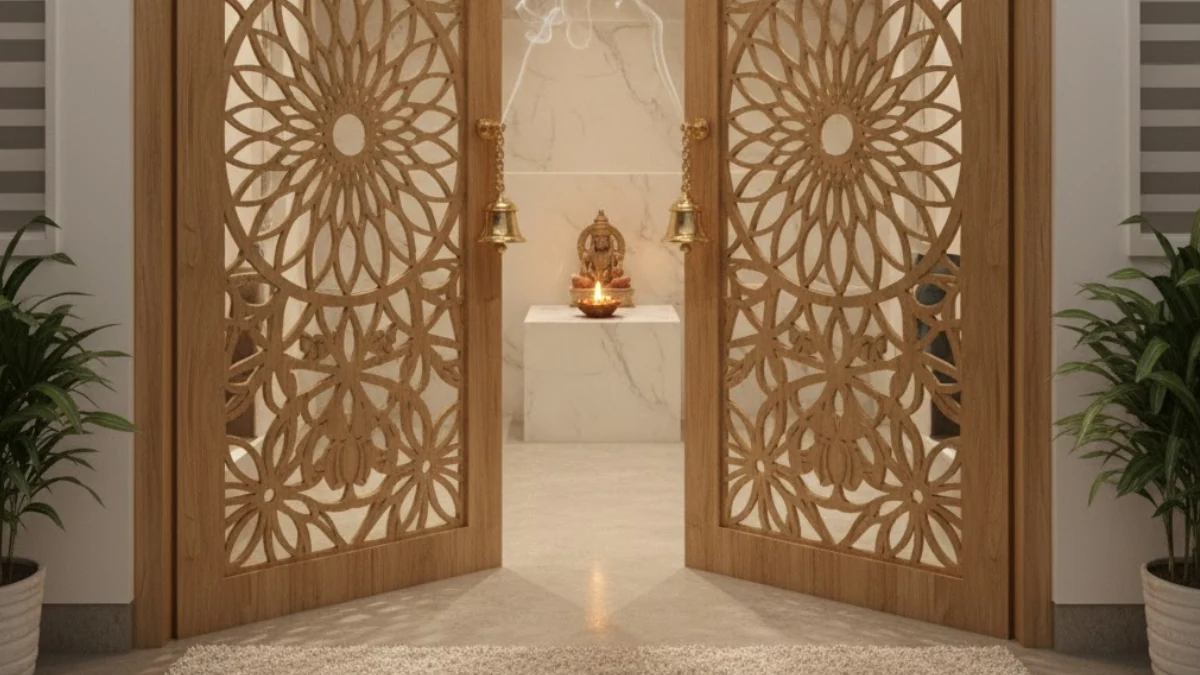
- The Look: A pair of doors with a traditional-yet-modern jali pattern (like a lotus or a ‘mandala’ motif) in a white or wood-grain finish. Often, bells are integrated into the handles.
- The Function: It allows the glow of the diya (lamp) to filter out, creating a serene ambiance in the adjoining room. It also allows for ventilation, which is important if you use incense.
- Homzinterio Tip: For smaller apartments, a folding jali door for the pooja niche is a brilliant space-saving solution.
2. The Grand Entrance: The Main Door
Your main door is your home’s first impression. A modern jali door makes an unforgettable one. It creates a stunning “peek-a-boo” effect, offering a hint of the beautiful home within.
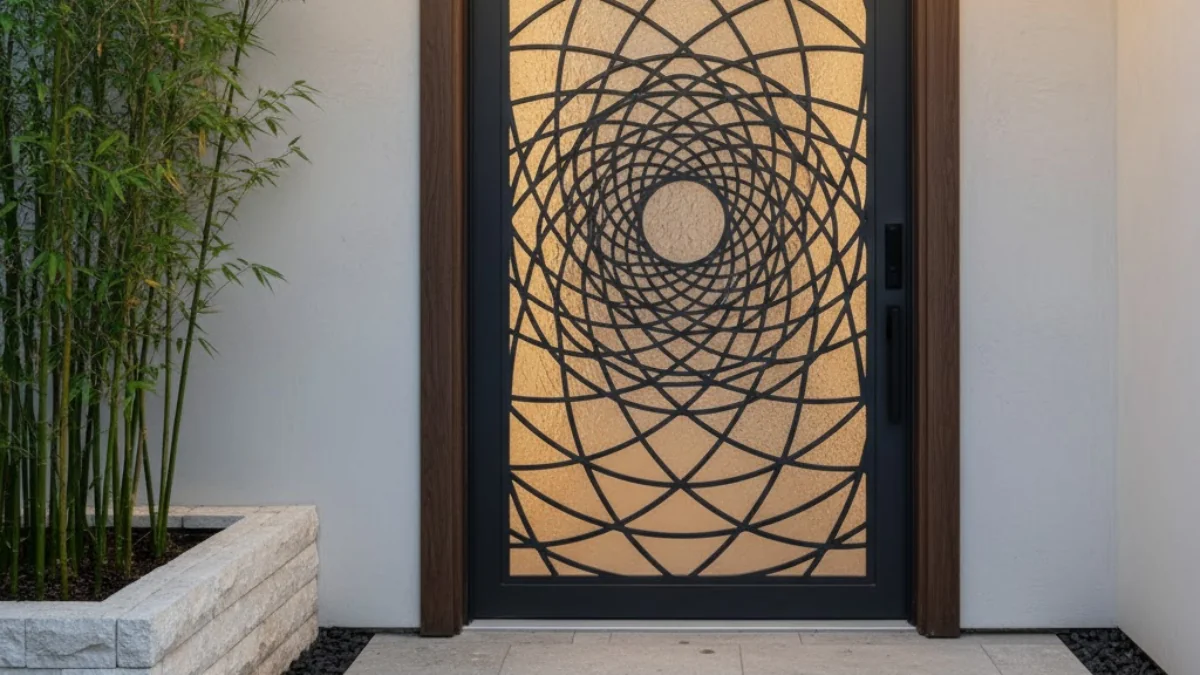
- The Look: A solid wood or metal door featuring a jali panel. This panel is almost always backed with frosted glass, a metal mesh, or a clear polycarbonate sheet.
- The Function: The backing provides security, keeps out insects, and maintains privacy, while the jali panel itself adds a powerful design element and allows you to see who is outside.
- Homzinterio Tip: Choose a bold, geometric pattern in a contrasting color (like a black metal jali on a natural teak wood door) for a powerful, modern statement.
3. The Smart Divider: Jali as Partitions
In today’s open-plan homes, the challenge is to create “zones” without building walls. A jali partition is the single most elegant solution to this problem. It separates spaces—like the living room from the dining area—without blocking light or flow.
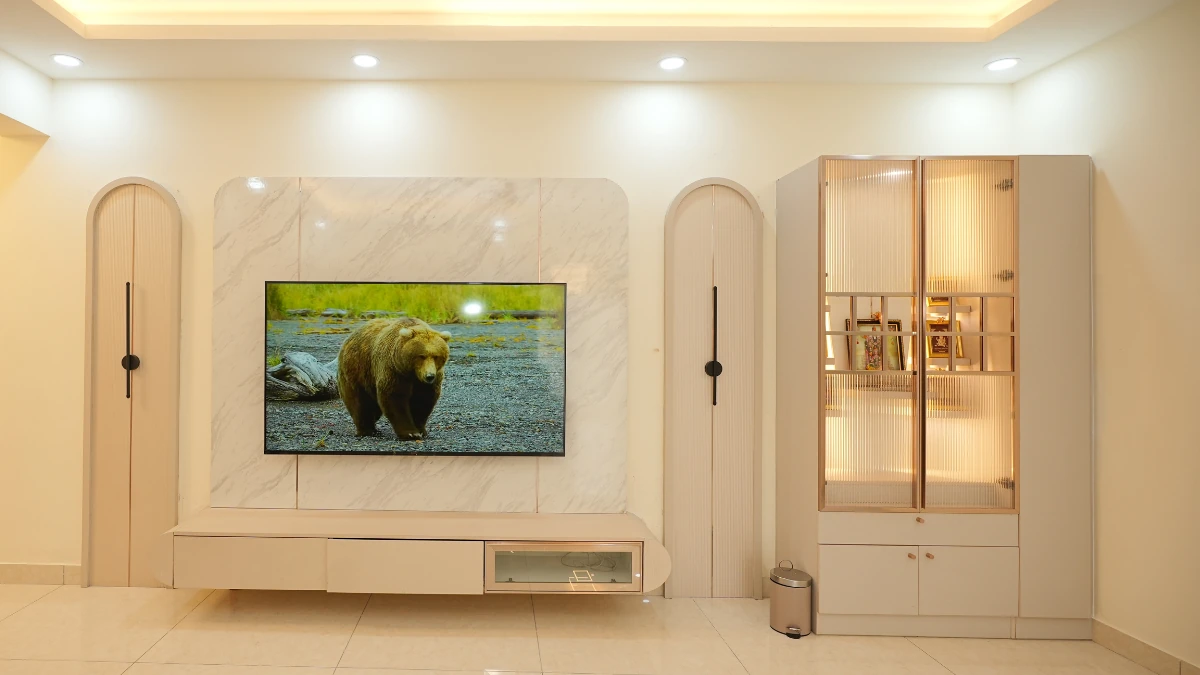
- The Look: A floor-to-ceiling jali panel, either fixed in place or, even better, designed as a sliding door on a barn track.
- The Function: It defines the dining space, giving it intimacy, but still allows for conversation and visual connection with the living room. It’s a “now you see it, now you don’t” wall.
- Homzinterio Tip: This is where you can have the most fun with patterns. A large-scale, biophilic (leafy) pattern can make the partition feel like a living-art installation.
4. The Functional Accent: Wardrobe & Cabinet Shutters
This is a smart, functional trend we’re seeing more and more. Using jali on cabinet doors is both beautiful and practical.
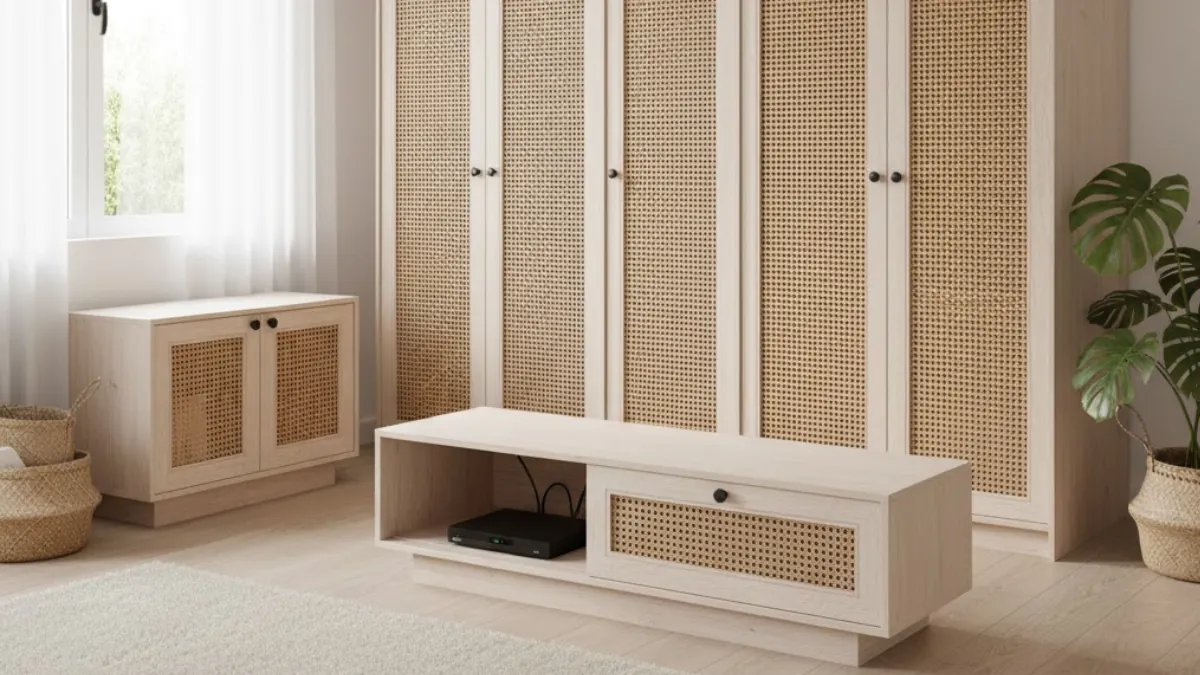
- The Look: Jali panels on wardrobe doors, shoe racks, or media units.
- The Function: Ventilation! Jali shutters on a wardrobe (especially one for linen) or a shoe cabinet are a game-changer, allowing air to circulate and preventing musty odors. On a media unit, a jali panel can elegantly hide your set-top box and wires while still allowing your remote control’s signal to pass through.
- Homzinterio Tip: We love using a cane or rattan-style jali pattern on wardrobe shutters for a light, breezy, “boho-chic” aesthetic.
5. The "Wow" Factor: Backlit Jali
This is the trick that elevates a jali panel from a design element to a work of art. By placing LED strip lights behind a jali panel—whether it’s a door, a partition, or a wall-mounted art piece—you create an awe-inspiring feature.
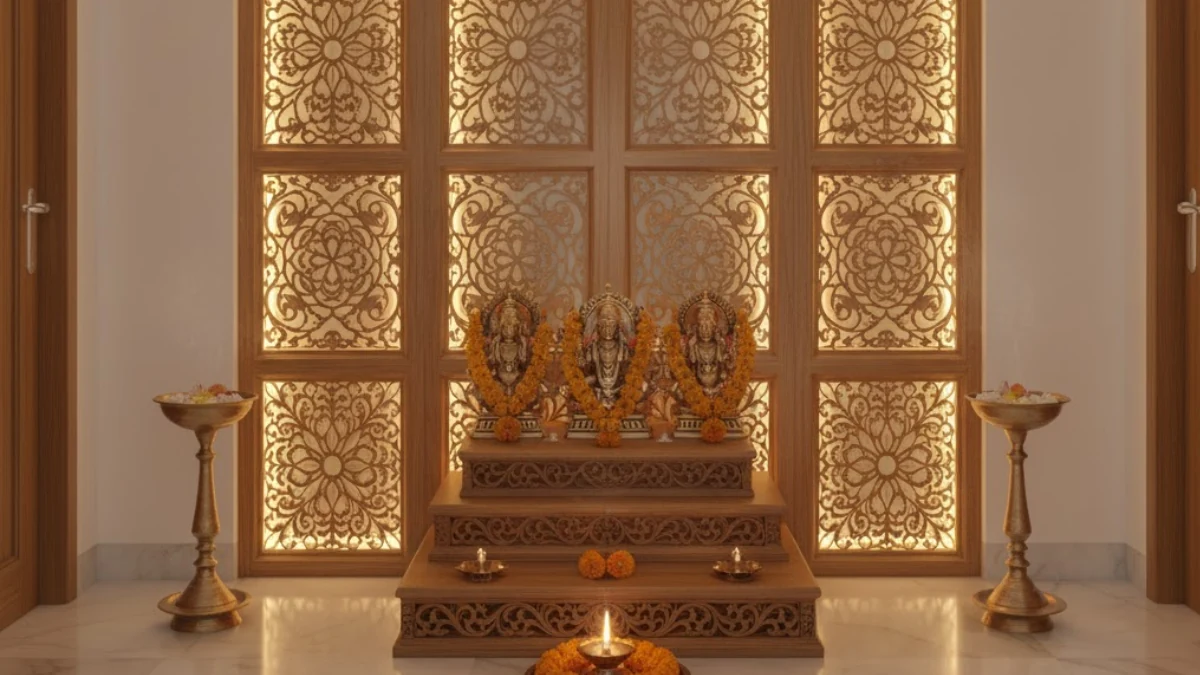
- The Look: The light streams through the cut-outs, highlighting the pattern’s intricacy and casting dramatic shadows. It creates an ambient, five-star-hotel lobby feel.
- The Function: It serves as both a light source and a design centerpiece. It’s perfect for a feature wall in the living room or as a headboard in the master bedroom.
The Homzinterio Difference: Jali, Integrated Your Way
A modern jali door isn’t a standalone product you buy off a shelf. It’s a custom-designed element that must speak the same language as the rest of your home. This is where design expertise is crucial.
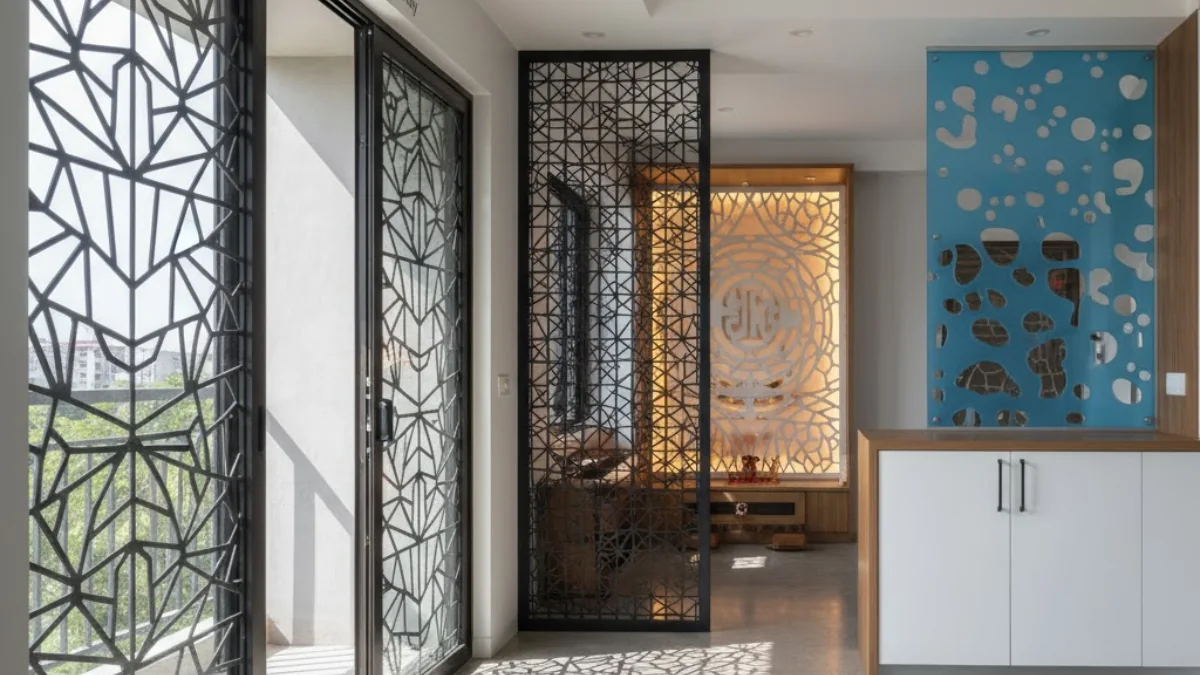
- Cohesion: The jali pattern you choose for your pooja room should complement the finish on your modular kitchen. The metal jali in your partition should echo the hardware on your cabinets. We ensure your jali design feels integrated, not like an afterthought.
- Customization: Our design-led process means you don’t just pick from a catalog. We can design a custom CNC pattern just for you. Love a specific motif? Want to abstract your family initial? We can translate your vision into a digital file and bring it to life.
- Smart Materials: We guide you on what to use where. We’ll recommend moisture-proof WPC for your balcony screen, a durable, paintable MDF for your wardrobe, and a high-impact, easy-to-clean acrylic jali for a kid’s room partition.
The jali door is, in many ways, the perfect symbol of modern Indian design: it’s rooted in a deep and intelligent tradition, but it has adapted, evolved, and embraced technology to become more relevant than ever.
It is the ultimate multitasker—a door, a partition, a ventilator, a light diffuser, and a piece of art, all in one. It’s a way to play with light, shadow, and space. Whether your home is minimalist, industrial, traditional, or eclectic, there is a modern jali design waiting to transform it.
Ready to explore the art of the modern jali in your home?
Don’t just build walls—create beautiful, functional, and light-filled spaces. Talk to a Homzinterio designer today, and let’s create a custom jali design that tells your story.
Contact Homzinterio for a Free Design Consultation
FAQ
1. What is the main difference between traditional and modern jali doors?
The main difference lies in the materials and manufacturing process. Traditional jali was typically hand-carved from heavy stone or wood, resulting in classic, intricate patterns. Modern jali, however, is predominantly made using CNC (Computer Numerical Control) or laser cutting with materials like MDF/HDF, WPC, metal, or acrylic.
2. Is jali suitable for small apartments and compact pooja rooms?
Yes, absolutely. Modern jali is highly recommended for small spaces. The article highlights that a jali door provides a sense of separation and sanctity without completely closing off the space, preventing a “boxed-in” feeling.
3. Which material is best for a jali door in a humid area like a bathroom or balcony?
For areas exposed to moisture, like a balcony, external gate, or near a wet area, the best material is WPC (Wood-Plastic Composite).
4. How does a jali door on a wardrobe or cabinet help with function?
Using jali on wardrobe or cabinet shutters is a smart functional trend because it provides crucial ventilation. The cut-out patterns allow air to circulate, which prevents musty odors, especially in cabinets for linens or shoes. For a media unit, the jali is functional because it can hide the set-top box and wires while still allowing the remote control’s signal to pass through.
5. For a small apartment pooja room, should I choose a sliding or folding jali door?
For small apartment pooja rooms, a folding jali door is often the most space-efficient choice, especially if the pooja unit is recessed or a niche. Folding doors stack neatly to the side, taking up very little wall space.