Divine Spaces: The Ultimate Guide to Indian Style Pooja Room Designs for Modern Homes
Divine Spaces: The Ultimate Guide to Indian Style Pooja Room Designs for Modern Homes
In every Indian household, regardless of its size or décor style, there exists a corner that holds a special gravitational pull. It is a space of serenity, a sanctuary for meditation, and the spiritual heart of the home—the Pooja Room.
At Homzinterio, we understand that designing a pooja room is not just about architecture; it is about creating an emotion. Whether you live in a sprawling villa or a chic urban apartment, integrating a traditional Indian pooja space into a modern layout requires a delicate balance of aesthetics, functionality, and Vastu compliance.
In this extensive guide, we explore the latest trends, timeless materials, and space-saving hacks to help you craft a divine corner that resonates with peace and positivity.
Table of Contents
- Introduction: The Evolution of the Indian Mandir
- Vastu Shastra: The Foundation of a Sacred Space
- Top 5 Trending Indian Style Pooja Room Design Styles
- The Classic Wood & Carving Look
- The Modern Marble Sanctuary
- The “Jali” Partition Concept
- Minimalist Wall-Mounted Units
- Glass-Enclosed Divine Corners
- Optimizing Space: Solutions for Compact Homes
- The Elements of Divinity: Doors, Lighting, and Backdrops
- Material Matters: Choosing the Right Finishes
- Storage Secrets for a Clutter-Free Mandir
- Maintenance Tips for Your Spiritual Space
- Conclusion: Bringing the Divine Home with Homzinterio
1. Introduction: The Evolution of the Indian Mandir
Gone are the days when the pooja room was strictly a secluded, closed-off room in the backyard of a courtyard house. Today, the Indian mandir has evolved. In modern interior design, the pooja unit is often a focal point of the living area or a seamless extension of the dining space.
Homeowners now seek designs that honor tradition without clashing with contemporary interiors. The challenge lies in merging the ornate, intricate details typical of Indian heritage—like bells, brass, and heavy wood—with the clean lines and neutral palettes of modern homes. Whether you prefer an elaborate room dedicated to prayer or a subtle niche in a hallway, the goal remains the same: to create a pause point in your busy life.
2. Vastu Shastra: The Foundation of a Sacred Space
Before diving into aesthetics, it is crucial to address the energy of the space. According to Vastu Shastra, the placement of the pooja room can significantly impact the prosperity and peace of the household.
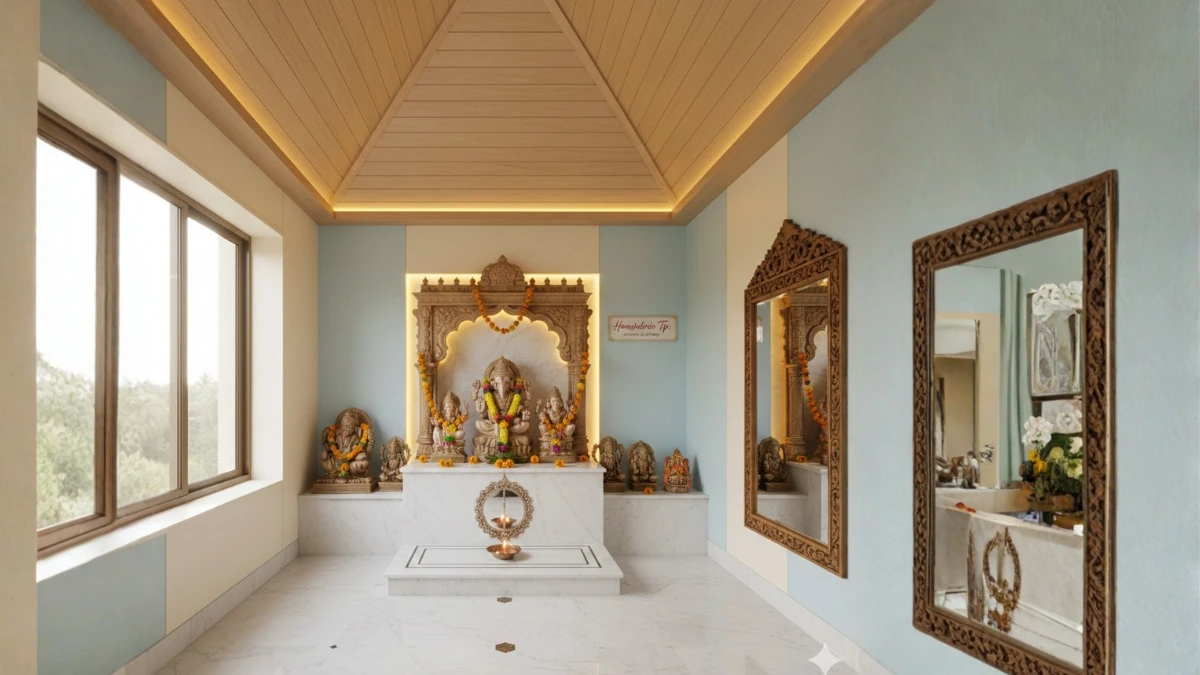
- Direction: The North-East corner (Ishan Kon) is considered the most auspicious direction for a pooja room. If that isn’t possible, the East or North directions are excellent alternatives.
- Idol Placement: The idols should be placed so that the worshipper faces East or North while praying. Ensure idols are not placed directly against a bathroom wall or under a staircase.
- Colors: Vastu recommends light, soothing colors. Whites, creams, light yellows, and light blues create a meditative atmosphere. Avoid dark colors like black or grey in the prayer area.
- Structure: A pyramid-shaped ceiling (gopuram structure) is believed to help in concentrating positive energy.
Homzinterio Tip: If you cannot structurally change your home to fit Vastu norms, use mirrors or specific lighting techniques to correct the “Dosh” (faults) and enhance the flow of light and energy.
3. Top 5 Trending Indian Style Pooja Room Design Styles
After researching more than 100 Indian Pooja room designs, finally we stop at top 5 distinct trends emerging that cater to different tastes. Here are the top five design themes currently ruling Indian homes.
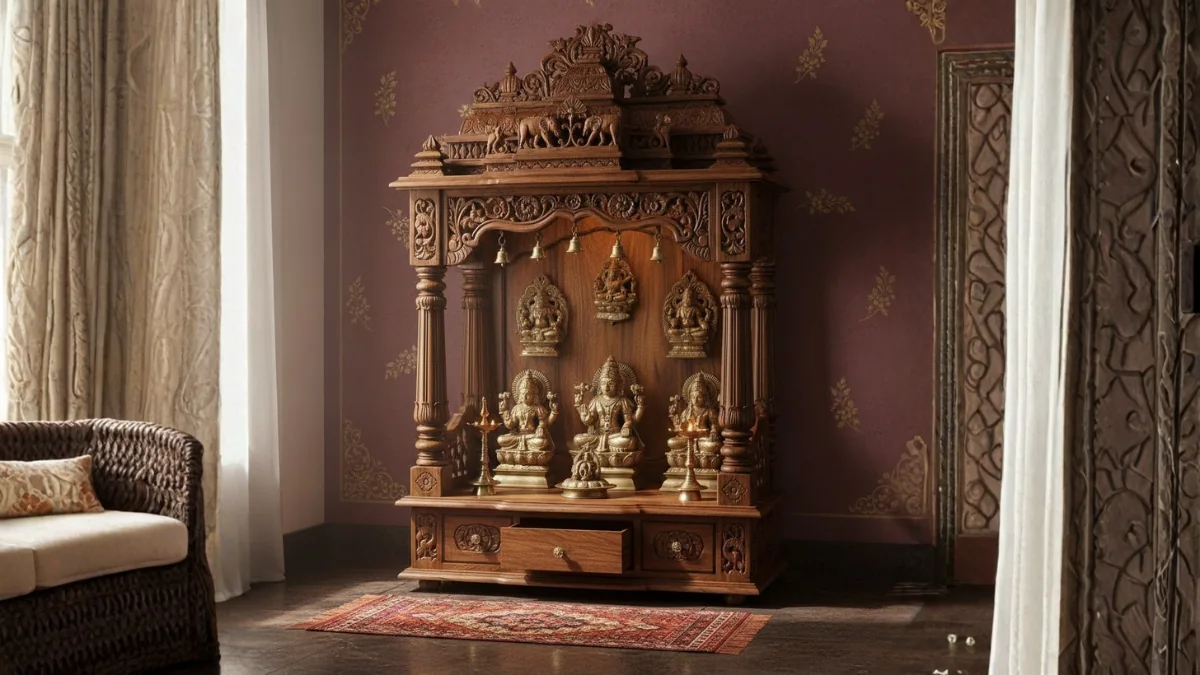
A. The Classic Wood & Carving Look
Nothing speaks “traditional” quite like wood. Solid teak or Sheesham wood units with intricate hand-carvings bring an earthy, warm, and majestic feel to the home. These designs often feature pillars, a gopuram-style top, and brass bells hanging from the ceiling.
- Best for: Homes with a traditional or heritage theme.
- Style Note: Pair dark wood with brass idols and lamps for a rich contrast.
B. The Modern Marble Sanctuary
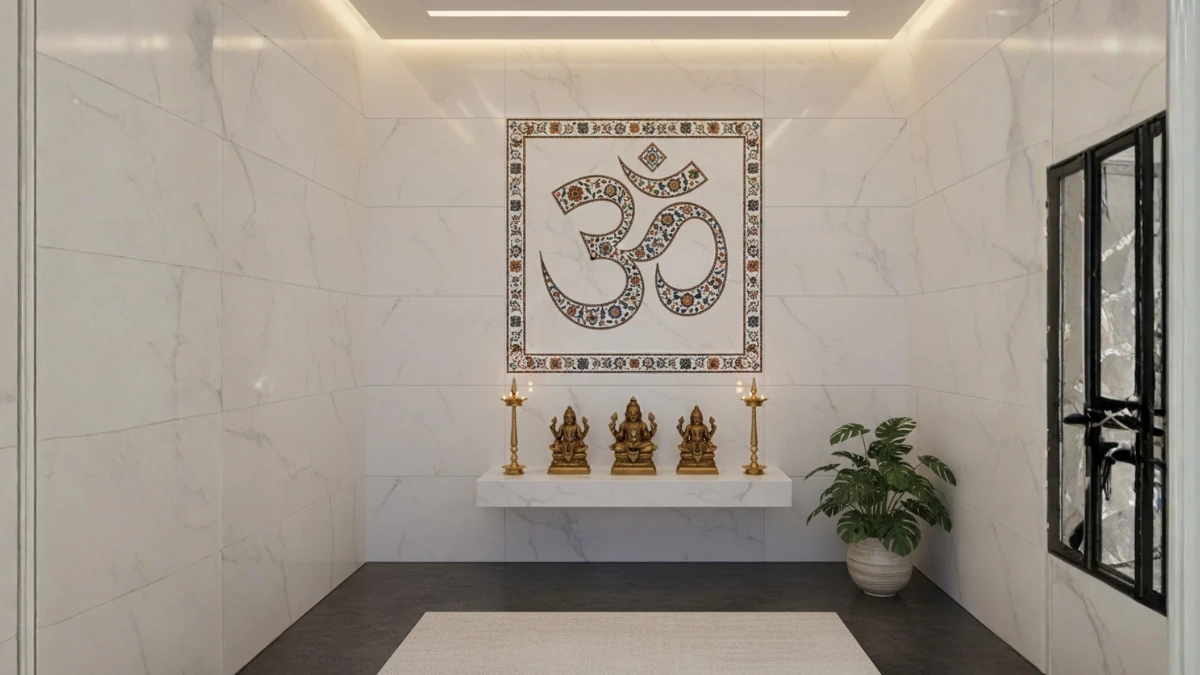
For those who love luxury and minimalism, marble is the material of choice. A white marble pooja room exudes calmness and purity. It is cool to the touch and looks stunning when lit up.
- Best for: Contemporary and luxury homes.
- Style Note: Use inlay work (Pietra Dura) with semi-precious stones or mother-of-pearl to add a touch of color to the white expanse.
What would be the color, Psychologically need to understand
C. The "Jali" Partition Concept
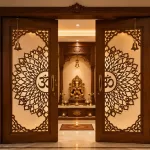
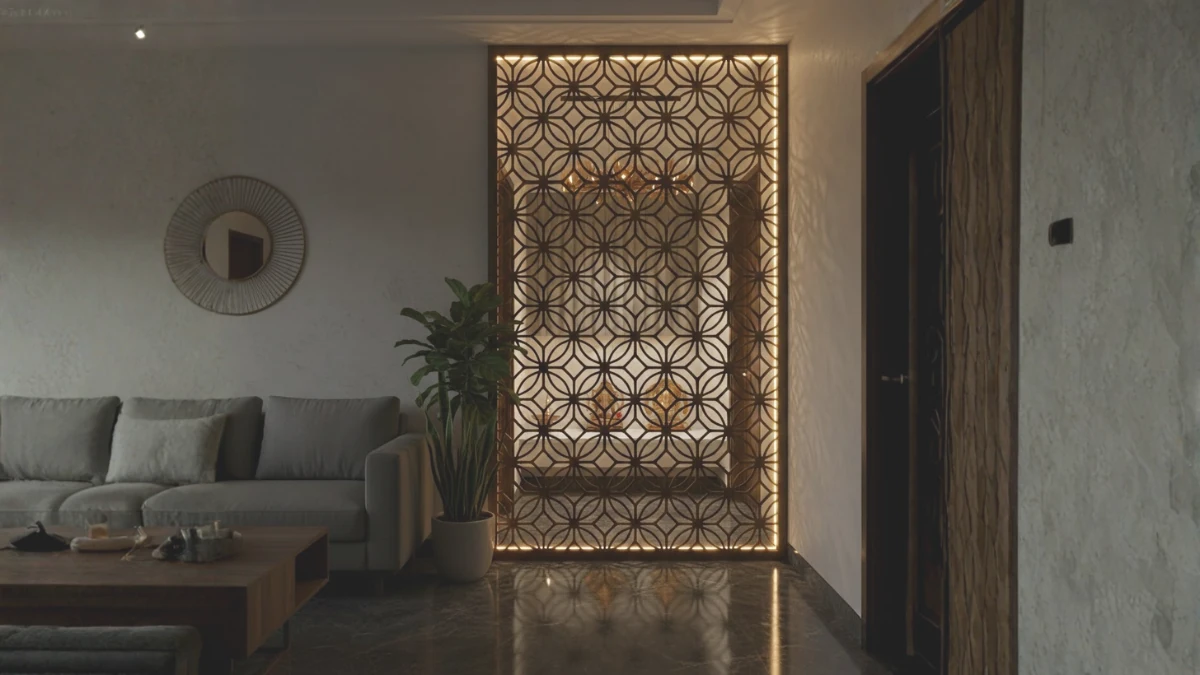
The ‘Jali’ (lattice screen) is perhaps the most versatile element in Indian interior design. Using a laser-cut wooden or MDF jali as a partition allows you to separate the pooja area from the living room without blocking light. It creates a sense of privacy while maintaining an open floor plan.
- Best for: Open-plan apartments where a separate room isn’t available.
- Style Note: Backlight the jali panel to create a dramatic, glowing effect at night.
Also Check Jali door design Idea for pooja room
D. Minimalist Wall-Mounted Units
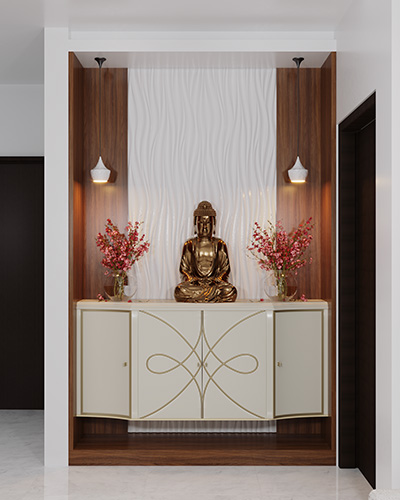
In studio apartments or compact 2BHKs, floor space is premium. Wall-mounted mandirs are sleek, functional, and space-saving. These units float off the floor, making cleaning easy.
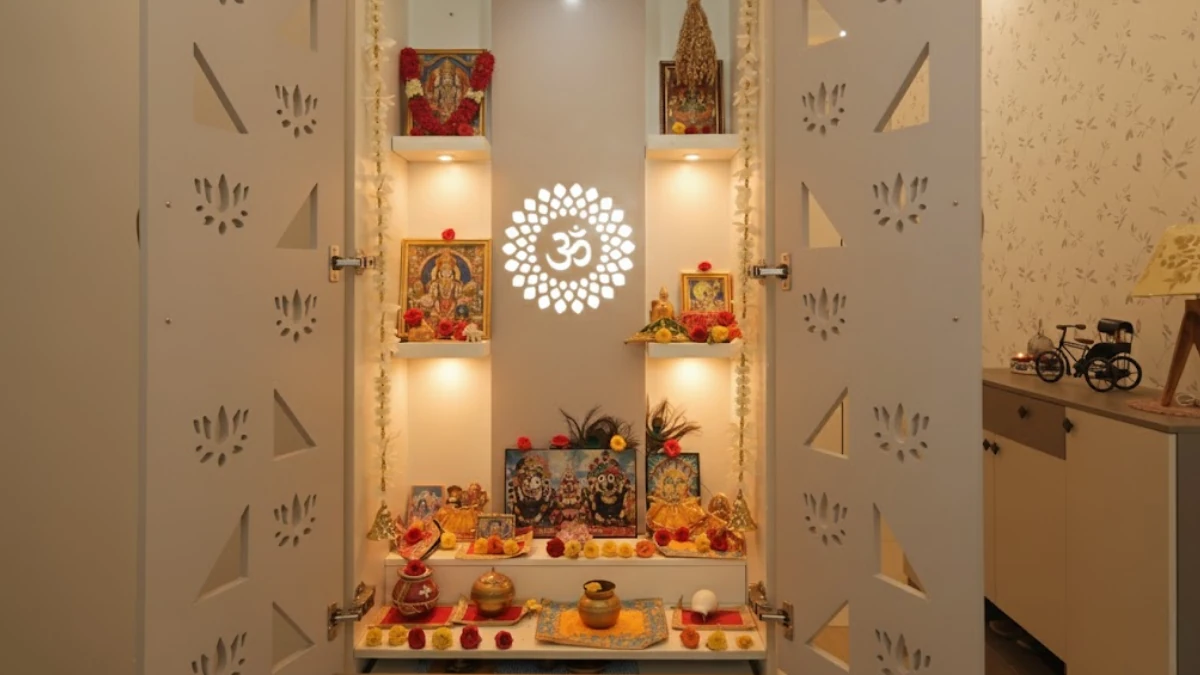
- Best for: Small apartments and minimalist enthusiasts.
- Style Note: Keep the design simple with clean lines and a high-gloss laminate finish.
E. Glass-Enclosed Divine Corners
Using glass cubicles to create a pooja room is a massive trend. It offers sound insulation (perfect for meditation) and visual transparency. You can use etched glass with mantras or floral patterns to add a spiritual touch.
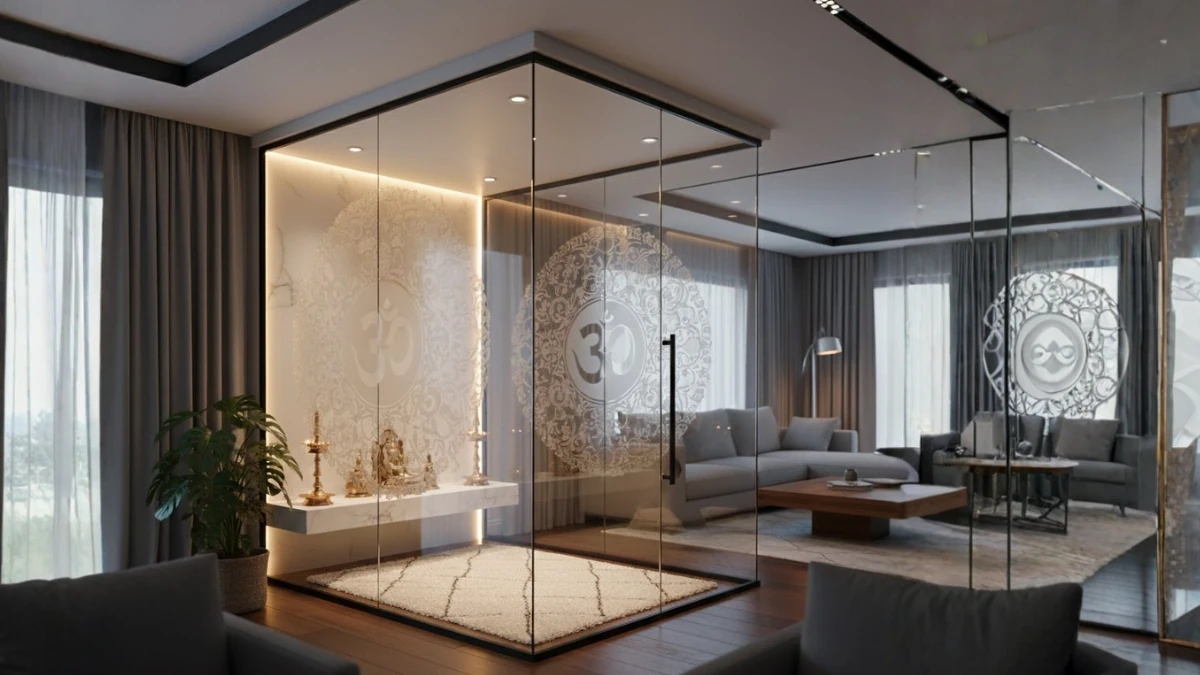
- Best for: Modern homes needing a designated quiet zone.
- Style Note: Use switchable privacy glass (smart glass) that turns opaque with the click of a button when you need privacy for prayer.
Here our Recent blog about 10 inspiring pooja room idea for home
4. Optimizing Space: Solutions for Compact Homes
Not every home has the luxury of a spare room. However, size should never limit devotion. Here is how Homzinterio optimizes small spaces:
- The Niche Mandir: Convert an unused alcove or wall niche into a mandir. Add shelves, a spotlight, and a small shutter door.
- The Cupboard Conversion: Dedicate a section of your wardrobe or a crockery unit to the temple. Use bi-fold doors that can be opened wide during prayer times.
- Corner Units: Corners are often dead space. A triangular, tiered corner stand can serve as a beautiful display for idols without intruding on the walkway.
- Shelf on a Ledge: A simple, sturdy wooden shelf installed at eye level with a decorative backdrop can serve as a fully functional pooja space.
5. The Elements of Divinity: Doors, Lighting, and Backdrops
The beauty of a pooja room lies in the details. These three elements define the atmosphere.
The Entrance (Doors)
The door distinguishes the sacred space from the mundane world.
- Bell Doors: Wooden doors with small cut-outs housing brass bells are a timeless favorite. The chime of the bells every time you open the door sets a spiritual tone.
- Etched Glass: For a lighter look, use glass doors etched with images of Ganesha, Om, or lotus flowers.
Lighting: Setting the Mood
Lighting in a pooja room should be soft, warm, and inviting—never harsh.
- Focus Lights: Use small spotlights to highlight the main idols.
- Backlighting: LED strips behind a stone or jali backdrop create a halo effect, making the wall appear to glow.
- Hanging Lamps: Traditional hanging diyas or brass lamps suspended from the ceiling add vertical interest.
The Backdrop
The wall behind the idols acts as the canvas for your divinity.
- Wallpaper: High-quality wallpapers with Indian motifs or Sanskrit shlokas.
- Tiles: 3D textured tiles or hand-painted tiles can create an accent wall that is easy to clean.
- Fabric: In budget makeovers, using a rich brocade or silk fabric framed behind glass makes for a royal backdrop.
6. Material Matters: Choosing the Right Finishes
When designing with Homzinterio, we help you select materials that balance durability, maintenance, and aesthetics.
| Material | Pros | Cons | Ideal For |
|---|---|---|---|
| Wood (Teak/Sheesham) | Warm, traditional, durable. | Can be expensive; requires polishing. | Traditional mandirs. |
| Marble / Granite | Luxurious, durable, easy to clean. | Porous (absorbs oil/stains if not sealed). | Flooring and countertops. |
| Corian (Acrylic) | Seamless, moldable into shapes, backlit capable. | Can scratch; sensitive to high heat. | Modern, white intricate designs. |
| Glass / Mirror | Makes space look bigger, modern. | Needs frequent cleaning. | Doors and shelves. |
| MDF / Plywood | Cost-effective, versatile finishes. | Not water-resistant (needs care with water/milk). | Structure and cabinetry. |
7. Storage Secrets for a Clutter-Free Mandir
A chaotic pooja room distracts from meditation. Indian rituals involve many items: oil, wicks (batti), incense (agarbatti), camphor, matchboxes, holy books, and prasad vessels.
- Drawer Dividers: Use shallow drawers with dividers to separate wicks, camphor, and kumkum.
- Pull-out Trays: Install a pull-out laminate tray just below the main platform. This serves as an extended surface to place the thali during aarti, saving the main platform from clutter.
- Hidden Storage: Utilize the space under the seating area or behind the backdrop panel to store items not used daily, like extra oil bottles or seasonal festival décor.
8. Maintenance Tips for Your Spiritual Space
To keep the vibrations high, the pooja room must be kept spotless.
- Smoke Management: Incense and oil lamps generate smoke which can blacken ceilings. Ensure the room is well-ventilated. If using a closed cabinet, consider installing a small, silent exhaust fan.
- Protecting Surfaces: If you have a marble or wooden counter, place a small glass sheet or a silicone mat under the diyas to catch oil spills and prevent staining.
- Brass Care: Traditional brass idols and lamps tarnish over time. Create a routine to polish them using natural cleaners like tamarind or specialized brass polish to keep them gleaming.
- Declutter Regularly: Do not let dried flowers accumulate. Remove burnt matchsticks and incense ash daily.
9. Conclusion: Bringing the Divine Home with Homzinterio
Your pooja room is more than just a design project; it is an act of devotion. Whether you envision a grand marble temple that anchors your home or a humble, floating wooden shelf that fits your lifestyle, the design should reflect your connection with the divine.
At Homzinterio, we specialize in blending Indian cultural nuances with modern interior trends. We don’t just build units; we craft experiences. From selecting the auspicious Vastu direction to the final installation of the last brass bell, we are with you every step of the way.
Are you ready to design the spiritual heart of your home?
Browse our portfolio for more inspiration or book a consultation with our design experts today. Let’s build a space where peace resides.
Frequently Asked Questions on Indian Pooja Room Designs
1. What is the best location for a pooja room according to Vastu?
The best location for a pooja room as per Vastu is the North-East (Ishan Kon) direction. If that isn’t possible, the East or North directions are also considered highly auspicious.
2. Which materials are ideal for designing an Indian-style pooja room?
Wood (like teak or Sheesham), marble, MDF, Corian, and glass are commonly used. Wood and marble are preferred for traditional looks, while Corian and glass suit modern designs.
3. How can I create a pooja space in a small apartment?
Use wall-mounted units, niche mandirs, corner stands, or convert a cupboard section into a temple. Floating shelves with a decorative backdrop are also perfect for compact homes.
4. What type of lighting works best in a pooja room?
Warm, soft lighting works best. Use a combination of spotlights for idols, LED backlighting for the backdrop, and hanging brass lamps for a traditional touch.
5. How do I keep my pooja room clutter-free?
Use drawer dividers, pull-out trays for aarti, and hidden storage under platforms or behind panels. Regularly clear incense ash, dried flowers, and unused items to maintain cleanliness.