Crockery unit Design Ideas for Stylish Dining & Living Spaces
A crockery unit should be more than a storage unit for plates and glassware. It should stay organized with everyday necessities, highlight your favorite collections, and seamlessly fit the rest of the design of your home. If you are looking for a small unit to fit in an apartment, or a large unit to fit in a crockery cabinet, the design you choose should match your family’s lifestyle.
We’ve seen and worked with more than 5,091 home interiors, and with 10+ years of experience, we know that each family uses their crockery in their own unique way. Some require easy access to their daily dinnerware; others would like to reserve a place for special holiday serveware, glassware, and collectibles. Our designers don’t use a standard format; they design units of crockery specifically to the storage needs, space, and interior design of individual homes.
We’ve noticed that homeowners rarely have the same storage requirements. Some prioritise displaying premium dinnerware, while others need quick access to everyday crockery.
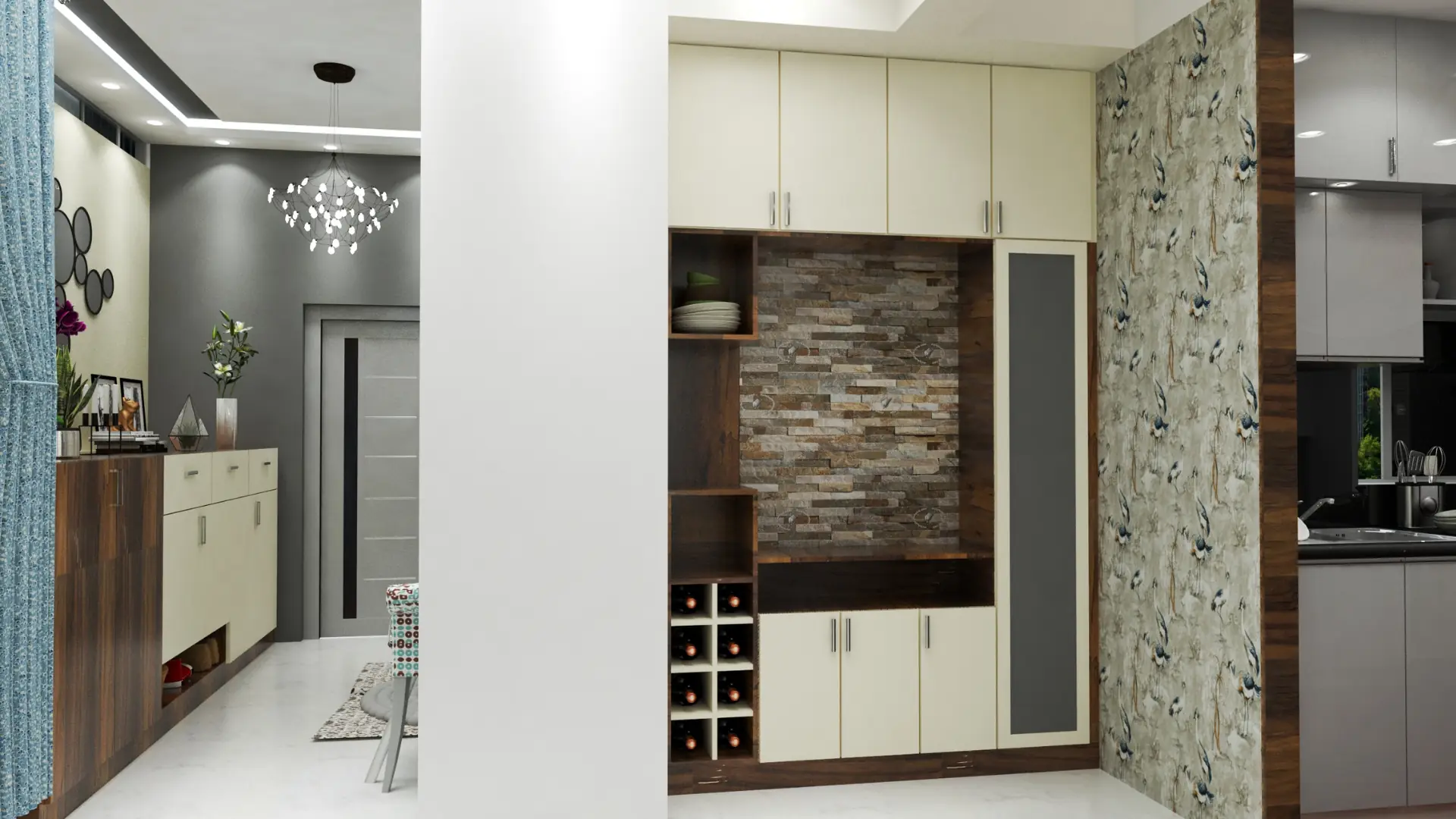
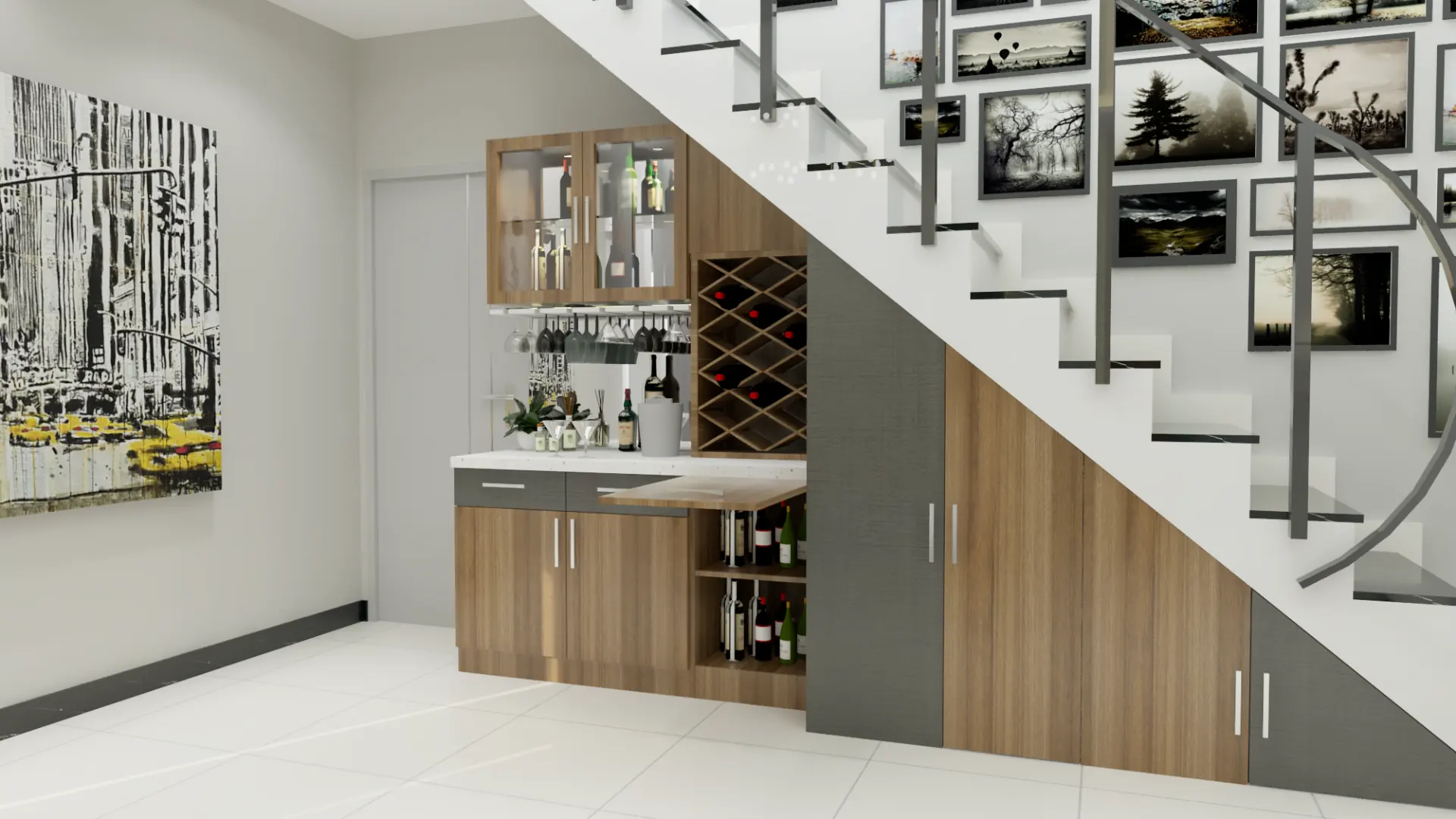
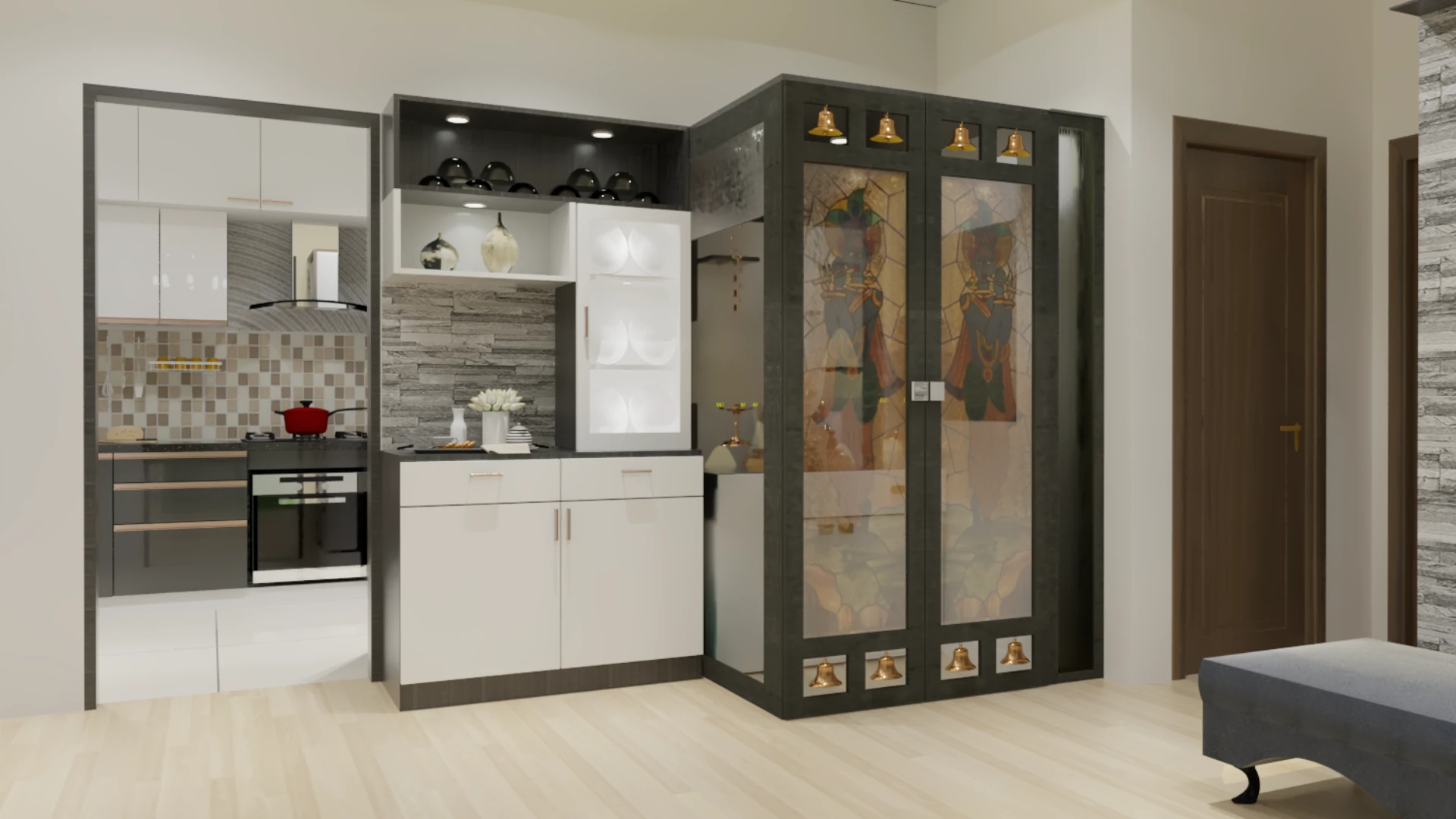
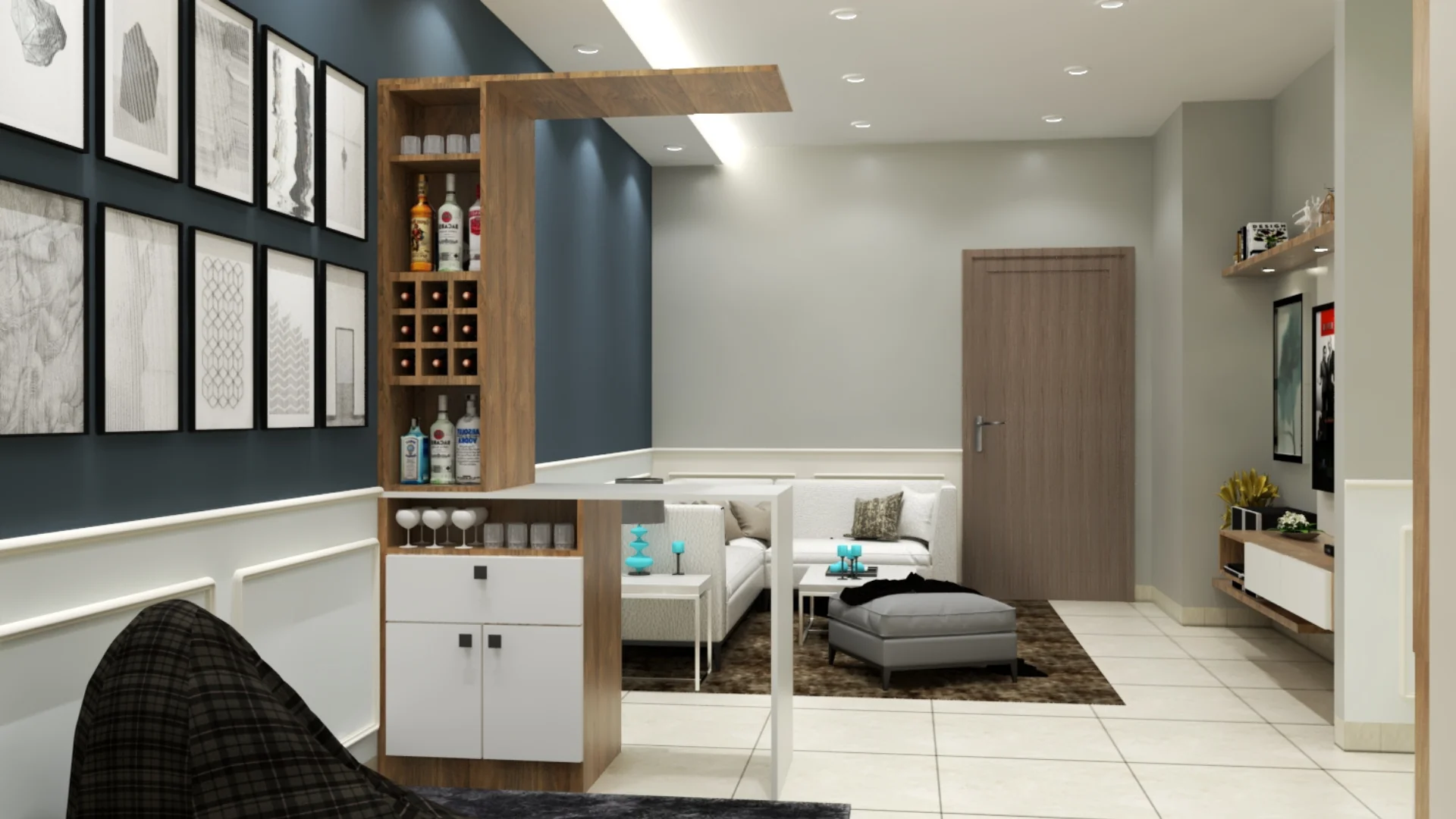
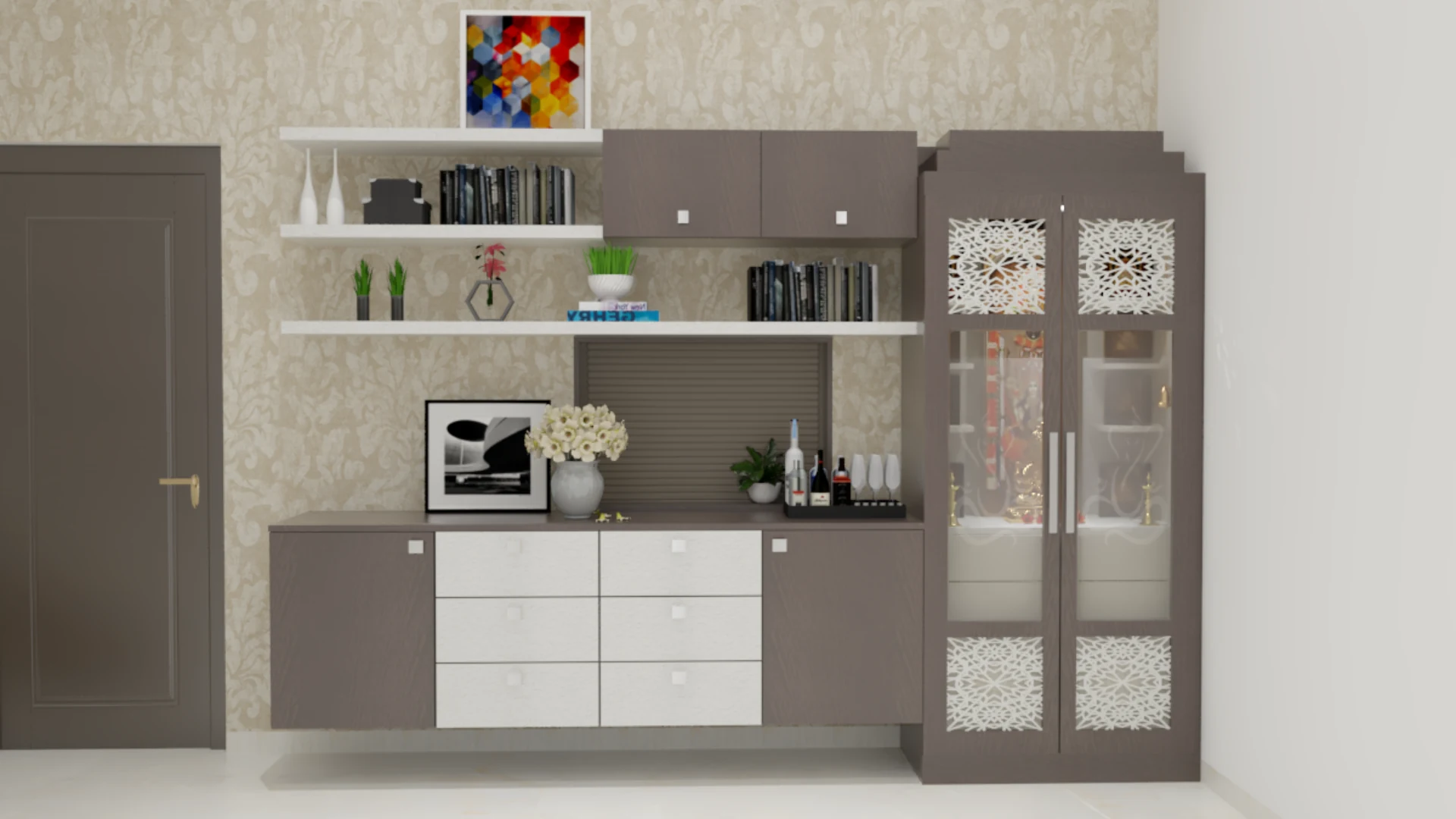
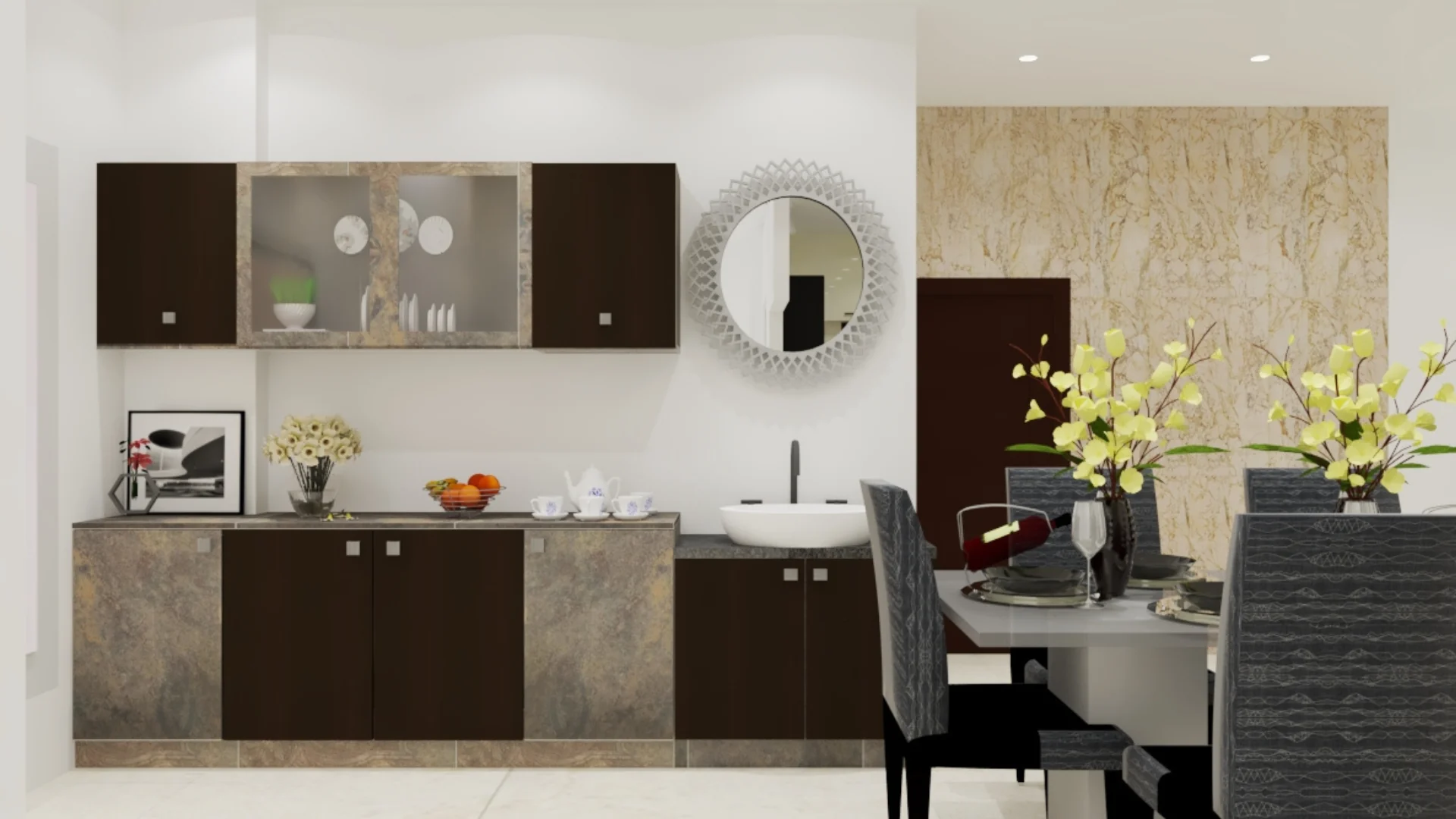
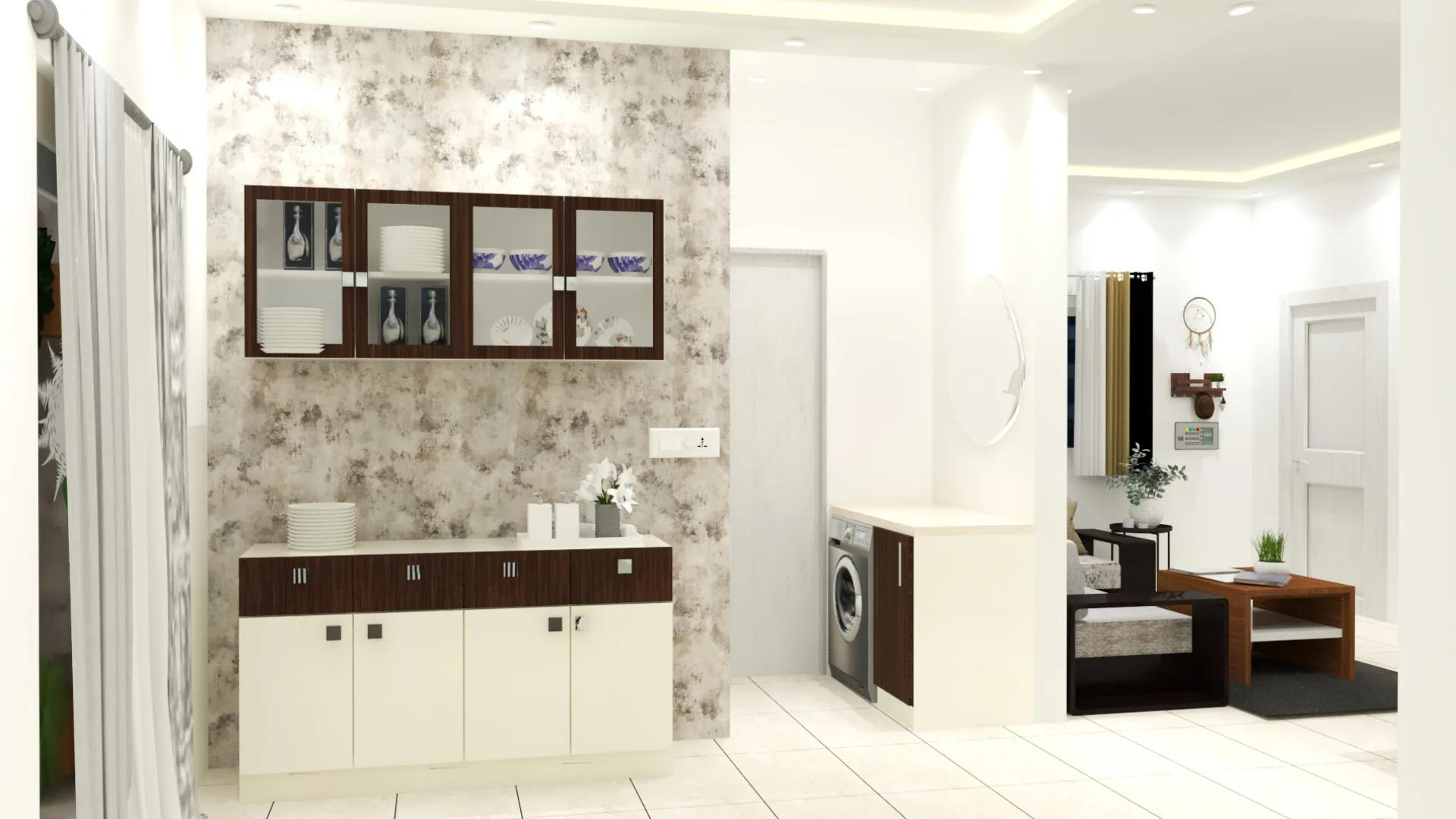
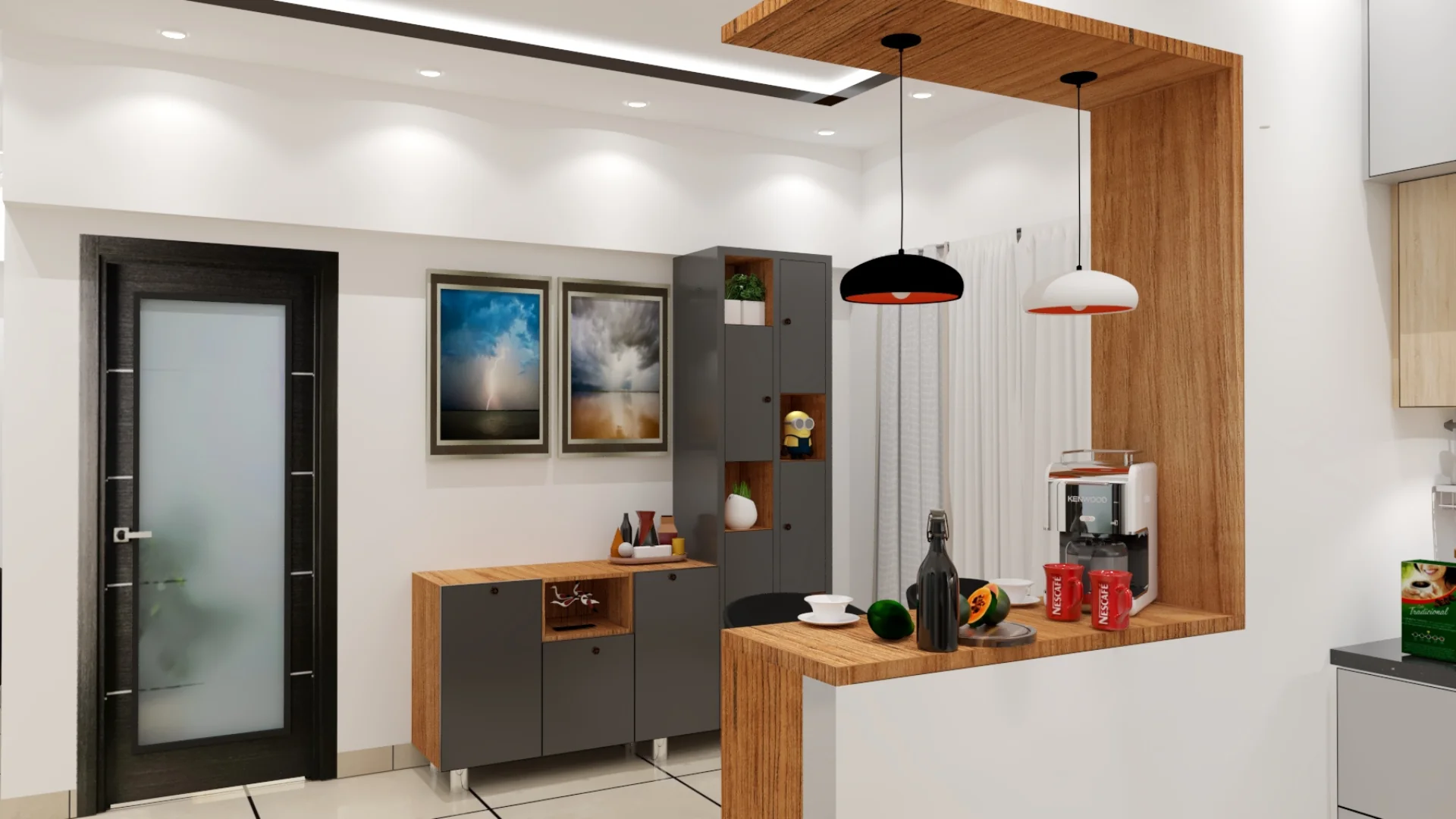
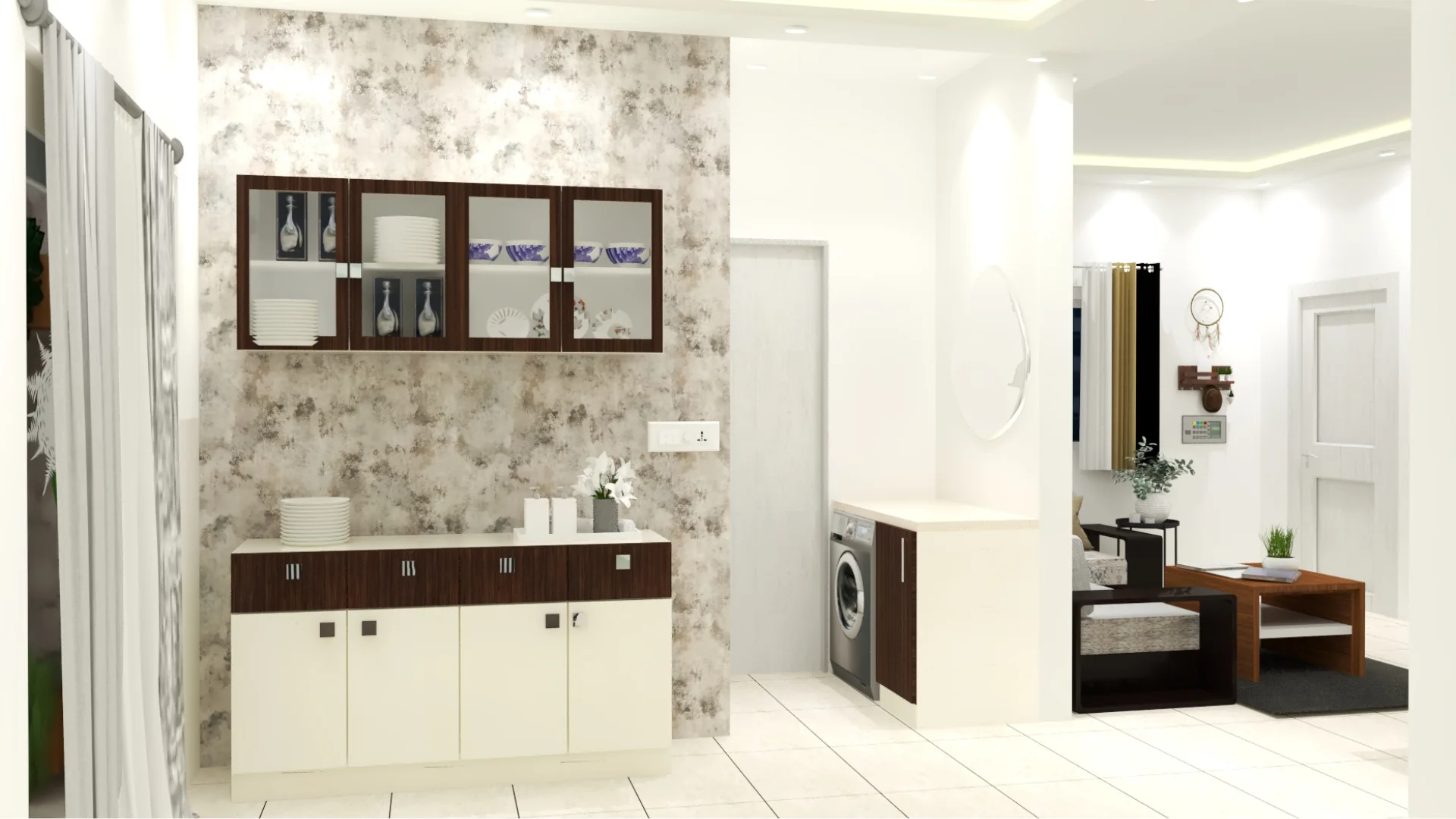
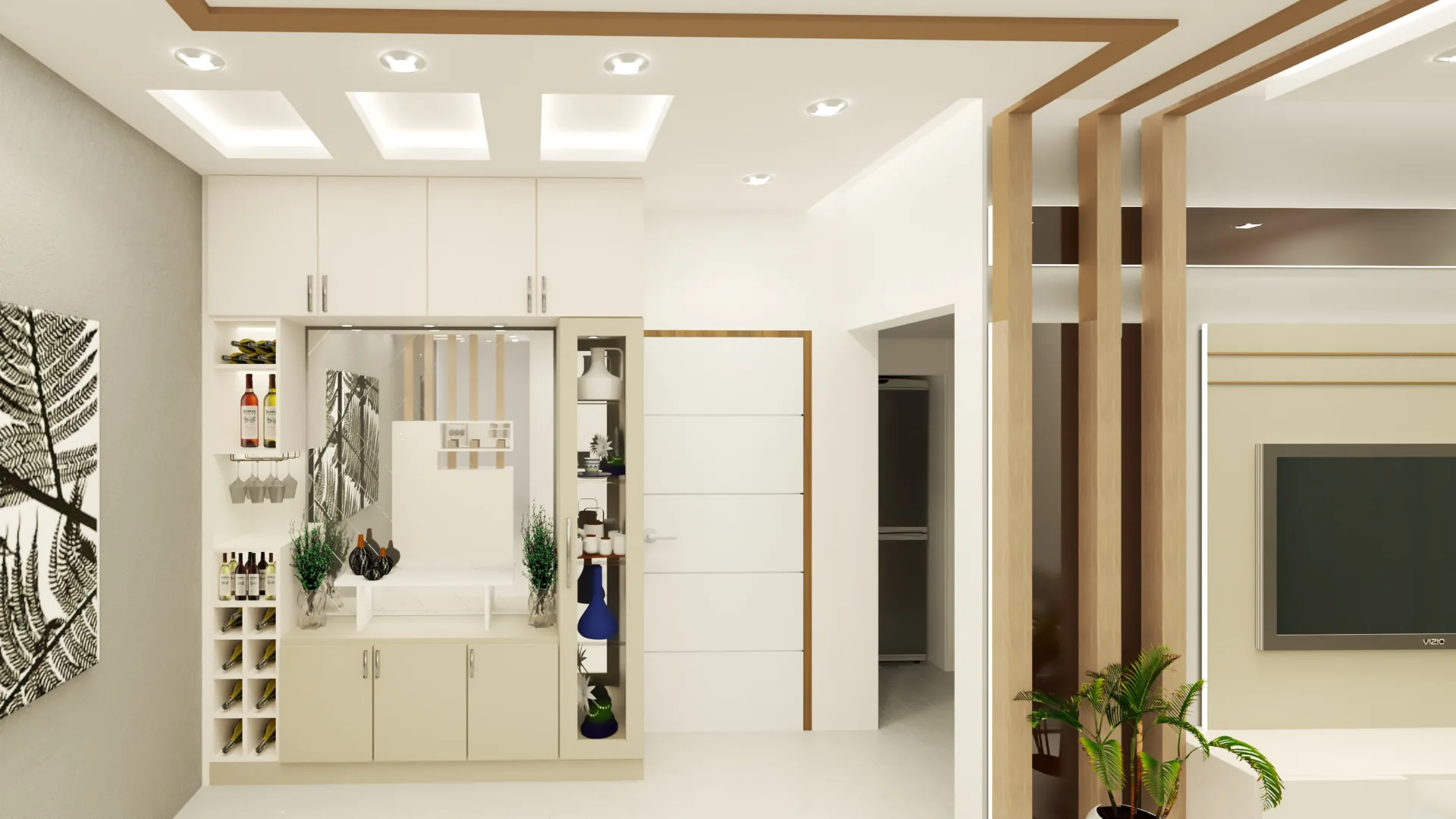
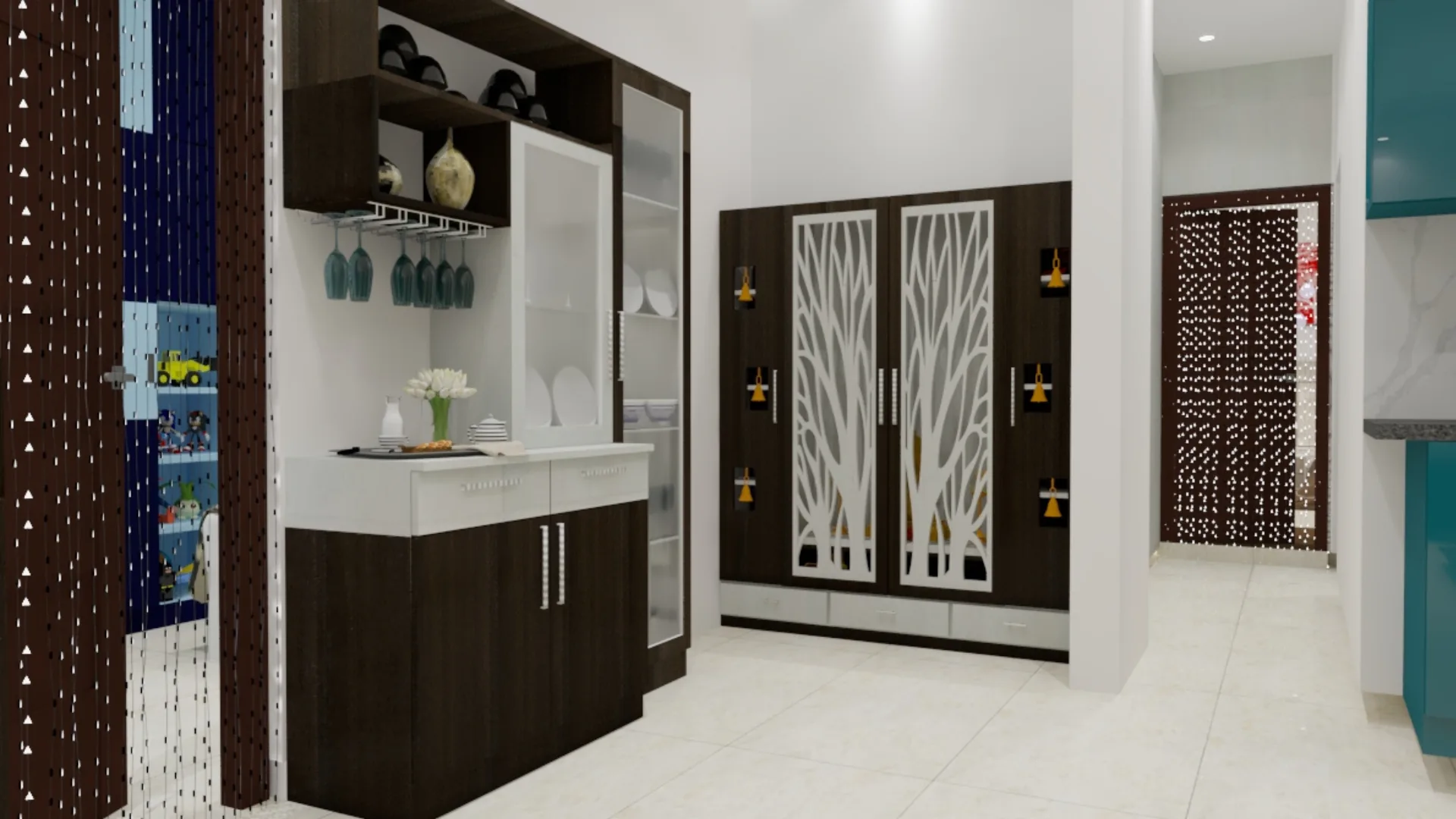
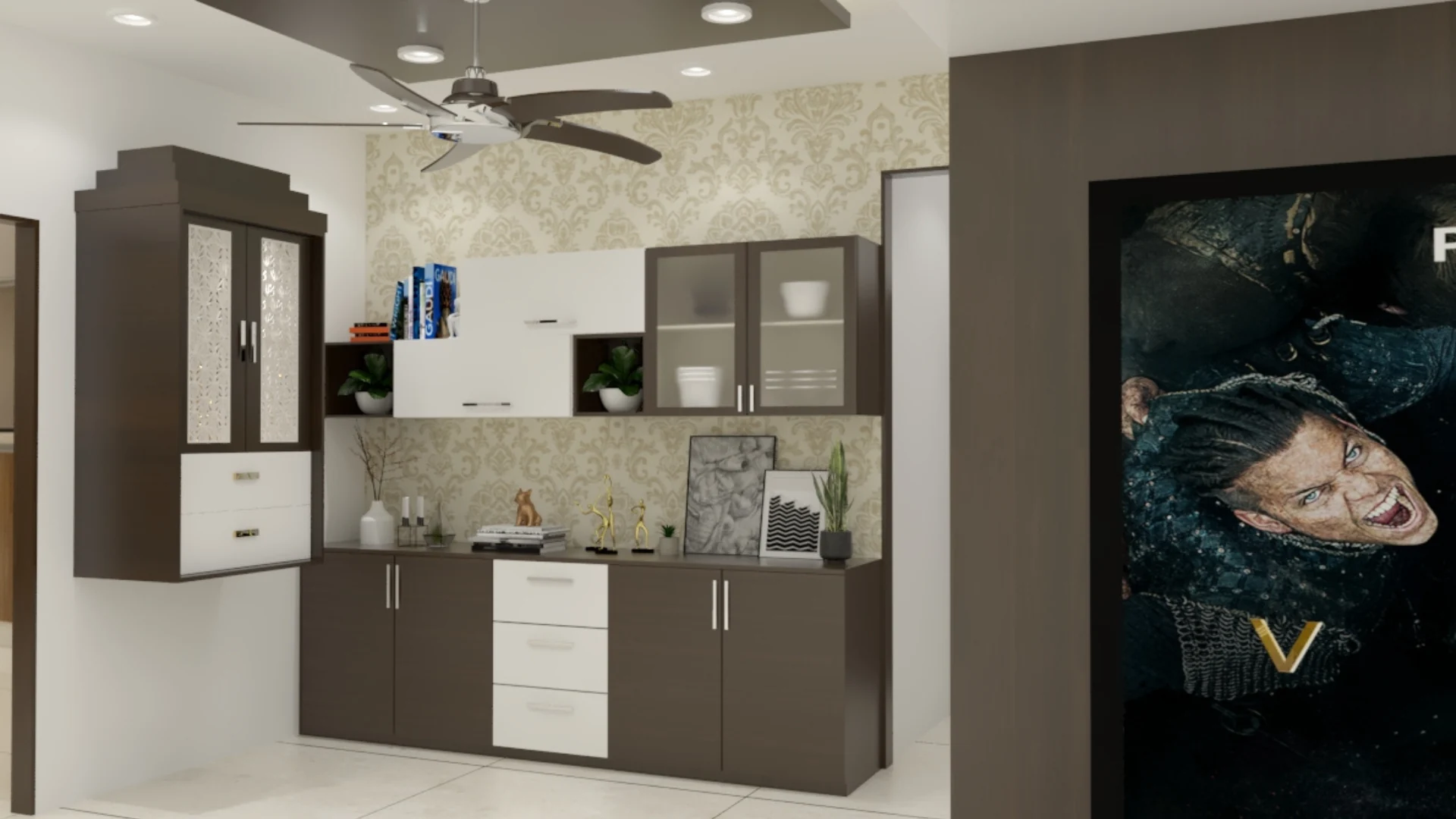
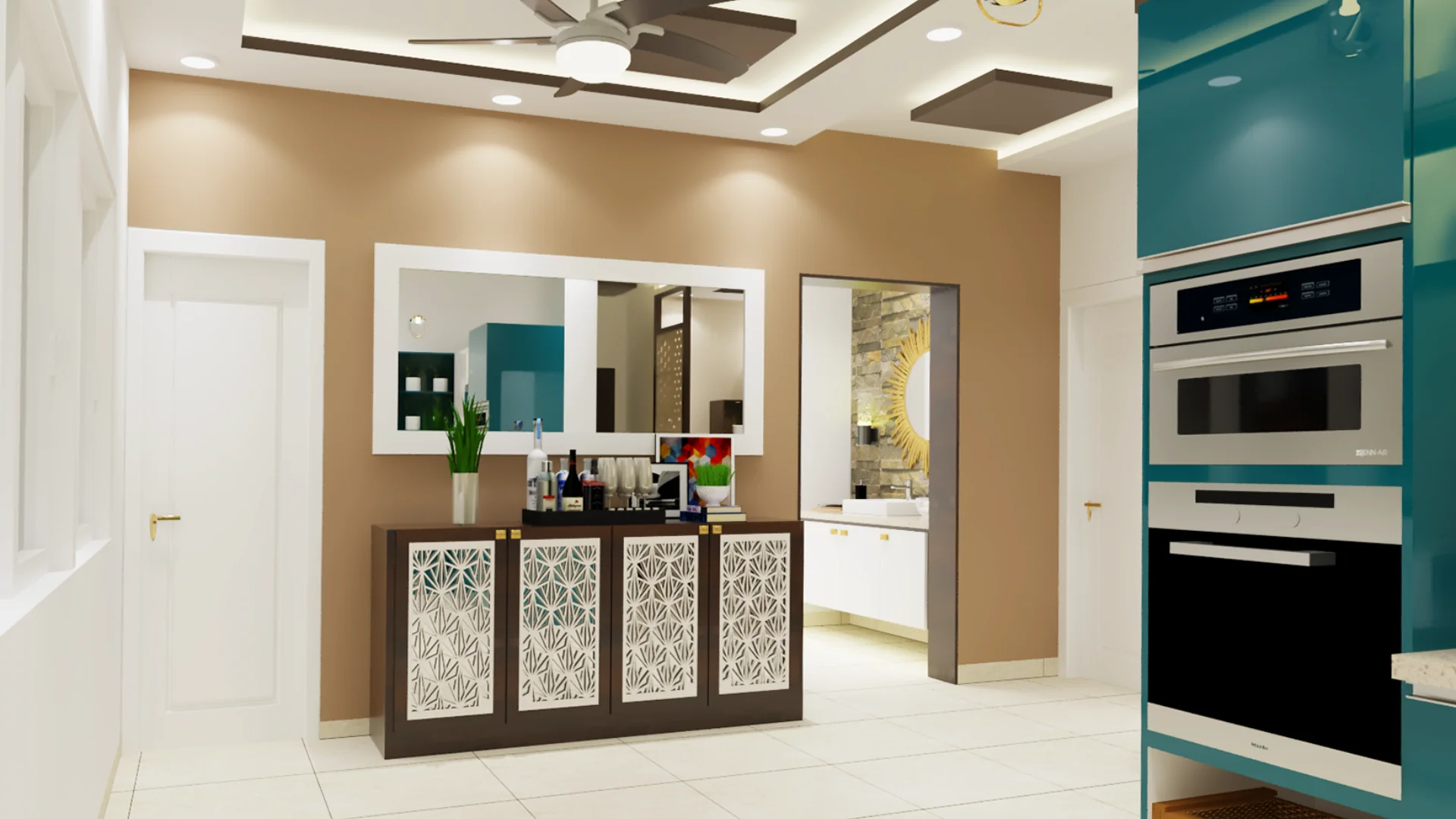
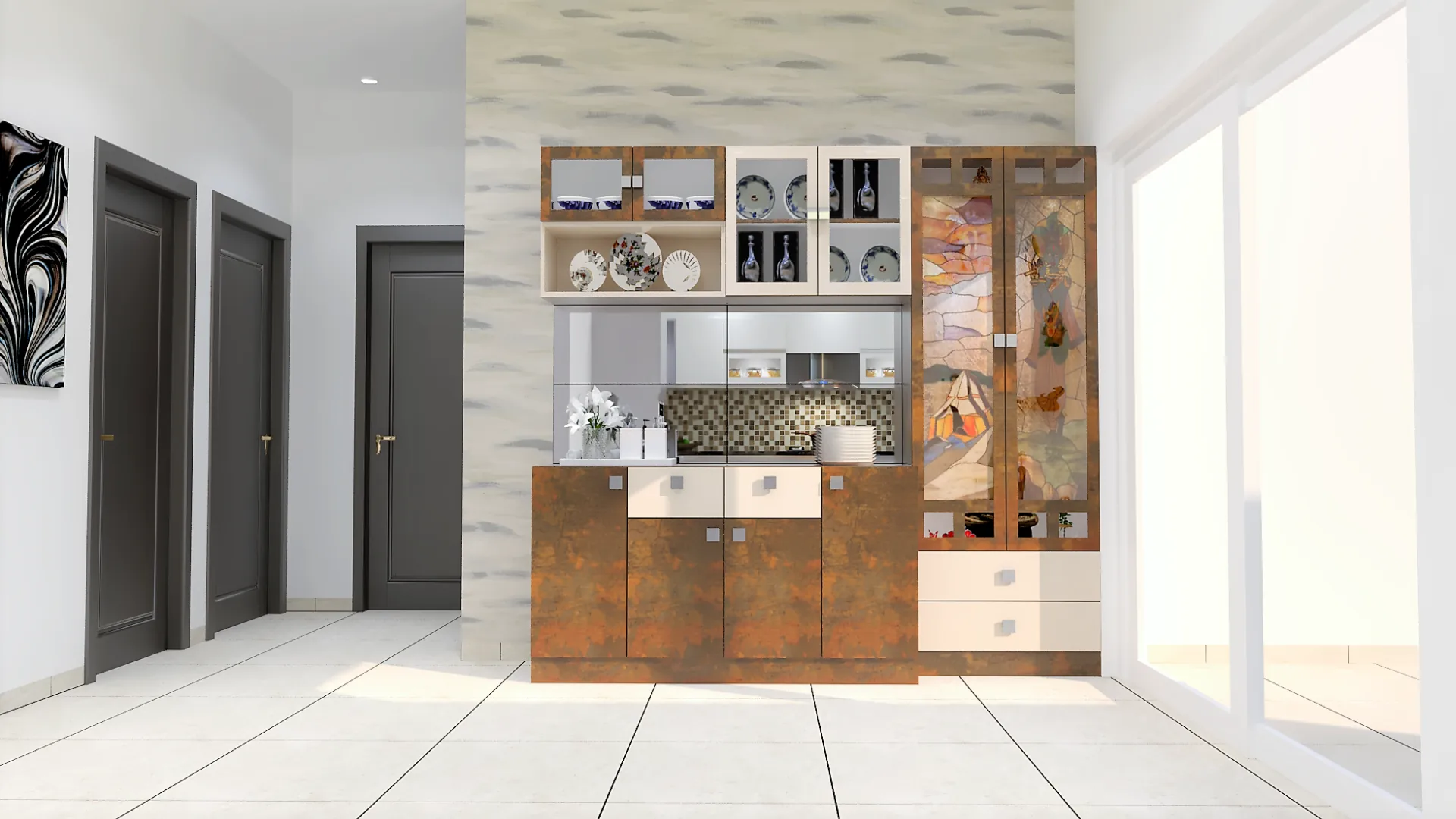
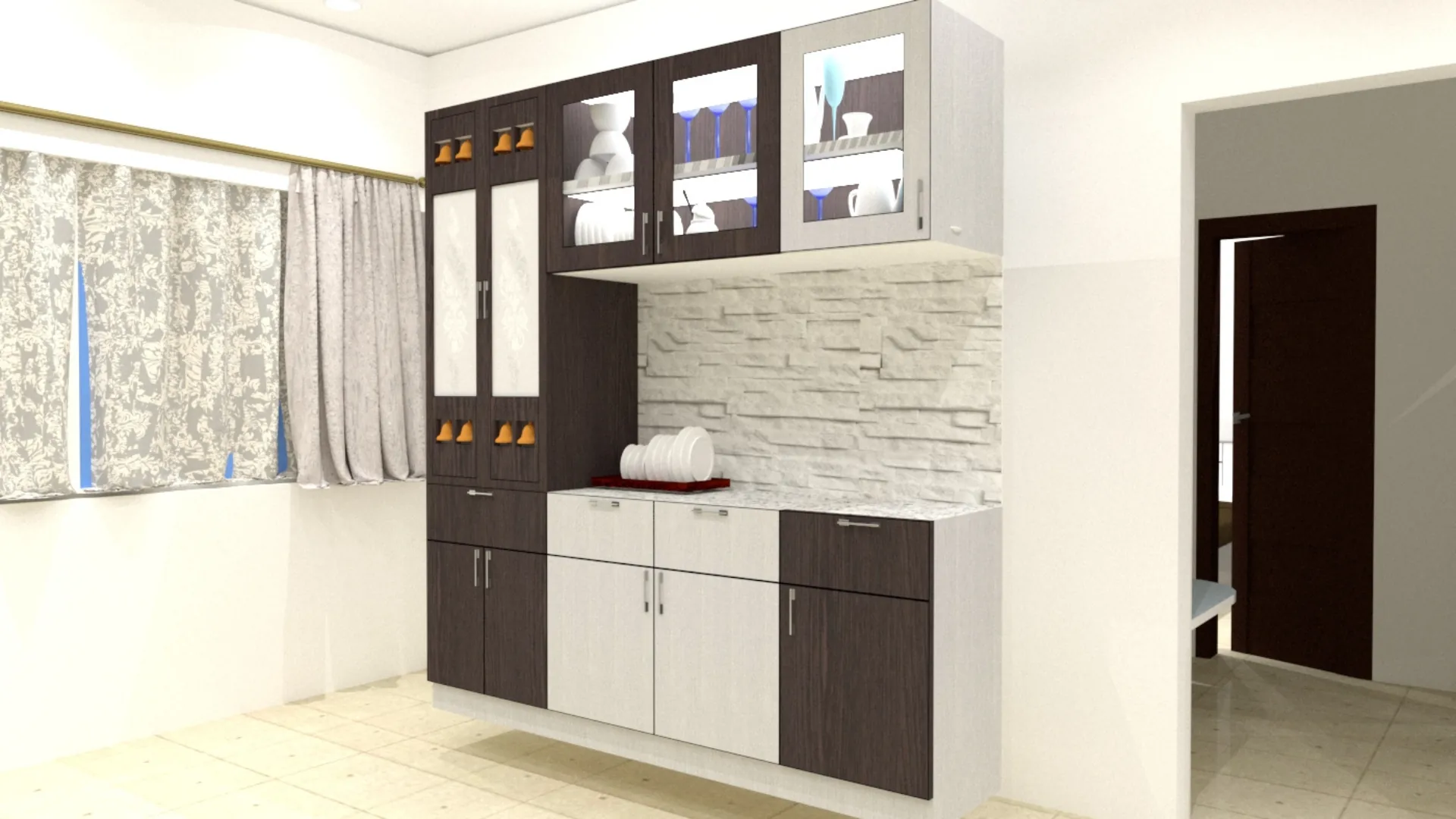
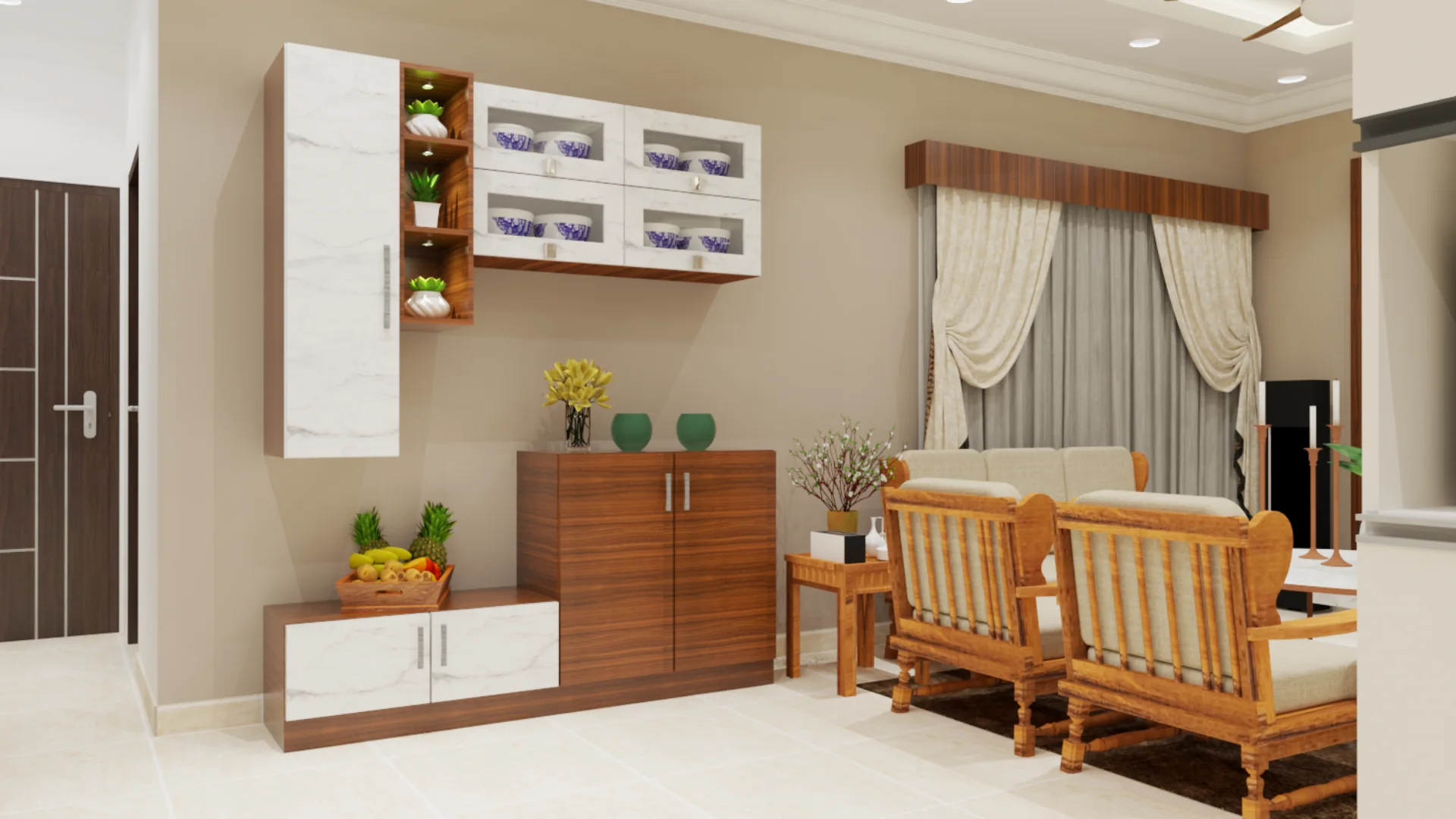
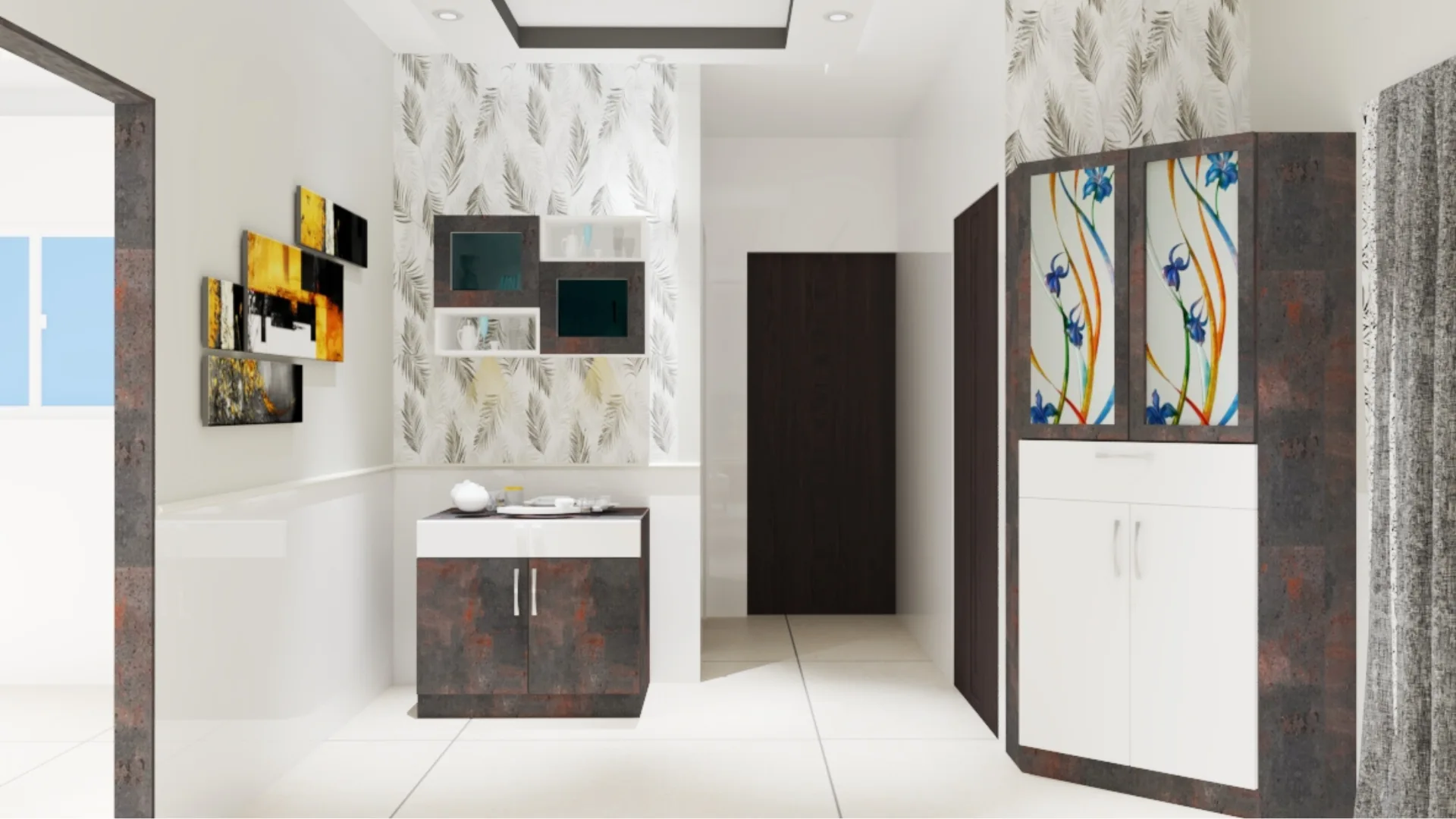
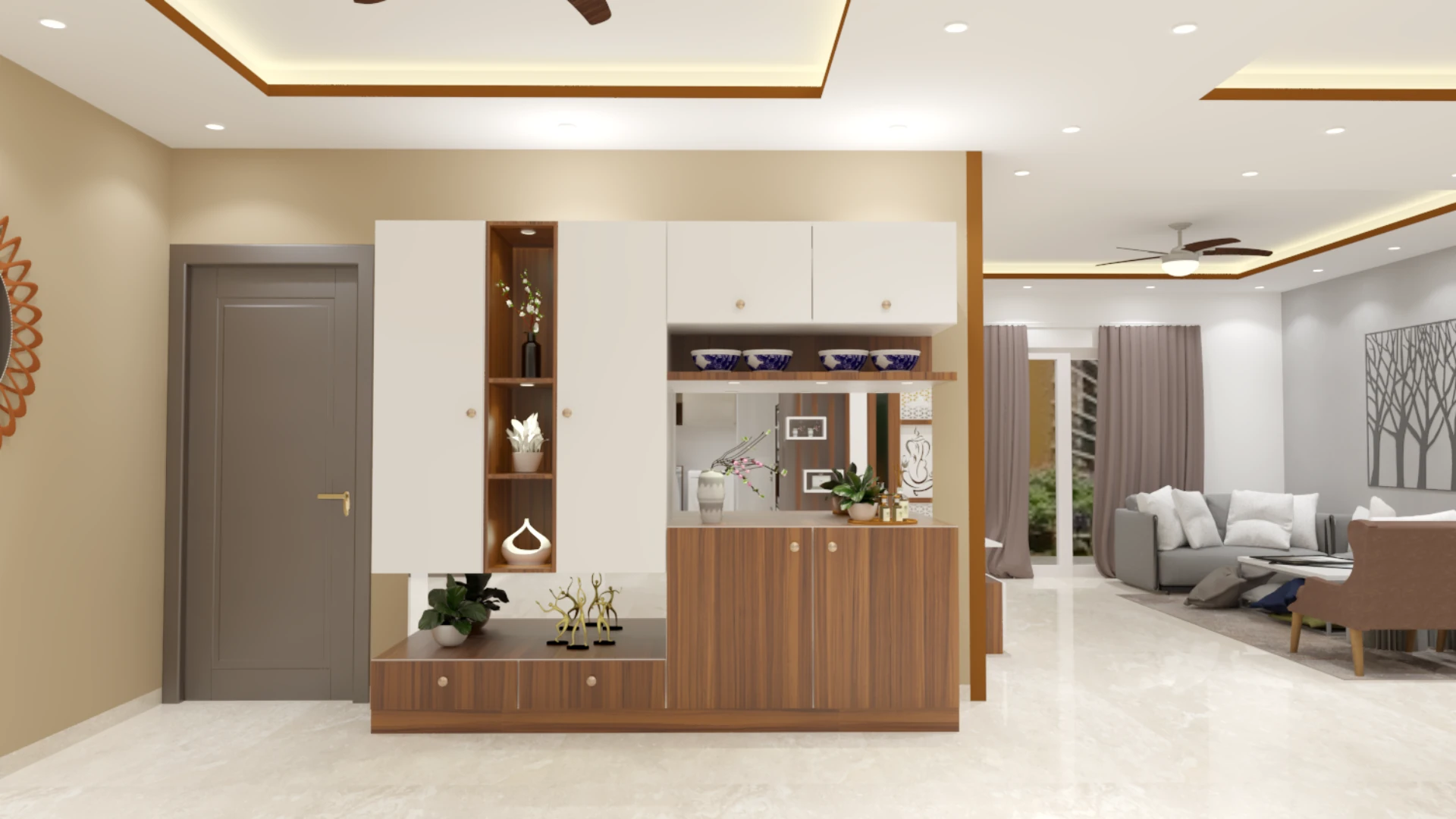
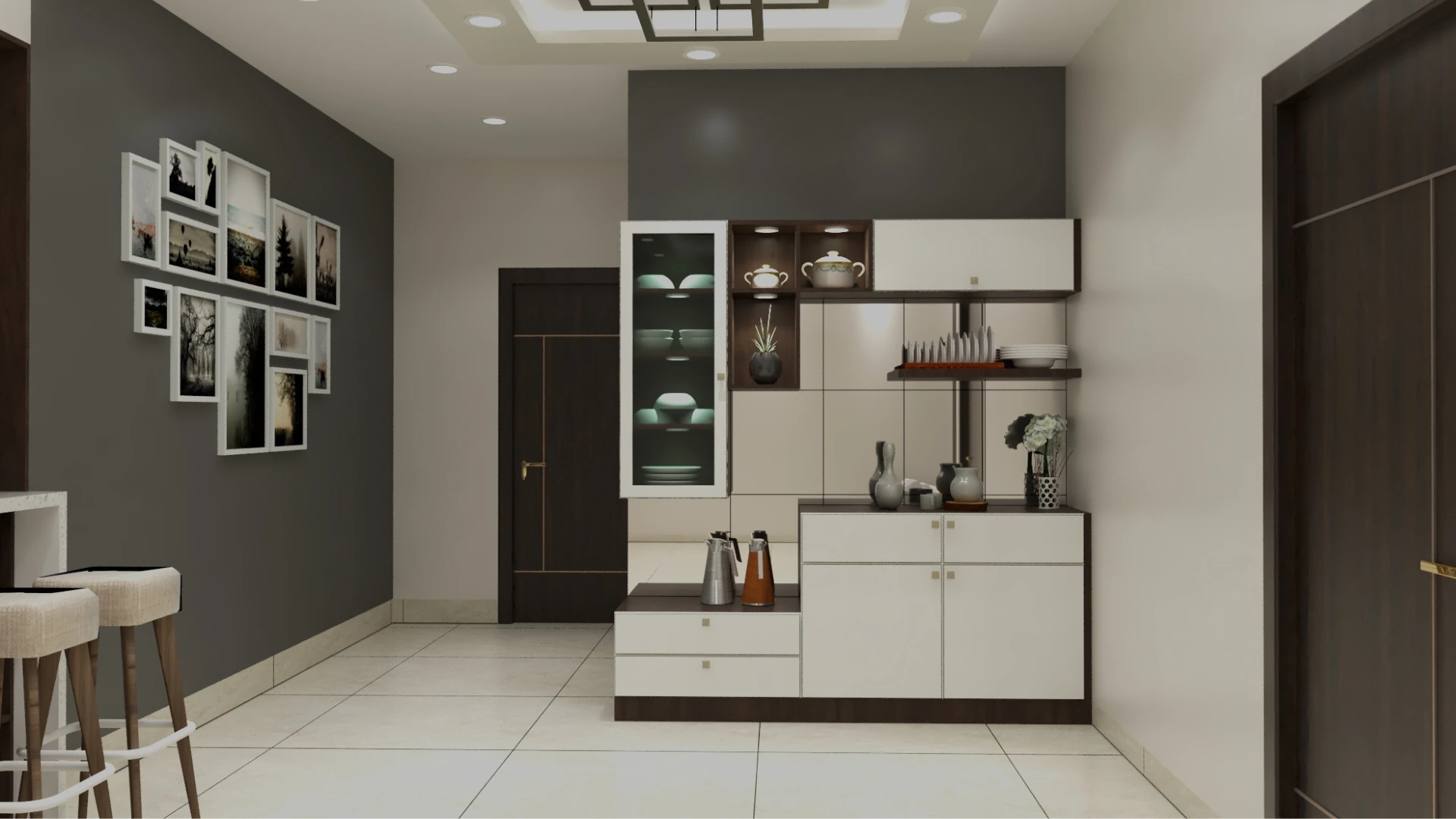
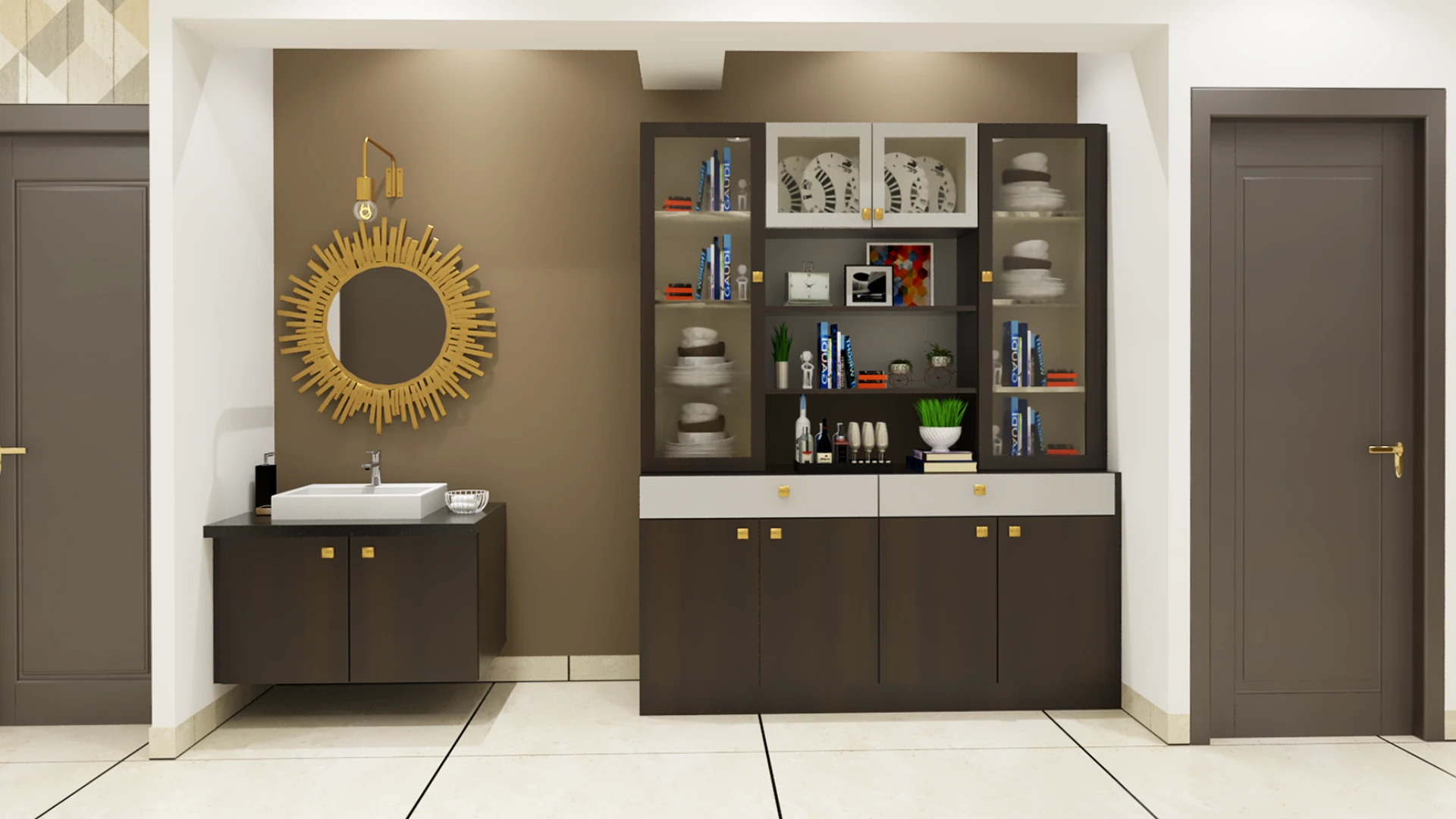
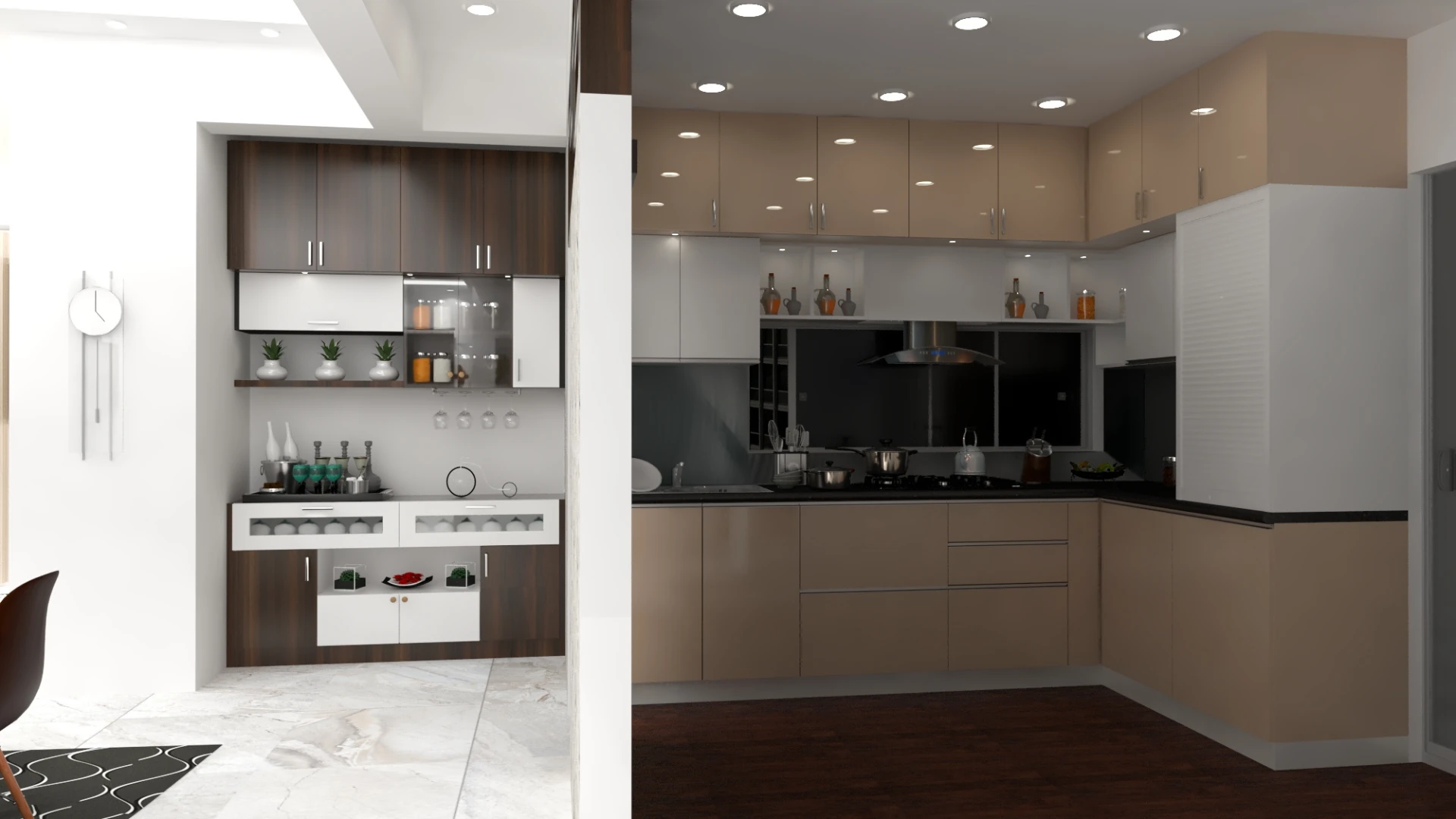
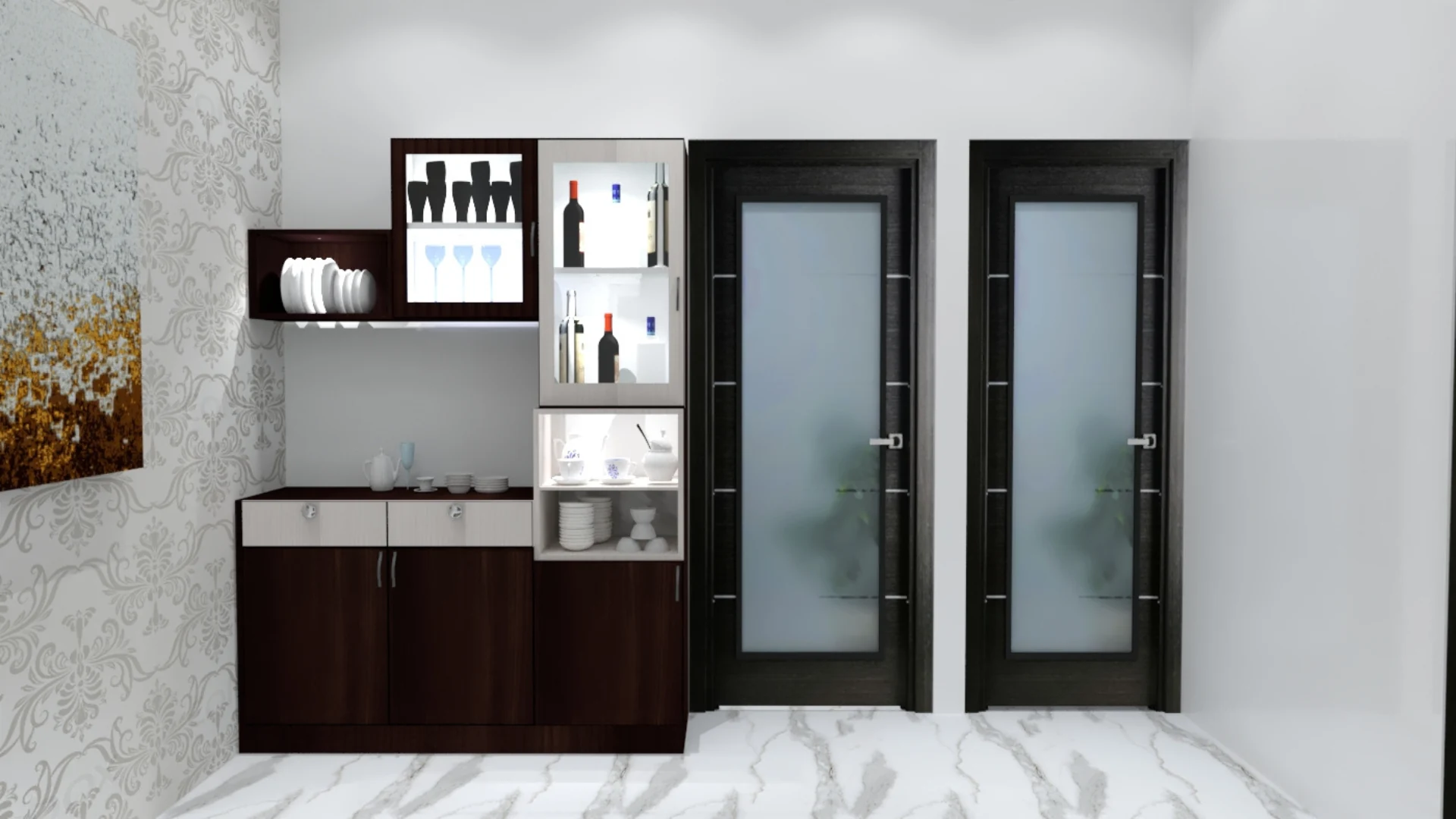
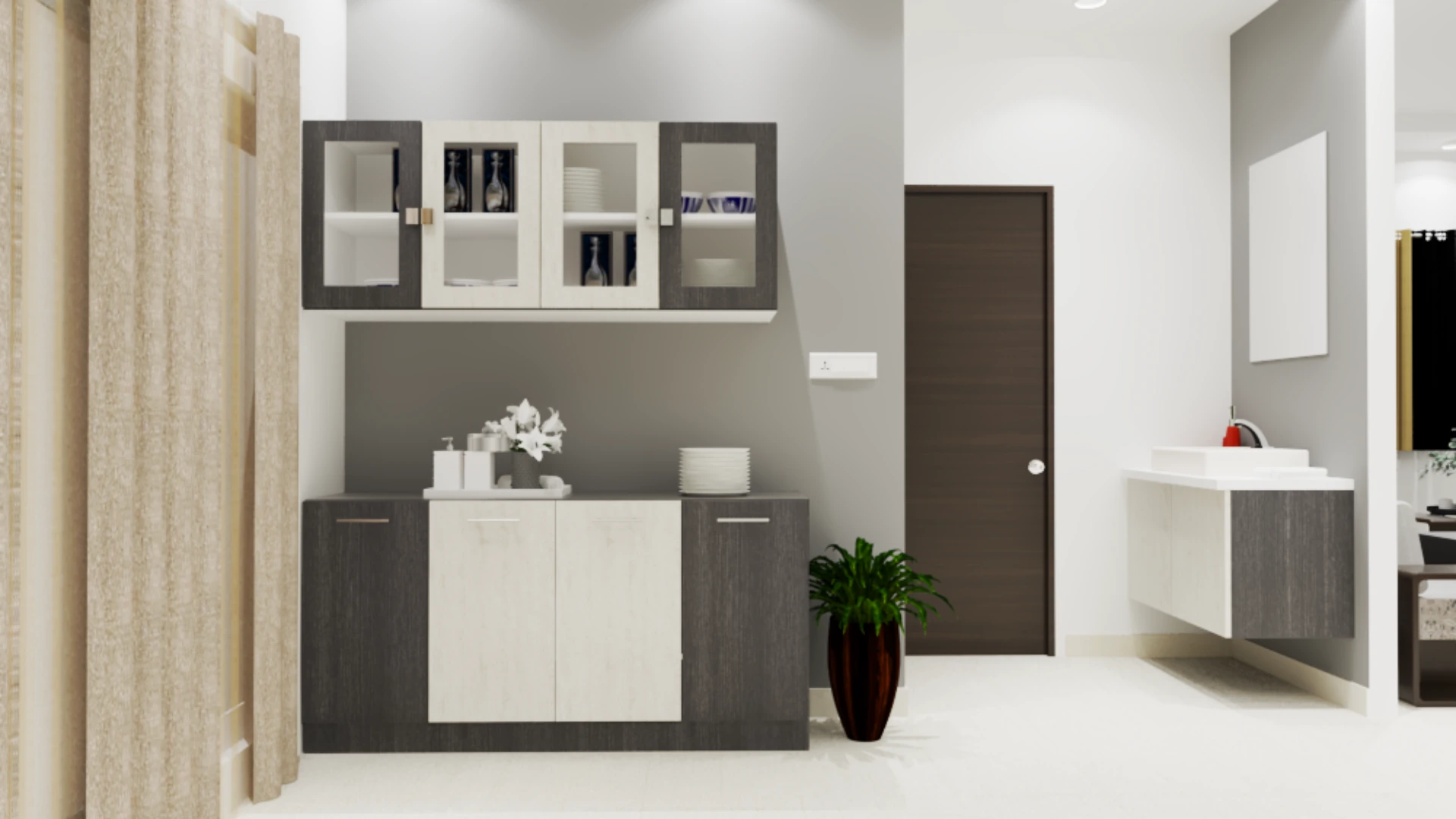
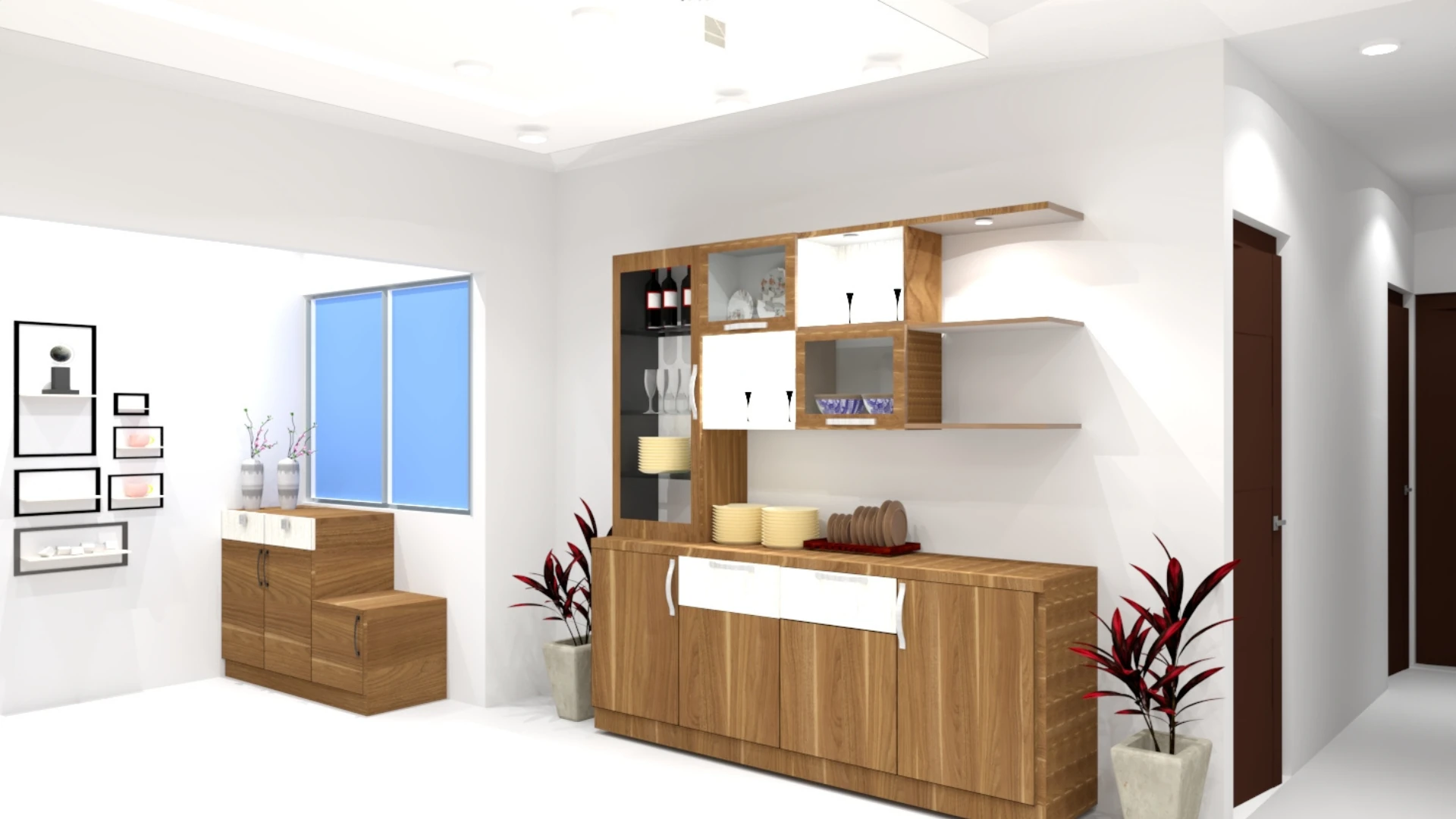
Design is based on the principles of everyday living.
Our designers find out what the space will be used for daily before recommending a crockery unit design. Before we decide on the design, we consider the layout, food consumption patterns, the position of the furniture, space around the wall, and storage space.
Before finalising the layout, our designers also evaluate the distance between the dining table, kitchen, and crockery unit. A well-planned position improves accessibility and keeps everyday movement comfortable.
One of the most frequently requested items we get is large glass display cabinets. They are great for using to display decorative crockery, but they are not the most practical choice. Glass display sections and closed cabinets are generally the best option for families who use their crockery daily. This will help to keep the more frequently used items safe from dust but at the same time have the decorative items visible.
Rather than maximising display space, we recommend balancing display and storage based on how frequently the crockery is used. This approach keeps the unit organised while reducing cleaning and maintenance over time.
Choosing the Right Crockery Unit Design
Each crockery unit is used for a purpose, and the most suitable one is that which fits into your lifestyle.
- Glass-front crockery units work well for showcasing high-quality dinnerware, while brightening up and opening the dining area. However, for homes where young children live, it is often recommended that half of the glass display sections be balanced with closed storage for added convenience.
- In smaller apartments, opt for wall-mounted crockery units that will make your living area more spacious and airy.
- Closed cabinets with drawers are perfect for family use for crockery, and help to make sure that key items are well organized and within reach.
- The modular crockery units can be used in apartments and owner’s houses, as they have a concealed storage system and will be used for display.
We usually recommend wall-mounted units for compact apartments, while larger homes often benefit from floor-to-ceiling crockery units that provide additional storage. The right choice always depends on the available space and the family’s daily routine.
Texture of the Material is Important.
One of our recent 2BHK apartment projects involved the homeowners wanting a complete open glass crockery unit to showcase all their crockery pieces. Once we were aware of our daily routine, our designers suggested the use of both open and closed storage below the glass display cabinets. This basic modification has helped to cut dust on the crockery that is most often used, improve organisation, and achieve a more balanced and clean appearance without interfering with the display.
Experiences like these remind us that small design decisions often make the biggest difference. A balanced combination of display and storage usually delivers better long-term functionality than choosing one over the other.
From Our Project Experience
The correct material can affect the look and durability. Wooden finishes are used to create warm finishes and work well with classic and modern interior styles. Glass shutters add light and accentuate decorative collections, and laminate finishes are easy to clean, resist daily use and have a long life. The metal accents complement modern interiors beautifully and can be used in combination with glass to create a contemporary look.
To ensure that you have the most appropriate finishes for your project, we don’t use the same materials for all of our crockery units, but rather choose them according to the layout of your home, the maintenance you require, and the use you make of the crockery unit.
Practical Tip: Glass-front cabinets need to be cleaned regularly to keep them clear and laminate finishes are easier to maintain in a busy home. Units that are easier to maintain in the long run are easier to own over the long haul.Choosing materials that match your lifestyle helps reduce maintenance over time. A beautiful design should also remain easy to clean and practical for everyday living.
Details That Make a Difference
A well planned crockery unit design should be designed for function, not looks. Our designers also take shelf heights of dinner plates, serving bowls, glasses, and tall bottles into account so that all items are easily accommodated. Often, adjustable shelves are suggested to accommodate the ever-changing demands of storage that may occur over the years.
A common mistake is buying a crockery unit just because it looks good, which can mean that you won’t get enough space, maintenance-free storage, or even space that’s useless. The best designs will meet the family’s needs for display, storage, accessibility, and maintenance.
After designing Indian homes for more than a decade, we’ve learned that the most successful crockery units aren’t necessarily the largest or most decorative. They’re the ones that continue to support everyday living while blending naturally with the home’s interiors.
Designed to Last
Not all the largest and most showy crockery units are the best. It’s the one that fits the design of your house, makes daily life easier, and is flexible enough to adapt to your family’s requirements. A thoughtful design paired with appropriate materials and solutions for storage makes a crockery unit a practical addition to your living or dining space that decorates with a sense of timelessness. Look through our latest designs of crockery for inspiration, which are created by years of designing Indian houses.
You may also interested in
Living Room Interior Design | Bedroom Interior Design | Dining Room Design | Study Room Design | Pooja Room Design | Foyer Room Design | Kitchen Interior Design | Vanity Room Design | Wardrobe Closet Design | Kids Room Design | TV Unit Design | False Ceiling Design | Partition Design | All Themes
Frequently Asked Questions About Crockery Unit Design
The standard height for a crockery unit is between 6 and 8 feet. Floor-to-ceiling units maximize storage, while waist-height units are ideal for smaller rooms where you do not want the furniture to dominate the space.
High-quality plywood or solid wood with a moisture-resistant laminate or PU finish is the most durable and practical choice. These materials offer long life, easy maintenance, and a premium appearance.
Absolutely. Many homeowners today place a crockery unit in the living room as a display cabinet for decorative items, books, and collectibles, in addition to crockery. It adds warmth and personality to the living space.
Wipe the surfaces regularly with a dry or lightly damp cloth to prevent dust buildup. Avoid using harsh chemical cleaners on laminate or wood finishes. For glass shutters, a gentle glass cleaner works best.
Custom-designed units are always the better choice if you want a perfect fit for your space and a design that matches your interiors. They offer greater flexibility in terms of size, finish, layout, and features like internal lighting and soft-close hinges.