
Top 10 Kitchen POP Design Ideas for a Modern Home
Top 10 Kitchen POP Design Ideas for a Modern Home
The kitchen is often described as the heart of the home, especially in modern Indian households where cooking is an elaborate, love-filled affair. We spend hours selecting the perfect modular kitchen cabinets, the most durable countertops, and the sleekest backsplash tiles. Yet, there is one surface in the kitchen that is frequently overlooked: the ceiling.
For a long time, kitchen ceilings were left bare, sporting nothing but a lonely tube light. However, as interior design evolves, the concept of the “fifth wall” has taken center stage. This is where a kitchen POP design (Plaster of Paris) comes into play. A well-executed false ceiling can transform a utilitarian cooking space into a sophisticated, ambient, and visually stunning area.
Beyond just aesthetics, POP designs serve practical purposes: they hide unsightly electrical wiring, conceal AC ducts, allow for uniform lighting distribution, and can even help in reducing heat—a significant bonus in Indian kitchens.
If you are designing your kitchen and you want that “magazine-cover” look, upgrading your ceiling is the way to go. In this guide, we will explore the top 10 kitchen POP design ideas that blend functionality with modern aesthetics, perfect for upgrading your cooking haven.
Why Invest in a Kitchen POP Design?
Before we dive into the specific designs, it is important to understand modern false ceiling design for an ideal room and why a false ceiling is a smart investment for your kitchen.
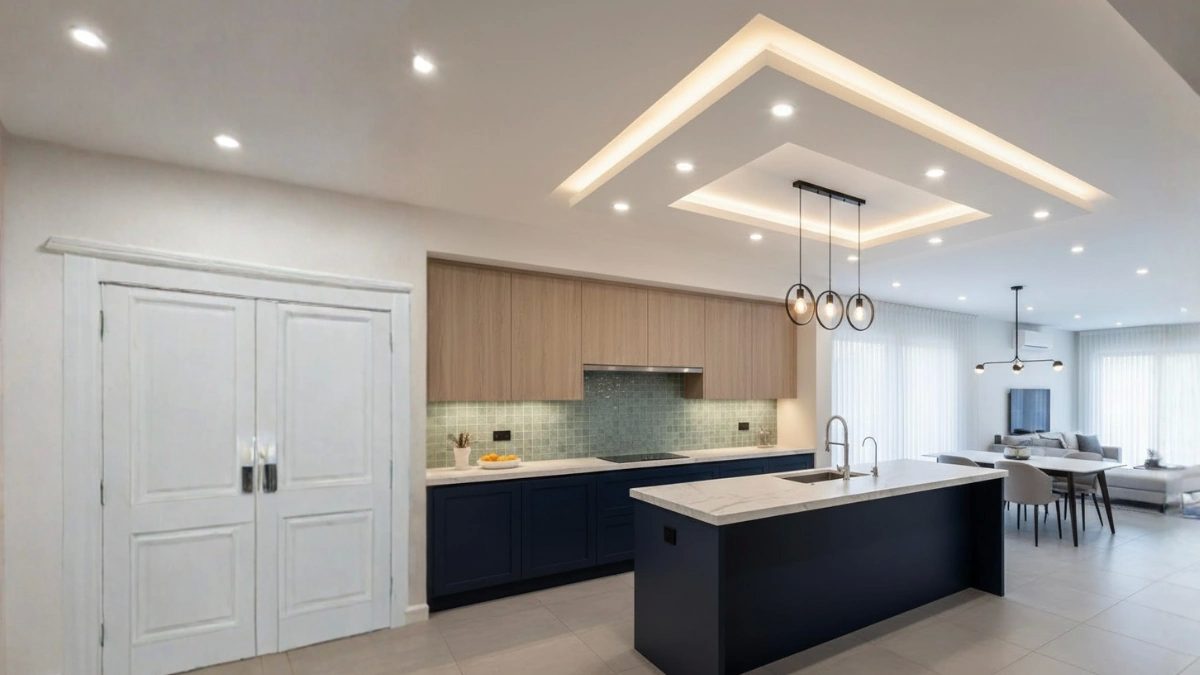
- Lighting Flexibility: The biggest advantage of a kitchen POP design is the ability to layer your lighting. You can move away from harsh, single-source shadows and integrate ambient cove lighting, focused recessed lights for chopping zones, and statement pendant lights for breakfast counters.
- Concealing Flaws: Kitchens require heavy-duty wiring, chimney pipes, and sometimes gas pipelines. A POP ceiling neatly tucks all these industrial elements away, leaving you with a clean, seamless look.
- Space Definition: In modern open-concept homes where the kitchen, dining, and living areas merge, a drop ceiling can subtly define the kitchen zone without the need for physical walls.
- Aesthetic Harmony: It allows you to mirror the geometry of your kitchen layout (L-shaped, island, or parallel) on the ceiling, creating a sense of balance and harmony.
The Top 10 Kitchen POP Design Ideas
After researching over 50 designs whether you prefer a minimalist look or a touch of grandeur, we finalize these top 10 designs that give the best look for every taste.
1. The Classic Recessed "Tray" Ceiling
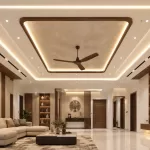
This is perhaps the most popular choice for modern apartments because it maximizes height while providing a clean border. In this design, the central part of the ceiling is kept higher (the original ceiling), while a POP border drops down around the perimeter.
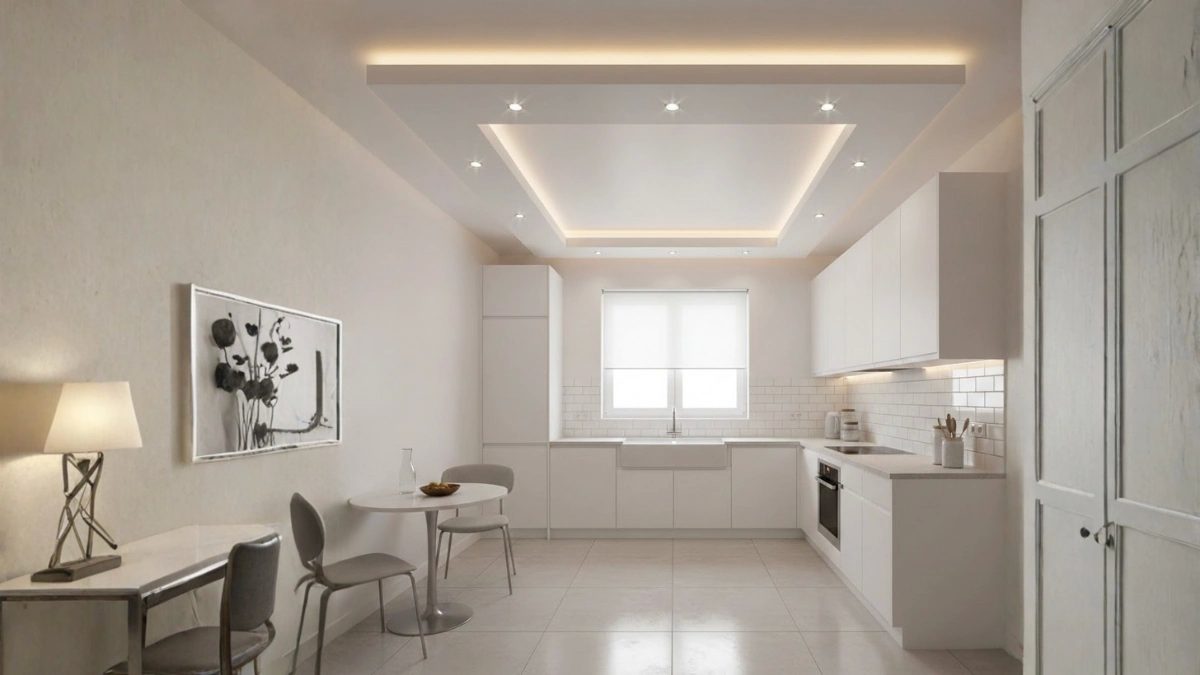
- Why it works: It makes small kitchens feel larger and airier. The recessed “tray” creates depth.
- Lighting Tip: Install LED strip lights inside the hidden groove of the tray for a soft, magical glow (cove lighting) and install recessed spotlights in the lower border to illuminate the countertops.
2. The Floating Island Ceiling
If you are lucky enough to have a kitchen island, your ceiling should pay homage to it. A “floating” island POP design involves creating a suspended block of POP directly above the kitchen island.

- Why it works: It acts as a mirror to the floor plan. It visually anchors the island, making it the focal point of the room.
- Style Note: This is the perfect spot to hang three linear pendant lights or a sleek chandelier. The suspended block can also house the extraction hood (chimney) if your hob is on the island.
- Best For: Large, open-plan kitchens with a central island.
3. POP with Warm Wooden Accents
Modern design can sometimes feel a bit cold with all the stainless steel and glossy cabinets. Combining a kitchen POP design with wooden rafters or panels brings instant warmth and texture.
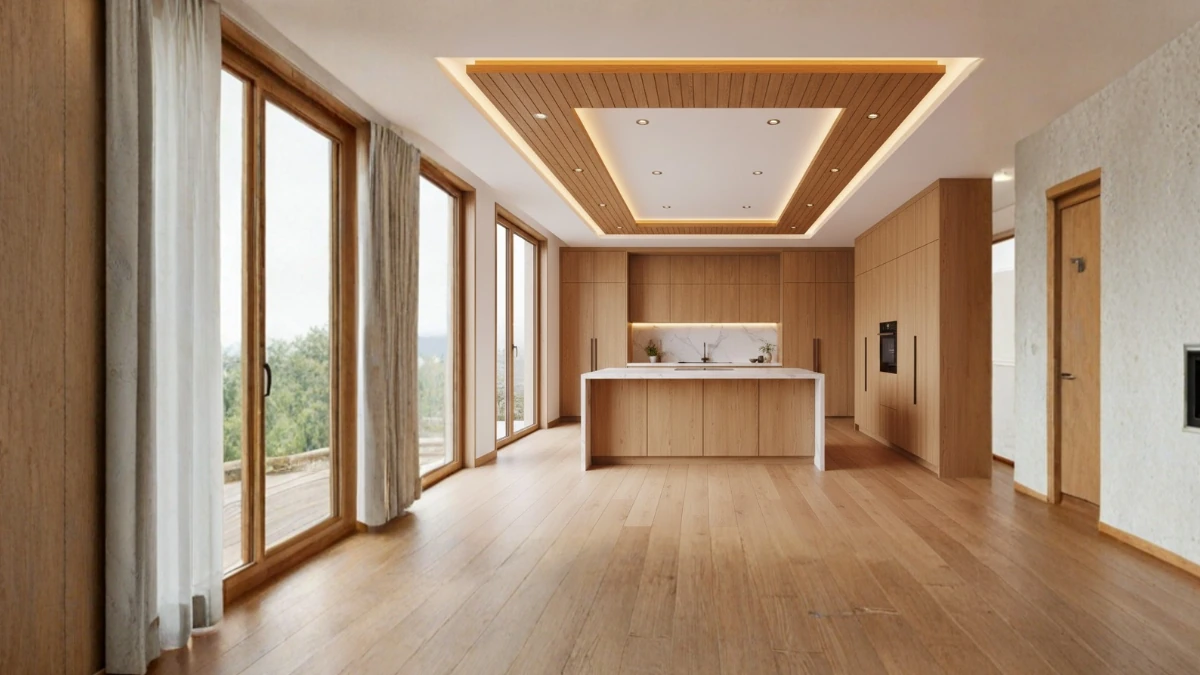
- The Look: You can have a white POP base with wooden slats running parallel across the center, or a wooden border framing the white POP.
- Material Tip: Since kitchens are high-moisture and heat zones, ensure the wood is sealed properly, or use PVC panels that mimic the look of wood but are fire and moisture-resistant.
- Best For: Kitchens with wooden cabinetry or a “Japandi” (Japanese-Scandi) aesthetic.
4. The Minimalist Parallel Lines
For narrow, galley-style kitchens (where two counters run parallel to each other), the ceiling design should help widen the space visually.
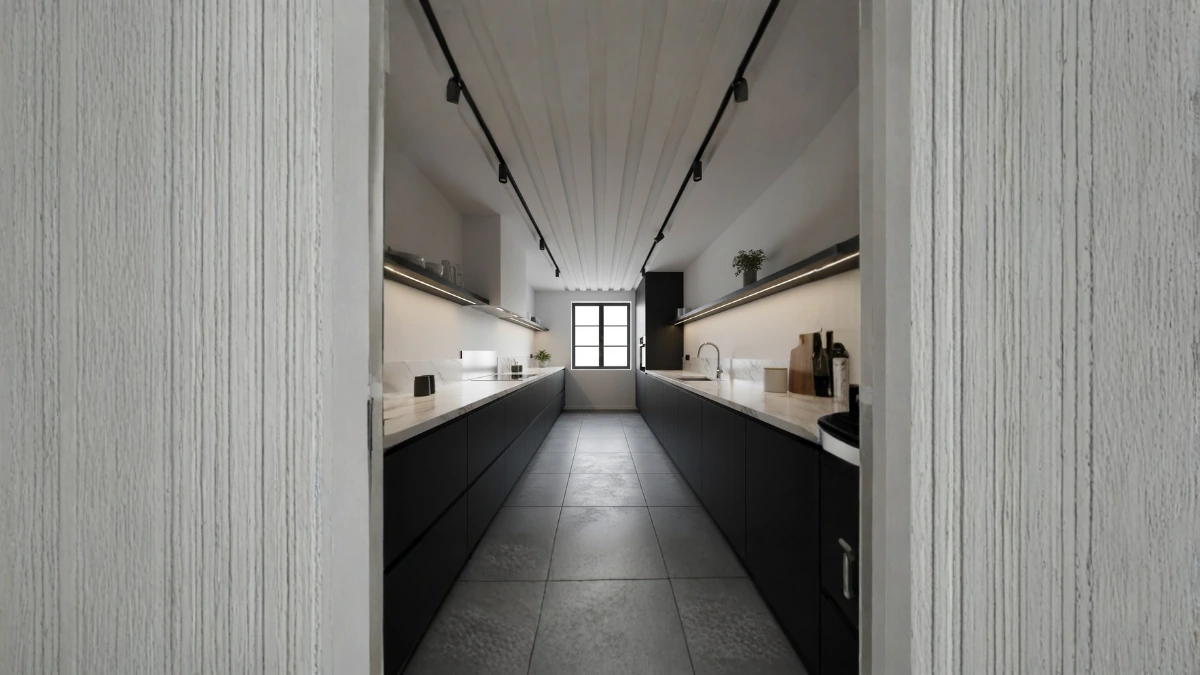
- The Design: Use recessed grooves in the POP running along the length or width of the kitchen. Simple, straight lines guide the eye and create a sense of order.
- Lighting Tip: Track lighting installed within these grooves looks incredibly industrial-chic and modern.
- Best For: Galley kitchens or long, narrow cooking corridors.
5. The Circular or Curved Drop
Who says kitchens have to be all about squares and rectangles? Break the monotony of sharp cabinet edges with a curved kitchen POP design.
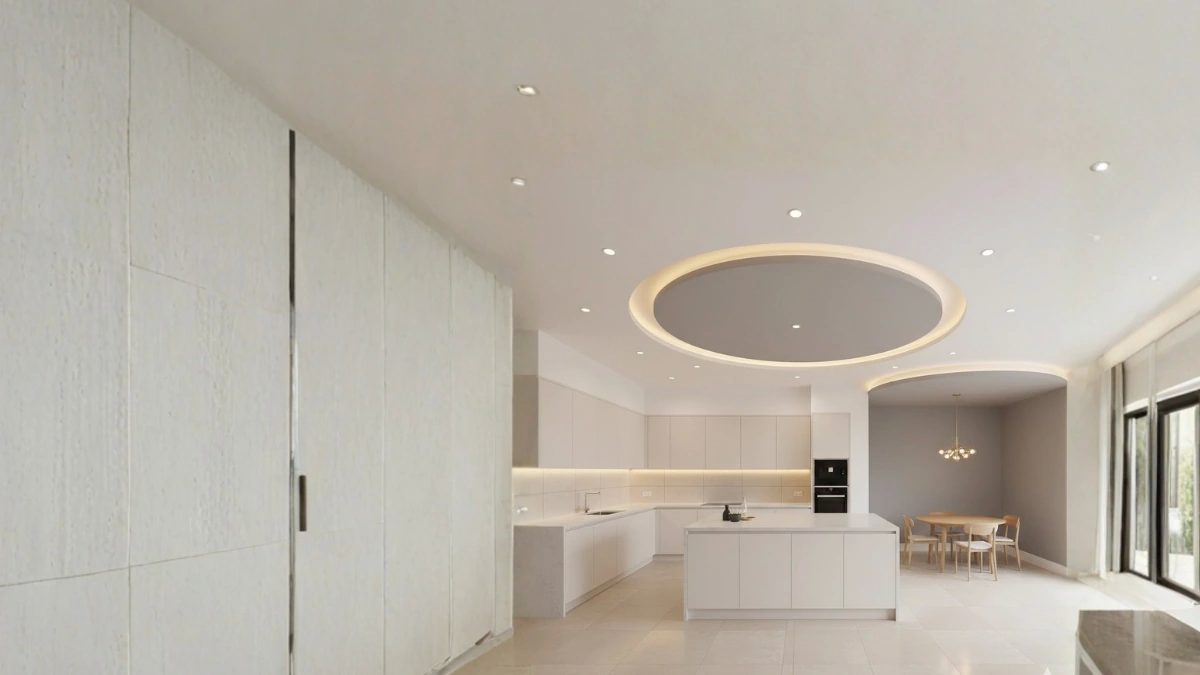
- The Look: A circular drop ceiling in the center, or a semi-circle curve above the breakfast counter, adds softness to the room. It feels organic and fluid.
- Style Note: Paint the circular drop a shade different from the rest of the ceiling (perhaps a soft grey or beige) to make it pop.
- Best For: Large square kitchens that need a softening element.
6. The "Plus-Minus" Layered Design
This design plays with levels. It involves boxed sections that protrude and recede, creating a 3D effect.
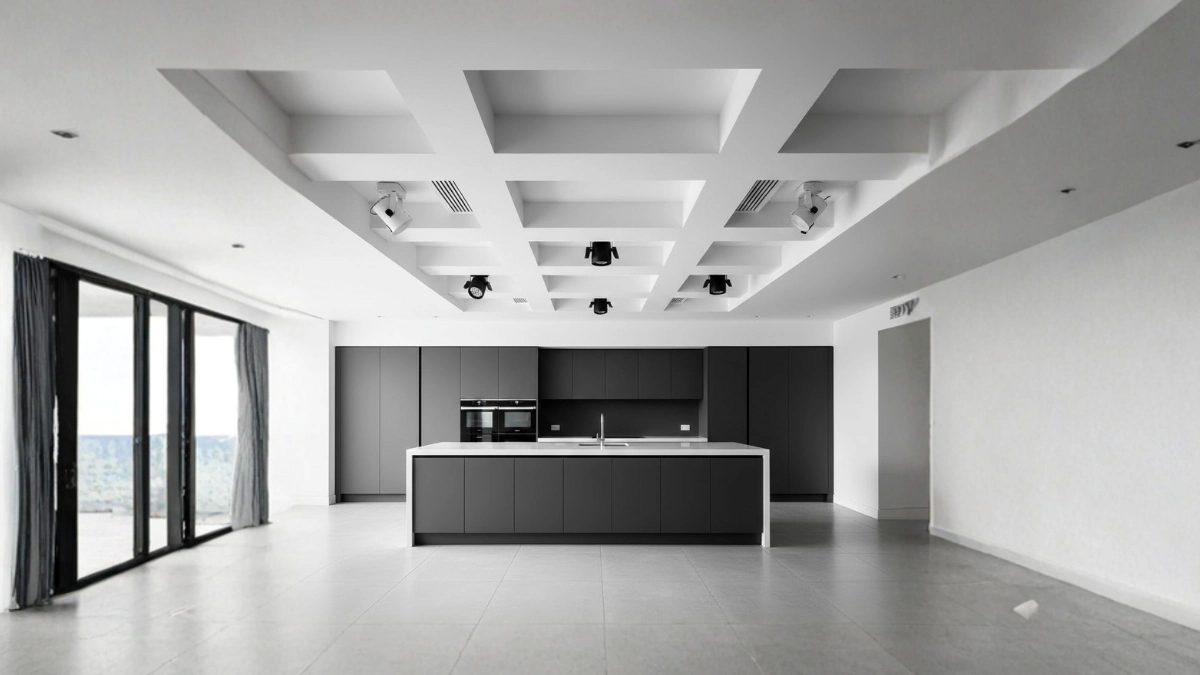
- Why it works: It adds architectural interest to a plain room. You can use the protruding parts to house vents or heavy-duty lighting, while the recessed parts provide height.
- Color Play: Keep the entire ceiling white to let the shadows create the drama, or paint the recessed parts a dark charcoal for a bold, modern contrast.
- Best For: High ceilings where you can afford to lose a few inches for the sake of drama.
7. The Chequered/Coffered Ceiling
Traditionally seen in living rooms or libraries, a simplified coffered ceiling can look incredibly chic in a kitchen, especially one with a farmhouse or vintage modern vibe.
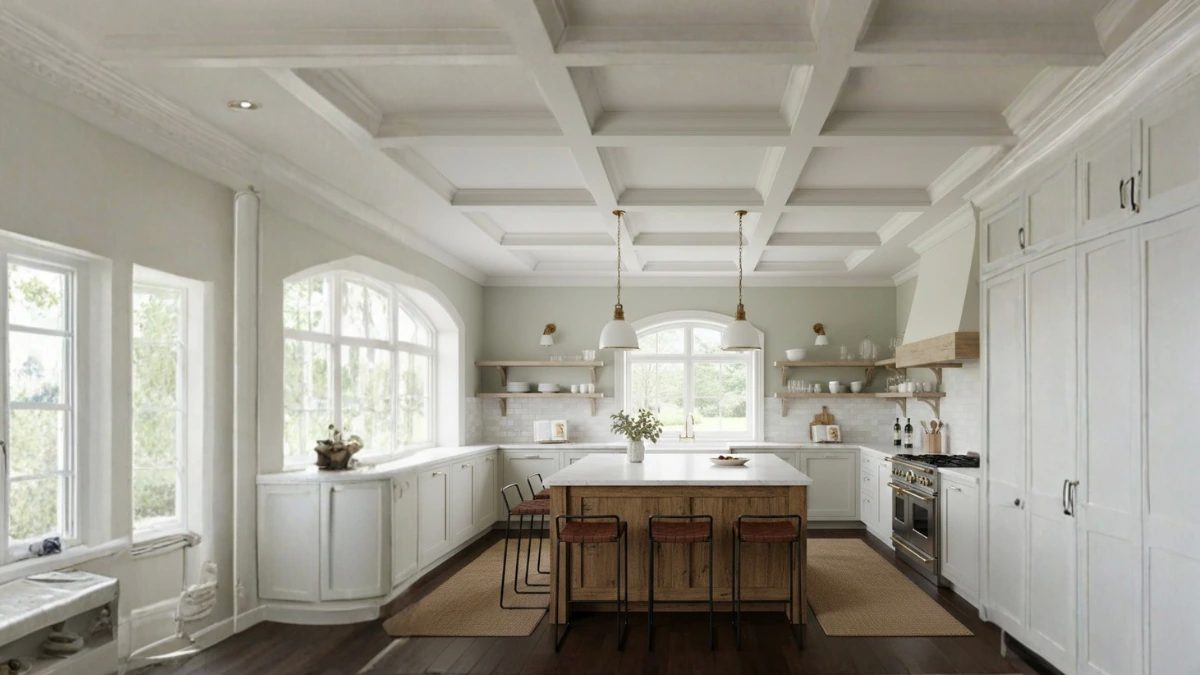
- The Design: A grid of sunken panels (square or rectangular). It adds a sense of structure and luxury.
- Modern Twist: Instead of heavy, deep beams, use shallow POP ridges to create a subtle grid pattern. It looks neat and expensive.
- Best For: Classical or Transitional style kitchens.
8. The Color-Blocked POP
White is the standard, but 2025 is all about embracing color. A kitchen POP design doesn’t strictly have to be white.

- The Idea: Match your ceiling color to your base cabinets. For example, if you have navy blue lower cabinets, a navy blue recessed portion in the ceiling creates a stunning “sandwich” effect that wraps the room in color.
- Caution: Only use dark colors on the ceiling if you have ample natural light; otherwise, the kitchen might feel cave-like.
- Best For: Bold personalities and well-lit kitchens.
9. The Extended Open-Plan Divider
In many modern Indian apartments, the kitchen flows directly into the dining area. A continuous kitchen POP design that extends from the kitchen to the dining area—but changes slightly—can visually connect the spaces while keeping them distinct.

- The Design: A lower false ceiling over the kitchen (to hide ducts) that steps up into a higher ceiling over the dining area. The transition point acts as a subtle threshold.
- Best For: Studio apartments and open layouts.
10. The Abstract Geometric Cut-out
For the ultra-modern home, asymmetrical shapes are trending.
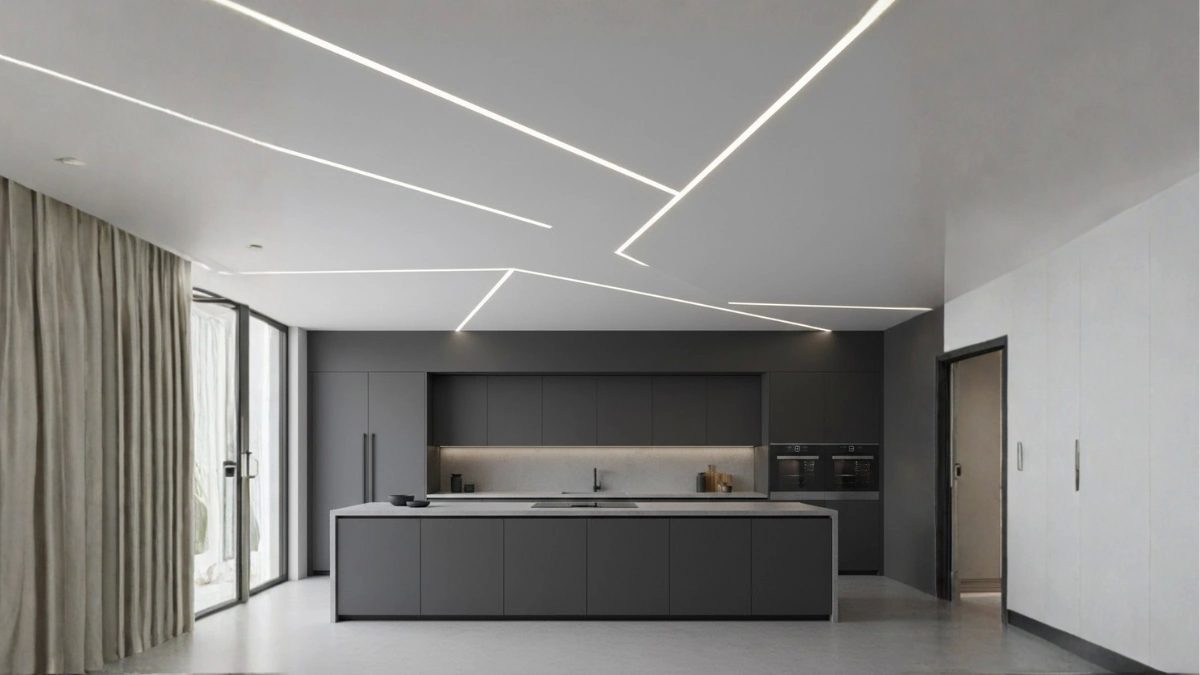
- The Design: Instead of a centered rectangle, imagine a triangular slice or a diagonal slash across the ceiling containing the lights. These jagged or angled lines add dynamic energy to the space.
- Lighting Tip: Use profile lighting (LED strips inside diffusers) to trace the geometric shapes. It looks like a sci-fi movie set in the best way possible.
- Best For: Contemporary, high-tech kitchen designs.
Important Considerations for Indian Kitchens
While browsing kitchen POP design photos is fun, the practical application in an Indian context requires attention to detail.
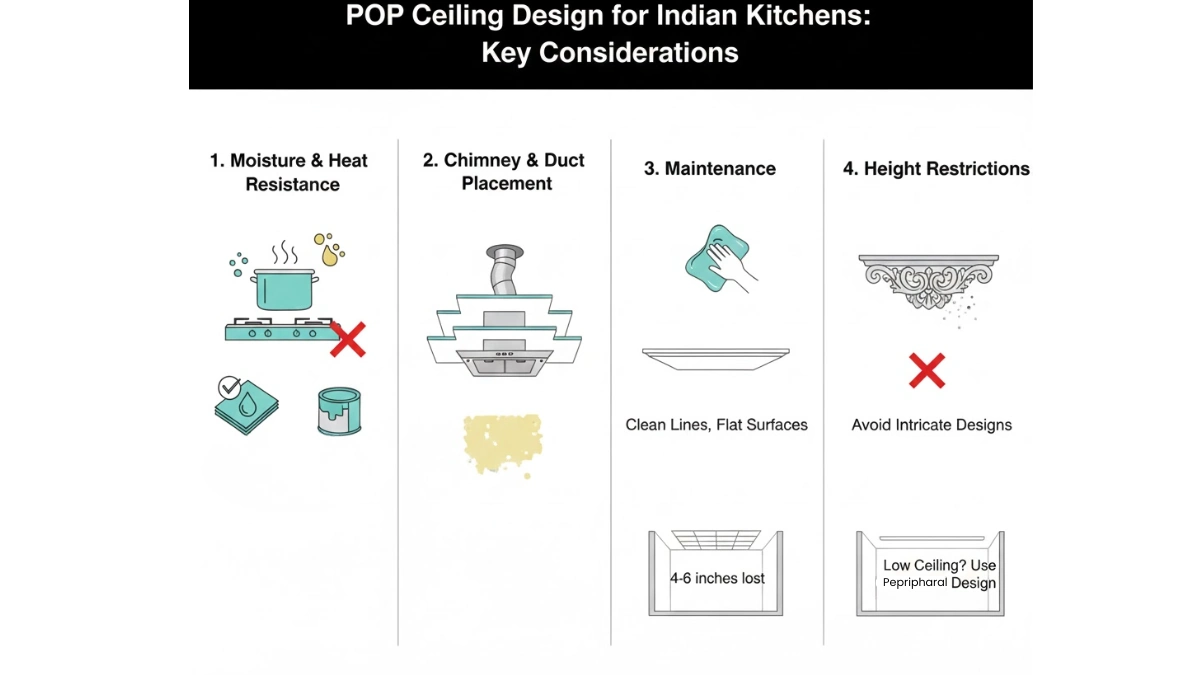
1. Moisture and Heat Resistance
Indian cooking involves steam, oil splatters, and heat. Standard POP can sometimes yellow or peel if exposed to excessive moisture.
- Solution: Ensure your contractor uses moisture-resistant gypsum boards for the kitchen. Use high-quality, washable emulsion paint (satin or semi-gloss finish) so you can easily wipe away grease deposits that settle on the ceiling over time.
2. Chimney and Duct Placement
Before finalizing the POP design, finalize your chimney placement. The POP design must be built around the ducting pipe. A tiered design is often best to hide the thick pipe running from the chimney to the window/outlet.
3. Maintenance
Intricate designs with too many crevices (like elaborate cornices) are dust magnets. In a kitchen where oil particles float in the air, dust becomes sticky and hard to clean.
- Recommendation: Stick to clean lines, flat surfaces, and simple recessed trays for ease of cleaning.
4. Height Restrictions
False ceilings reduce the room height by at least 4 to 6 inches. If your apartment ceiling is already low, opt for a peripheral design (only along the edges) rather than a full dropped ceiling, to avoid making the kitchen feel claustrophobic.
Lighting: The Partner to Your POP
A kitchen POP design is incomplete without the right lighting plan. You need three types:
- Ambient Lighting: This is the general light for the room. Recessed downlights (LED panels) spaced evenly across the POP provide this.
- Task Lighting: This is crucial for cooking. Ensure there are lights directly above the countertop prep area and the hob. Under-cabinet lighting (attached to wall units) is great, but ceiling spots focused on the counter are also effective.
- Accent Lighting: This sets the mood. Cove lighting (hidden LED strips) creates a soft glow perfect for leaving on during a party or late at night.
Conclusion
Your kitchen deserves to be as stylish as the rest of your home. A thoughtful kitchen POP design ties the whole room together, blending the cabinetry, flooring, and walls into a cohesive visual story. Whether you opt for the warmth of wood accents, the clean lines of a tray ceiling, or the drama of a floating island, the “fifth wall” offers endless possibilities to elevate your space.
At Homzinterio, we understand that every home is unique. Our team of expert designers can help you visualize and execute the perfect ceiling design that complements your modular kitchen layout and your personal style.
Ready to transform your kitchen from ordinary to extraordinary?
Contact Homzinterio today for a consultation, and let’s create a kitchen you’ll love to cook in.
Quick Answers to Your Kitchen POP Design Queries
1. Is POP ceiling good for kitchens?
Yes, POP ceilings are a great choice for kitchens when installed correctly. They help hide wiring, chimney ducts, and lighting fixtures while giving the space a sleek, modern look. Just make sure moisture-resistant gypsum boards and high-quality paints are used.
2. Is a POP ceiling expensive?
POP ceilings are affordable for most homeowners. The cost varies based on the complexity of the design, thickness, and lighting integration. Simple tray or border designs are budget-friendly, while layered or floating designs cost more.
3. Which false ceiling material is best for Indian kitchens?
For Indian kitchens, moisture-resistant gypsum POP boards are the most practical. They are durable, lightweight, and easy to maintain. PVC ceilings are also a good alternative for heavy-use kitchens.
4. Does POP crack in the kitchen due to heat?
POP itself doesn’t crack easily, but poor installation, excessive heat, or moisture can cause cracks. Choosing high-quality materials, proper sealing, and ensuring good ventilation will prevent this issue.






I always was concerned in this topic and stock still am, thanks for putting up.
very interesting topic, great post.