
Hall New Ceiling Design 2026
Classy Bedroom Wallpaper Designs: Elevate Your Space with Timeless Elegance
Your hall is the heart of your home, the first space guests walk into and the room where your family spends the most time together. While most homeowners invest heavily in furniture, flooring, and wall color, the ceiling is often the last element considered. Yet, a well-chosen hall’s new ceiling design can completely transform the mood, light quality, and perceived size of your living space.
In 2026, all new ceiling design trends are more exciting than ever. From layered hall false ceiling designs with integrated LED strips to intricately crafted hall pop designs with the latest patterns, the options available suit every budget, room size, and style preference: minimalist, modern, traditional, or luxurious.
This complete guide covers every important angle: the latest design types, trending colors, material comparisons, room-size-specific tips, cost breakdowns, Vastu considerations, and practical maintenance advice.
Why Your Hall Ceiling Design Matters More Than You Think
Most interior design guides focus on what is at eye level, but the ceiling is the largest uninterrupted surface in any room. Here is why it deserves serious attention:
- Creates a Visual Focal Point: A beautifully designed ceiling, whether a layered false ceiling design for the hall’s latest style or a classic hall’s latest pop design, becomes the room’s centerpiece and makes the entire space feel intentional and curated.
- Controls Light Quality: The way you integrate lighting into your ceiling design determines whether your hall feels bright and energizing or warm and intimate. Recessed spotlights, cove lighting, and pendant fixtures all rely on the ceiling structure.
- Defined Room Proportions: A well-executed ceiling design for the latest hall style can make a low-ceilinged room feel taller, a narrow hall appear wider, and a cavernous space feel cozier.
- Improves Acoustics: Acoustic panels embedded in a hall’s false ceiling design absorb echo and sound reverberation, which is essential if your hall doubles as an entertainment or home theater space.
- Adds Market Value: A premium ceiling design is a selling point that increases perceived property value, especially when combined with quality lighting and finishing.
Trending Hall Ceiling Colours for 2026
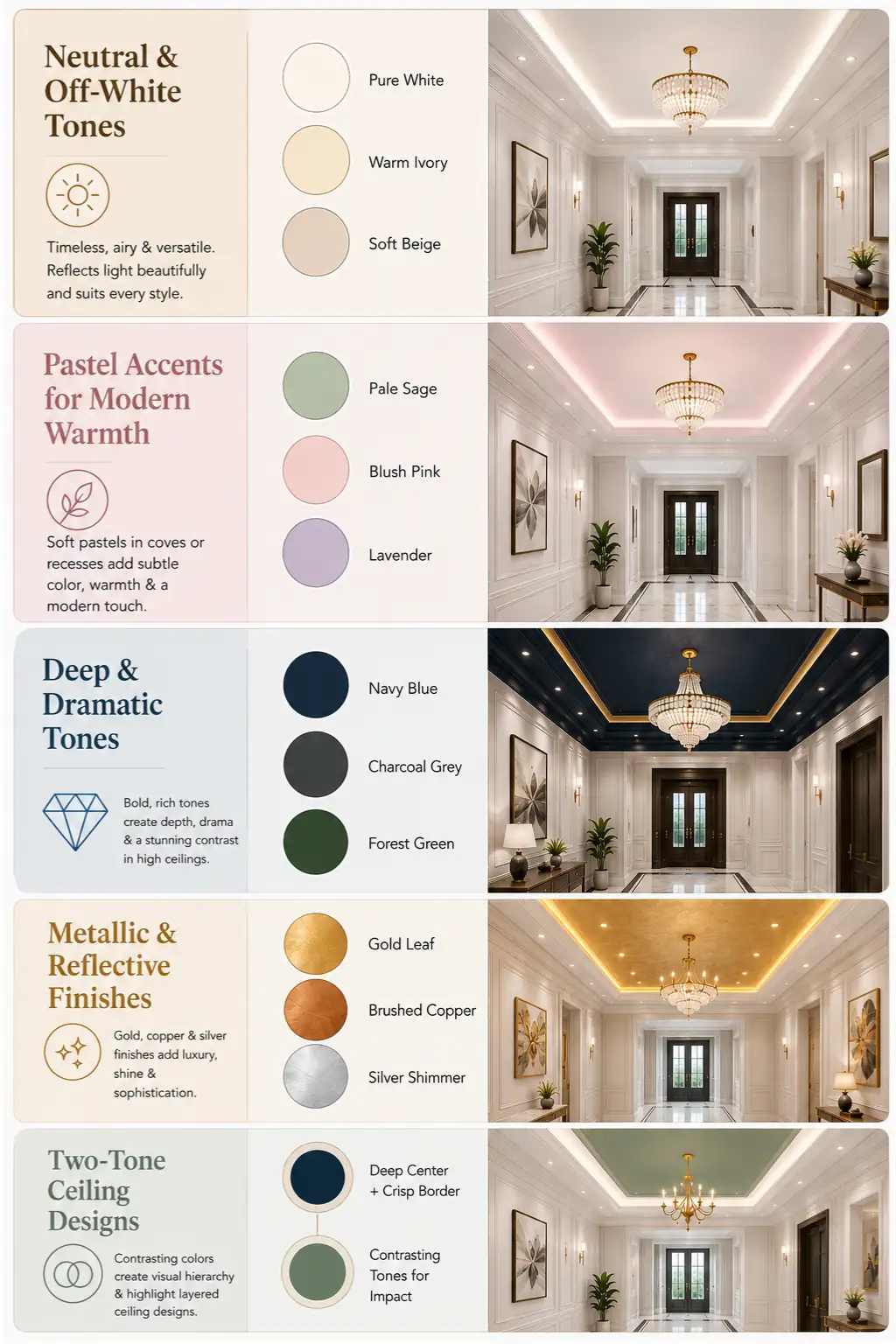
Color is the fastest way to change the mood of a ceiling. Here are the key color trends shaping hall ceiling design latest preferences in 2026:
1. Neutral and Off-White Tones
White, warm ivory, and soft beige remain the most universally preferred ceiling colors. They reflect light effectively, make rooms feel airy, and pair well with any wall color or furniture style. For a brand-new ceiling design simple approach, a neutral ceiling with recessed LED lighting is timeless and effective.
2. Pastel Accents for Modern Warmth
Pale sage green, blush pink, and lavender are gaining traction as accent tones within multi-level false ceiling designs for the hall’s latest structures. Rather than painting the entire ceiling, designers are using these pastels in cove recesses or lower-tier panels.
3. Deep and Dramatic Tones
Navy blue, charcoal grey, and forest green are being used boldly in luxury hall projects. These darker colors add depth and theater to high-ceilinged halls and create a stunning contrast against white walls.
4. Metallic and Reflective Finishes
Gold leaf, brushed copper, and silver shimmer finishes are a major 2026 trend, especially in Hall Pop Design’s latest styles, where the plaster surface can be polished or painted with metallic paints.
5. Two-Tone Ceiling Designs
A growing trend involves using two contrasting colors, for example, a deep central panel framed by a crisp white border to create a visual hierarchy on the ceiling. This works exceptionally well with a coffered or layered hall’s latest pop design.
Types of Hall Ceiling Designs: A Complete Guide
1. False Ceiling Design for Hall (Latest Trends)
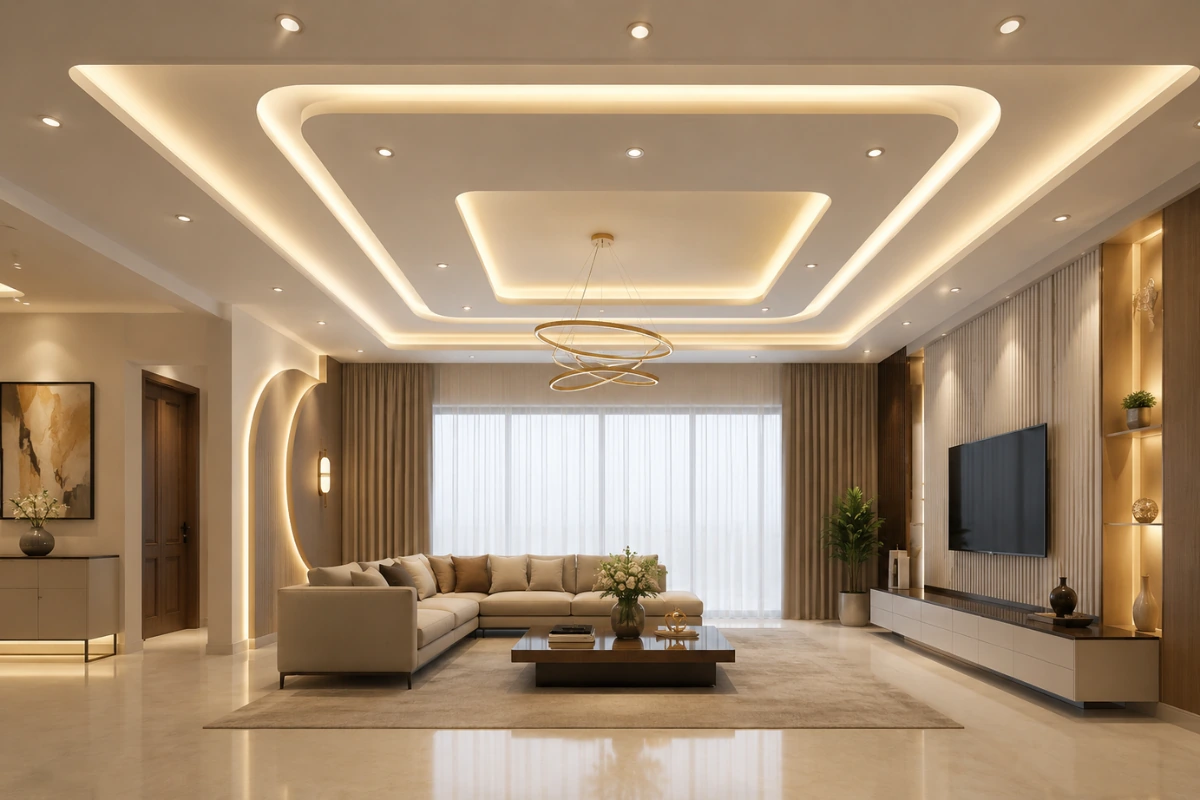
A false ceiling design for the hall is installed below the structural slab, creating a secondary surface that hides electrical wiring, air conditioning ducts, and plumbing. In 2026, false ceilings are the most popular choice for Indian homes because they offer maximum design flexibility.
Key Features:
- Conceals MEP services (Mechanical, electrical, and Plumbing)
- Allows integration of recessed lights, LED coves, and HVAC vents
- Can be designed in single-tier, double-tier, or multi-tier configurations
- Available in gypsum board, POP, metal panels, and wood veneer
Latest Hall False Ceiling Design Styles in 2026:
- Backlit cloud panels for a futuristic look
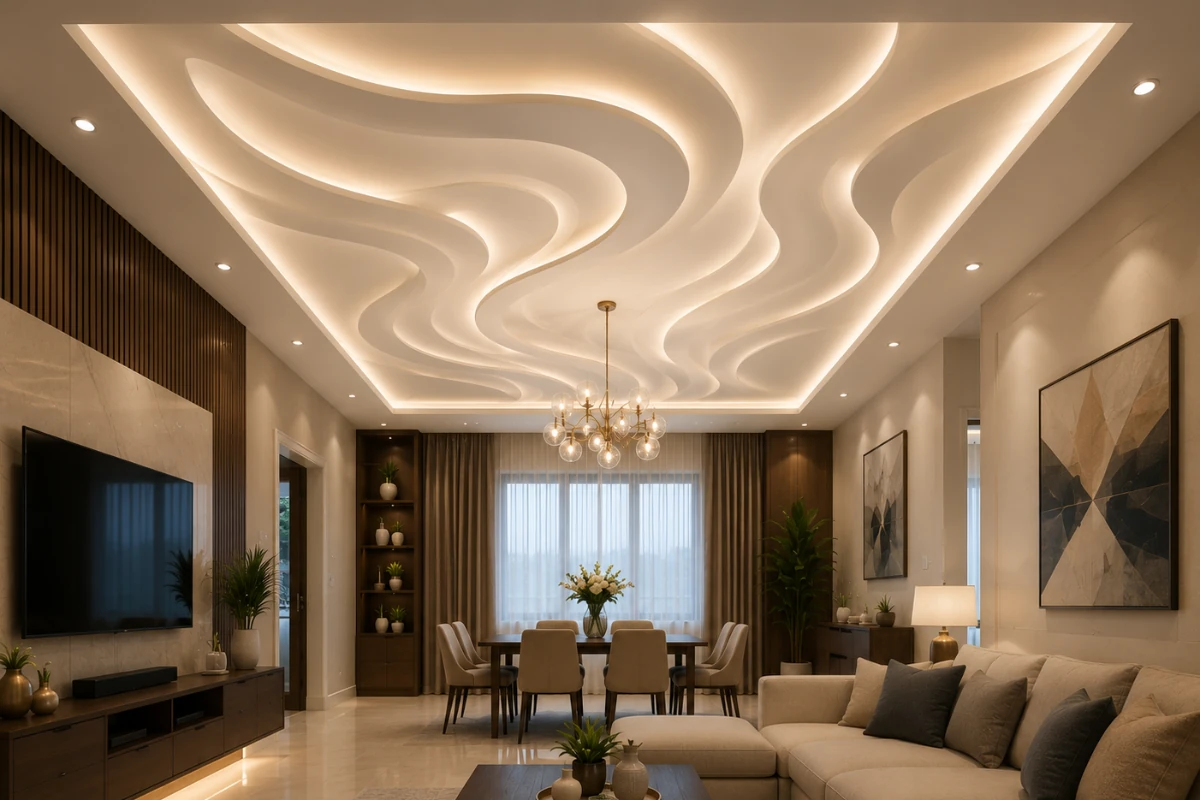
- Curved and wave-form false ceilings
- Geometric cut-out patterns with concealed lighting
- Tray ceilings with LED cove lighting on multiple tiers
Best Ideas by Hall Size
- For small halls: Single-tier with peripheral cove lighting
- For large halls: Double-tier with chandelier drop at centre
- For luxury halls: Multi-tier with layered lighting and decorative medallions
2. Hall POP Design Latest (Plaster of Paris)
POP (Plaster of Paris) is the most widely used material for ceiling design in India, and the latest hall POP design trends show it is far from outdated. In fact, POP is experiencing a creative revival with designers pushing its sculptural possibilities.
Why POP Remains Popular:
- Lightweight and easy to work with
- Highly customizable, can be moulded into any shape
- Takes paint well, including metallic and textured finishes
- Cost-effective compared to gypsum board for complex shapes
- Can be repaired easily if damaged
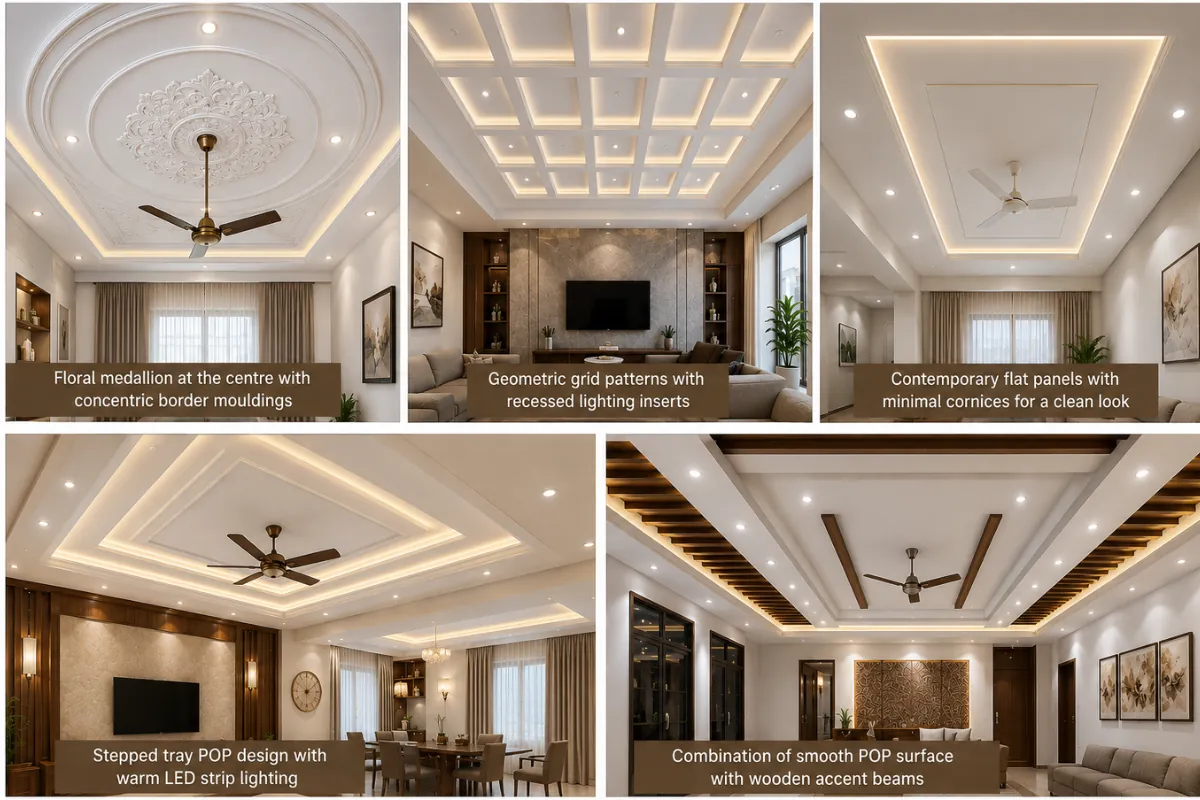
Hall's Latest POP Design Ideas for 2026:
- Floral medallion at the centre with concentric border mouldings
- Geometric grid patterns with recessed lighting inserts
- Contemporary flat panels with minimal cornices for a clean look
- Stepped tray POP design with warm LED strip lighting
- Combination of smooth POP surface with wooden accent beams
3. Gypsum Board False Ceiling
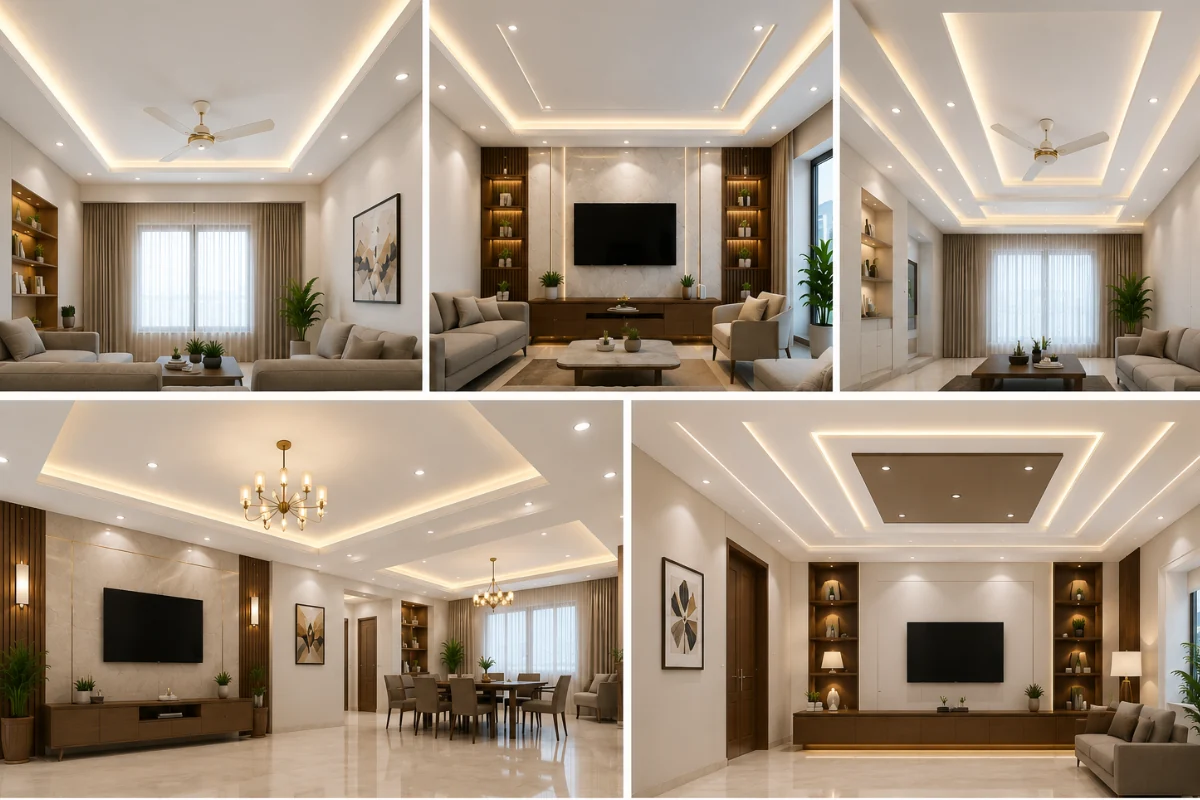
Gypsum board ceilings are preferred for their smooth, uniform finish and superior moisture and fire resistance. They are the standard choice for professional and modern residential false ceiling installations.
Advantages over POP:
- More uniform and consistent surface
- Better fire and moisture resistance
- Less prone to cracking over time
- Faster installation in large areas
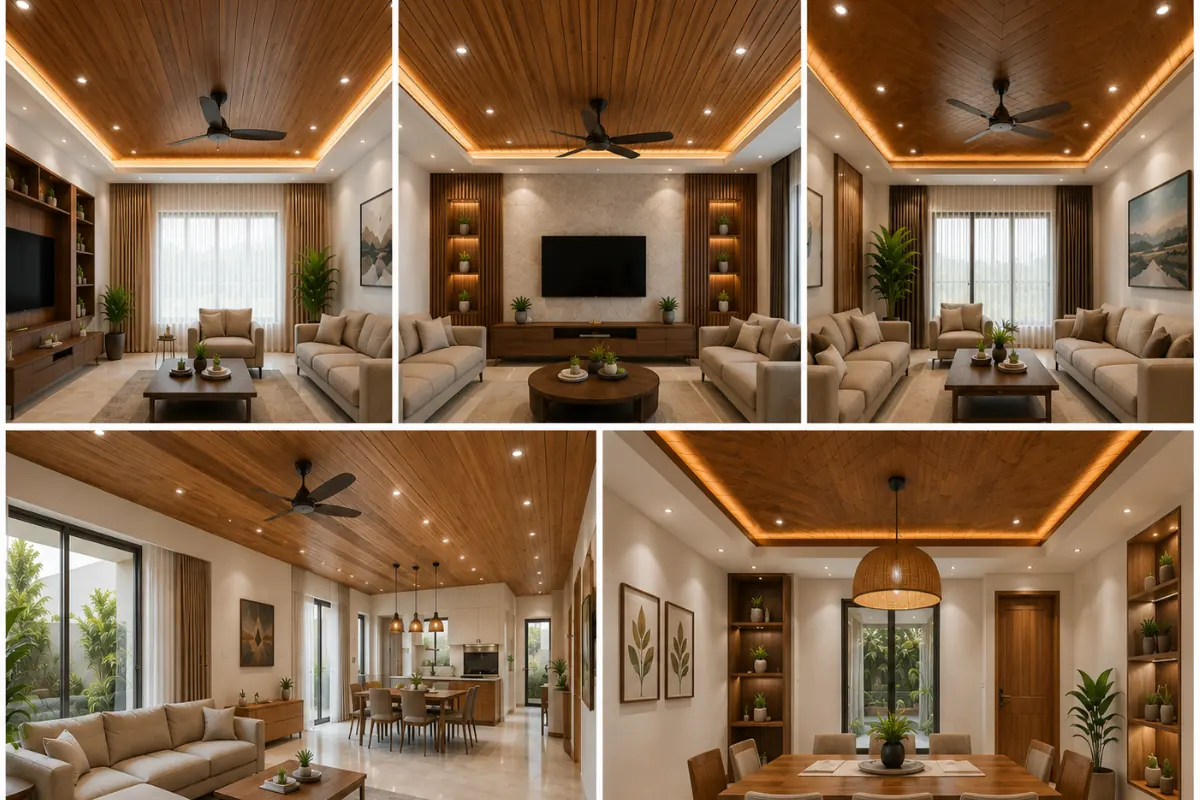
4. Wooden Ceiling Designs
Wooden ceilings add a warmth and texture that no other material can replicate. They are increasingly popular in open-plan living halls with a rustic, Scandinavian, or farmhouse aesthetic.
Material Options:
- Solid teak or oak planks (premium, heavy, expensive)
- Engineered wood panels (lighter, more affordable, moisture-resistant)
- Wood veneer on MDF boards (cost-effective, wide pattern variety)
- Bamboo panels (eco-friendly, suitable for tropical climates)
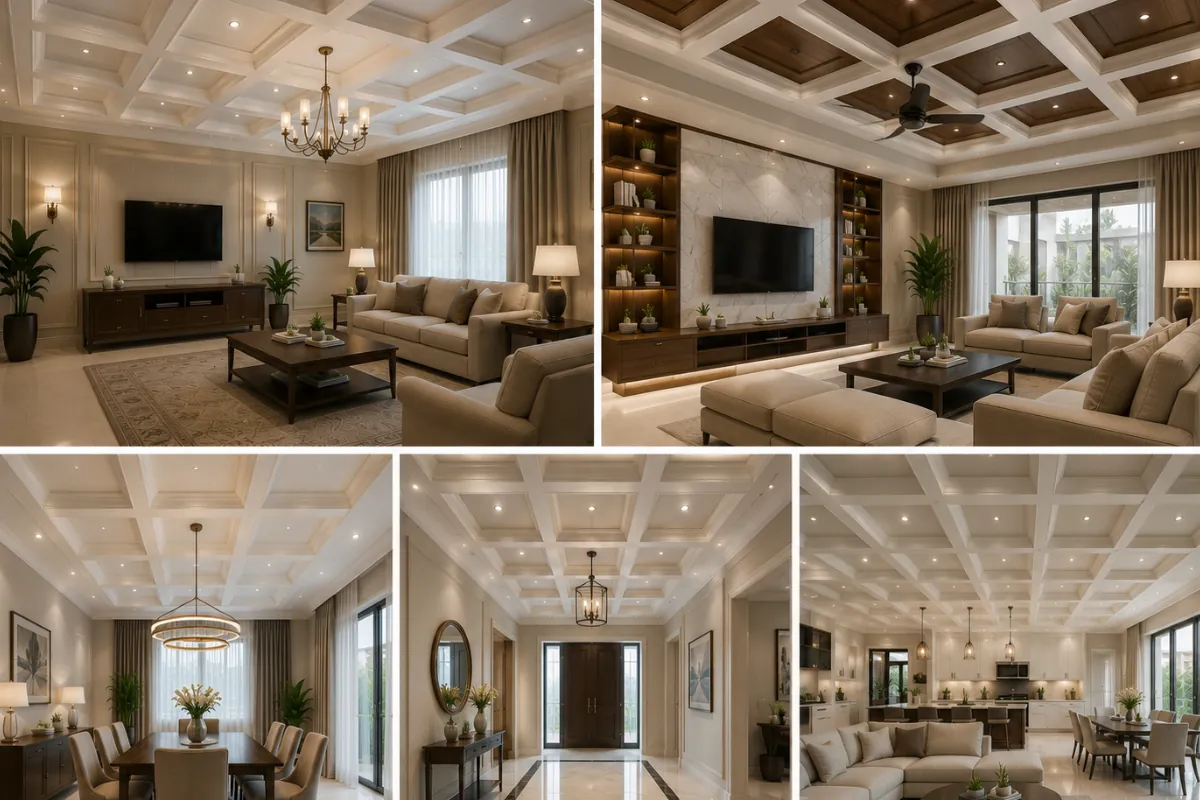
5. Coffered Ceiling Designs
A coffered ceiling features a series of recessed square or rectangular panels arranged in a grid. It is one of the most classic and architecturally significant ceiling styles, creating depth, visual interest, and a sense of grandeur.
6. Stretch Ceiling Designs
Stretch ceilings use a PVC or fabric membrane stretched across a perimeter track to create an ultra-smooth, seamless surface. They can incorporate backlighting, printed graphics, or even starlight LED systems ideal for luxury halls and home theaters.
Check Our Recent Blog About pvc ceiling designs
Hall Ceiling Design Ideas by Room Size
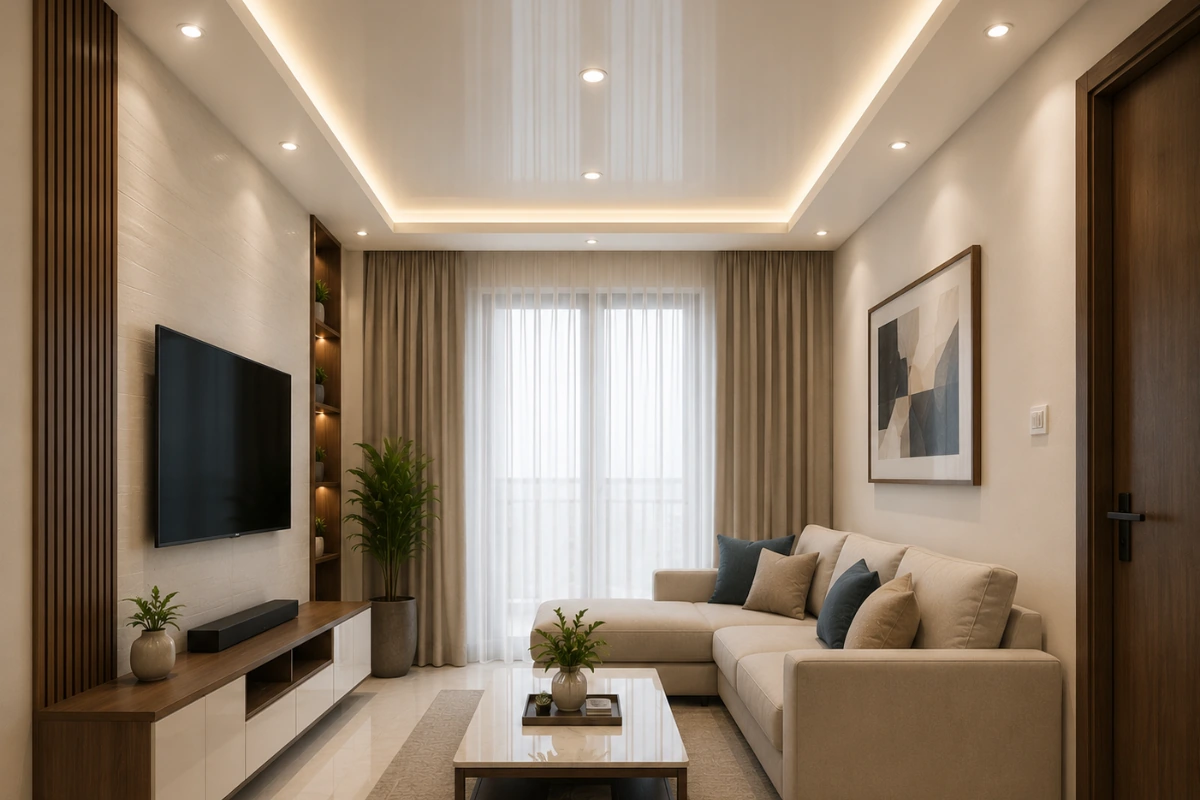
Small Hall (Below 150 sq ft)
- Avoid heavy multi-tier false ceilings; they reduce headroom and make the space feel cramped
- Use a single-tier false ceiling with peripheral cove lighting to draw the eye outward
- Light colours are non-negotiable; white or off-white maximises light reflection
- Mirror or high-gloss finishes in ceiling panels create an illusion of height
- Minimise decorative elements: a clean, simple hall, a new ceiling design, and a simple approach works best
Medium Hall (150–300 sq ft)
This is the most common hall size in Indian apartments and offers good design flexibility:
- A double-tier false ceiling design for hall with a central feature and peripheral cove is ideal
- A hall pop design latest with geometric border cornice and recessed lighting works well
- Can comfortably accommodate one to two ceiling fans with complementary light fixtures
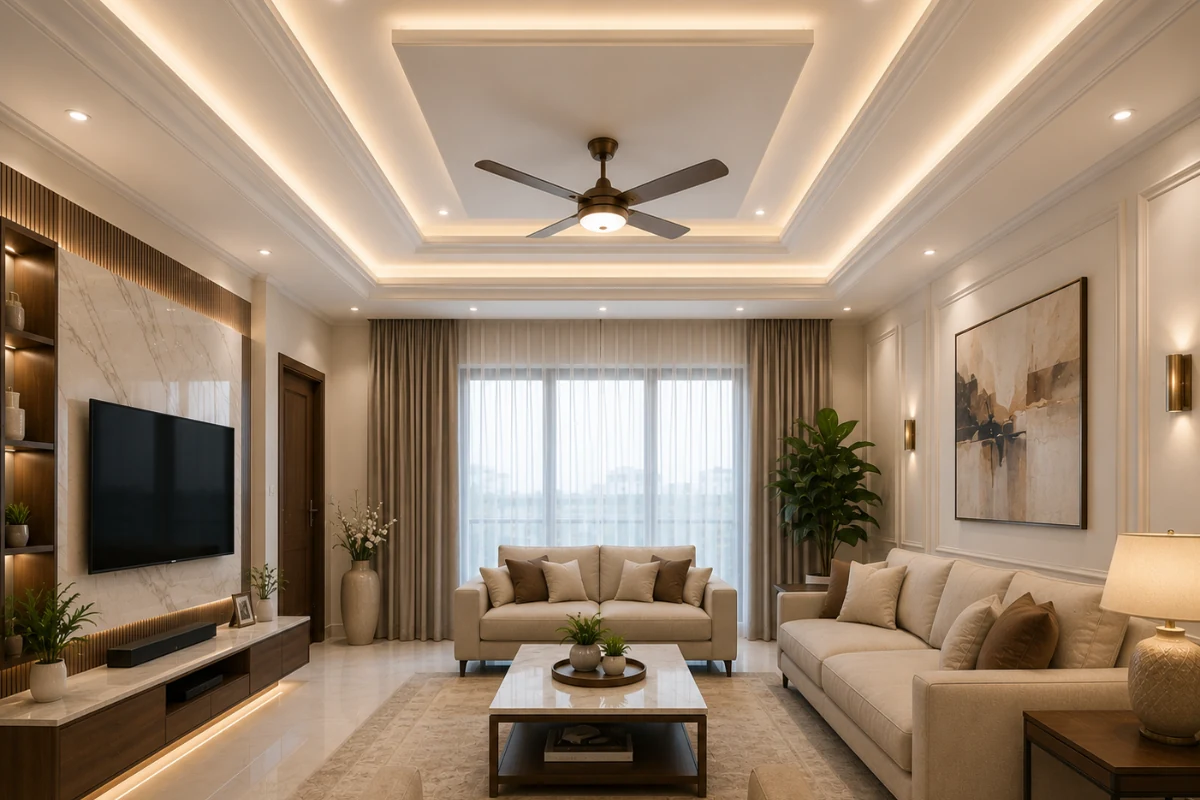
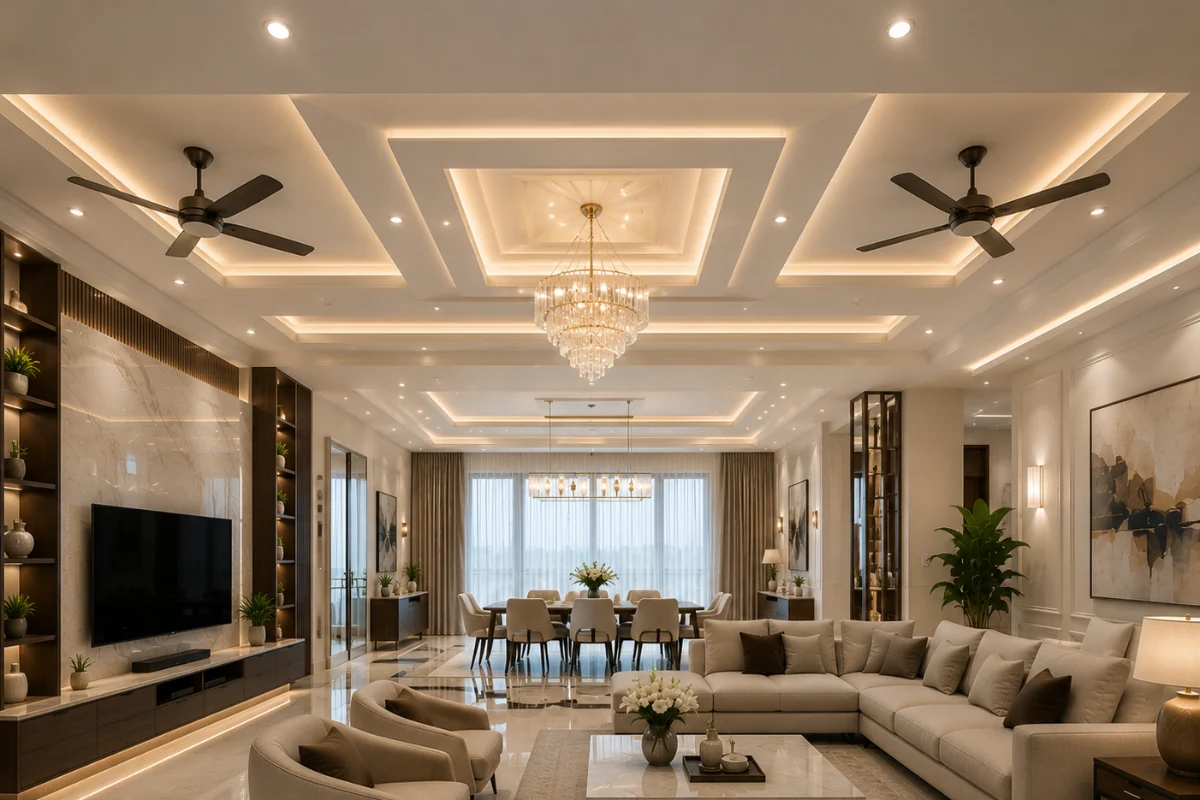
Large Hall Hall New Ceiling Design with Two Fans: (Above 300 sq ft)
Large halls allow for truly dramatic, all-new ceiling design statements:
- Multi-tier false ceilings with a chandelier drop at the centre
- Coffered ceiling grid spanning the full room
- Zone-specific ceiling designs (dining vs sitting area) with different heights and lighting
- Hall new ceiling design with two fans positioned symmetrically across the ceiling plane
Vastu Shastra Tips for Hall Ceiling Design
Vastu considerations are extremely important to Indian homeowners yet are almost entirely absent from most ceiling design guides. Here are the key principles:
- Height: The ceiling in the north and east sections of the hall should ideally be slightly lower than the south and west sections, following Vastu principles of energy flow.
- No beams over seating areas: Exposed beams or false ceiling edges directly above sitting positions are considered inauspicious. Use smooth ceilings over sofas and chairs.
- Avoid irregular shapes: Circular or spiral false ceilings directly in the center of the hall are generally discouraged. Rectangular and square tray ceilings are preferred.
- Colors: White and cream are Vastu-recommended for hall ceilings, as they are associated with clarity and positive energy. Dark ceiling colors should be used sparingly.
- Lighting direction: North and east-facing lighting points are considered beneficial. Ensure your lighting plan has adequate fixtures on these sides.
Hall New Ceiling Design Price: Detailed Cost Breakdown (2026)
The cost of a ceiling design depends on materials, design complexity, and additional features. Here is a complete breakdown including labor costs:
| Type | Material (₹/sq ft) | Labour (₹/sq ft) | Total Range (₹/sq ft) |
|---|---|---|---|
| Basic POP Ceiling | ₹40–₹70 | ₹40–₹80 | ₹80–₹150 |
| Gypsum Board Ceiling | ₹120–₹180 | ₹80–₹120 | ₹200–₹350 |
| Layered False Ceiling with LED | ₹180–₹300 | ₹120–₹200 | ₹300–₹500 |
| Wooden Ceiling (Engineered) | ₹300–₹500 | ₹150–₹250 | ₹500–₹800 |
| Coffered Ceiling | ₹300–₹600 | ₹200–₹400 | ₹500–₹1,000 |
| Luxury False Ceiling (Multi-tier) | ₹500–₹1,000 | ₹300–₹600 | ₹800–₹2,000 |
| Stretch Ceiling | ₹400–₹900 | ₹200–₹400 | ₹600–₹1,500 |
Factors That Affect Final Cost:
- City and local labour rates (metros are 20–30% higher than tier-2 cities)
- Ceiling height (above 10 feet requires scaffolding, increasing cost by 15–25%)
- Complexity of design (more tiers, curves, and custom shapes = higher cost)
- Lighting integration (quality of LED fixtures, smart dimmer systems)
- Paint and finishing (premium textured or metallic paints add ₹30–₹80/sq ft)
Material Durability Comparison
How long will your ceiling last? Here is a side-by-side comparison of all major materials:
| Material | Lifespan | Moisture Resistance | Repair Ease | Best Climate |
|---|---|---|---|---|
| POP (Plaster of Paris) | 10–15 years | Low | High | Dry / Semi-dry |
| Gypsum Board | 20–25 years | Medium | Medium | All climates |
| Wood (Engineered) | 15–20 years | Medium-High | Low | All (avoid high humidity) |
| PVC Panels | 20–30 years | High | High | Coastal / Humid |
| Stretch Ceiling | 15–20 years | High | Medium | All climates |
How to Choose the Right Hall Ceiling Design: A Decision Framework
Follow these four questions to narrow down your ideal design:
A ceiling is one part of a bigger picture, it really comes together when the rest of the room is designed around it. If you’re planning your hall as part of a full home makeover rather than a standalone update, working with an interior designer in Bangalore early on can help ensure the ceiling, lighting and furniture are planned together rather than separately.
What is your hall size?
- Under ₹150/sq ft → Simple POP or basic gypsum with flat finish
- ₹150–₹500/sq ft → Layered false ceiling with LED cove lighting
- Above ₹500/sq ft → Luxury multi-tier, wood, or coffered design
What is your budget?
- Under 150 sq ft → Single-tier, light colour, minimal design
- 150–300 sq ft → Double-tier with cove lighting and one fan
- Above 300 sq ft → Multi-tier, feature chandelier, or coffered ceiling
What is your interior style?
- Modern/minimalist → Gypsum flat ceiling with recessed lights
- Traditional/Indian → POP with decorative cornices and medallions
- Rustic/natural → Engineered wood planks
- Luxury → Multi-tier false ceiling with metallic accents
Do you have specific functional needs?
- Sound control → Acoustic gypsum panels
- Energy efficiency → LED-integrated ceiling with smart dimmers
- Air circulation → Plan for fan placement before false ceiling framework begins
Hall Ceiling Maintenance: Tips After Installation
This topic is almost entirely absent from existing guides, yet it is among the most commonly searched questions after installation:
- Dusting: Use a soft microfiber duster or vacuum with a brush attachment every 4–6 weeks. Avoid wet mopping.
- Stain Removal: For POP and gypsum ceilings, use a slightly damp cloth with mild soap for water stains. Never scrub vigorously.
- Crack Repair: Hairline cracks in POP ceilings can be filled with white sealant or a POP putty mix. For gypsum, use joint compound and repaint.
- LED Strip Maintenance: Dust LED cove channels using a blower every 3 months. Replace LED strips every 5–7 years.
- Wooden Ceilings: Apply wood polish or wax coat once a year. Check for termite activity annually, especially in monsoon-heavy regions.
- Annual Inspection: Have a professional check the false ceiling structure, fixings, and any concealed plumbing or wiring every 2–3 years.
Common Mistakes to Avoid in Hall Ceiling Design
- Not planning lighting before starting: always finalize your lighting layout before the false ceiling framework begins.
- Choosing a design too heavy for a low-height hall: in halls with 9-foot ceilings, multi-tier false ceilings can reduce headroom to an uncomfortable level.
- Ignoring ventilation: false ceilings can trap heat if air conditioning vents are not properly placed.
- Using POP in high-humidity areas: in bathrooms, laundry areas, or coastal homes, POP absorbs moisture and develops mold.
- Skipping a structural engineer’s opinion for heavy elements like coffered ceilings or large chandeliers, always get a professional assessment of the slab load capacity.
Conclusion
A thoughtfully chosen hall new ceiling design does far more than cover your slab; it sets the tone for the entire home. Whether you prefer the sculptural flexibility of a hall pop design latest style, the sleek finish of a gypsum false ceiling design for a hall, the natural warmth of wood, or the classic depth of a coffered structure, 2026 offers more design possibilities than ever before.
The key is to balance four things: your aesthetic vision, your hall’s proportions, your functional needs (lighting, ventilation, acoustics), and your budget. Use the decision framework in this guide, plan your lighting before construction begins, and always work with experienced contractors who understand both the design and the structural requirements.
Frequently Asked Questions (FAQs)
Q1. What is the best new ceiling design for a small hall in India?
Ans: For small halls (under 150 sq ft), a single-tier false ceiling with peripheral LED cove lighting is ideal. Use white or off-white colors to maximize light reflection and keep the design minimal to avoid making the space feel cramped
Q2. What is the latest hall POP design trend in 2026?
Ans: The hall POP design, the latest trend in 2026, features geometric tray designs, stepped layers with warm LED strips, and combination designs with smooth POP panels accented by wood beams. Metallic and gold-finish POP medallions are also very popular for traditional and luxury interiors.
Q3. What is the difference between a POP ceiling and a gypsum false ceiling?
Ans: POP (Plaster of Paris) is mixed on-site and is highly malleable, ideal for sculptural, decorative designs. Gypsum board comes in pre-manufactured sheets and is faster to install with a more uniform, crack-resistant finish. Gypsum is better for moisture-prone areas and lasts longer (20–25 years vs. 10–15 for POP).
Q4. How do I choose a ceiling design for my hall based on Vastu?
Ans: Vastu recommends rectangular or square tray ceiling designs, light colors (white, cream, and light yellow), smooth ceilings without exposed beams directly above seating areas, and good lighting on the north and east sides of the hall.
Q5. Can I install two fans in a false ceiling design for a hall?
Ans: Yes, and for halls longer than 15 feet, two fans are recommended for adequate air circulation. Plan the fan positions symmetrically and ensure structural backing is built into the false ceiling framework before installation.
Q6. How long does a false ceiling last?
Ans: A gypsum board false ceiling lasts 20–25 years with proper maintenance. POP ceilings last 10–15 years. PVC panel ceilings can last 20–30 years and are the most moisture-resistant option.
Q7. What are the best colors for a hall ceiling design in 2026?
Ans: White, off-white, and warm beige remain the most universally effective choices. For accent-tier panels or coves, pastels (sage green and blush pink) and metallic finishes (gold and copper) are trending. Dark colors like navy and charcoal work well only in halls with ceilings above 10 feet.
Q8. Is a wooden ceiling good for Indian homes?
Ans: Engineered wood or wood-veneer ceilings work well in dry and semi-humid climates. In coastal cities with high humidity (Bangalore, Hyderabad, and Chennai), use moisture-resistant engineered wood or PVC wood-finish panels to prevent warping and termite damage.
Q9. How do I maintain a false ceiling after installation?
Ans: Dust the ceiling with a microfiber duster every 4–6 weeks. Clean stains with a slightly damp cloth. Fill hairline cracks with white sealant. Clean LED cove channels with a blower every 3 months. Have a professional inspect the ceiling structure every 2–3 years.
Q10. What is the most budget-friendly hall ceiling design?
Ans: A simple POP ceiling with a flat finish and basic border cornice is the most cost-effective option, ranging from ₹80–₹150 per sq ft. Adding a single cove LED strip is an affordable upgrade that significantly enhances the look.





good
Very nicely explained the basics of false ceiling.