The Next-Gen Kitchen: Latest Modular Materials and Finishes for Your Home
The Next-Gen Kitchen: Latest Modular Materials and Finishes for Your Home
The kitchen has long shed its image as a purely utilitarian space. Today, it stands as the heart of the home—a hub for cooking, entertaining, and even working. This shift means that the materials and finishes you choose for your modular kitchen are no longer just about durability; they are the definitive statement of your home’s style, functionality, and longevity.
For Homzinterio readers across India, particularly in bustling cities where moisture and high usage are constant factors, making an informed choice is critical. Forget the old standards; the latest trends blend cutting-edge technology with eco-conscious design and luxurious aesthetics.
Here is your comprehensive guide to the revolutionary materials and finishes defining the modern modular kitchen.
The Foundation: Latest Materials for Cabinet Carcasses and Shutters
The longevity of your modular kitchen hinges on its core material. When building your cabinets, the choice is typically between engineered woods, each offering a distinct balance of cost, strength, and moisture resistance.
1. Plywood: The Time-Tested Workhorse
Plywood remains the industry gold standard, particularly for the carcass (the inner structure) of the cabinets.
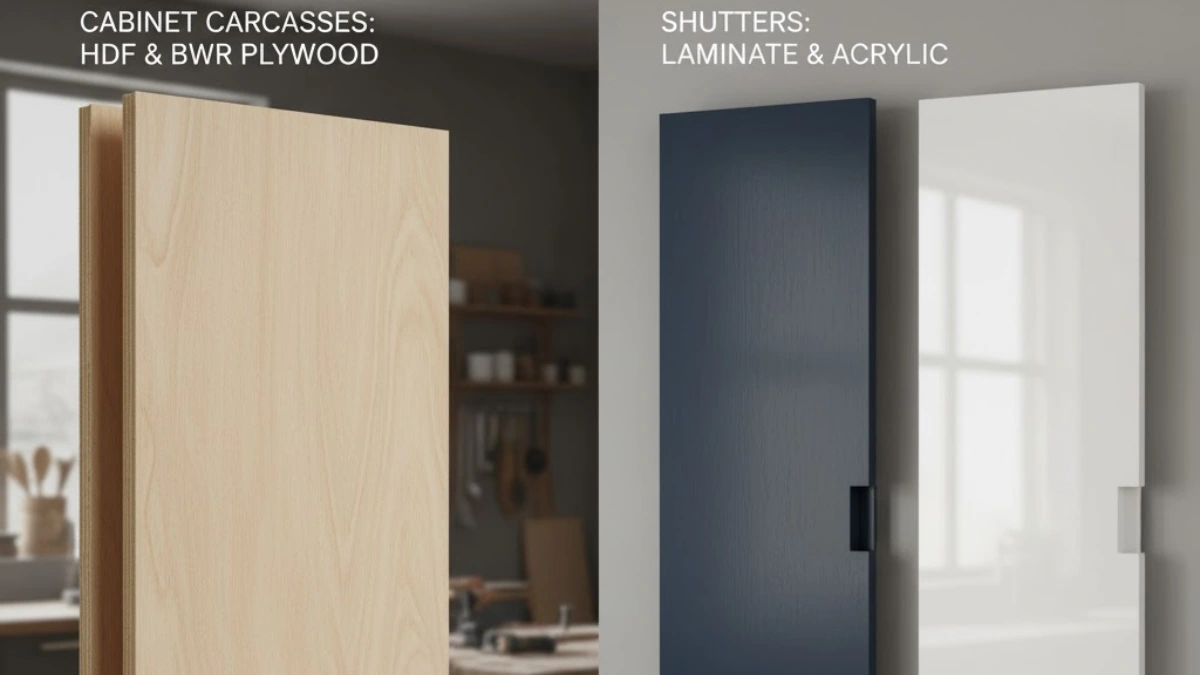
- BWR (Boiling Water Resistant) Plywood: This is the minimum standard we recommend. It offers good protection against moisture and humidity, making it reliable for general kitchen use.
- Marine-Grade Plywood (BWP/MR Grade): For ultimate durability, especially in areas prone to dampness like under the sink or near the dishwasher, Marine-Grade Plywood bonded with phenolic resins is the superior choice. While it comes at a higher initial cost, its moisture-impermeable barrier ensures the structure survives the Indian monsoon and kitchen spills for decades.
- The Key to Durability: Regardless of the grade, ensure the edges are properly sealed with specialized hot-melt adhesives to prevent any moisture ingress at the vulnerable joints.
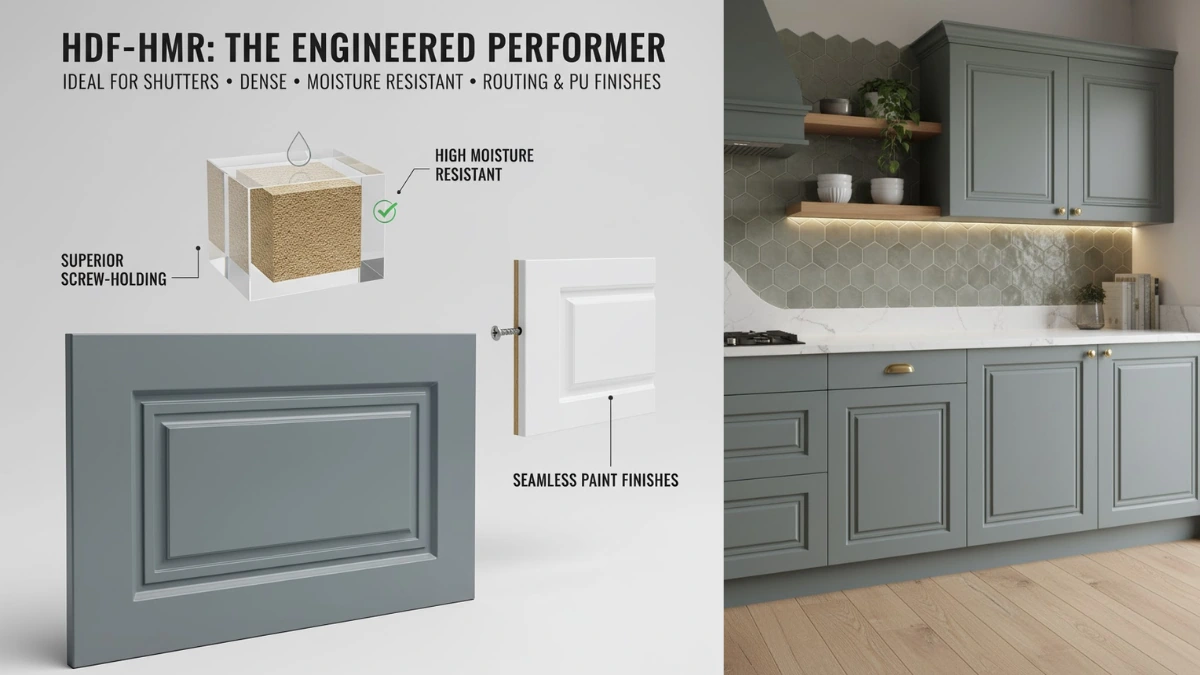
2. High-Density Fiberboard (HDF-HMR): The Engineered Performer
HDF-HMR (High-Density Fiberboard – High Moisture Resistant) is gaining massive popularity, especially for cabinet shutters (doors).
- Sleek Finishes: Modern materials like high-gloss acrylic, matte laminates, and polished PVC offer a clean, contemporary look that is also durable and easy to maintain.
- Minimalist Aesthetics: Uncluttered countertops, handleless cabinetry, and clever storage solutions contribute to a minimalist design that makes the space feel more spacious and sophisticated.
- Functional Layouts: The classic “work triangle”—the relationship between the sink, stove, and refrigerator—remains a cornerstone of good kitchen design. By optimizing this layout, we ensure that every movement in your kitchen is efficient and effortless.
3. Stainless Steel: The Hygienic, Future-Proof Choice
Moving beyond wood-based materials, stainless steel is transforming the kitchen from a residential space into a commercial-grade, hygienic zone.
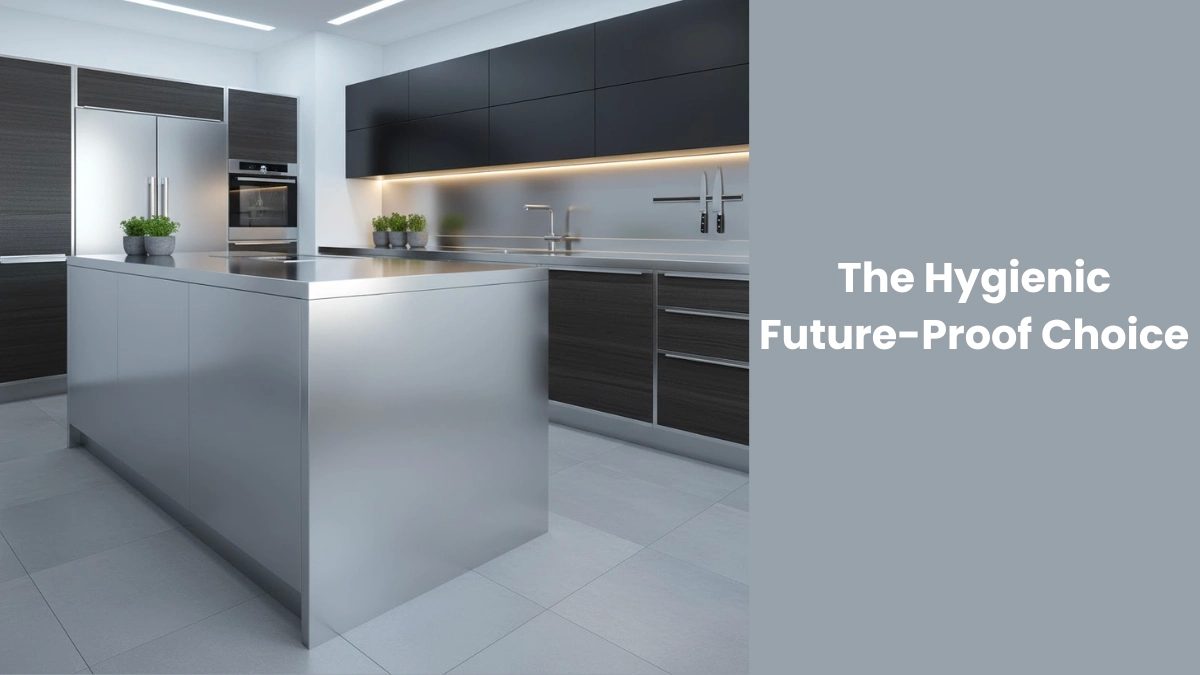
- Superior Properties: Stainless steel is non-porous, corrosion-resistant, fire-resistant, and entirely immune to termite and moisture damage. It is the most hygienic option, with an invisible protective oxide layer that self-heals if scratched.
- The Look: Modern stainless steel cabinets have moved past the industrial aesthetic, now featuring sleek, powder-coated finishes or textures that mimic traditional materials like wood, offering durability without compromising on style.
- Investment: This is a higher-end option, but its near-indestructibility offers the ultimate long-term value.
The Aesthetic Layer: Latest Cabinet Finishes
The finish is the visible skin of your modular kitchen. It dictates the look, feel, and day-to-day maintenance effort.
1. The Power of Matte and High-Gloss Finishes
The battle between gloss and matte continues, but both have evolved.
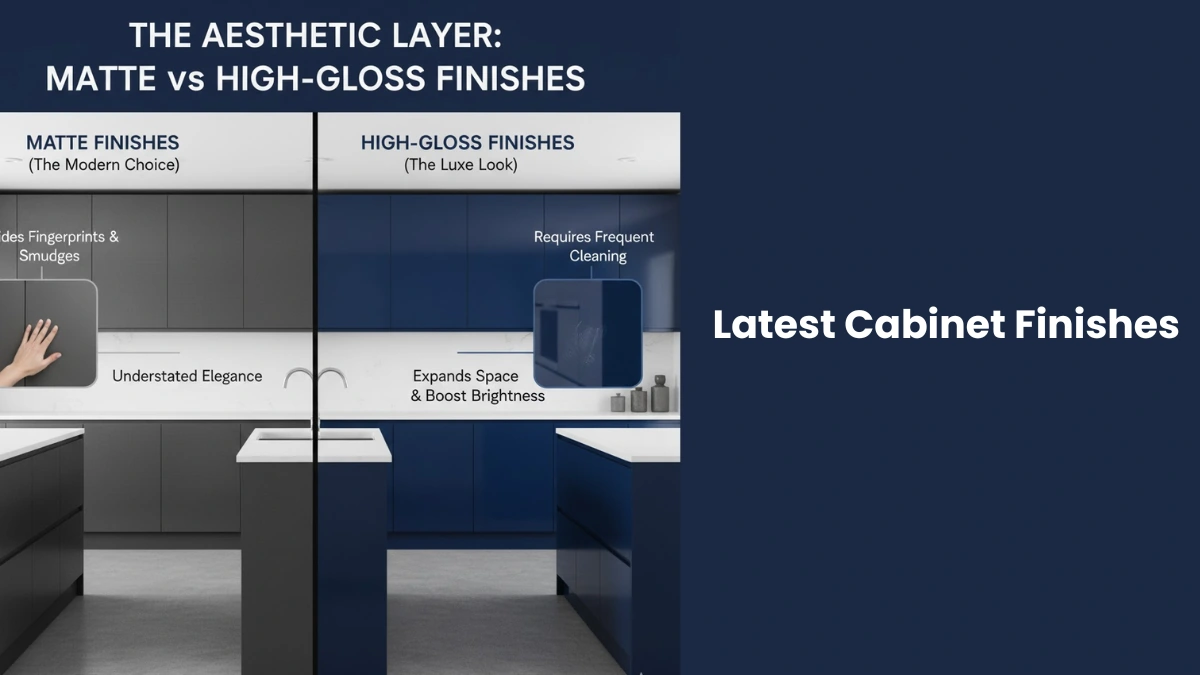
- Matte Finishes (The Modern Choice): Matte has surged into the mainstream. It offers an understated elegance and sophistication, absorbing light to give the kitchen a serene, contemporary look. Crucially, matte surfaces are highly effective at hiding fingerprints, smudges, and minor scratches, making daily upkeep much easier. Suede-finish laminates and matte PU are currently in high demand.
- High-Gloss Finishes (The Luxe Look): Glossy kitchens, primarily achieved with Acrylic or High-Gloss Laminates, are unbeatable for their reflective quality. They make the kitchen appear brighter and significantly larger. While they require more frequent cleaning due to visible fingerprints, the depth of colour and luxurious sheen of acrylic remains unmatched for a premium, bold statement.
2. Polyurethane (PU) Finish: The Custom Colour Champion
PU is a liquid plastic polymer painted onto the shutter, hardening into a strong, protective shell.
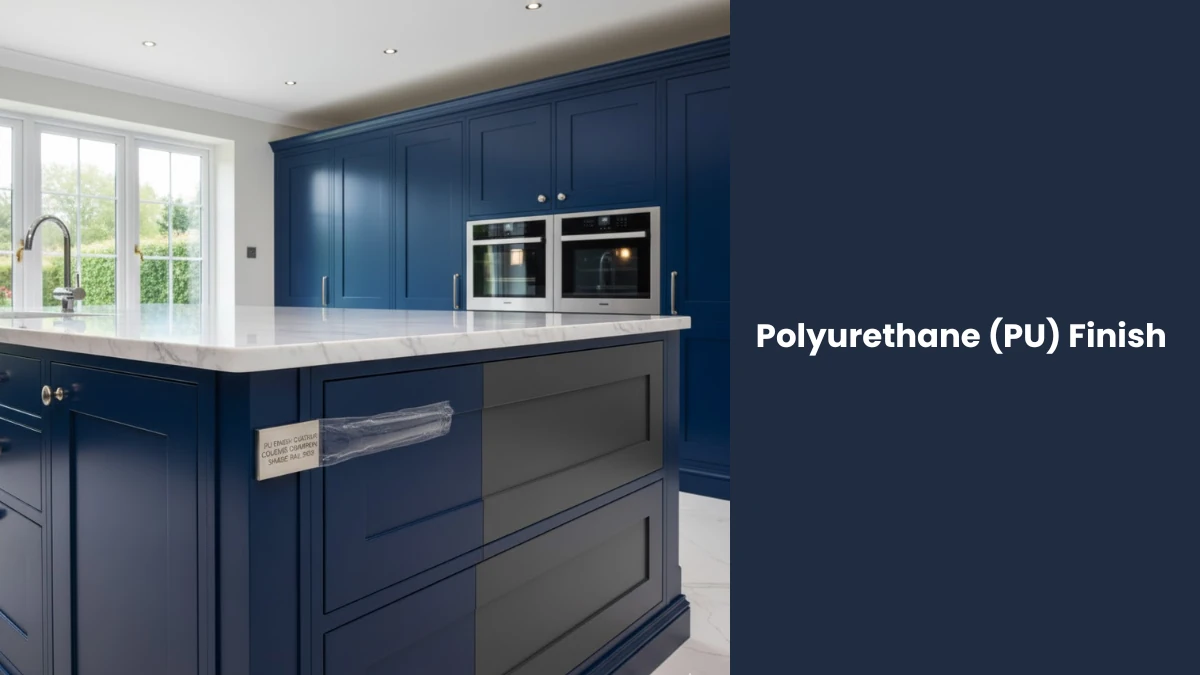
- Versatility: PU allows for complete colour customisation—you can choose virtually any shade from a paint code—a huge advantage over pre-set laminate or acrylic colours.
- Finish: It provides a seamless, luxurious finish, available in both glossy and matte textures.
- Durability: It creates a protective layer that is excellent for high-end, bespoke kitchen interior room designs, though it is one of the more expensive and time-consuming finishes to apply.
3. Veneer Finishes: Nature with a Modern Twist
Veneers are thin slices of real wood applied to a base material like plywood.
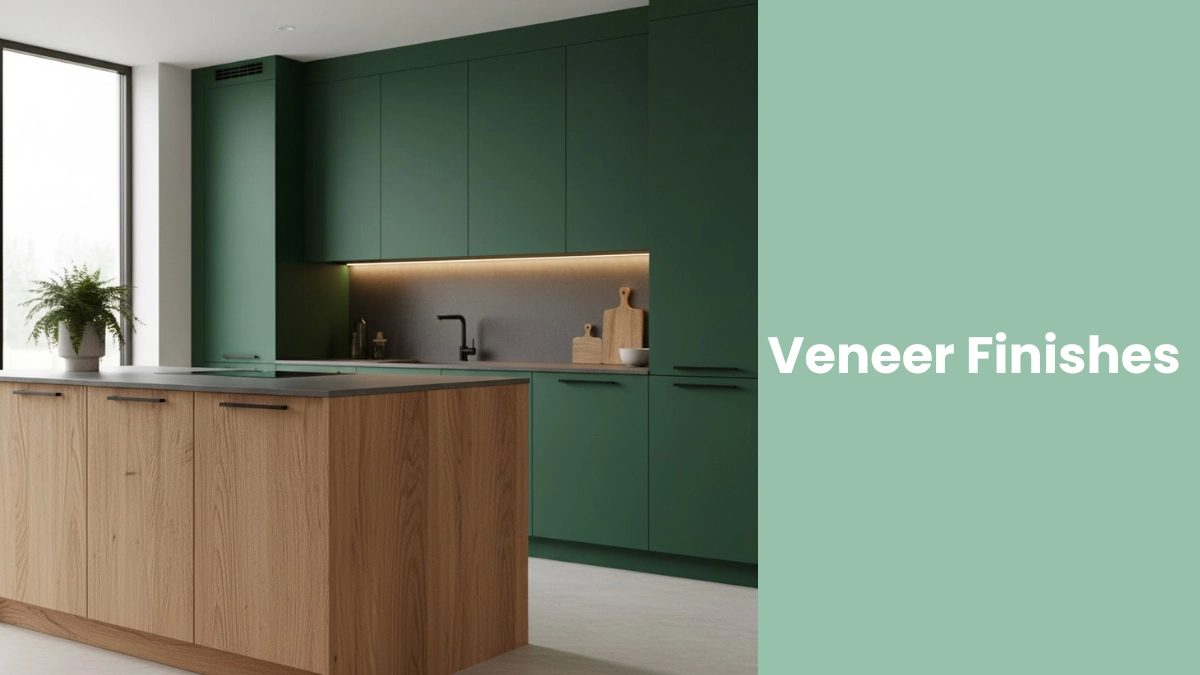
- Aesthetics: They offer the warmth and luxury of natural wood grain at a fraction of the cost of solid wood.
- New Trend: The current trend is moving away from heavily polished wood to rough-hewn, fluted, or textured veneers that add a raw, tactile element to the kitchen, often paired with neutral or bold-coloured laminates for a two-tone effect.
4. Laminates: The All-Rounder's Evolution
Laminates (including High-Pressure Laminates or HPL) remain the most popular choice due to their durability, vast variety, and cost-effectiveness.
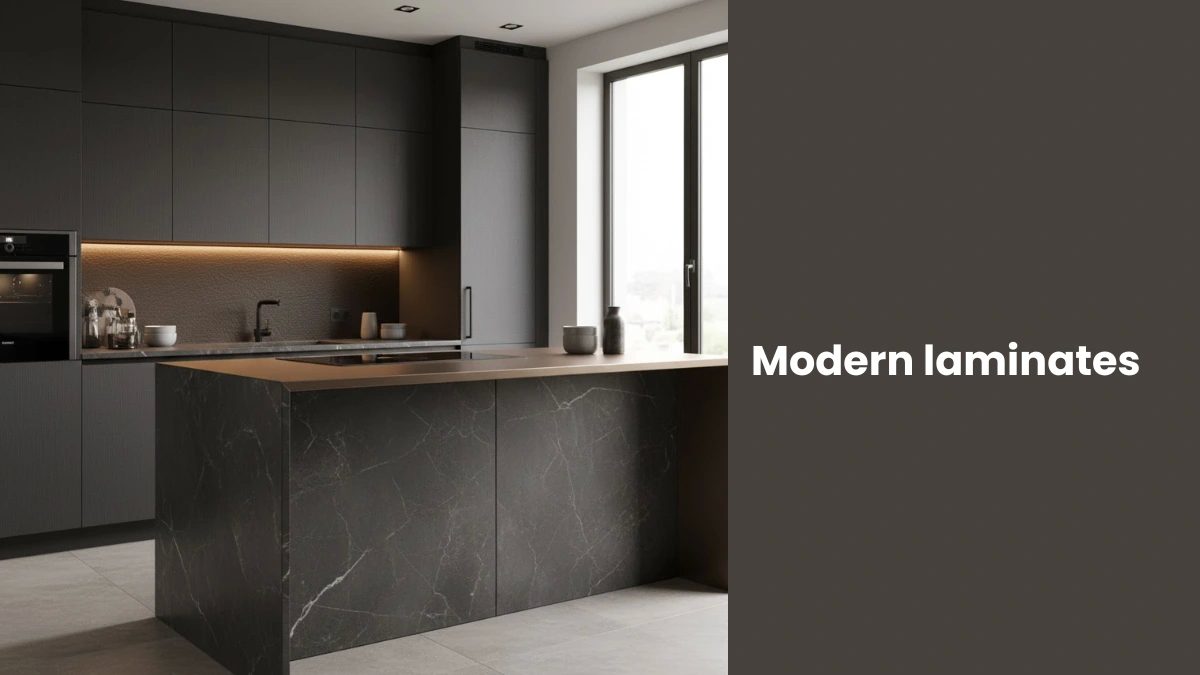
- Latest Trends: Modern laminates come in sophisticated textures, including fabric, stone, leather, and metallic finishes, allowing designers to achieve high-end looks without the maintenance of natural materials. Textured laminates are particularly effective at hiding minor wear and tear.
The Work Surface: Innovative Countertop Materials
The countertop is the highest-traffic surface in your kitchen. Its material must resist heat, stains, scratches, and, most importantly, provide a hygienic surface.
1. Quartz: The Modern King of Durability
Quartz (an engineered stone) has largely replaced granite as the countertop material of choice.

- Non-Porous Excellence: It is non-porous, meaning it is highly resistant to staining and does not require periodic sealing, a massive advantage over natural stone like marble and granite.
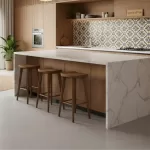
- Aesthetic Range: The latest quartz designs feature dramatic, high-contrast veining that perfectly mimics the look of luxurious Calacatta marble, as well as subtle linear and cloud veining for a minimalist, calming look.
2. Porcelain and Sintered Stone: The Emerging Champion
Porcelain slabs and Sintered Stone (which includes brands like Dekton or Neolith) are the technological leaders in countertop materials.
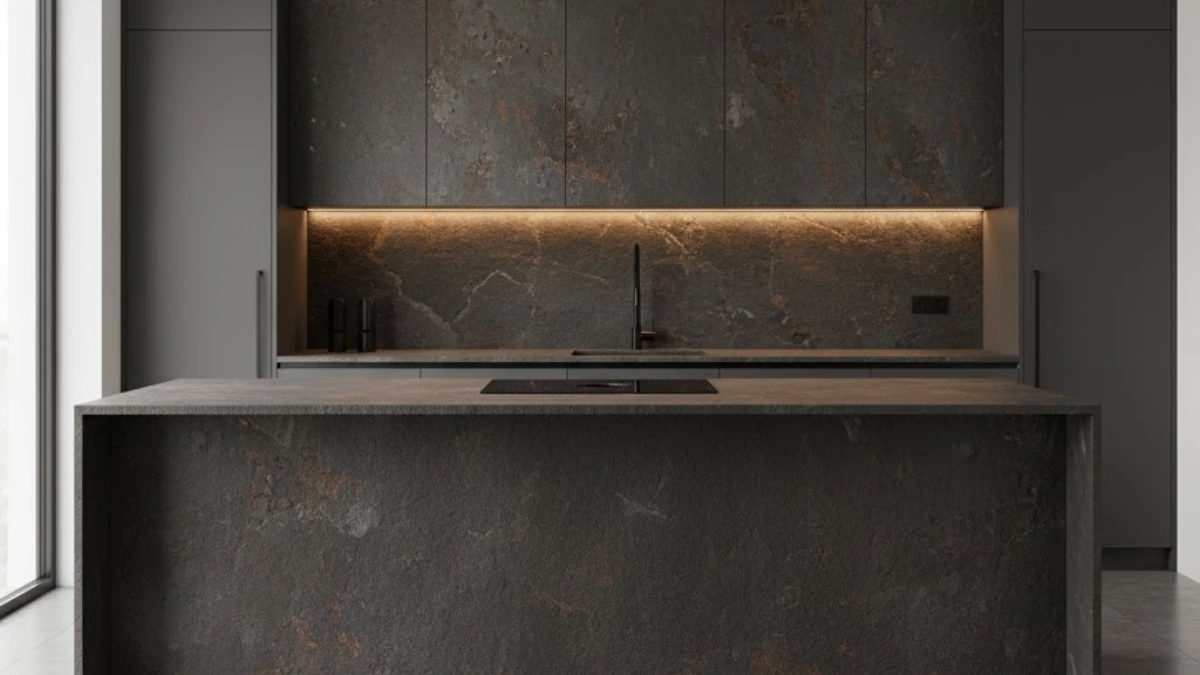
- Unmatched Resistance: Created by subjecting natural minerals to extreme pressure and heat, they are virtually impervious to heat, scratches, UV rays, and etching.
- Design Versatility: Their manufacturing process allows for incredible versatility, enabling them to perfectly mimic the texture and colour of natural wood, rust, concrete, or stone with a highly realistic finish. They are perfect for achieving a seamless, integrated look by extending the material from the countertop up the wall as a monolithic backsplash or waterfall island.
3. Concrete and Recycled Materials: The Sustainable Edge
For the eco-conscious homeowner, a focus on sustainability is driving new material choices.

- Recycled Glass and Porcelain: These materials are becoming popular for their green credentials and unique speckled aesthetics.
- Concrete Countertops: Custom-poured concrete, sometimes formulated with recycled aggregates, offers a distinct, industrial, and highly customizable look. They require a good quality, food-safe sealant for protection.
The Final Touch: Hardware and Integrated Aesthetics
- Handleless Cabinets: This is the defining feature of the modern kitchen Cabinets organization, employing either a “Gola” or “J-Profile” handleless system (an integrated groove to pull the shutter) or a “Push-to-Open” mechanism. This look is incredibly sleek, safe (no handles to bump into), and easy to clean.
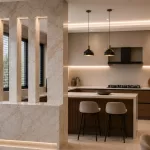
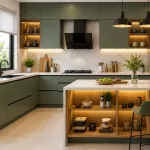
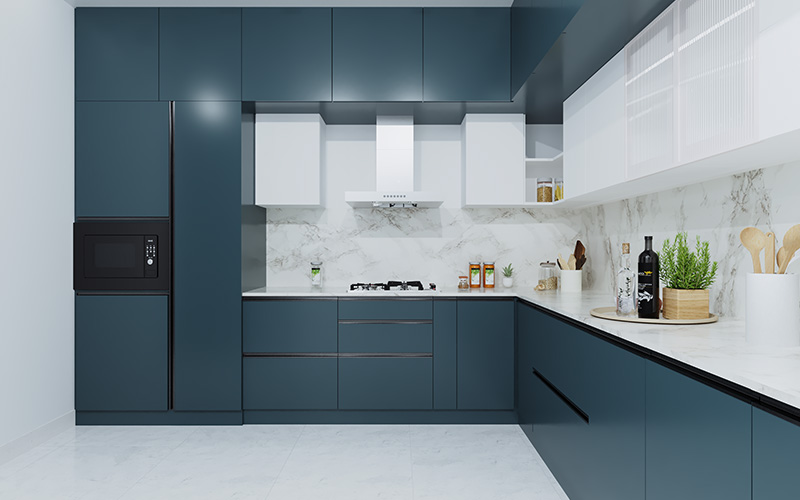
- Two-Tone Cabinetry: Using two contrasting colours—typically a bold, deep colour (Navy Blue, Forest Green, or Matte Black) for the lower cabinets/island and a neutral shade (White, Grey, or Wood Veneer) for the upper cabinets—adds depth and visual interest, making the kitchen look custom-designed.
- Smart Storage Integration: The materials work in tandem with advanced storage, such as pull-out pantries and automated mechanisms, where the aesthetic choice (like the matte finish) does not compromise the functional efficiency.
Also People are Searching These Question like,
Q1-Which is the most durable and water-resistant material for cabinet carcasses?
Marine-Grade Plywood (BWP) is considered the industry gold standard. It is bonded with phenolic resins, offering superior resistance to moisture, humidity, and termites, making it the best long-term investment for high-moisture areas like under the sink.
Q2-Is HDF-HMR a good alternative to Plywood?
Yes, HDF-HMR (High-Density Fiberboard – High Moisture Resistant) is an excellent and often more cost-effective alternative, particularly for cabinet shutters and areas with moderate moisture exposure.
Q3-Why is Stainless Steel gaining popularity for cabinets?
Stainless steel is the most hygienic, non-porous, fire-resistant, and entirely immune to termite/moisture damage.
Q4-What is the benefit of a PU (Polyurethane) finish?
PU is a liquid polymer paint that offers complete colour customisation (any paint code) and provides a seamless, highly durable, and luxurious protective shell over the cabinet.
Q5-How does Quartz compare to natural stone like Granite?
Quartz (engineered stone) is non-porous, making it highly resistant to staining and eliminating the need for periodic sealing. Granite is natural, heat-resistant, but porous and requires sealing. Quartz is generally preferred for its low maintenance and consistent, modern aesthetic.
Q6-What are Porcelain and Sintered Stone?
They are the technological leaders. Created under extreme pressure and heat, they are virtually impervious to heat, scratches, UV rays, and etching. They are perfect for achieving a seamless, monolithic look that extends from the countertop to the backsplash.