The Beauty of One: Why Single-Floor House Design is Taking Over (And How to Get It Right)
The Beauty of One: Why Single-Floor House Design is Taking Over (And How to Get It Right)
For generations, the “dream home” was often pictured as a grand, multi-story structure. But today, a quiet revolution is underway. Homeowners are rediscovering the profound beauty, logic, and comfort of single-floor living. From sprawling ranch-style homes to sleek, minimalist modern builds, the single-story house is no longer just a “starter home” or a “downsize” option—it’s an intentional choice for a smarter, more connected, and more luxurious way of life.
It’s a return to simplicity, but with a modern twist. The appeal isn’t about having less space; it’s about having smarter space . It’s about eliminating barriers, both physical and visual, to create a home that flows with you, not against you.
At Homzinterio, we’ve seen a surge in clients looking to design interiors for single-level homes. Why? Because when done right, a single-floor layout offers an unparalleled canvas for cohesive, personal, and breathtaking design. But mastering this “effortless” look requires careful planning.
This guide will explore the magic of single-door house design, from its practical perks to the expert strategies that transform a simple layout into a stunning, unified home.
The Growing Appeal of One-Story Living
Why are so many people falling in love with the idea of living on one level? The benefits are a compelling mix of practicality and lifestyle.
- The “Forever Home” Champion: Accessibility This is the most significant advantage. The complete absence of stairs makes a single-floor home design the ultimate “forever home.” It’s perfectly safe for toddlers just learning to walk, eliminating the daily worry of tumbles. More importantly, it supports aging in place, allowing homeowners to maintain their independence and comfort for decades without worrying about mobility challenges. This is not just a convenience; it’s long-term peace of mind.
- A More Connected Family Life When your living, working, and resting spaces are all on one level, it fosters a natural sense of connection. There’s no “upstairs” and “downstairs” to divide the family. You’re more likely to interact, share moments, and feel part of a cohesive unit. A parent cooking in the kitchen can still chat with a child doing homework at the dining table, all while enjoying a view of the living room.
- Seamless Indoor-Outdoor Integration Single-story homes, by their very nature, are more grounded. This horizontality makes it incredibly easy to connect the indoors with the outdoors. You can have multiple rooms—the master bedroom, the dining area, the living room—all opening directly onto a patio, garden, or pool deck. This blurs the lines between inside and out, expanding your living space and filling your home with natural light and air.
- Easier Maintenance Let’s be practical: cleaning is simpler. There’s no hauling a heavy vacuum up and down stairs. Reaching windows, gutters, and roofing for maintenance is far less complicated and safer. This simplicity frees up more of your time to actually enjoy your home.
Key Layouts for Single-Floor Home design
A “single-floor” home isn’t one-size-fits-all. The layout is crucial and sets the stage for the entire interior design.
The Classic L-Shape or U-Shape: These layouts are brilliant for creating a sense of privacy and sheltering a beautiful outdoor space. A U-shaped home, for example, can wrap around a central courtyard, creating a private, tranquil oasis that can be viewed from almost every room in the house.
The Split-Bedroom Plan: This is a modern favorite for privacy. The master suite is placed on one side of the home, while the guest rooms or children’s bedrooms are on the opposite side. The “public” spaces—kitchen, living, and dining—are positioned in the center, acting as a buffer.
The Open-Concept Rectangle: The most common and flexible layout. This design removes most interior walls from the main living areas, creating one large, airy “great room” that combines the kitchen, dining, and living zones. This is where interior design expertise becomes absolutely critical.
Design Strategies: Mastering the Single-Floor Interior
The primary challenge—and opportunity—of a single-story home is cohesion. When you can see from one space to the next, your design must be harmonious. Here’s how our experts at Homzinterio approach it.
1. Creating "Zones" in an Open-Concept Space
In a great room, you need to define different functional areas without building walls. This is the art of “zoning.”
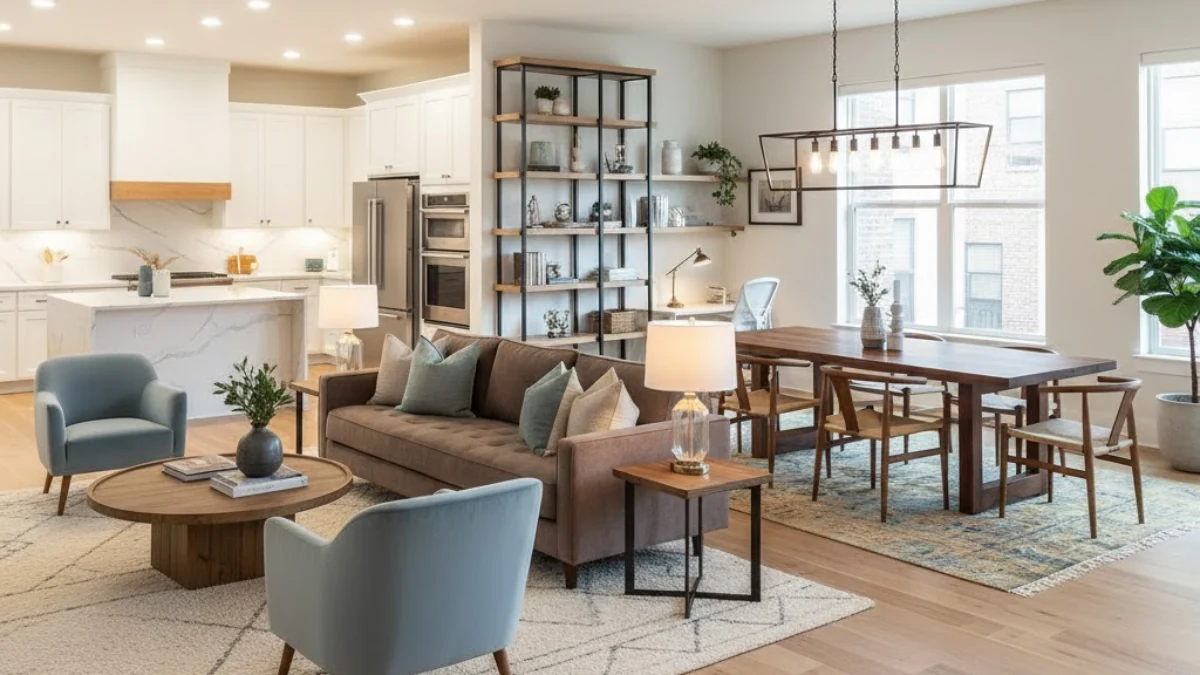
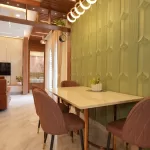
- Use Area Rugs: A large rug is the simplest and most effective way to anchor a “room.” Place one under your living room seating group and a different (but complementary) one under your dining table. This creates two distinct visual zones.
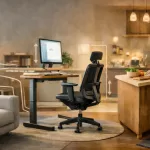
- Furniture as Partitions: A sofa with its back to the dining area creates a clear, yet penetrable, line. A tall, open-backed bookshelf can divide a living space from a home office nook without blocking light.
- Strategic Lighting: This is a designer’s secret weapon. A dramatic pendant light or chandelier hung low over the dining table instantly claims that space. A cluster of pot lights might define the kitchen work area, while warm table lamps create an intimate “bubble” in the living room.
2. The Unsung Hero: Consistent Flooring
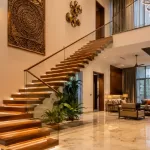
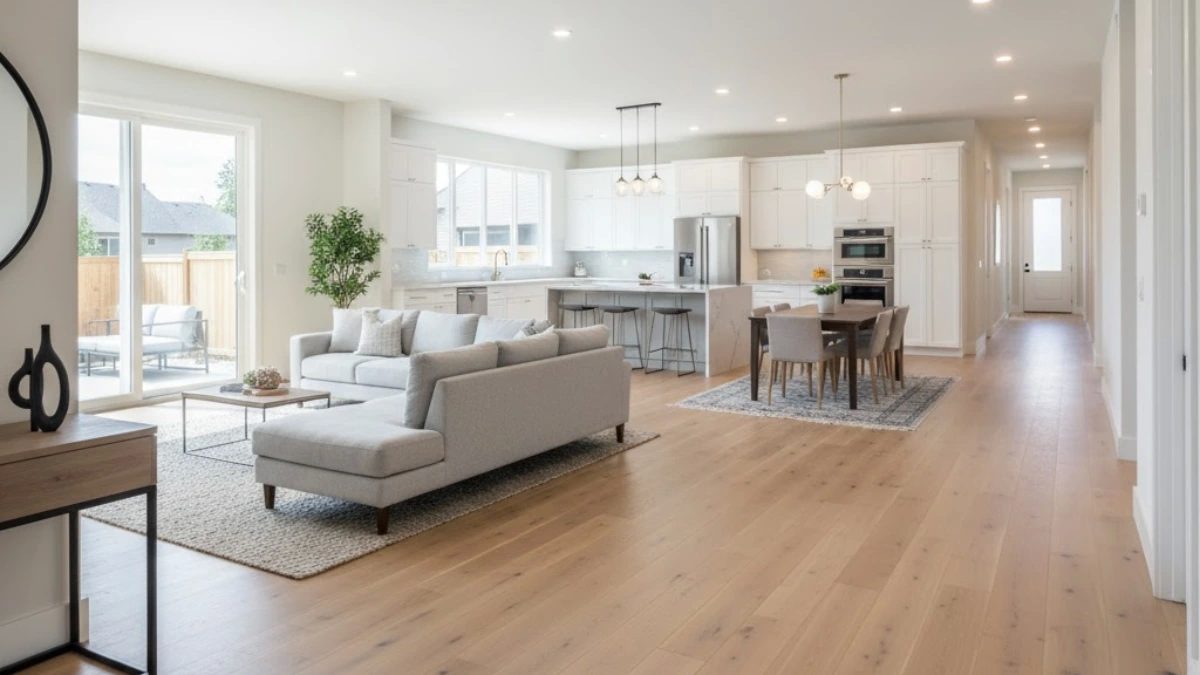
This is our number one tip. To make your single-floor home feel expansive, use the same flooring material throughout all the main living areas. When the hardwood, tile, or luxury vinyl flows uninterrupted from the entryway through the living room, kitchen, and hallways, the eye travels smoothly, making the entire space feel larger, more unified, and more intentional.
3. Chasing the Light (and Air)
When your home is wide, the central areas can sometimes feel dark. We solve this by actively bringing in natural light from all angles.
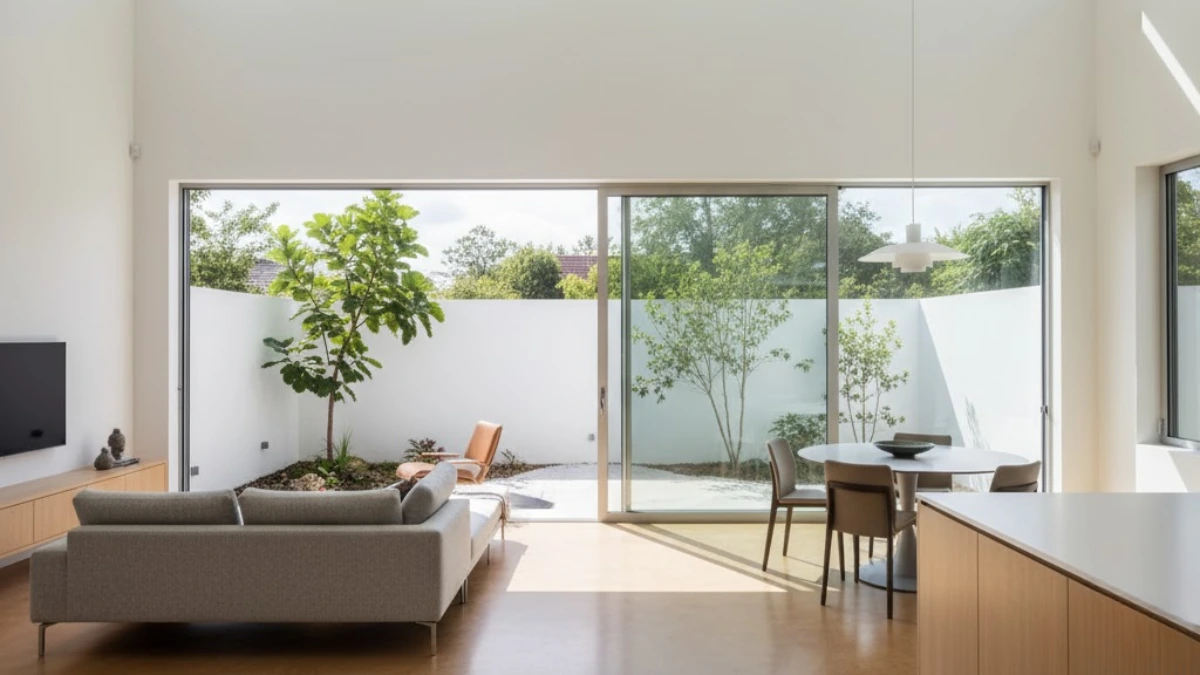
- Skylights and Solar Tubes: These are fantastic for bringing daylight into landlocked spaces like bathrooms, hallways, or the center of a large kitchen.
- Clerestory Windows: These are short, wide windows mounted high up on the wall, just below the ceiling. They flood a room with light while maintaining complete privacy, making them perfect for bedrooms and bathrooms.
- Interior Courtyards: For U-shaped or O-shaped homes, a central courtyard acts as a private light well, illuminating the home from the inside out.
4. Smart Storage is Non-Negotiable
A common drawback of single-story homes is the potential lack of an attic or basement. This means storage must be seamlessly integrated into the design.
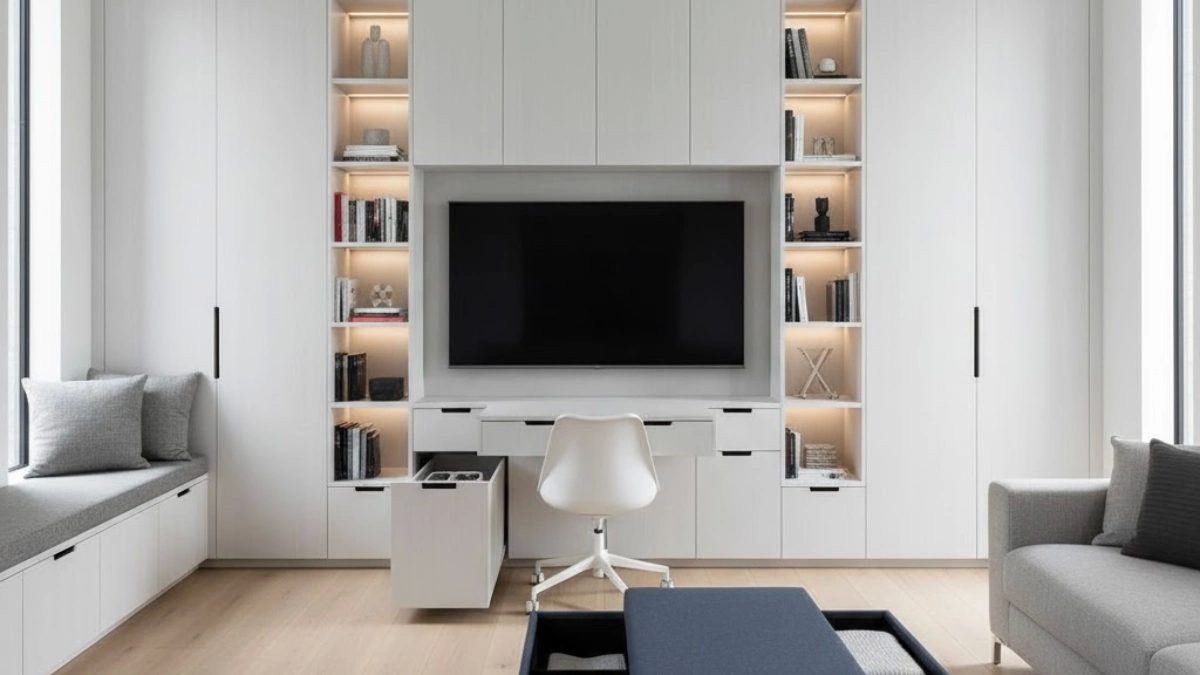
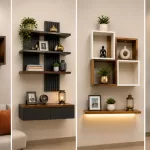
- Go Vertical: Floor-to-ceiling built-ins are your best friend. They use every inch of vertical space for storage while also drawing the eye upward, making the ceiling feel higher.
- Multifunctional Furniture: Think ottomans with hidden storage, beds with built-in drawers, and kitchen islands packed with cabinets.
- Modular Magic: This is where Homzinterio’s modular solutions truly shine. We can design a sleek, handleless wardrobe that appears to be just a beautiful feature wall. Our modular TV units can incorporate display shelving, hidden storage, and a desk, all in one cohesive piece.
5. A Cohesive Color and Material Palette
In a single-story home, you can’t have a “red room” next to a “blue room.” The visual flow is too important. Instead, choose a unified color palette for the entire home and stick to it.
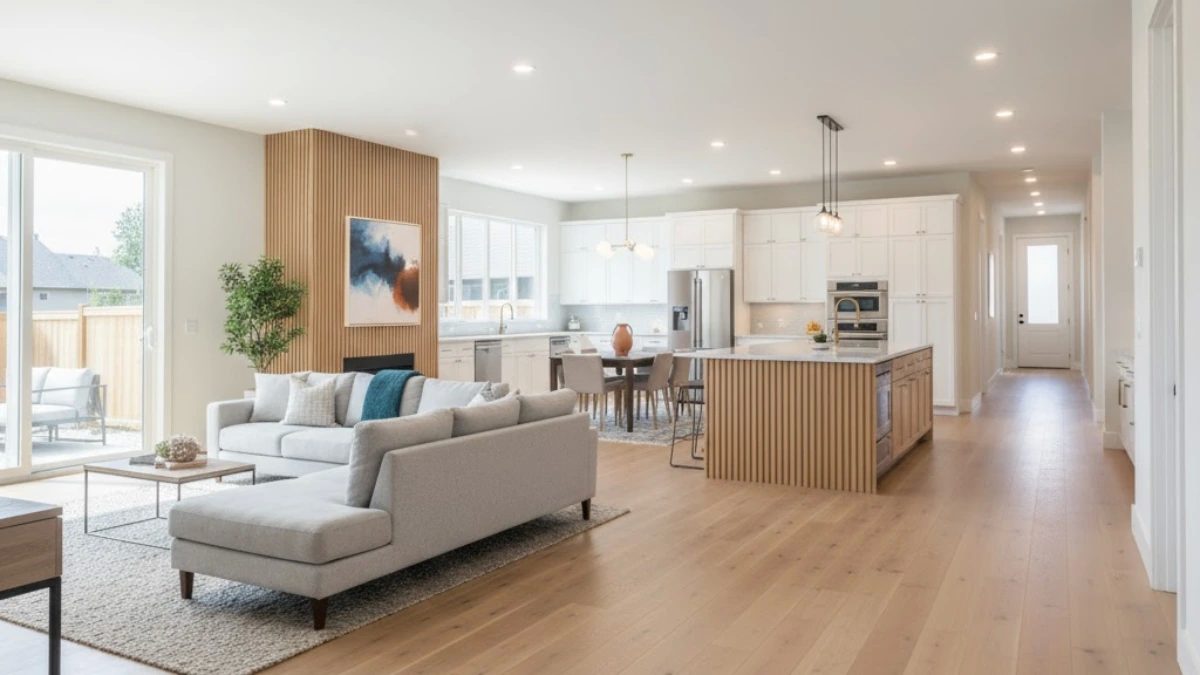
This doesn’t mean boring! You can have a base of 2-3 neutral colors (like white, grey, and a warm wood tone) that flow through every room. Then, add personality with accent colors in items you can easily change, like pillows, art, and decor. Use materials to add texture—a slatted wood accent wall in the living room that’s repeated on the kitchen island, or brass hardware that’s used consistently in the kitchen, bathrooms, and on doors.
Your Single-Floor Dream, Realized with Homzinterio
A single-floor house design is a celebration of smart design, effortless flow, and intentional living. It’s a home that adapts to you, not the other way around. By focusing on a smart layout, clever zoning, consistent materials, and integrated storage, you can create a space that feels both infinitely spacious and intimately cozy.
But you don’t have to do it alone.
The beauty of a single-floor plan is its potential for seamless modular integration. At Homzinterio, we specialize in creating smart, beautiful interiors that maximize every square inch. From a modular kitchen that blends perfectly into your living space to floor-to-ceiling wardrobes that provide a wall of storage, our design experts can help you craft a cohesive, harmonious, and stunning one-level home.
Ready to design a home that flows with your life?
Contact the design experts at Homzinterio today for a free consultation. Let’s create your perfect single-floor sanctuary.
FAQ
Q1: What is the main advantage of a single-floor house design over a multi-story home?
The main advantage is accessibility and long-term peace of mind. The complete absence of stairs makes it the ultimate “forever home,” perfect for safe living with small children and allowing homeowners to age in place without mobility worries. Additionally, it fosters a more connected family life, as all living spaces are on one level.
Q2: Do single-story homes lack storage space compared to homes with a basement or attic?
Single-story homes can sometimes lack the traditional storage provided by basements or attics, but this is overcome with smart, integrated design. The solution is to go vertical with floor-to-ceiling built-in cabinets and use multifunctional furniture (like ottomans or beds with hidden drawers). Modular solutions are key to maximizing every inch for storage without cluttering the floor space.
Q3: How can I ensure my single-floor home feels unified and expansive?
The most effective technique for cohesion is using consistent flooring throughout all main living areas (entryway, living room, kitchen, and hallways). When the same material flows uninterrupted, the eye travels smoothly, making the entire space feel larger and more intentional.