Pooja room design
A pooja room is one of the few spaces in a home that becomes part of everyday life. It is where families begin their mornings, celebrate festivals, and spend quiet moments in prayer. The perfect pooja room design doesn’t necessarily have to be showy and large. They are calm, functional, and harmonious with the overall interior design.
The first step at Homzinterio is always to understand how the room will be used when designing a pooja room. Our designers study the family’s daily prayer routine, available space, storage needs, natural light, ventilation, and the overall interior style before recommending a layout. Some families like to have a prayer room; others look for a small mandir that can be incorporated into the living room, dining room, or a corner of the house. All the designs are designed around the layout of the home and make the pooja room an integral part of the home instead of a separate room added.
With over 10 years of experience and 5000+ completed home interior projects, every pooja room at Homzinterio is thoughtfully designed to complement your home’s layout, lifestyle, and traditions. From space planning and material selection to lighting and storage, our designers focus on creating prayer spaces that are functional, elegant, and built to remain beautiful for years.
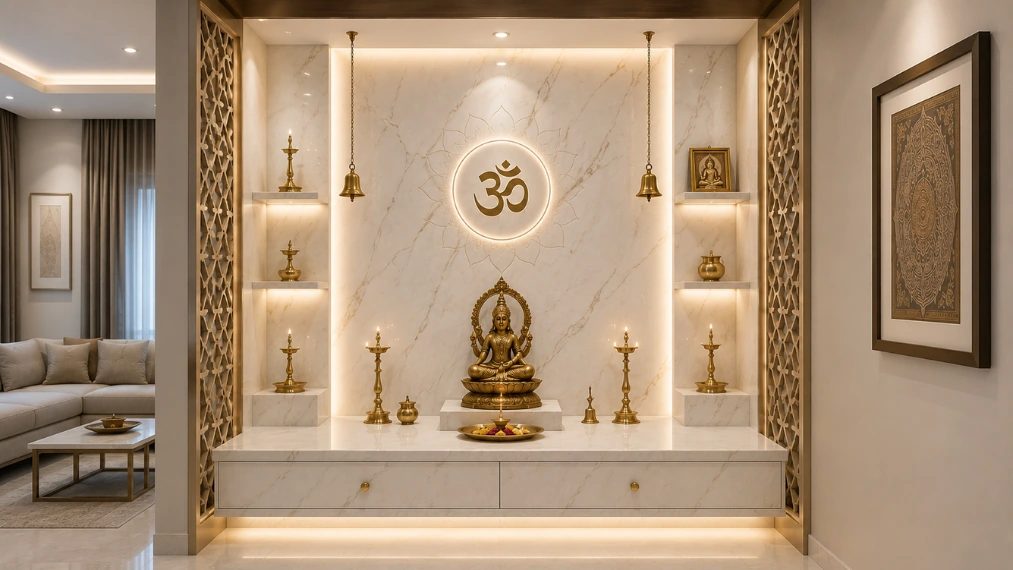
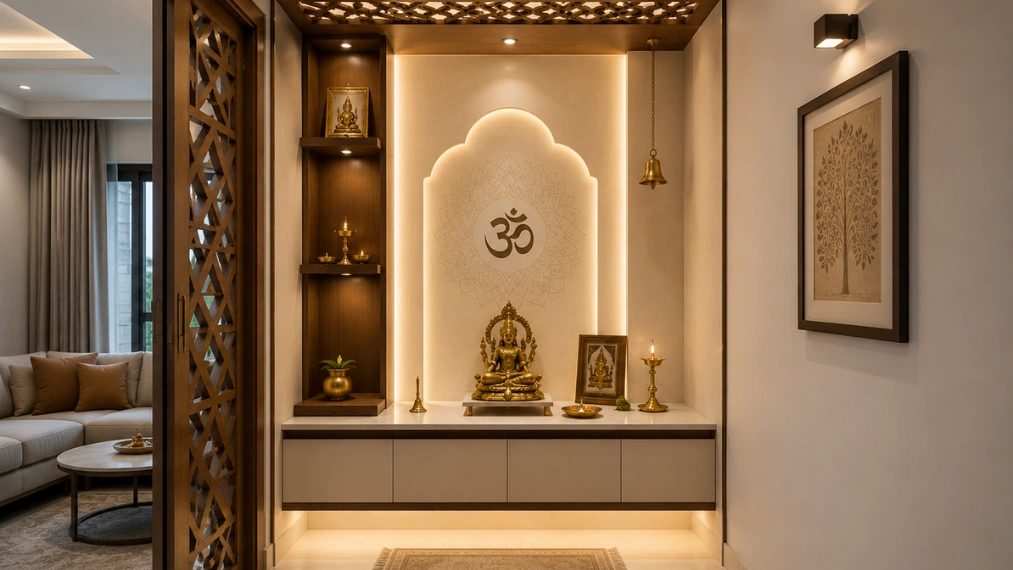
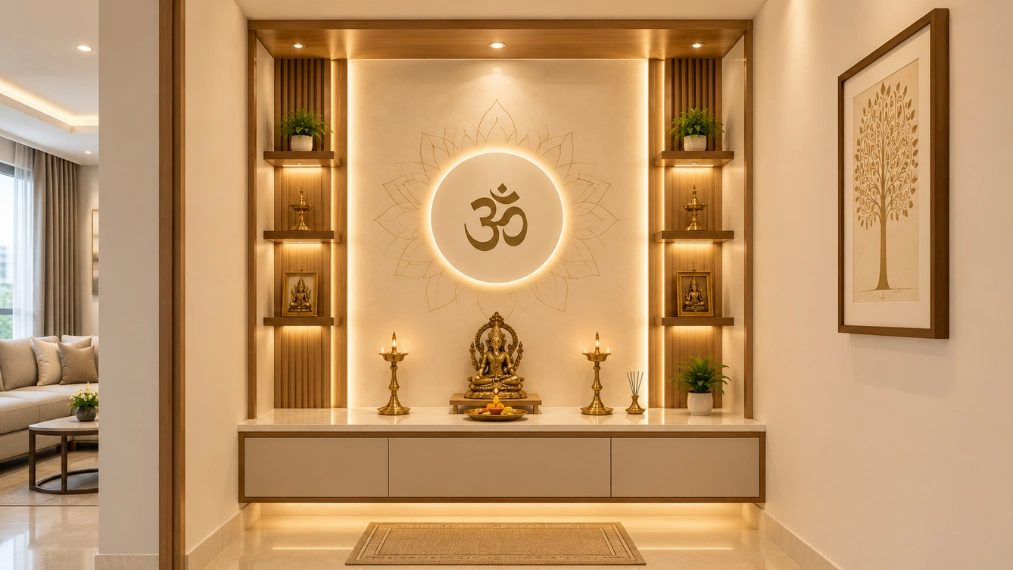
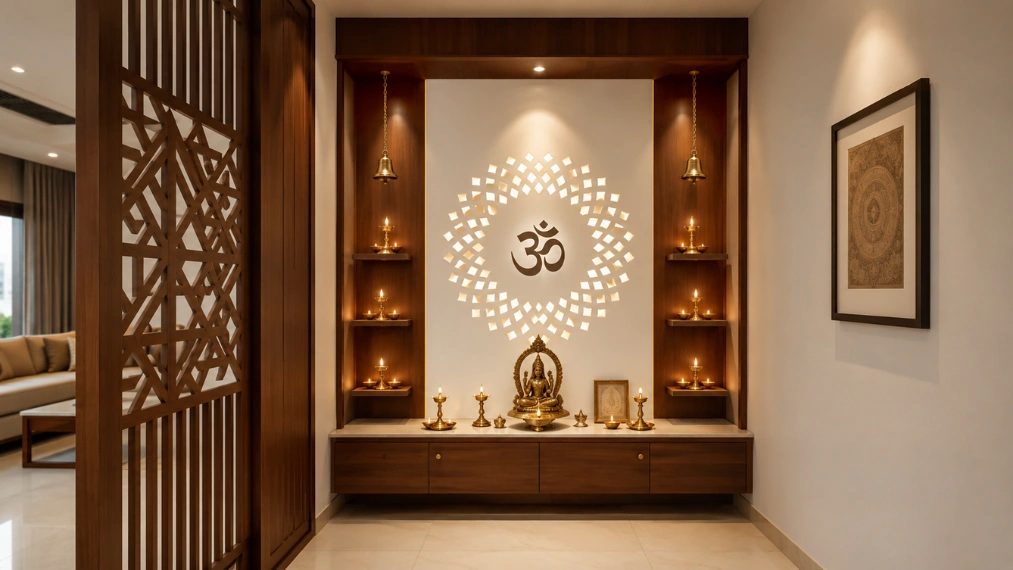
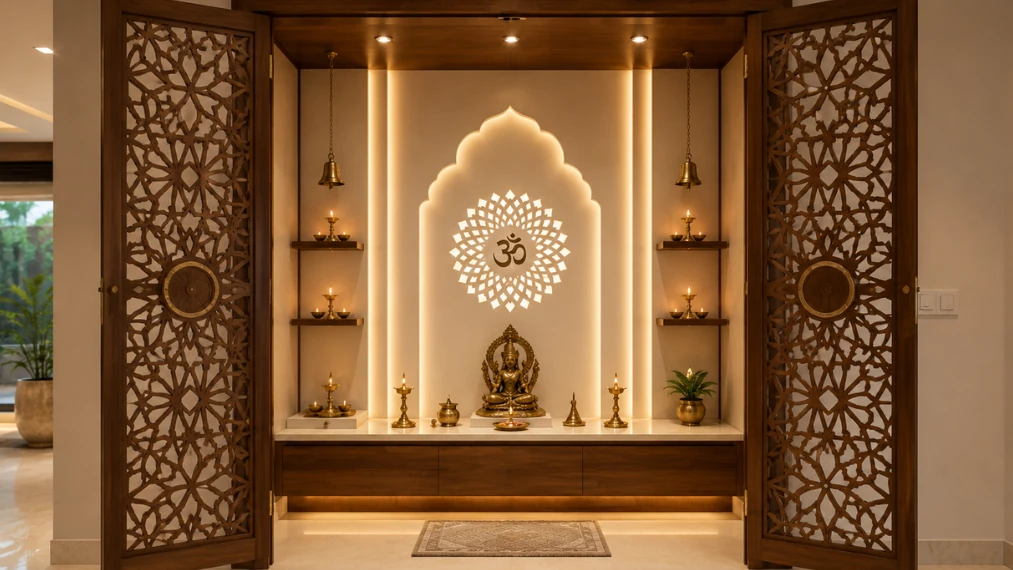
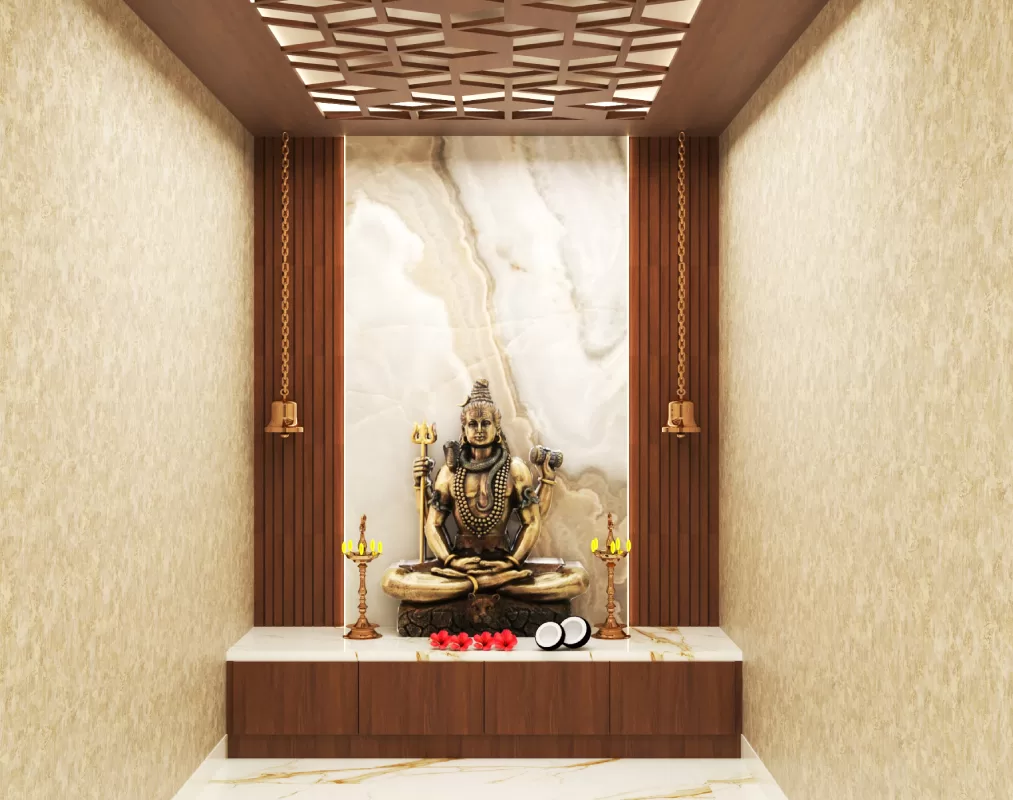
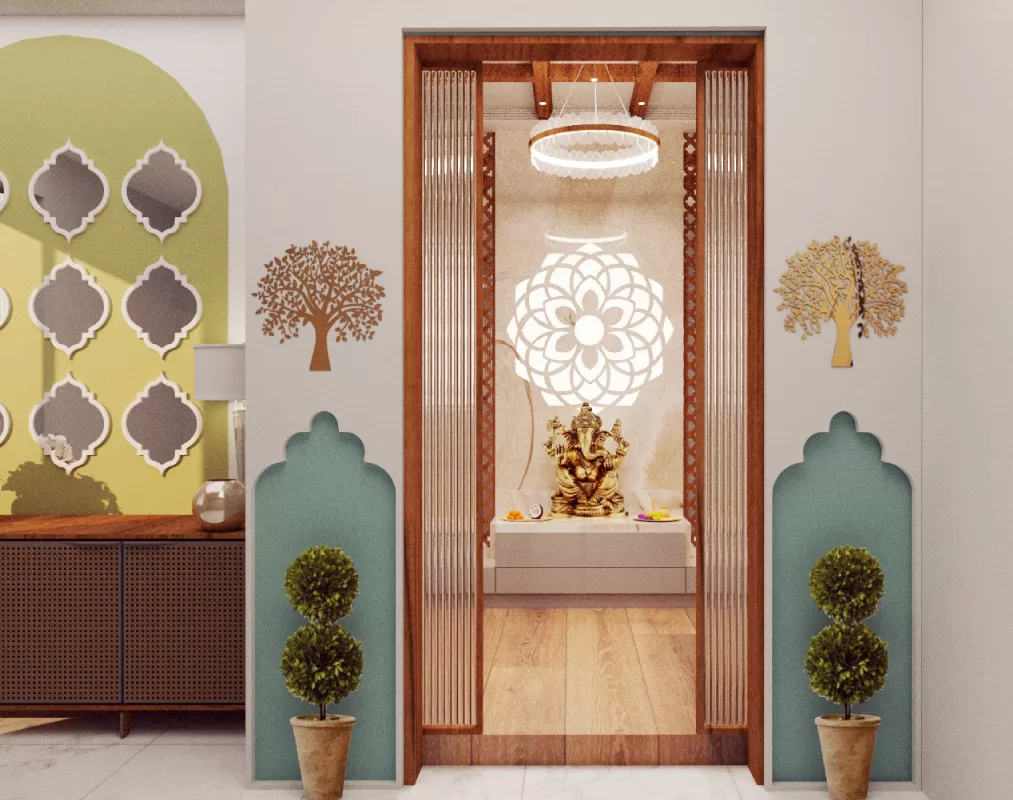
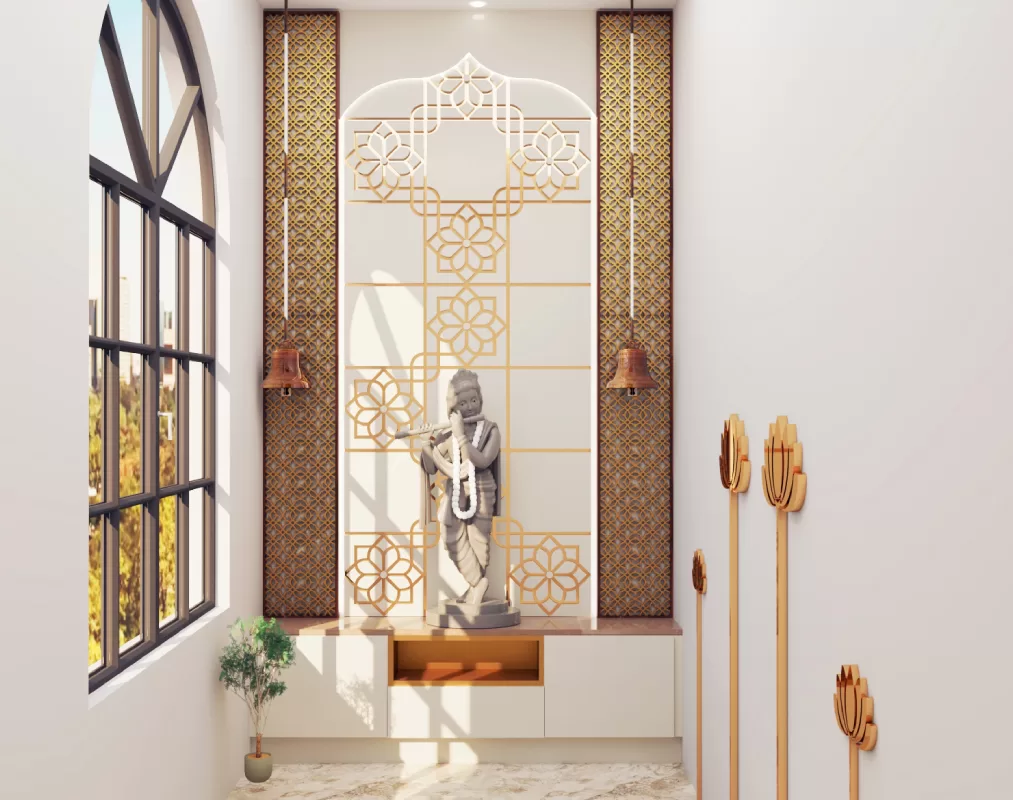
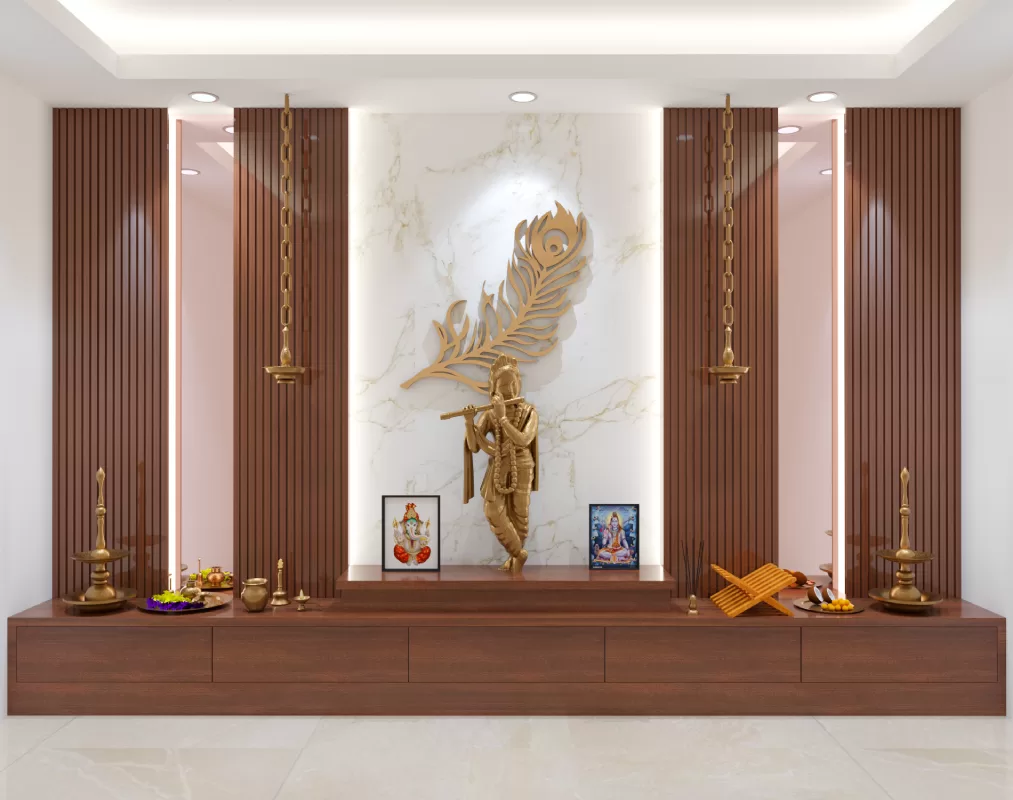
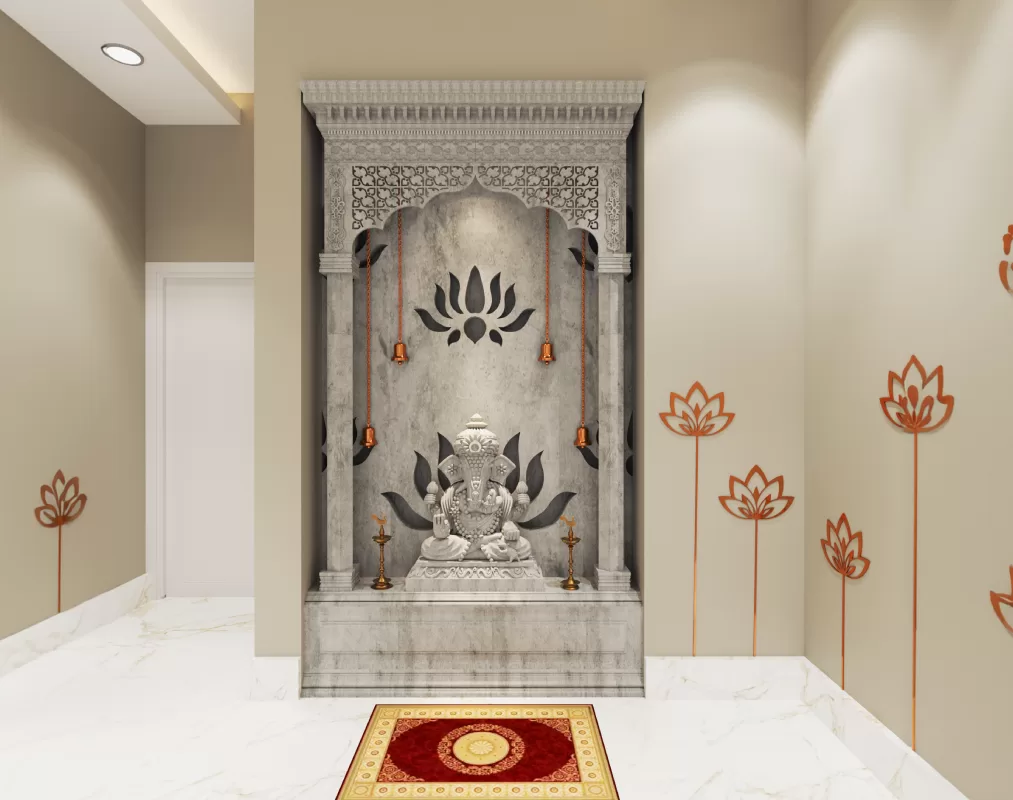
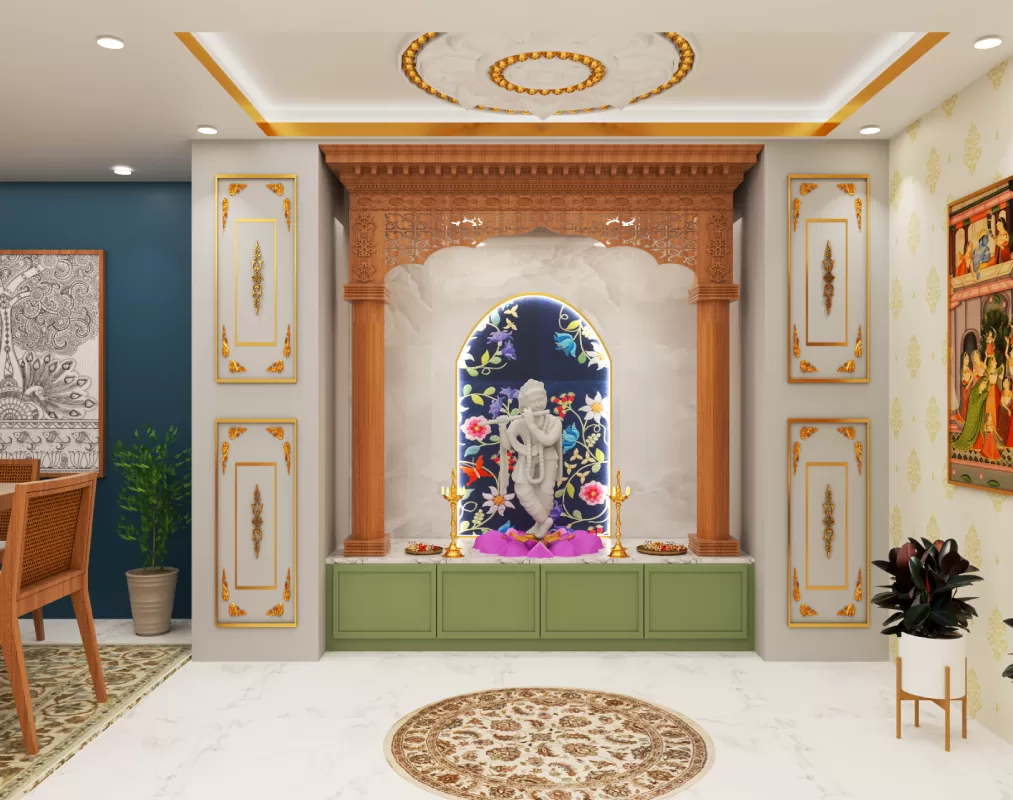
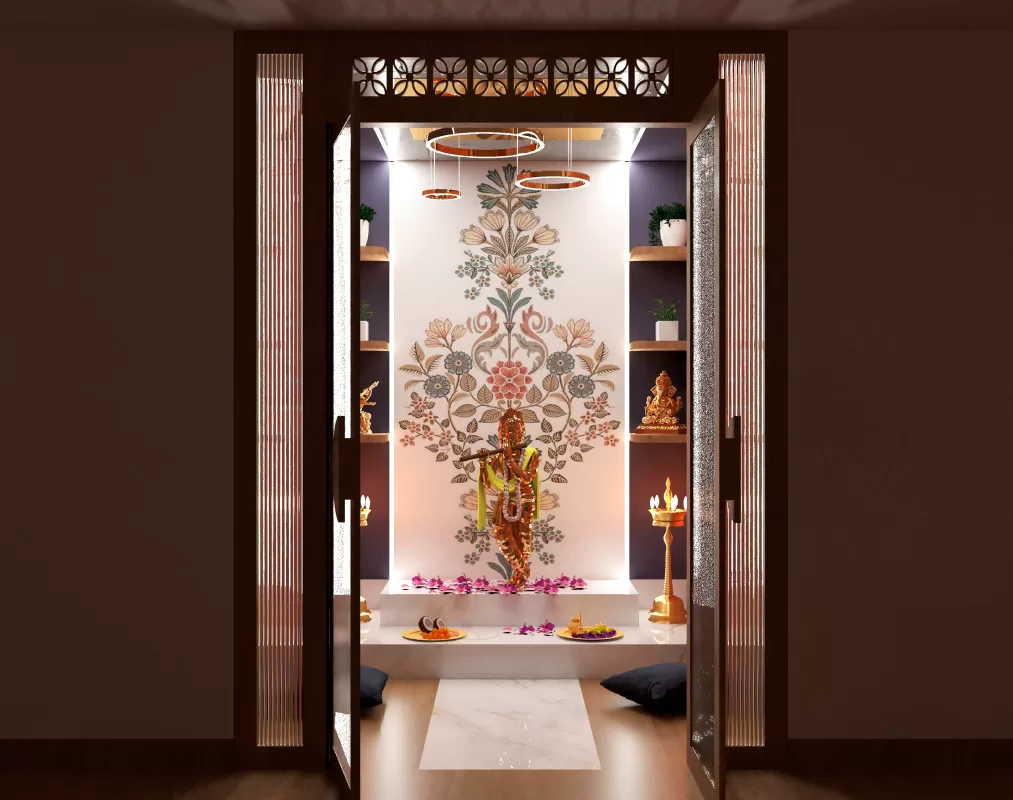
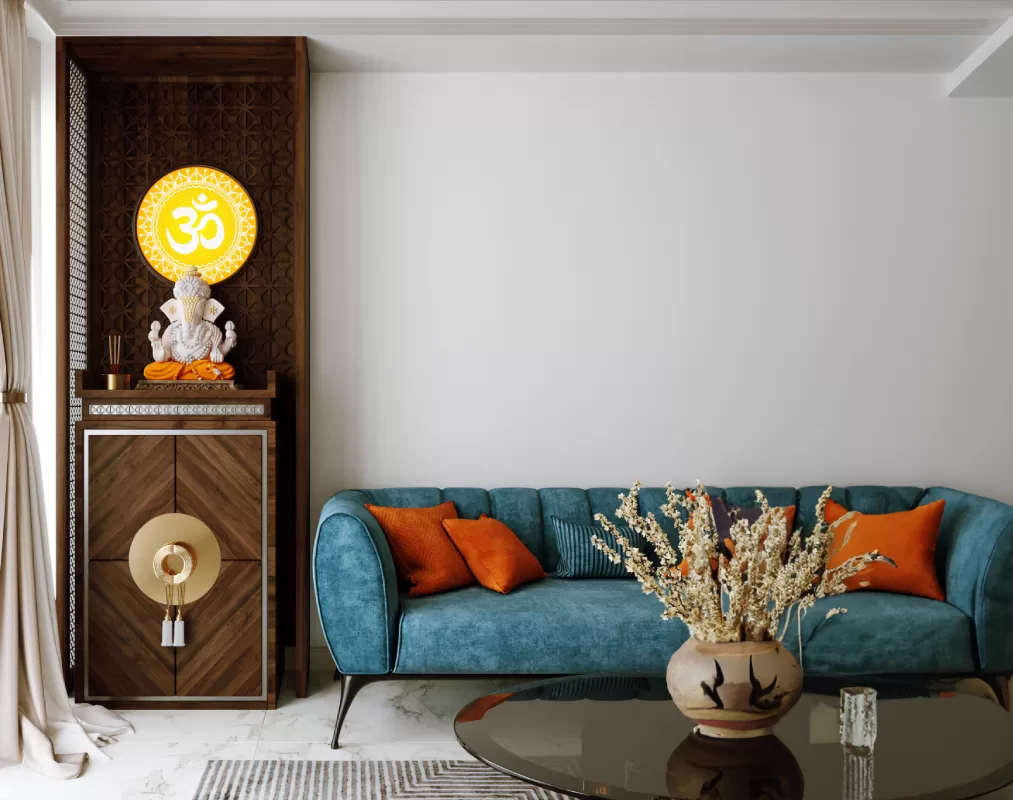
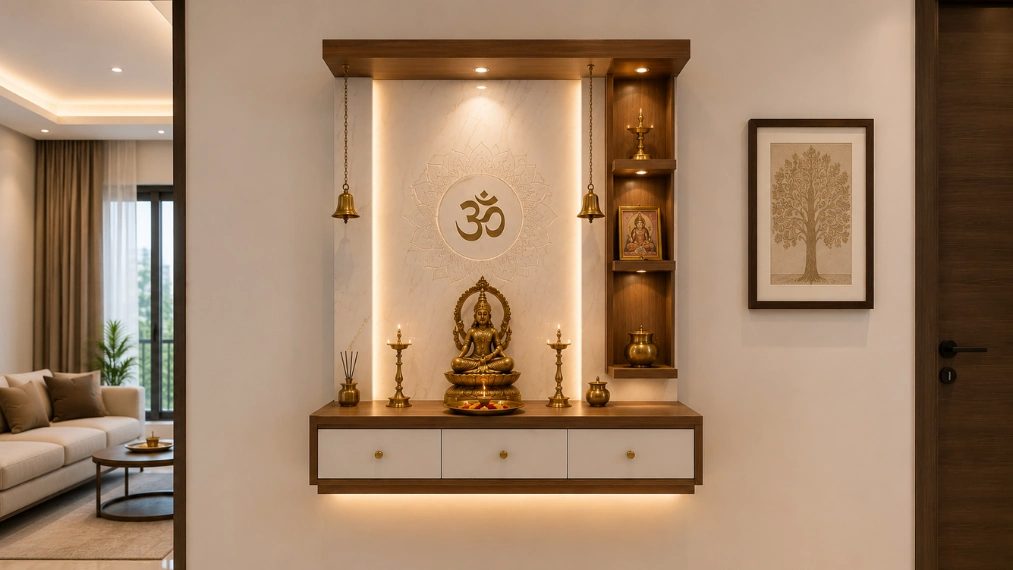
Explore Pooja Room Design Styles
Modern Pooja Room Design
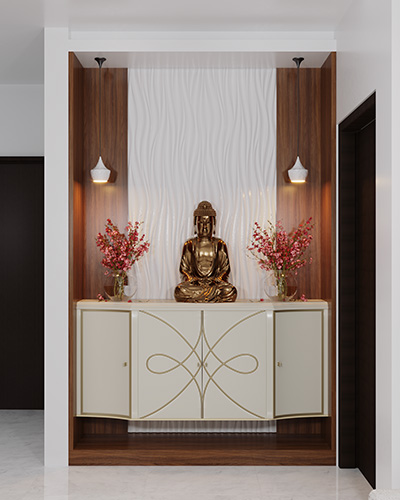
The contemporary Indian pooja room design is simple, functional, and subdued in its appearance. The space for prayer is defined by clean lines, warm wood finishes, hidden lighting, and well organised storage, without dominating the rest of the interiors. This style is particularly suitable for modern houses, as it seamlessly integrates with their overall architecture whilst maintaining an ideal setting for quiet moments of prayer and celebration.
Traditional Wooden Mandir
The traditional Indian craftsmanship is reflected in hand carved doors, modern jaali door design panels, carved pillars, and brass accents, which provide a comfortable place for everyday worship.
Marble Pooja Room Design
Marble is widely preferred for pooja rooms because it reflects natural light, stays cool, and is easy to maintain after daily rituals involving flowers, oil lamps, and incense.
Compact Pooja Unit
Floating shelving, hidden storage, and strategic lighting can be used to convert unused corners into functional prayer areas. These are particularly useful designs to consider in apartments where every inch of space is important.
Wall-Mounted Pooja Unit
The wall-mounted units do not occupy the floor space and allow for a dedicated space for idols, lamps, pooja essentials, etc. They make practical choices for the small house and will not affect functionality.
Glass Partition Pooja Room
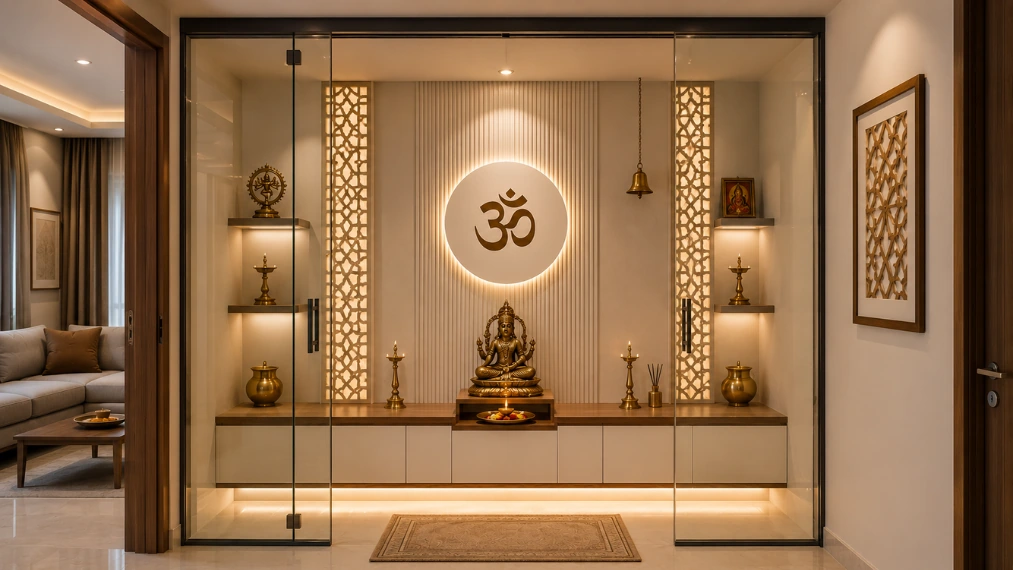
The use of glass partitions provides a sense of separation from the rest of the office space to form an area for prayer, whilst still providing good natural light and maintaining privacy.
How Our Designers Plan Every Pooja Room?
Each and every family has its own traditions, and it is necessary to give individuality to each pooja room. Our designers don’t just start picking materials or finishes, but consider the way the space will be used daily first.
After evaluating each of the following points, the interior design of each pooja room will be planned:
- The size of wall and floor space available
- Daily prayer routine and family preferences
- Natural lighting and fresh air
- Easy to move about inside the mandir
- Installation of the lamp, incense, books, and pooja blocks in the store
- Hanging and attaching to the ceiling straps and hooks
- Materials which are durable and easy to maintain
- The overall interior design of the house
Rather than following a standard layout, every pooja room is customized around your family’s prayer rituals, available space, storage requirements, and interior style. This ensures the space feels personal, practical, and naturally connected to the rest of your home.
Designer Insights
In most of the apartment interior projects we have undertaken, we have seen that one cannot always have a bigger mandir. A pooja unit with a well-proportioned layout and organised storage can make for a more enjoyable daily experience, and help to maintain an uncluttered environment.
One of those things that makes an impact is planning electrical points before installation. This can be done without any exposed wiring to allow for lighting, bells, and other accessories to be integrated into the system effectively. Also, select materials that can be easily cleaned if you live in a home where you use oil lamps, flowers, incense, and kumkum daily.
Many of the homes also have layouts that reflect Vastu Shastra. Over the years, our designers have created pooja rooms for apartments, villas, and independent homes with varying space constraints and lifestyle needs. One of the most common solutions is designing compact yet functional pooja units that maximise available space while maintaining a peaceful and clutter-free environment.
Choosing Materials that Last
The beautiful pooja room should remain good for years and years. Depending on the design of the home, our team suggests solid wood, quality laminates, natural marble, stone cladding, CNC cut jaali panels, fluted finishes, decorative glass, and brass accents. Each material is chosen with durability, low-maintenance, and ease of use in mind, as well as for its ability to match or flow with the interior of the home rather than being trendy.
The Details That Complete the Space
Often the pooja rooms that are most memorable are those that are superbly designed but not superfluously adorned. Behind-the-deity panel lighting is warm so as to provide a soft glow, hidden storage maintains a tidy house safe while keeping all things essential, and well-balanced shelving ensures that there is no visual clutter. Easy access, functional arrangements, and harmonious finishes keep the space inviting for both regular worship time and special occasions.
Find Inspiration for your Home
Every family follows its own traditions, and every home has its own character. The right pooja room should reflect both. Explore our collection of pooja room designs for apartments, villas, and independent homes to discover ideas that combine thoughtful planning, quality materials, and practical design. A well planned pooja room becomes a peaceful part of everyday life and continues to serve your family for years to come.
You may also interested in
Living Room Interior Design | Bedroom Interior Design | Dining Room Design | Study Room Design | Foyer Room Design| Kitchen Interior Design | Vanity Room Design | Wardrobe Closet Design | Kids Room Design | TV Unit Design | Balcony Interior Design | False Ceiling Design | Partition Design | Crockery Unit Design | All Themes
POOJA ROOM DESIGN – FREQUENTLY ASKED QUESTIONS
Pooja room is a very personal space that can be decorated according to the beliefs and devotion of the owner or resident. Pooja room designing is a very simple process as it always uses warm lighting to represent the omnipresent's belief. The main temple or Thapana is set in the centre, while other essential materials like oil, agarbatti, etc, can be kept in a side formed small closet or cabinet.
Materials used for pooja room interiors are:
* Wood- teak, sheesham.
* Marble
* Granite
* Glass
Yes, definitely interior designers for a pooja room can be created in a small apartment with careful space calculations.
- Idols of Deities
- Diya
- Pooja Plate
- Prayer Books
- Agarbatti
According to Vastu, designing a pooja room in the basement of top floors is not preferable.
A good place for a pooja room is the ground floor with an east facing temple.
Colours usually white, light yellow and cream are preferred best for pooja rooms.
No, it is not considered ideal to place a pooja room near the kitchen or dining room as the kitchen is associated with agni (fire element) whereas a pooja room is a pure and spiritual space. The kitchen holds a lot of ingredients and foods which we consider inauspicious to present before a temple. Hence this is another reason Pooja room is not to be placed near the kitchen or dining area.
Modern Furniture and designs have a lot of beneficial significance. It looks clean and minimalistic, space efficiency, fluent functionality etc. Some of the modern furniture that we can infuse in a pooja room design are Floating-Mounted shelves, small side tables, modern lighting, etc.
The smallest functional space for puja room interior are 3 feet * 3 feet.
Generally, it is not advised to have a Pooja room interior without doors.
You can design a pooja room at home in the ground floor facing east direction, with proper interior designing including the idols, diya, agarbatti which can be stored in a proper side cabinet.
Yes, water element is a positive symbol of purity and cooling effect. Hence it is a positive imbibe in the pooja room design.
The Vastu Shastra has some practical considerations that we can implement while making pooja room designs- It should be in east or north-east directions. Avoid the south direction. It should be preferably on the ground floor. An elevated platform is a must for idol placement. There should be doors at the entrance and the colours should be calm, soothing ones.