Pooja Room Design Frequently Asked Questions
How do I design a Pooja unit for a small apartment?
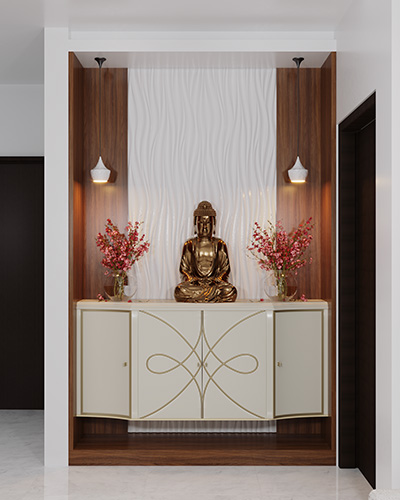
For compact spaces, wall-mounted Puja units or "Pooja mandirs" integrated into a crockery unit or a niche in the living room work best. Use mirrors and light colors to make the small space feel larger.
What is the ideal direction for a Pooja room according to Vastu?
The North-East (Ishanya) corner is considered the most auspicious direction for a Pooja room. If that isn't possible, East or North directions are the best alternatives to ensure positive energy flow.
Is a CNC jali design suitable for a Pooja room?
Yes, CNC jali designs are very popular. They provide a beautiful aesthetic, allow for ventilation (necessary for incense smoke), and create an intricate play of light and shadow.
How do I choose between an open vs. closed Puja unit design?
Open units are great for quick prayers and small spaces, while closed units with doors offer privacy, protect the idols from dust, and are preferred if the unit is located in a multi-purpose room like the dining area.
What are the latest trends in Pooja room door designs?
Current trends include glass-paneled doors with etched lotus motifs, wooden doors with small brass bells, and sliding jali doors that save space while looking elegant.
Can I have a Pooja unit in the living room?
Yes, a living room Puja unit is a common feature in urban Indian homes. You can use a decorative partition or a high-end stand-alone cabinet to distinguish the sacred space from the rest of the room.
How does Homzinterio balance Vastu Shastra with modern apartment layouts?
At Homzinterio, we understand that modern floor plans don't always offer a perfect North-East corner. Our designers specialize in Vastu-correction through design. We use specific materials, colors, and placement techniques to ensure your space remains spiritually compliant without compromising the flow of your modern home.
How does Homzinterio handle temple bell integration in modern doors?
We specialize in Acoustic Door Designs. We can integrate traditional brass bells into CNC-cut wooden frames or glass shutters. This allows the bells to chime when the door is moved, blending a sensory traditional experience with a high-end, modern aesthetic.
Why is "Layered Lighting" important in a Puja unit?
Standard overhead bulbs can create harsh shadows. Homzinterio uses three layers of light:
- Ambient: Soft cove lighting for the whole room.
- Focus: Spotlights on the deity's face.
- Accent: Backlighting for the Jali or wall panels to create depth and a sense of "depth of field" during evening prayers.