The Silent Symphony of Space: A Masterclass in Minimalist Interior Design
The Silent Symphony of Space: A Masterclass in Minimalist Interior Design
In the frantic, high-decibel world of 2026, the home has evolved from a mere dwelling into a critical tool for psychological preservation. For interior designers with more than a decade of experience, the Minimalist Interior Design Theme represents the ultimate architectural “deep breath.” It is a design philosophy that transcends the mere removal of clutter; it is a rigorous, intentional pursuit of simplicity, functionality, and the essential.
At its core, minimalism focuses on achieving a profound sense of calm and balance by stripping away the superfluous to reveal the inherent beauty of space, light, and form. It is an “art of restraint,” where every line, every texture, and every shadow is curated to serve a purpose.
1. The Architectural Ethos: Space, Light, and Lines
The foundation of a successful minimalist interior is not found in what is added, but in the integrity of the “shell” itself. A seasoned designer treats the room as a canvas where Open Spaces are the primary medium.
The Luxury of Open Spaces
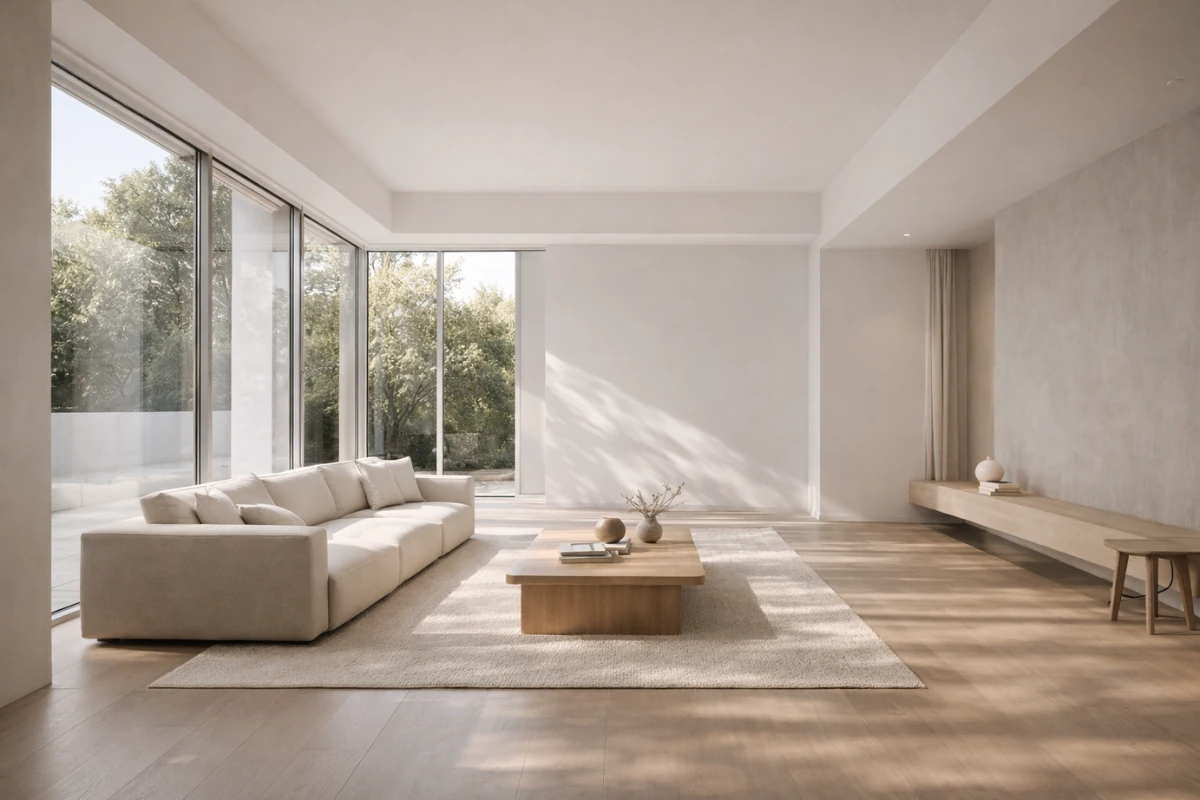
Minimalism relies on the concept of “negative space” the areas left unoccupied. These open volumes allow the eye to rest and the mind to expand. By maintaining an uncluttered floor plan, the home facilitates a seamless flow of movement and energy, which is essential for a peaceful domestic life.
The Power of Clean Lines and Geometric Shapes
Minimalist architecture is defined by Clean Lines and Geometric Shapes. Whether it is the sharp, 90-degree angle of a floating shelf or the perfect circle of a recessed ceiling light, these forms provide a sense of mathematical order. This structural clarity eliminates visual “noise,” creating an environment that feels organized and deliberate.
Natural Light as a Material
In minimalism, Natural Light is treated as a tangible building material. Expansive, unobstructed windows are a staple of the style, serving to blur the boundary between the sanctuary of the home and the world outside. The interplay of light and shadow across a bare wall provides all the “decoration” a minimalist room requires, shifting and evolving throughout the day to create a dynamic, living atmosphere.
2. The Palette of Tranquility: Neutrals and Monochromes
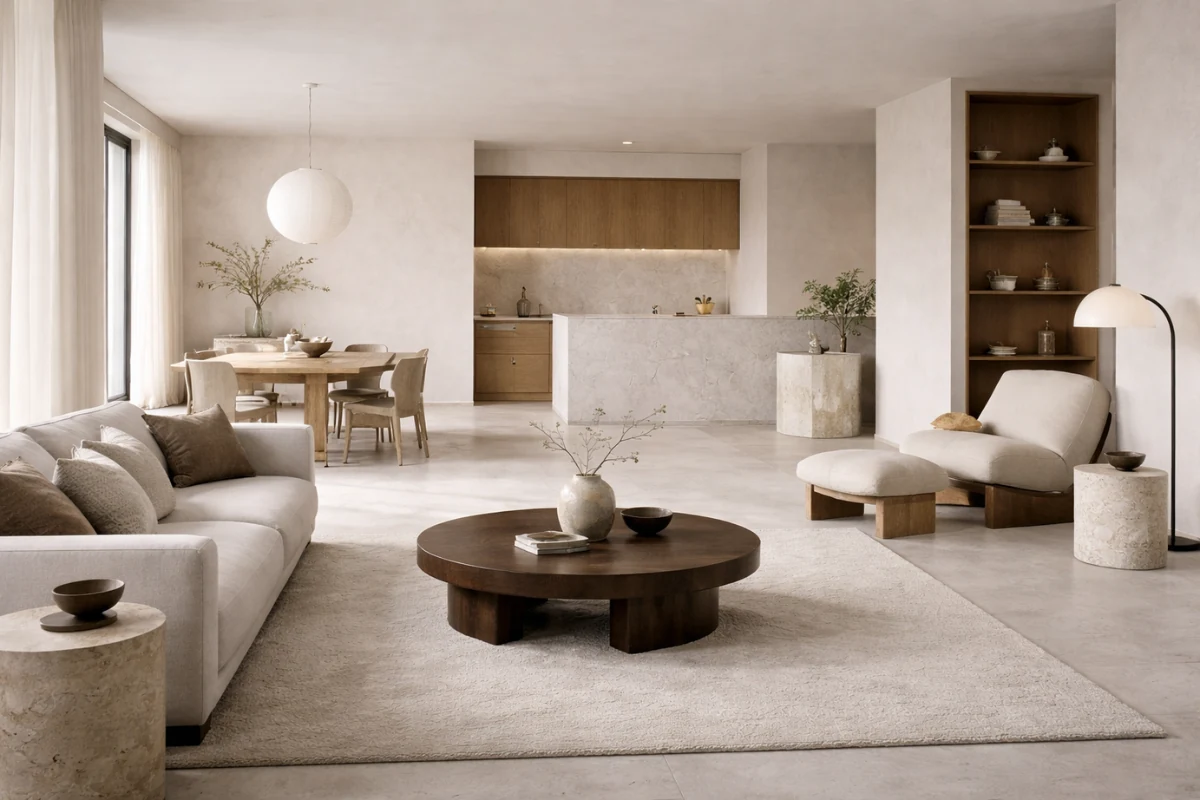
The Neutral Color Palette is the heartbeat of the minimalist aesthetic. By avoiding jarring, high-saturation colors, designers create a cohesive environment that promotes a state of “low-arousal” relaxation.
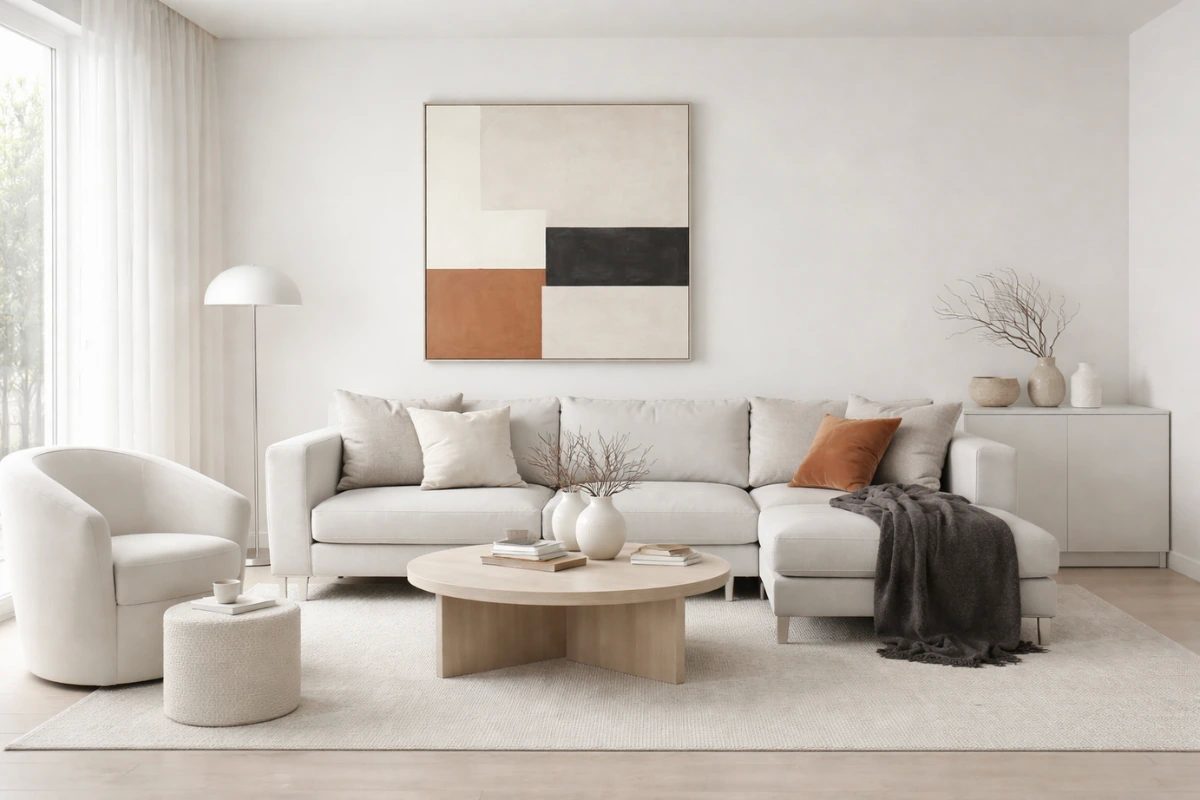
- The Foundation: Whites, off-whites, and soft grays form the primary canvas. These tones maximize light reflection and provide a timeless, airy feel.
- Monochromatic Accents: Depth is introduced not through different colors, but through different shades and tints of the same hue. Monochromatic Accents—such as a charcoal throw on a light gray sofa—add sophisticated layers without breaking the visual unity of the room.
- Bold Color (The Exception): Occasionally, a single Bold Colour may be used in an artwork or a single cushion to act as a singular, powerful focal point within the neutral landscape.
3. Materiality and Furniture: Quality Over Quantity
For a designer with a decade of tenure, the mantra of minimalism is always Quality Over Quantity. When there are fewer items in a room, the craftsmanship of each individual piece becomes paramount.
Functional Furniture with Clean Lines
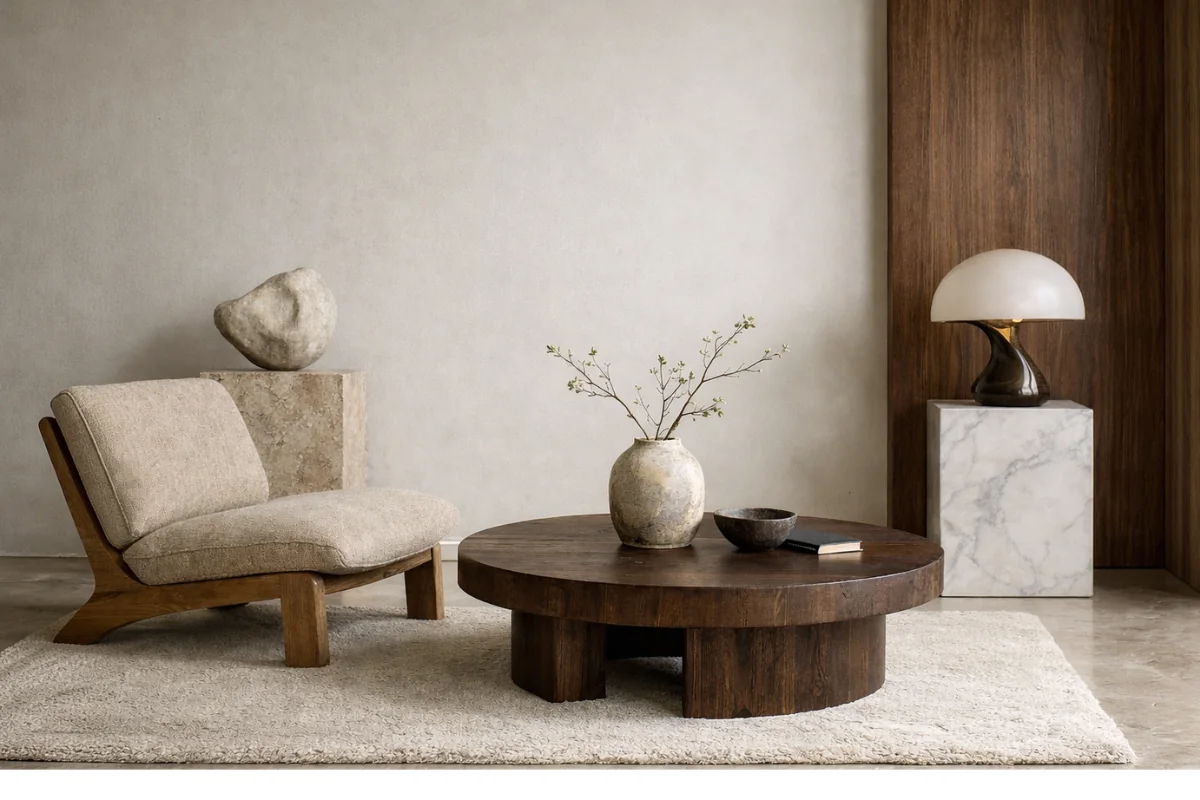
Minimalist furniture must be Functional Furniture. Every piece is selected for its utility first. Clean Line Furniture often featuring exposed wood frames or slim metal legs is preferred to avoid visual bulk.
- Tactile Textures: Because the color palette is restrained, designers use materials like cotton, linen, and wool to introduce tactile warmth. The subtle weave of a high-quality cotton fabric provides a sensory richness that compensates for the lack of ornate patterns.
The "Less is More" Decor Philosophy
Minimalism utilizes Limited Decor. A single, high-quality vase or a piece of abstract Urban Art often carries more weight than a shelf full of trinkets. This “editing” process ensures that the items that remain are those that truly resonate with the homeowner.
4. The Functional Masterclass: Zoned Minimalism
Achieving a clean and uncluttered space requires strategic planning, particularly in high-activity areas like the bedroom and living room.
| Zone | Design Strategy |
|---|---|
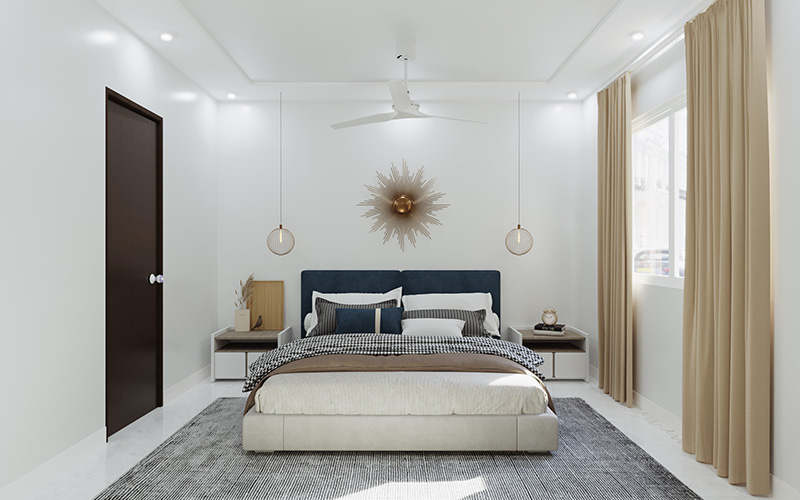
| The Minimalist Bedroom | Prioritize low platform beds and hidden storage. The goal is to eliminate all visual distractions that might interfere with sleep. |
| The Living Room | Use modular seating and "invisible" shelving that blends into the walls. Focus the layout toward a single source of natural light or a view. |
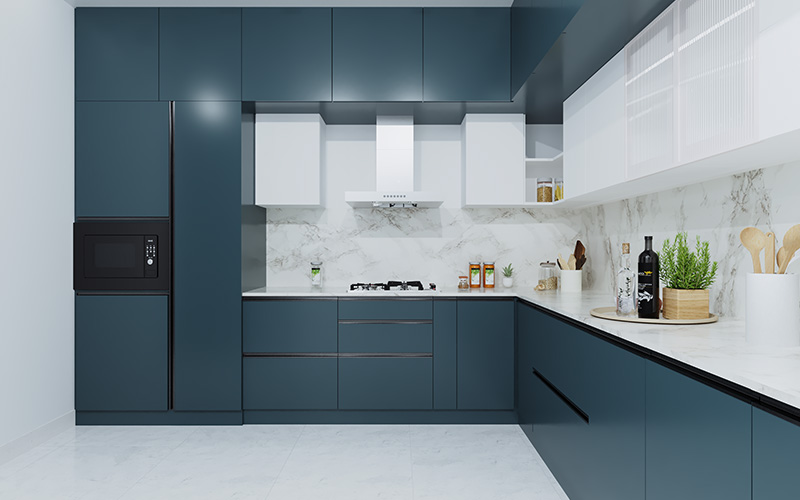
| Storage Solutions | Minimalism is often supported by "hidden" complexity. Floor-to-ceiling handle-less cabinetry allows for the storage of life's necessities while maintaining a bare exterior. |
Final Professional Perspective: The Luxury of Choice
Minimalist Interior Design is not a “cold” or “empty” style; rather, it is the luxury of choosing only what is necessary. For the modern inhabitant in 2026, it offers a powerful antidote to the overwhelm of the digital world. By embracing Clean Lines, Open Spaces, and a Neutral Color Palette, designers create a space that does not demand anything from its occupant, but instead gives back a sense of profound clarity and peace.
For More Enquiry
It is an investment in the “essential,” proving that in the world of luxury design, often the most sophisticated statement one can make is saying nothing at all.
FAQ About minimalist interior design
1. What is minimalist interior design?
Minimalist interior design is a style that focuses on simplicity, clean lines, and functional spaces. The concept follows the idea of “less is more,” where unnecessary elements are removed to create a calm and uncluttered environment. Minimalist spaces typically use neutral colors, natural materials, simple furniture, and plenty of natural light to achieve a balanced and peaceful atmosphere.
2. Is minimalist design expensive?
Minimalist design is not always expensive. While some minimalist interiors use high-quality furniture and premium materials, the core principle is reducing unnecessary items. This can actually help save money by focusing only on essential pieces instead of filling the space with excessive decor. The cost mainly depends on the materials, furniture quality, and overall design approach.
3. How much does minimalist interior design cost?
The cost of minimalist interior design can vary depending on the size of the space, materials used, and level of customization. On average, minimalist interior design can range from ₹1,500 to ₹5,000 per square foot in India. Basic minimalist designs using simple furniture and finishes are more affordable, while luxury minimalist interiors with premium materials and custom furniture can cost more.
4. Why is minimalist interior design so popular?
Minimalist interior design is popular because it creates clean, calm, and functional living spaces. In modern lifestyles where people prefer clutter-free environments, minimalist design helps reduce stress and improve focus. Its timeless aesthetic, easy maintenance, and ability to make spaces look larger and brighter also contribute to its growing popularity.
5. What colors work best in minimalist homes?
Minimalist homes typically use neutral and soft color palettes to maintain a clean and balanced look. Popular colors include white, beige, cream, light gray, taupe, and soft earth tones. These colors create a calm atmosphere and allow natural materials like wood, stone, and fabric textures to stand out without overwhelming the space.