The Ultimate Guide to Kids Room Interior Design: Creating Magical Spaces for Boys and Girls
The Ultimate Guide to Kids Room Interior Design: Creating Magical Spaces for Boys and Girls
Designing a child’s bedroom is perhaps the most exciting yet challenging project for any homeowner. Unlike a living room or a master bedroom, a kid’s room is a dynamic space. It is a sleeping sanctuary, a play zone, a study hall, and a daydreaming station—all rolled into one. For Indian parents, specifically in bustling cities like Bangalore, the challenge is often doubled: how do you fit all these functions into a compact apartment room without making it look cluttered?
At Homzinterio, we believe a child’s environment shapes their creativity and growth. Whether you are looking for a kids room design for boys or a dreamy sanctuary for girls, this guide covers everything you need to know about creating a functional, safe, and aesthetically stunning space.
The Core Principles of Kids Room Interiors
Before diving into gender-specific themes, it is crucial to understand the pillars of a successful kids’ room design. These elements ensure the room grows with your child.
1. Safety First, Always
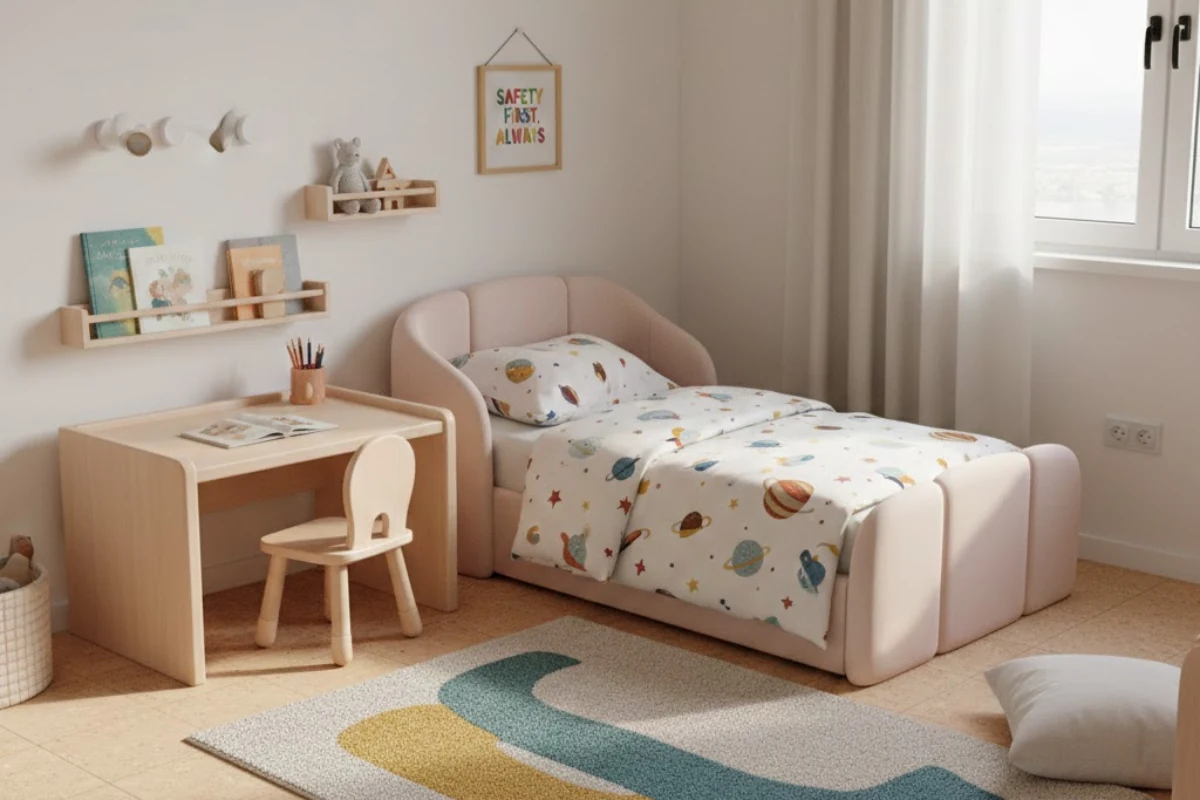
Safety is non-negotiable. When planning interiors for children, opt for rounded corners on furniture to prevent injuries during playtime. Avoid sharp edges on bed frames and study tables. For flooring, consider anti-slip tiles or wooden flooring that offers better grip and is softer on the knees.
2. The Magic of Zoning
A well-designed room must have distinct zones. Even in a small 10×10 room, you can create visual separation:
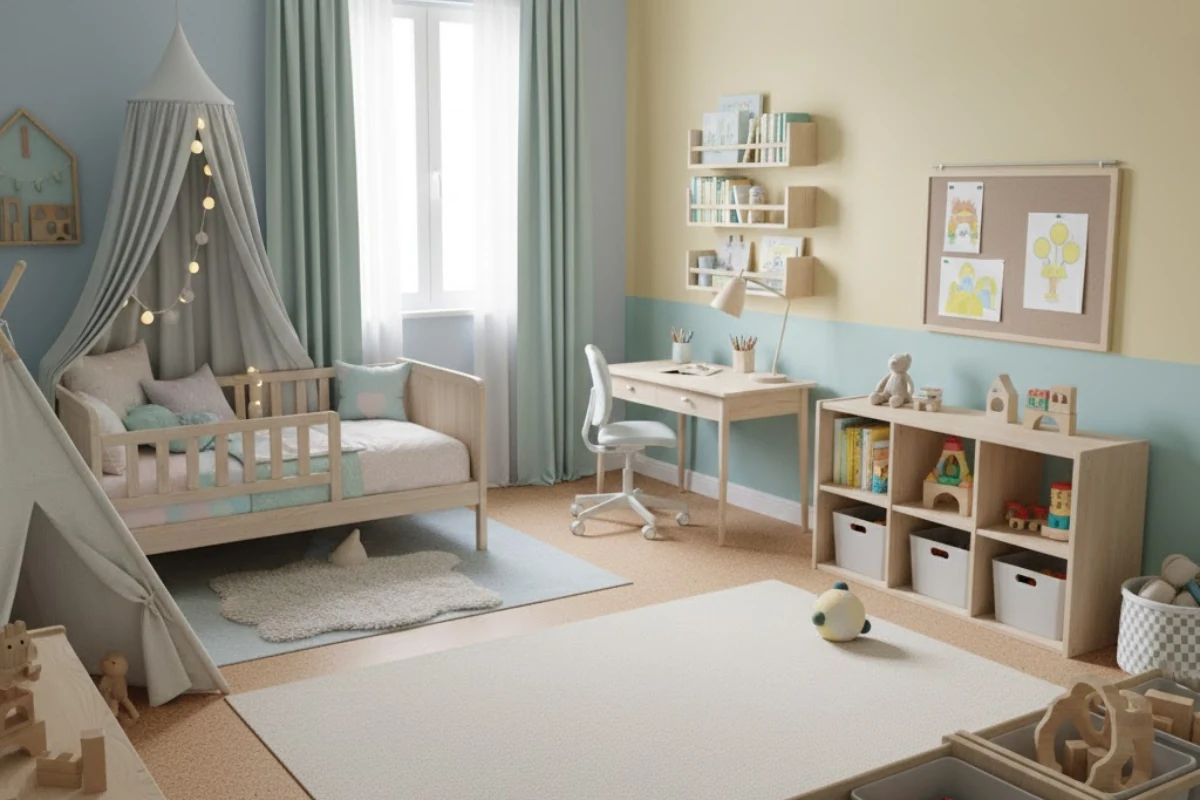
- The Sleep Zone: Cozy, calm, and free of distractions.
- The Study Zone: Well-lit, organized, and ergonomic.
- The Play Zone: Open floor space with accessible storage.
3. Smart Storage Solutions
“A place for everything and everything in its place.” This is easier said than done with kids! To keep the clutter at bay, invest in:
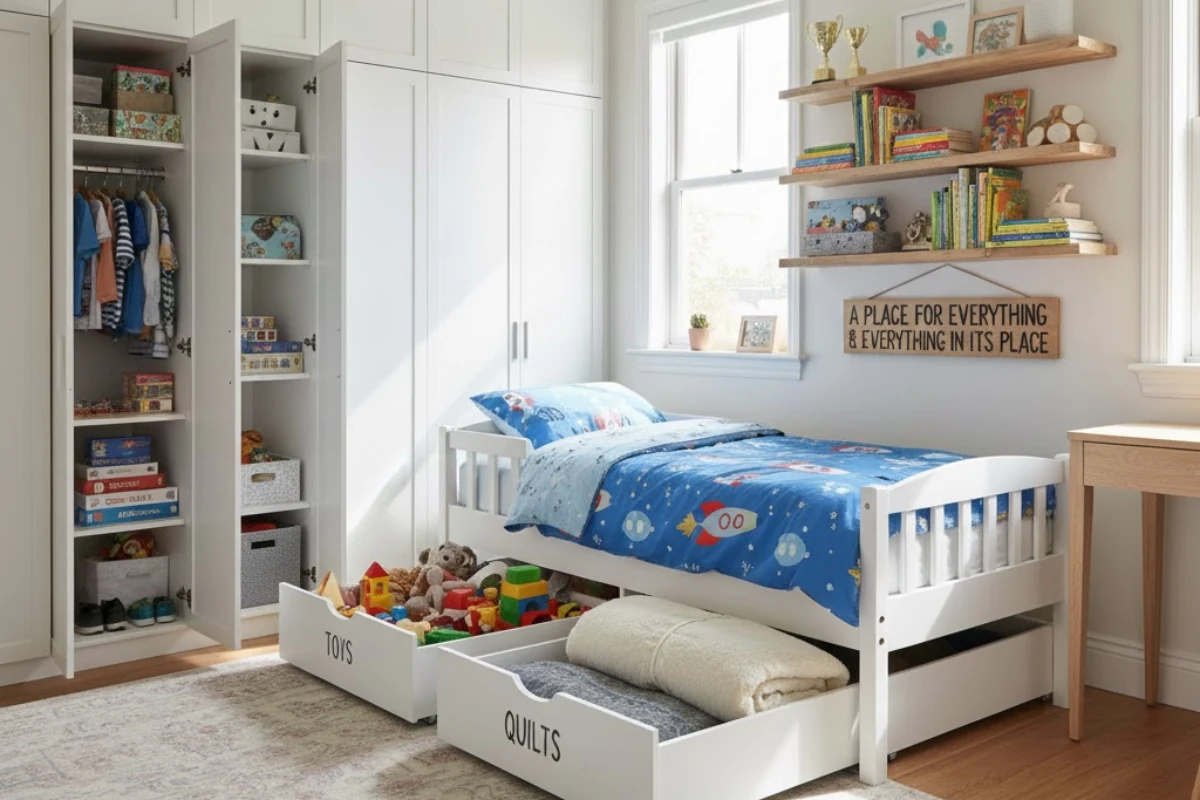
- Floor-to-ceiling wardrobes: Maximize vertical space.
- Under-bed storage: Perfect for bulky toys or winter quilts.
- Open shelving: For books and trophies, encouraging them to keep things tidy.
Kids Room Design for Boys: Beyond Just Blue
Gone are the days when a boy’s room meant painting four walls blue and throwing in a car-shaped bed. Modern kids room interior design for boys is about personality, durability, and style.
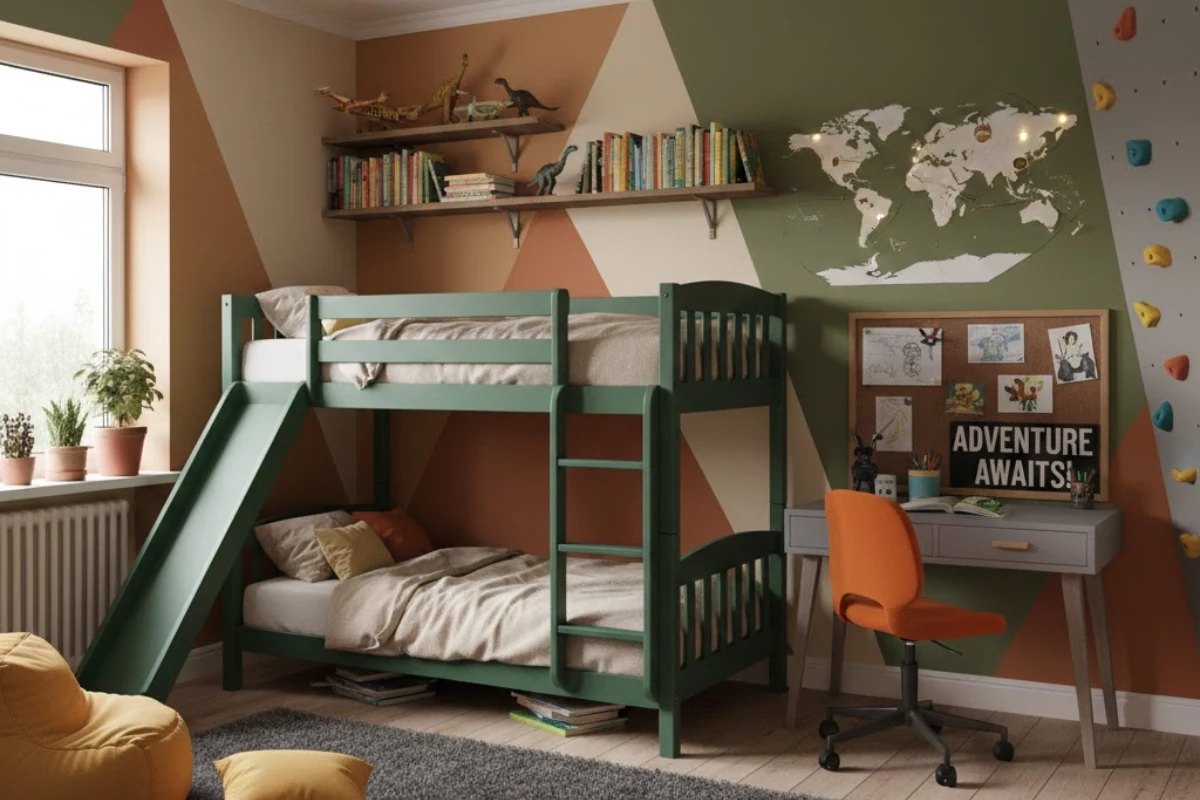
Theme 1: The Modern Adventurer
This theme is perfect for the curious child. Think wall murals featuring world maps, mountains, or constellations.
- Color Palette: Sage greens, earthy browns, and slate greys mixed with warm wood textures.
- Decor Element: A chalkboard wall where he can scribble his “plans” or draw maps.
- Furniture: A sturdy loft bed with a study unit underneath is a great space-saver for adventurous layouts.
Theme 2: The Tech & Gamer Den
For the older boy or pre-teen, the requirements shift from play to technology.
- Lighting: LED strip lighting behind the headboard or desk adds a futuristic “gamer” vibe that is incredibly popular right now.
- Ergonomics: Invest in a high-quality ergonomic chair. As academic pressure increases, his posture needs support.
- Aesthetics: Geometric wallpapers and metallic finishes on handles/knobs give a sleek, industrial look.
Theme 3: The Minimalist Sports Fan
Instead of overwhelming the room with sports memorabilia, go for subtle nods.
- Design Hack: Use customized laminate on wardrobes featuring abstract sports motifs.
- Display: Floating shelves to display cricket bats, footballs, or medals.
- Carpet Area: A soft rug with a track design or a simple turf-green rug can anchor the room without being loud.
Designing for Longevity (Boys)
Boys tend to play rough. Ensure your laminates are scratch-resistant (high-gloss might show scratches, so opt for matte or textured finishes). Washable paints are a must-have investment for walls to survive muddy hands and crayon art.
Kids Room Design for Girls: Empowering and Enchanting
Designing a girl’s room is about creating a canvas for her imagination. Whether she is a princess, an astronaut, or an artist, her room should reflect that.
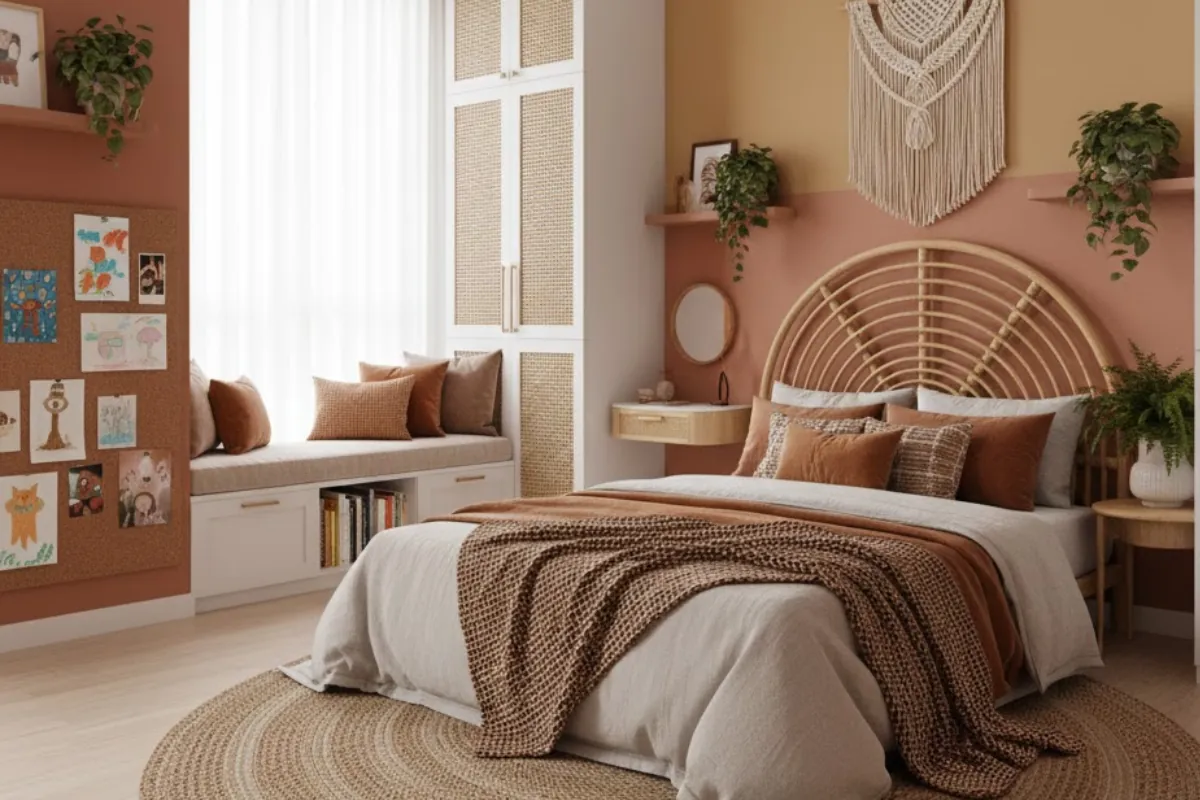
Theme 1: The Modern Boho-Chic
This is a trending aesthetic in interior design for 2025. It’s relaxed, warm, and incredibly stylish.
- Color Palette: Soft terracottas, warm whites, and muted mustards.
- Textures: Use cane or rattan for headboards and wardrobe shutters to bring in that Indian artisanal vibe.
- Decor: Macramé wall hangings and plenty of indoor plants (safe varieties) to freshen up the air.
Theme 2: The Contemporary Pastel Dream
Moving away from the shocking “Barbie pink,” modern designs utilize dusty pinks, lavenders, and mint greens.
- Design Hack: Use a two-tone wall painting technique. Paint the bottom half a darker pastel shade (easier to clean) and the top half a lighter neutral tone to make the room feel taller.
- Furniture: White or light oak furniture complements pastel shades beautifully, keeping the room airy and bright.
Theme 3: The Creative Studio
If your daughter loves art or reading, center the room around that passion.
- The Nook: Create a window seat with storage underneath. This serves as a perfect reading corner.
- The Art Station: A dedicated desk with a pinboard wall (made of cork) allows her to pin up her artwork without damaging the paint.
Designing for Longevity (Girls)
Girls often acquire more accessories and clothes as they grow.
- Vanity Unit: Even for a young girl, incorporating a small dresser or a mirror unit into the wardrobe design is smart. It saves you from buying a separate dressing table later.
- Adjustable Shelving: Ensure wardrobe shelves are adjustable to accommodate longer dresses as she grows taller.
Key Elements of a Modern Kids Room
Regardless of gender, certain interior elements elevate a room from “basic” to “designer.”
1. False Ceilings for Kids Rooms
The ceiling is the “fifth wall.” In a kid’s room, a false ceiling is not just about hiding wires; it’s a design feature.
- Cloud Designs: Soft, backlit cloud shapes cut into the gypsum board.
- Starry Night: Fiber optic lights embedded in the ceiling to mimic stars (great for inducing sleep).
- Cove Lighting: Soft, indirect light is better for children’s eyes than harsh direct downlights.
2. The Study Unit: The Powerhouse of Productivity
With online classes and homework, the study unit is vital.
- Location: Ideally near a window for natural light. If that’s not possible, ensure 4000K (Daylight) LED task lighting.
- Design: A floating desk makes the room look larger. Ensure there are drawers for stationery to keep the surface clutter-free.
- Growth Factor: Consider a height-adjustable table if the child is very young.
3. Color Psychology
Colors affect behavior.
- Blue/Green: Calming, good for high-energy children.
- Yellow/Orange: Stimulating, great for creativity, but use sparingly as accents.
- White/Neutral: The best canvas. It makes small rooms feel massive and allows you to change the room’s theme just by changing bedsheets and curtains.
Shared Kids Room Ideas (Gender Neutral)
In many Indian urban homes, siblings share a room. Designing a shared space for a boy and a girl requires a neutral ground.
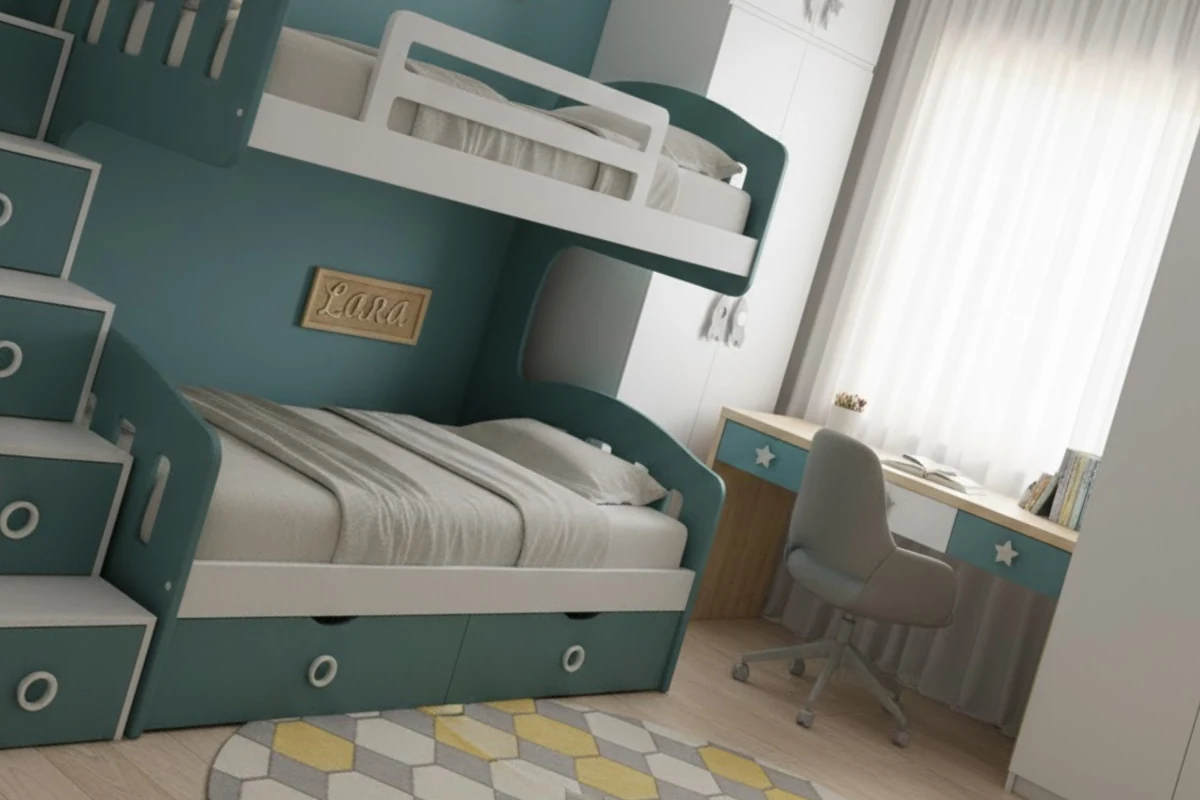
- The Bunk Bed Solution: Bunk beds are the ultimate space savers. Modern bunk beds come with built-in stairs (that double as drawers) rather than dangerous ladders.
- Color Palette: Go for yellow and grey, or teal and white. These combinations work for both genders.
- Personalization: Give each child their own “zone” within the shared space—perhaps different headboard colors or personalized nameplates on their wardrobe doors.
Budgeting for Your Kid's Room Interior
A common question we get at Homzinterio is about the budget.
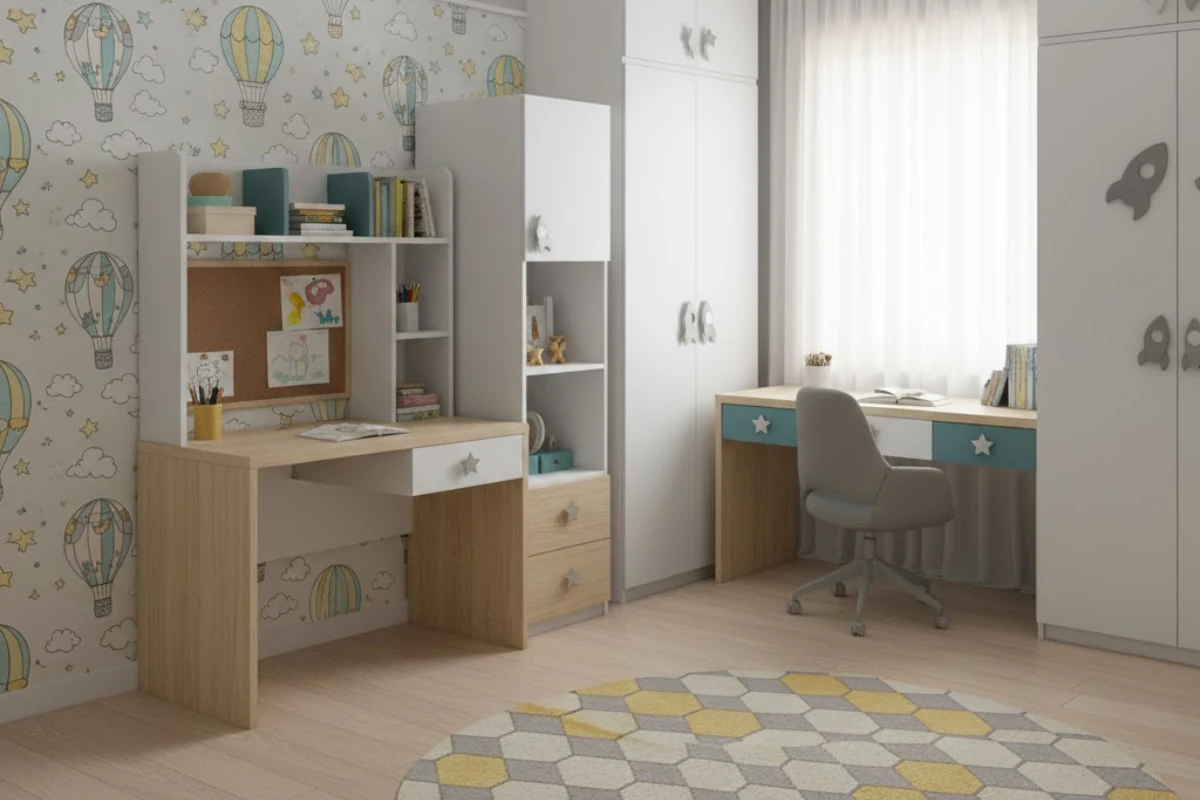
- Laminates vs. Acrylic: Acrylic is glossy and premium but expensive. High-quality laminates offer great durability at a fraction of the cost.
- Modular vs. Custom: Modular furniture is faster to install, but custom carpentry allows you to utilize every inch of awkward corners in older apartments.
- Wallpaper vs. Paint: Wallpaper adds instant drama and is often cheaper than textured paint. Use it on one focal wall to keep costs down while maximizing impact.
Why Choose Homzinterio for Your Child's Room?
Designing a kid’s room is not child’s play. It requires a deep understanding of ergonomics, safety standards, and material durability.
At Homzinterio, we specialize in transforming standard apartments into personalized havens.
- Customization: We don’t do “cookie-cutter.” Your child is unique, and their room should be too.
- Visualization: We provide 3D designs so you can see exactly how the room will look before we hammer a single nail.
- Quality Assurance: We use only child-safe, non-toxic materials and paints.
Ready to give your child the room of their dreams?
Whether you want a superhero lair or a fairytale castle, our experts are here to make it happen.
[Contact Homzinterio Today for a Free Consultation]
Let’s build happy memories, one room at a time.
Kids Room Interior Design FAQs
1. What is the best color for a kid's bedroom?
While blue and pink are classics, modern trends favor Sage Green, Teal, and Warm Neutrals (Greige). These colors are calming and versatile, allowing the room decor to evolve as the child ages.
2. How do I design a small kids' room?
Use vertical space! Loft beds, wall-mounted study units, and floor-to-ceiling wardrobes are essential. Use mirrors on wardrobe doors to visually double the space.
3. Is a false ceiling necessary for a kid's room?
It is not mandatory, but highly recommended for lighting distribution. A false ceiling allows for ambient cove lighting which is softer on a child’s eyes compared to a single bright tube light.
4. How do I make a kid's room safe?
Ensure all heavy furniture (like wardrobes) is anchored to the wall to prevent tipping. Use soft-close hinges on drawers to prevent finger trapping, and avoid glass decor at low heights.
5. Can Homzinterio customize themes?
Absolutely. From Harry Potter to Space Exploration to Jungle Safari, we can customize wallpapers, bed designs, and color palettes to match any theme your child desires.