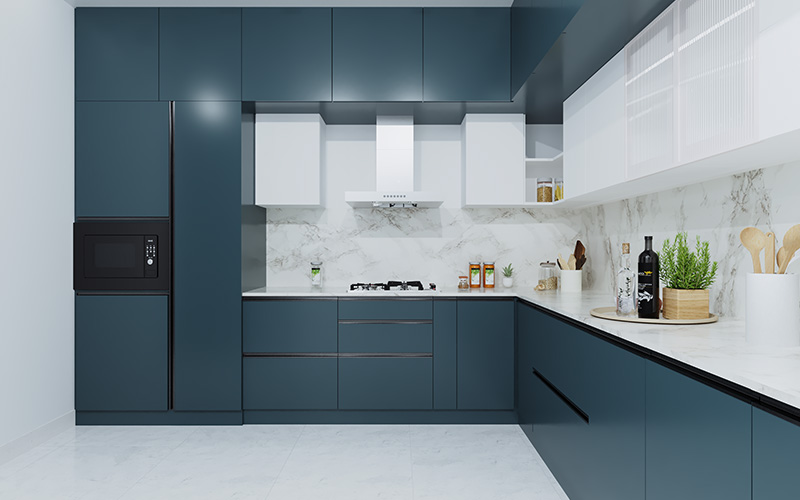
Meet the Kitchen Wardrobe: Say Goodbye to Clutter
Meet the Kitchen Wardrobe: Say Goodbye to Clutter
The kitchen. It’s the undisputed heart of the modern home. It’s a laboratory for culinary experiments, a stage for family gatherings, a quiet corner for a morning coffee, and, all too often, a battlefield against relentless clutter.
We’ve all been there: the avalanche of spice jars, the hunt for that one specific pot lid, the countertop appliances that have established permanent residency. We dream of the sleek, seamless kitchens we see in magazines, but the reality is… mess.
What if there was a single design solution that could consolidate this chaos, elevate your kitchen’s aesthetics, and streamline your daily life?
Enter the “kitchen wardrobe.”
You might be thinking, “A wardrobe? In the kitchen?” Absolutely. While it may not be the standard industry term, “kitchen wardrobe” perfectly captures the essence of this transformative piece of cabinetry: a tall, elegant, floor-to-ceiling unit that functions like a personal wardrobe, but for your culinary life.
At Homzinterio, we see this as the evolution of the humble pantry. It’s not just a cupboard; it’s a fully integrated storage command center. This blog is your ultimate guide to kitchen wardrobe design.
what it is, why you need one, and how to design it perfectly for your space.
De-clutter & Define: What is a Kitchen Wardrobe?
A kitchen wardrobe—more technically known as a tall pantry unit, larder, or utility cabinet—is a full-height kitchen cabinet that spans from floor to (or near) the ceiling. Unlike standard base and wall cabinets, its power lies in its vertical volume.
Think of it as the difference between a small bookshelf and a grand library. Base and wall cabinets are fragmented. A kitchen wardrobe is a single, uninterrupted column of storage potential.
The Key Benefits:
- Massive Consolidation: It moves storage from scattered, hard-to-reach cupboards into one organized, accessible location. All your dry goods, small appliances, and even cleaning supplies can live in a single, harmonious space.
- Aesthetic Elegance: A tall unit creates a strong vertical line, drawing the eye upward and making the ceiling feel higher. It can seamlessly blend in or stand out as a stunning focal point.
- Ergonomic Efficiency: When designed correctly, everything is at a comfortable height. No more kneeling to search the back of a deep base cabinet or stretching for a high-up shelf.
- Space-Saving Illusion: By concentrating storage vertically, you free up valuable horizontal and counter space, making the entire kitchen feel larger, more open, and breathe-able.
The Three Faces of the Kitchen Wardrobe
Not all tall units are created equal. Their “personality” is defined by their function. At Homzinterio, we typically design three primary types:
1. The Larder / Pantry
This is the foodie’s dream. The classic larder is dedicated entirely to food and ingredient storage. But the modern version is a marvel of engineering.

- Function: Storing dry goods (pasta, rice, cereals), canned goods, oils, vinegars, and spices.
- Design Must-Haves:
- Shallow Shelving: The biggest mistake is making shelves too deep. Nothing should get lost at the back.
- Internal Drawers: Use deep drawers at the bottom for heavy items (bags of flour, potatoes) and shallow drawers for linens or snacks.
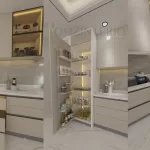
- Door Racks: The inside of the door is prime real estate. Use it for spices, jars, and bottles, keeping your main shelves free.
2. The Appliance Garage / Breakfast Nook
This is the ultimate solution for appliance clutter. It’s a kitchen wardrobe designed to house and hide your small appliances.

- Function: Storing (and often using) your toaster, coffee machine, blender, and microwave.
- Design Must-Haves:
- Pocket Doors: This is the key. The doors slide back and disappear into the cabinet’s sides, allowing you to keep the unit open while you make your coffee without a door blocking the walkway.
- Integrated Power: The cabinet must have internal plug sockets. This way, appliances are always plugged in and ready to use.
- Stone Countertop: The “work” surface inside the cabinet should be durable and heat-resistant, like a small piece of quartz or granite.
- Ventilation: If you’re housing a microwave or toaster oven, proper ventilation is essential for safety.
3. The Utility Closet
This is the unsung hero of home organization. This wardrobe isn’t for food at all—it’s for the tools that keep the home running.

- Function: Storing your vacuum cleaner, broom, mop, ironing board, and cleaning supplies.
- Design Must-Haves:
- Tall, Unbroken Space: One side should be a tall, open void to stand the vacuum and ironing board.
- Smart Compartments: The other side can be fitted with shelves for cleaning sprays, cloths, and baskets.
- Hooks and Holders: Use the back wall and doors to hang brooms, dustpans, and charging docks for cordless vacuums.
The Inside Story: Mastering Interior Organization
A beautiful kitchen interior design that’s a black hole of chaos on the inside is a design failure. The magic is in the fittings. When planning your interiors, prioritize accessibility and visibility.
Shelving
- Adjustable Shelves: Non-negotiable. Your storage needs will change.
- Material: Opt for sturdy plywood or MDF (at least 18mm) to prevent “sagging” under the weight of cans and jars.
- Depth: For a pantry, we recommend shelves no deeper than 12-14 inches. You should be able to see everything at a glance.

Drawers & Pull-Outs
This is where you get the most “bang for your buck.”
- Internal Drawers: Hiding drawers behind a single tall door maintains that sleek, seamless exterior. You get the function of drawers with the clean aesthetic of a wardrobe.
- Tandem Pull-Outs: This is the “Ferrari” of pantry systems. You open the cabinet door, and the front set of shelves swings out with it, while a second, deeper set of shelves glides forward into the new, open space. It brings the entire contents of the cabinet to you.
- Corner Solutions: If your wardrobe is in a corner, “LeMans” or “Magic Corner” pull-outs are essential. These articulated shelves swing right out of the cabinet, making that “dead” corner 100% accessible.

Lighting: The Secret Ingredient
You cannot organize what you cannot see. A dark, cavernous pantry is useless.
- Integrated LEDs: This is the most professional solution. LED strips that run vertically down the inside of the cabinet frame are a game-changer.
- Motion-Sensor Lights: Install battery-operated or hard-wired motion-sensor puck lights. The light turns on the second you open the door and off when you close it. It feels like magic and ensures you never forget to turn it off.
Design & Aesthetics: Blending In vs. Standing Out
Now for the fun part. How should your kitchen wardrobe look? You have two main aesthetic philosophies to choose from.
Philosophy 1: The "Seamless" Integration
This approach is for the minimalist. The goal is to make the kitchen wardrobe look like an intentional, architectural part of the room, not a separate piece of furniture.
- How to achieve it:
- Panel-Ready: The unit is built-in and faced with the exact same cabinet fronts and hardware as the rest of your kitchen.
- Handle-less: Use “push-to-open” mechanisms or a continuous, channeled “J-grip” handle. This creates an uninterrupted, monolithic surface that is incredibly sleek.
- Flanking the Fridge: A common layout is to place a pantry unit on either side of the refrigerator, creating a “wall of storage” that feels balanced and powerful.
Philosophy 2: The "Statement" Piece
This approach is for the bold. You treat the kitchen wardrobe as a standalone piece of statement furniture—a “destination” in the kitchen.
- How to achieve it:
- Contrast is Key: If your main cabinets are white, make the wardrobe a dramatic matte black, a deep navy blue, or a rich natural wood like walnut.
- Change the Material: Use a unique finish. Fluted glass doors add texture and a hint of what’s inside. A high-gloss lacquer can bounce light, while a rustic, reclaimed wood can add warmth and history.
- Statement Hardware: This is the place for that gorgeous, oversized brass pull-bar or artisanal leather handle you’ve been eyeing.
Practical Considerations Before You Build
Ready to start designing? Keep these crucial points in mind.

- Workflow: Where will the wardrobe live? A pantry should be near the “prep” zone (your main counter) and the “drop” zone (where you unload groceries). An appliance garage should be near your breakfast table or island.
- Door Swing: A full-height door is large. You must account for its swing path. If the walkway is tight, you have options:
- Double Doors: Two narrower doors are often more practical than one wide one.
- Pocket Doors: As mentioned, they slide into the cabinet. Ideal for appliance garages.
- Sliding Doors: These slide in front of an adjacent cabinet.
- The “Landed” Cost: Remember that the cost isn’t just the cabinet. The high-end pull-out mechanisms, custom drawers, and integrated lighting are what make it truly functional, and they will (and should) be a significant part of the budget. It’s an investment, not an expense.
Conclusion: The Wardrobe Your Kitchen Deserves
The kitchen wardrobe is more than a tall cupboard. It’s a design philosophy. It’s a commitment to an organized, efficient, and beautiful home. It’s the design choice that finally clears your countertops, tames your clutter, and consolidates the chaos of daily life into one elegant, accessible, and deeply personal space.
By trading fragmented wall and base cabinets for a single, intelligent, floor-to-ceiling unit, you are not just adding storage; you are transforming the way you live in your kitchen.
Ready to design the kitchen wardrobe of your dreams?
The expert designers at Homzinterio are masters of maximizing space with style. We can help you plan the perfect larder, appliance garage, or utility unit, complete with custom fittings and seamless integration.
Contact us today for a free design consultation and let’s build the clutter-free kitchen you deserve.
FAQ
Q1: What is the difference between a kitchen wardrobe design and a regular pantry?
A kitchen wardrobe design is a full-height, floor-to-ceiling cabinet (or larder unit) focused on highly efficient, integrated organization. It’s an aesthetic upgrade from a basic pantry, designed to be a seamless architectural feature that consolidates clutter.
Q2: What dimensions should I use for my kitchen wardrobe depth?
For a dedicated food pantry, the ideal depth is 12 to 14 inches (30-35 cm). This shallow depth ensures every item is visible and easily reachable, preventing food waste.
Q3: What kind of lighting is best for a practical kitchen wardrobe?
Integrated LED strip lighting running vertically along the cabinet frame is the most professional solution. Alternatively, motion-sensor puck lights provide hands-free illumination that turns on instantly when the door is opened.