Modern Kitchen Tiles Design: The 2025 Guide to Style, Durability, and “Desi-Proofing” Your Kitchen
Modern Kitchen Tiles Design: The 2025 Guide to Style, Durability, and “Desi-Proofing” Your Kitchen
The kitchen has stopped being just a “workstation” hidden at the back of the house. In modern Indian homes, especially with the rise of open-concept layouts, the kitchen is the heart of the home. It’s where the family congregates, where the morning coffee ritual happens, and where the magic of “Maa ke haath ka khana” begins.
But designing a kitchen, specifically choosing tiles is a high-stakes game. You need a surface that can survive the “Haldi Test” (turmeric stains), handle high heat, withstand heavy foot traffic, and still look like a page out of an architectural magazine.
Whether you are renovating a compact kitchenette or designing a kitchen interior, tiles are the makeup that defines the face of your space. This comprehensive guide explores the top tile trends for 2025, practical advice for Indian homes, and how to mix and match like a pro.
Table of Contents
- The Shift: Trends Defining Kitchens in 2025
- Backsplash Brilliance: Wall Tile Trends
- Ground Rules: Floor Tile Innovations
- Material Matters: Ceramic vs. Porcelain vs. Vitrified
- The “Indian Kitchen” Checklist: Stains, Heat, and Grout
- Color Chronicles: Beyond White and Grey
- Layout Patterns: It’s Not Just the Tile, It’s How You Lay It
- Budgeting & Buying: How to calculate and what to buy
- Homzinterio’s Top 3 Combo Recommendations
- Conclusion: Laying the Foundation
1. The Shift: Trends Defining Kitchens in 2025
Gone are the days when kitchen tiles were merely functional squares meant to protect walls from water. In 2025, tiles are the heroes of kitchen décor.

The current vibe is “Tactile Luxury.” We are moving away from the hyper-glossy, sterile look toward textures that feel natural and handmade. We are seeing a resurgence of:
- Imperfection: Tiles that look hand-molded (Zellige style).
- Continuity: Using the same material for countertops and backsplashes for a seamless look.
- Earthiness: Colors drawn from nature—terracotta, stone greys, and warm woods.
Check out Our Recent Blog About Latest modular kitchen materials
Modular Kitchen Design Ideas for Modern Homes.
2. Backsplash Brilliance: Wall Tile Trends
The backsplash (the wall area between your counter and upper cabinets) is the focal point of your kitchen. It is the one place where you can take a design risk without overwhelming the space.

A. The “Kit-Kat” Mosaic (Finger Tiles)
Currently the idol of interior designers, these thin, vertical rectangular tiles resemble Kit-Kat bars.
- Why it works: The vertical lines draw the eye up, making small Indian apartment kitchens feel taller and more spacious.
- Style Tip: Go for a deep emerald green or navy blue Kit-Kat tile with contrasting white grout for a dramatic look.
B. Zellige: The “Perfectly Imperfect” Look
Originating from Morocco, these tiles have a shimmering, uneven surface. No two tiles look exactly the same.
- Why it works: They catch the light beautifully. In an Indian kitchen that might not get a lot of natural light, Zellige tiles bounce artificial light around, making the space glow.
C. The Slab Backsplash
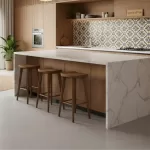
This is the ultimate luxury move. Instead of small tiles, you use a single large slab of quartz, granite, or large-format porcelain that matches your countertop.
- Why it works: Zero Grout Lines. No grout means no oil accumulation and no scrubbing blackened lines with a toothbrush. It is the cleanest, most modern look available.
3. Ground Rules: Floor Tile Innovations
Floor tiles need to be the workhorse. They must be anti-skid and durable.

A. Wood-Look Tiles (The Indian Favorite)
We love the warmth of wooden flooring, but wood and water (mopping) don’t mix. Enter wood-look ceramic or vitrified planks.
- 2025 Update: The trend is moving toward lighter, “blonde” wood tones (Scandinavian style) rather than dark mahogany. It hides dust better and brightens the room.
B. Modern Terrazzo
Terrazzo (chips of marble/granite set in concrete) is back with a bang.
- Why it works: It is practically indestructible. The busy speckled pattern is excellent at hiding crumbs, dust, and minor spills until you get a chance to clean them.
C. Large Format Concrete Style
For the industrial or minimalist lover, large format (2×4 feet or 4×4 feet) tiles that mimic cement are huge.
- Benefit: Fewer joints to clean. It gives a seamless, loft-like aesthetic that pairs perfectly with matte black kitchen fittings.
4. Material Matters: Ceramic vs. Porcelain vs. Vitrified
This is the most common question we get at Homzinterio. Here is the simple breakdown:

- Ceramic:
- Best for: Wall Backsplashes.
- Pros: Cheaper, huge variety of colors/patterns, easier to cut.
- Cons: More porous, not suitable for floors (can crack under heavy pots).
- Porcelain:
- Best for: Floors and Walls.
- Pros: Dense, water-resistant, very durable.
- Cons: Harder to cut, slightly more expensive than ceramic.
- Vitrified Tiles:
- Best for: Indian Kitchen Floors.
- Pros: Extremely strong, low porosity (stain resistant), can handle the “heavy duty” nature of Indian households.
5. The "Indian Kitchen" Checklist: Stains, Heat, and Grout
This section is critical. Western trends don’t always work in an Indian context.

- The Turmeric Factor: Avoid porous natural stones (like unsealed marble) for the backsplash near the hob. If a curry splatters, that stain is permanent. Stick to Glazed Porcelain or Quartz backsplashes.
- Grout grime: The lines between tiles (grout) are the enemy. In an Indian kitchen, oil and spice fumes settle in these lines.
- Solution: Use Epoxy Grout. Unlike standard cement grout, epoxy is waterproof and stain-proof. It doesn’t turn black and can be wiped clean.
- Design Hack: Go for “Rectified Tiles.” These tiles are cut precisely to allow for extremely thin grout lines (1-2mm), minimizing the area that can get dirty.
6. Color Chronicles: Beyond White and Grey
While white kitchens are classic, they are high maintenance. 2025 brings warmth.
- Sage & Olive Green: Pairs beautifully with brass hardware and wood finishes.
- Warm Terracotta: Brings a rustic, earthen feel that connects to traditional Indian pottery.
- Midnight Blue: A bold choice for lower cabinets or floor tiles; it grounds the space and looks incredibly chic.
7. Layout Patterns: It’s Not Just the Tile, It’s How You Lay It
You can take a cheap, standard subway tile and make it look expensive just by changing the layout.

- Herringbone: Laying rectangular tiles in a V-shape. It looks high-end and adds movement.
- Vertical Stack: Stacking rectangular tiles straight up. It feels very modern and mid-century.
- Hexagon Transitions: Using hexagonal floor tiles that “fade” into wooden floor tiles in open kitchens. A difficult installation, but a stunning visual.
8. Budgeting & Buying: How to calculate and what to buy
Before you head to the showroom, keep these tips in mind:
- The 10% Rule: Always buy 10-15% more tiles than your measured area. Cuts, breaks during transit, and future repairs will require these spares. Finding the exact same batch shade 5 years later is impossible.
- Size Matters: In a small kitchen, huge floor tiles can actually make the space look smaller if there are too many cuts. For small kitchens, 600x600mm is ideal. For large kitchens, go for 800x1600mm.
- Check the Box: Ensure all boxes have the same “Batch Number” and “Tone/Caliber” code to avoid slight color variations.
9. Homzinterio’s Top 3 Combo Recommendations
Stuck on what to choose? Here are three fail-safe combinations curated by our design team.
Combo 1: The “Modern Organic” (Scandi-Indian)
- Floor: Light Oak Wood-look tiles.
- Backsplash: Cream/Off-white Zellige tiles (glossy finish).
- Cabinetry: Sage Green or Light Greige.
Combo 2: The “Urban Industrial”
- Floor: Matte Grey Concrete-look large format tiles.
- Backsplash: White Subway tiles with Black epoxy grout (graphic look).
- Cabinetry: Charcoal Grey or Matte Black.
Combo 3: The “Desi Luxe”
- Floor: Beige Italian Marble finish (Vitrified tile).
- Backsplash: The same slab continued up the wall (Seamless).
- Cabinetry: Dark Walnut Wood finish.
10. Conclusion: Laying the Foundation
Your kitchen tiles are a long-term relationship. Unlike a wall color, you can’t just paint over them if you get bored. They need to stand the test of time, heat, and spills.
The best kitchen is one that balances your aesthetic dreams with the reality of your cooking habits. Whether you choose the geometric drama of patterned tiles or the quiet luxury of stone slabs, ensure they bring you joy every time you step in to make your morning chai.
Confused about which tile matches your cabinets? At Homzinterio, we bring the showroom to your screen. Let our experts help you visualize the perfect combination. Book Your Kitchen Design Consultation Now
Frequently Asked Questions (FAQs): Practical Tips for Indian Kitchen Tiles
1. Kit-Kat" Mosaic (Finger Tiles) work well in small Indian apartment kitchens?
The vertical lines of the Kit-Kat tiles draw the eye upward, creating an illusion of height. This design feature makes small Indian apartment kitchens feel taller and more spacious.
2. What is the specific functional benefit of using "Rectified Tiles" in the kitchen?
Rectified tiles are precisely cut to allow for extremely thin grout lines (1–2mm). This minimizes the area that can get dirty from oil and spice fumes, making the surface much easier to clean.
3. What is the practical advantage of using Modern Terrazzo tiles for the kitchen floor?
Terrazzo is practically indestructible and highly durable. Its busy, speckled pattern is excellent at hiding crumbs, dust, and minor spills until the user gets a chance to clean them.
4. Besides white and grey, which new color trends are recommended for bringing warmth to the kitchen in 2025?
Warmth is brought in through Sage & Olive Green, which pairs well with brass and wood, and Warm Terracotta, which offers a rustic, earthen feel.
5. What is the "10% Rule" when buying kitchen tiles, and why is it essential?
The 10% Rule means always buying 10–15% more tiles than the measured area. This surplus is necessary to account for cuts, breakages during transit, and future repairs, as finding the exact batch shade later is impossible.