The Art of Transparency: Transforming Your Home with Glass Wall Designs
The Art of Transparency: Transforming Your Home with Glass Wall Designs
The modern Indian home is evolving. We have moved away from the rigid, compartmentalized layouts of the past where every room was a concrete box. Today, we crave openness. We want sunlight to flood our living rooms, we want to keep an eye on the kids while cooking, and we want our homes to feel expansive.
But there is a catch. Open floor plans, while beautiful, come with their own set of problems: cooking odors traveling to the sofa, noise from the TV disturbing a work call, and a general lack of privacy.
Glass walls are the architectural answer to the “Open vs. Private” debate. They offer the best of both worlds—physical separation without visual disconnection. Whether you are looking to partition a large hall or create a soundproof home office, glass walls are the 2025 design essential that screams modern luxury.
In this guide, Homzinterio explores how to design and use glass walls to elevate your interiors, the types of glass you should know about, and the latest trends dominating the design world.
Why Glass? The Unmatched Benefits
Before we dive into designs, let’s look at why designers (and homeowners) are obsessed with glass partitions.
- Light Flow: A solid wall stops light dead in its tracks. A glass wall lets it dance through. For apartments with limited windows, glass walls can borrow light from one room to brighten another.
- Visual Space: Glass tricks the eye. It makes a 12×12 room feel like part of a much larger space. It is the ultimate hack for compact urban apartments.
- Acoustic Control: You can see your family, but you don’t have to hear the cricket match commentary while you are on a Zoom call. High-quality glass provides excellent sound insulation.
- Odor Containment: Essential for Indian kitchens! A glass partition keeps the tadka aroma in the kitchen while keeping the chef connected to the party in the living room.
Top 5 Glass Wall Design Trends for 2025
1. The Ripple Effect: Fluted Glass
If there is one trend taking over Instagram and Pinterest, it is Fluted (or Reeded) Glass.
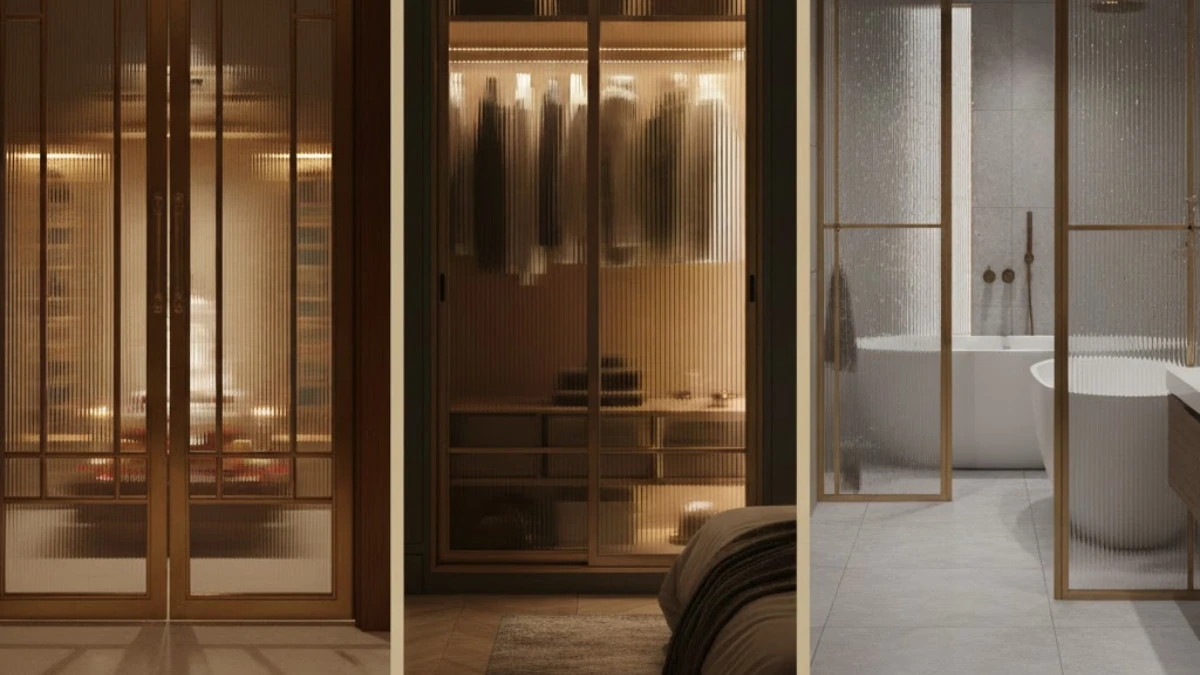
- The Look: Vertical grooves run down the glass, creating a ripple effect. It distorts the view, blurring shapes and colors behind it.
- Best For: Privacy. Use it for bedroom wardrobes, bathroom partitions, or a puja room where you want light but not a direct view inside.
- Homzinterio Tip: Pair fluted glass with a matte gold or brass frame for a vintage Art Deco look that is incredibly chic right now.
2. Industrial Chic: The Crittall Style
Inspired by old factories, this style uses black metal framing to create a grid pattern.
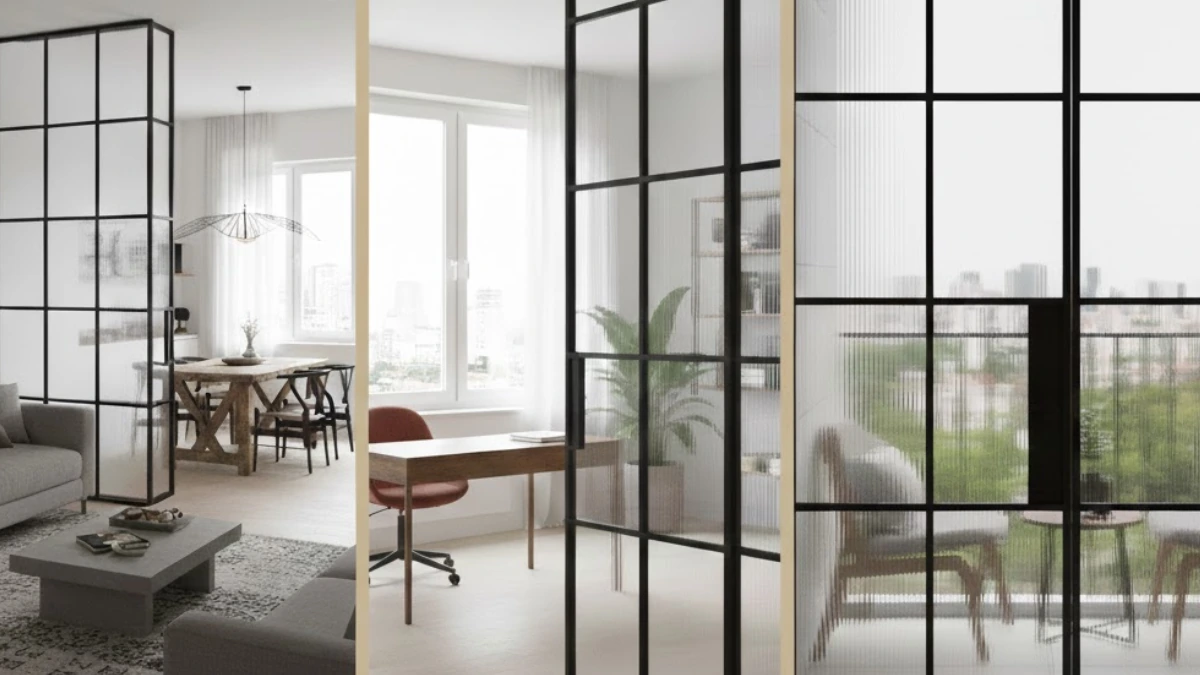
- The Look: Bold, graphic, and edgy. The black grid acts as a frame for the view behind it.
- Best For: Separating a living room from a dining area or enclosing a balcony. It adds character to a plain room without needing artwork.
3. The High-Tech Choice: Smart Glass
Imagine a wall that turns from clear to opaque with the flip of a switch. That is Smart (Switchable) Glass.
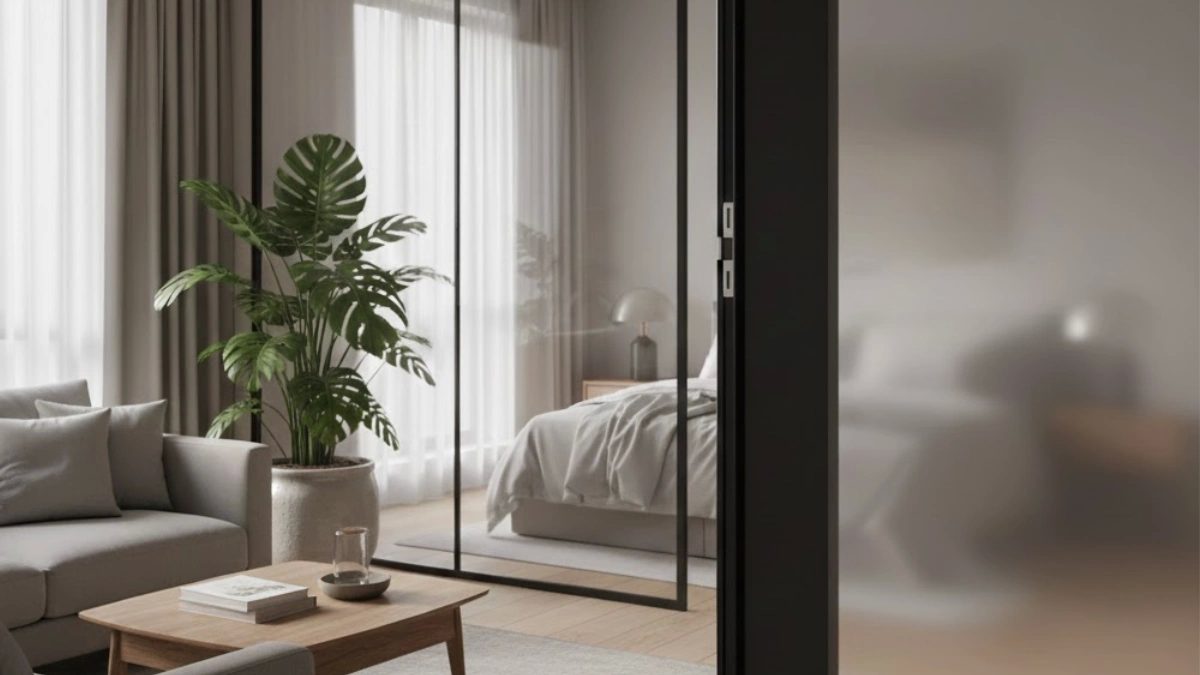
- The Tech: It uses liquid crystal technology. When the power is on, the particles align, and the glass is clear. When off, they scatter, turning the glass frosted.
- Best For: Guest bedrooms or meeting rooms in a home office. It eliminates the need for dusty curtains or blinds.
4. The "Invisible" Wall: Frameless Glass
For the purists who want zero visual clutter.
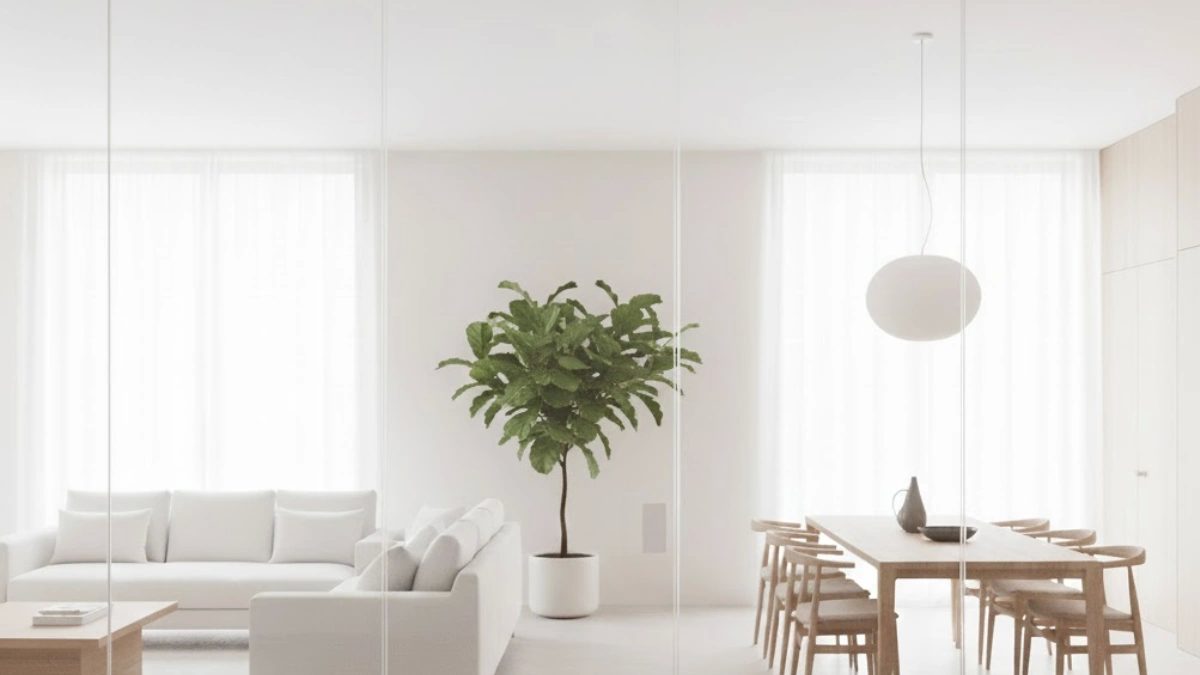
- The Look: Floor-to-ceiling sheets of thick, toughened glass with no visible frames. The glass is usually slotted into concealed channels in the floor and ceiling.
- Best For: Balcony doors (to maximize the view) or staircase railings.
- Check our previous blog balcony railing Design.
5. Tinted Sophistication
Clear glass is classic, but tinted glass is a mood.
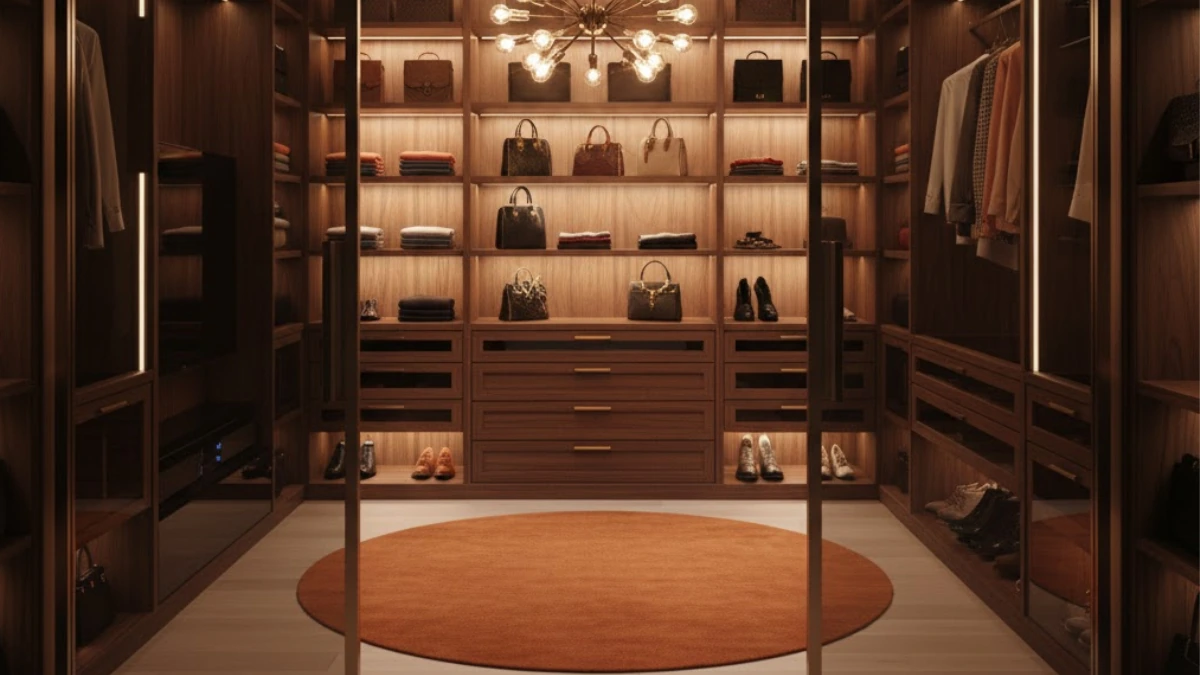
- The Look: Grey, bronze, or black-tinted glass that reduces glare and adds a layer of mystery.
- Best For: Walk-in closets or TV unit shutters. Bronze-tinted glass looks exceptionally luxurious when paired with warm wood interiors.
Where to Use Glass Walls in Your Home
1. The Kitchen-Living Divide
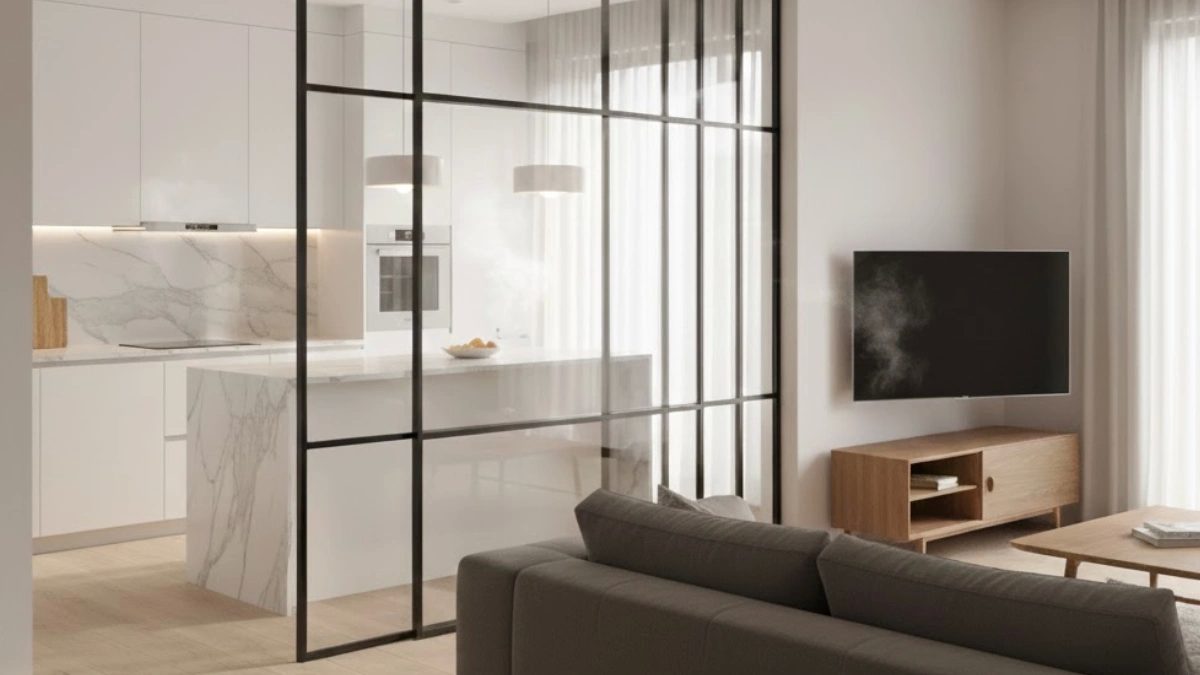
- The Problem: You want an open kitchen, but you don’t want the noise of the mixer-grinder or the smell of frying fish to reach the living room.
- The Solution: A sliding glass partition. Keep it open for daily use, and slide it shut when you’re doing heavy cooking.
- Check our previous Blog About unique Partition Design for living room
2. The Home Office Nook
Working from home is permanent for many.
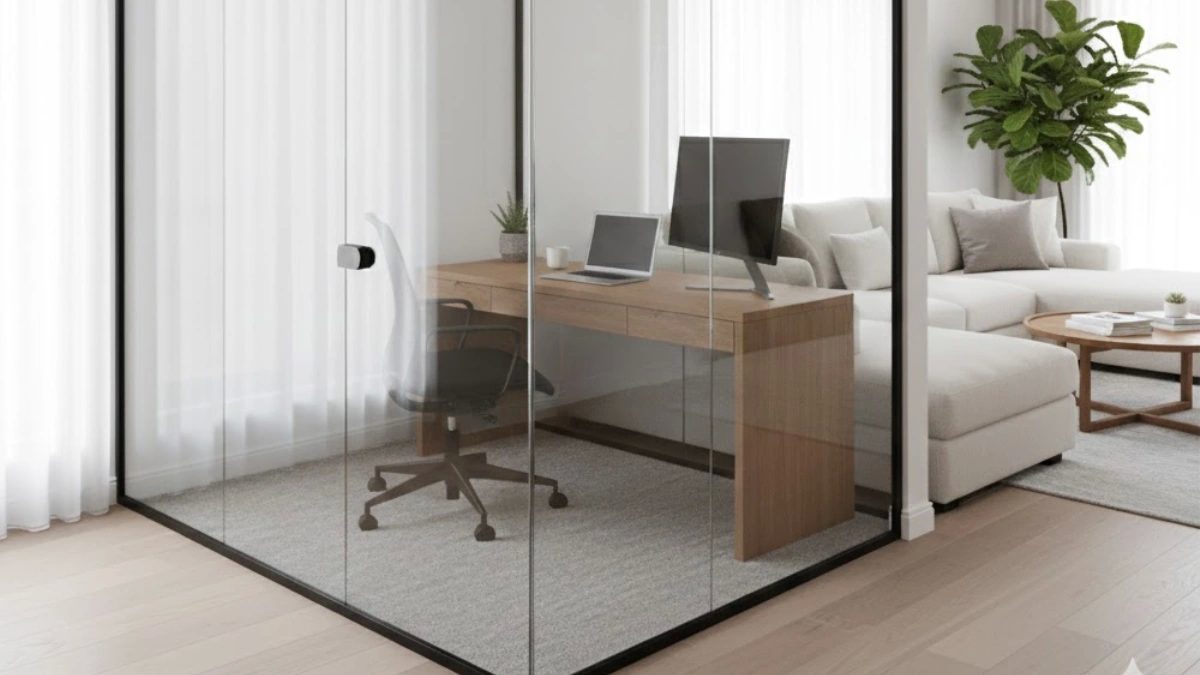
The Solution: Carve out a corner of your living room or bedroom with a corner glass partition. It creates a dedicated “mental zone” for work without making the room feel smaller. Use double-glazed glass if soundproofing is a priority.
3. The Ensuite Bathroom
For the bold and the romantic.
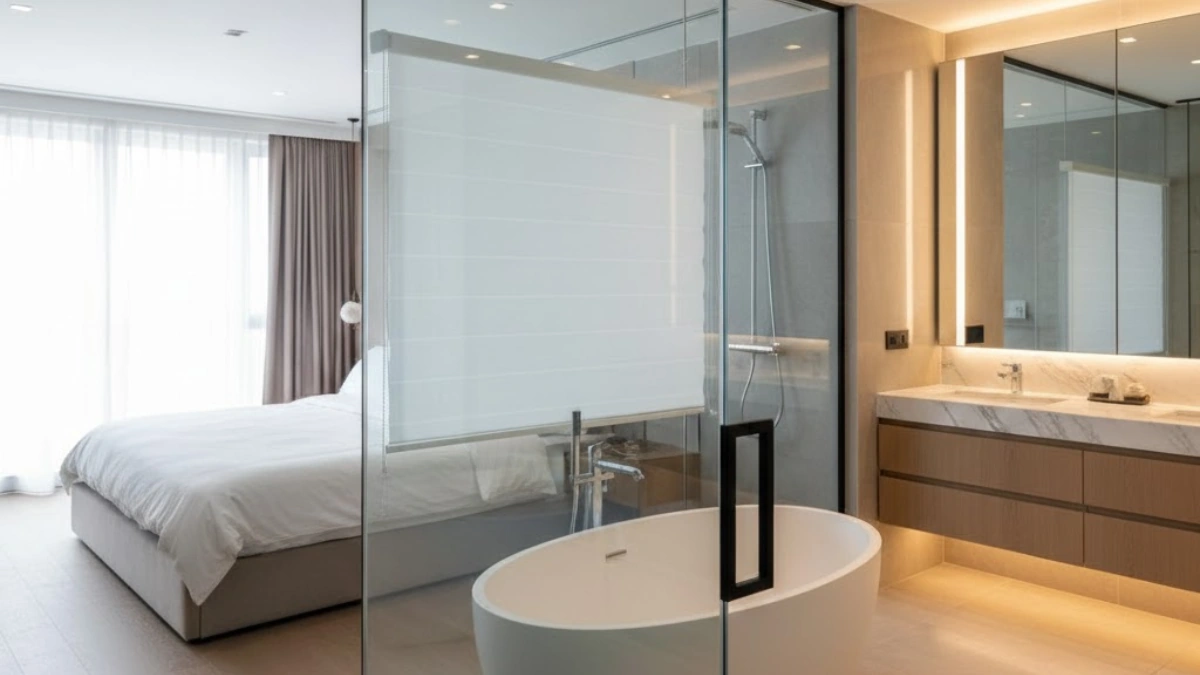
The Trend: Replacing the solid wall between the master bedroom and the bathroom with a glass wall (often with a blind for privacy). It makes the bedroom feel like a high-end hotel suite.
4. The Foyer Entrance
In many apartments, the front door opens directly into the living room.
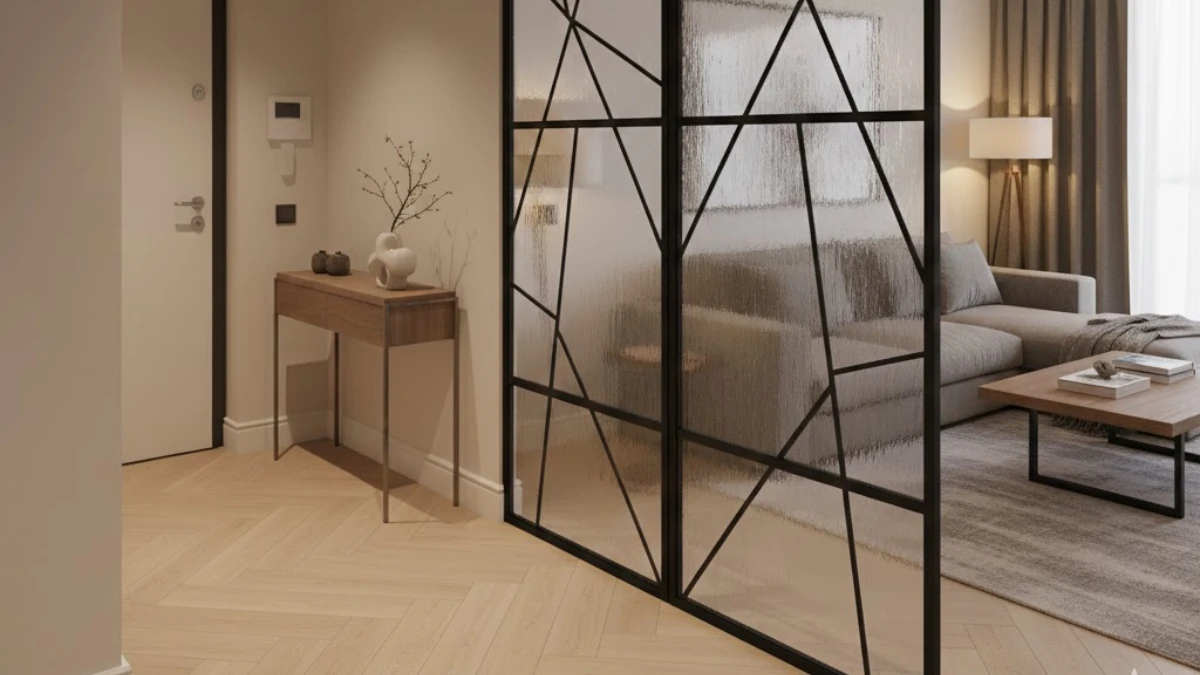
The Solution: A decorative glass partition (perhaps with etched patterns or fabric-sandwiched glass) creates a “pause point” or foyer without blocking light.
Safety First: Choosing the Right Glass
This is the technical part, but it is crucial. Not all glass is created equal.
Toughened (Tempered) Glass: This is the standard for safety. It is heat-treated to be 4-5 times stronger than regular glass. If it breaks, it shatters into small, blunt cubes that won’t cut you. Always use this for partitions.
Laminated Glass: Two sheets of glass sandwiched with a plastic layer. If it breaks, the glass stays stuck to the plastic layer and doesn’t fall. This is best for high-rise balcony glazing or soundproofing.
Thickness: For a standard floor-to-ceiling partition, we recommend a minimum of 10mm to 12mm thickness.
Maintenance: Keeping It Crystal Clear
The only downside to glass? Fingerprints. Here is how to keep your glass walls pristine:
- The Tool: Ditch the paper towels (they leave lint). Use a high-quality microfiber cloth and a squeegee.
- The Solution: A mix of water and white vinegar is often better (and cheaper) than chemical sprays.
- The Trick: Wipe in an “S” motion rather than circles to avoid streaks.
- Hard Water Stains: If your glass partition is near a bathroom or balcony, you might get hard water spots. Use a specialized limescale remover once a month to prevent permanent etching.
The Homzinterio Promise
A glass wall design is a precision installation. A gap of even 2mm can mess up the soundproofing or cause the door to jam.
At Homzinterio, we treat glass installation with the seriousness it deserves.
- We use laser measurements for millimeter-perfect fits.
- We source only ISO-certified toughened glass.
- We offer customized framing options—from sleek aluminum to warm wood veneers—to match your existing furniture.
Ready to let the light in?
Whether you want a fluted glass partition for your puja room or a grand sliding wall for your living area, our design team is ready to visualize it for you.
Book a Design Consultation with Homzinterio
People Also Ask Like
1. Which type of glass is recommended for a high-priority privacy area, like a puja room or a wardrobe?
The article highlights Fluted (or Reeded) Glass as the ideal choice for privacy. Its vertical grooves distort the view, blurring shapes and colors while still allowing light to pass through, giving you the best of both worlds.
2. Can a glass wall design be used to effectively block cooking odors and noise in an open-plan living room?
Yes. The article specifically recommends using a sliding glass partition for the kitchen-living divide. This allows you to open it for daily use and slide it shut during heavy cooking to contain odors (“tadka aroma”) and noise from the mixer-grinder, providing both physical separation and visual connection.
3. What is the minimum thickness of glass recommended for a safe, floor-to-ceiling interior partition?
For a standard floor-to-ceiling partition, Homzinterio recommends a minimum of 10mm to 12mm thickness of glass. It also stresses that you should always use Toughened (Tempered) Glass as the safety standard.
4. What is Smart Glass and how does it work?
Smart (Switchable) Glass is a high-tech option that can turn from clear to opaque instantly. It works using liquid crystal technology; when power is on, the glass is clear, and when the power is off, the particles scatter, turning the glass frosted for privacy.
5. What are the best methods and tools for cleaning glass walls and avoiding streaks?
The best method is to ditch paper towels and use a high-quality microfiber cloth and a squeegee. The article suggests a solution of water and white vinegar as an effective, streak-free cleaner. The trick is to wipe in an “S” motion instead of circles.
6. What is the Crittall style, and where is it best used in a modern home?
The Crittall Style is an Industrial Chic trend that uses bold, black metal framing to create a grid pattern on the glass. It is best used for separating large areas, like a living room from a dining area, or enclosing a balcony, as it adds an edgy, graphic character to the space.