The Sanctuary of Sleep: The Ultimate Guide to Bedroom Interior Design
The Sanctuary of Sleep: The Ultimate Guide to Bedroom Interior Design
We spend roughly one-third of our lives in our bedrooms. Yet, in the grand scheme of home interior design, the bedroom often takes a backseat to more “public” spaces like the living room or kitchen. We tend to prioritize the areas guests see, leaving our personal sanctuaries for last.
At Homzinterio, we believe this is a fundamental mistake. Your bedroom is the bookend to your day; it is where you reset your mind in the evening and where you gather the energy to face the morning.
Designing an interior for your bedroom is not just about buying a bed and a matching nightstand. It is about curating an atmosphere of tranquility, intimacy, and comfort. Whether you are working with a sprawling master suite or a cozy compact room, the principles of exceptional design remain the same.
In this comprehensive guide, we will explore the art of bedroom interior design blueprint, helping you transform your sleeping quarters into the retreat you deserve.
1. The Foundation: Layout and Space Planning
Before you purchase a single pillow, you must understand the architecture of your room. A poorly planned layout can make even the largest bedroom feel cramped and chaotic.
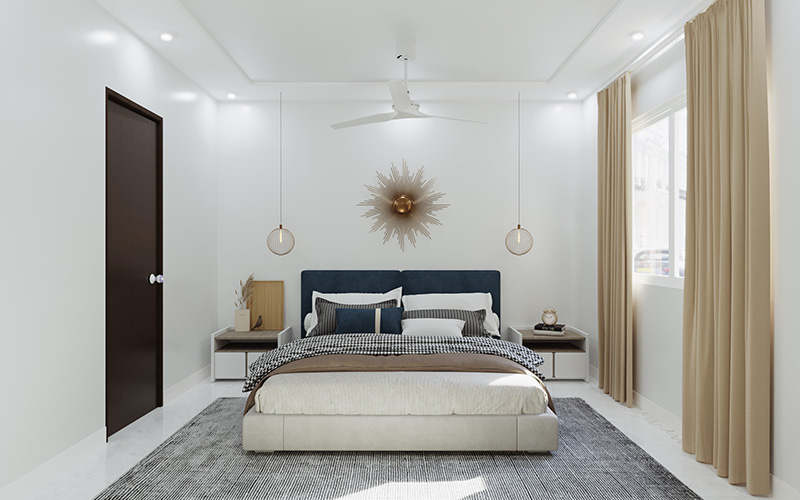
The Bed Placement The bed is the undisputed protagonist of the room. In interior design psychology, the “command position” is preferred. Ideally, you should be able to see the door from your bed, but you should not be directly in line with it. Placing the headboard against the solid main wall usually anchors the space best.
- Tip: Ensure there are at least 24-30 inches of walking space on either side of the bed to prevent the “obstacle course” effect.
Zoning: If space permits, try to create distinct zones.
- The Sleeping Zone: Strictly for rest (the bed).
- The Dressing Zone: Near the wardrobe or closet.
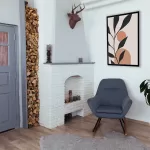
- The Lounging/Reading Zone: A small armchair and a floor lamp in a corner can transform a bedroom into a multi-functional suite.
2. Color Psychology: Painting Your Mood
The color on your bedroom walls dictates the energy of the room. Unlike the kitchen, where high-energy colors like yellow or red might work, the bedroom demands a palette that lowers your heart rate.
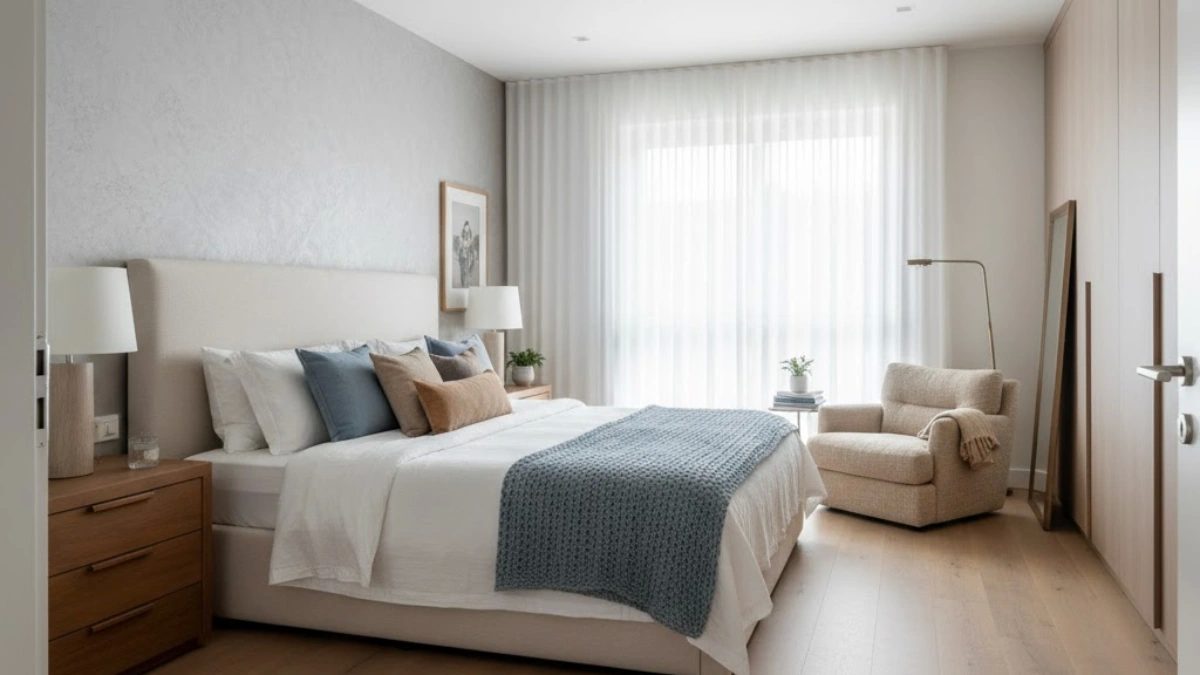
The Neutrals Soft whites, creams, and beiges are timeless. They create a canvas that allows you to change your accent colors (bedding, art) as trends shift. However, avoid “clinical” whites; opt for warmer undertones to keep the room cozy.
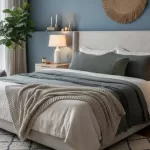
The Cool Tones Science suggests that blue is the best color for sleep. It is associated with the sky and ocean, triggering a calming response in the brain. Soft sage greens and lavender also work beautifully to reduce anxiety.
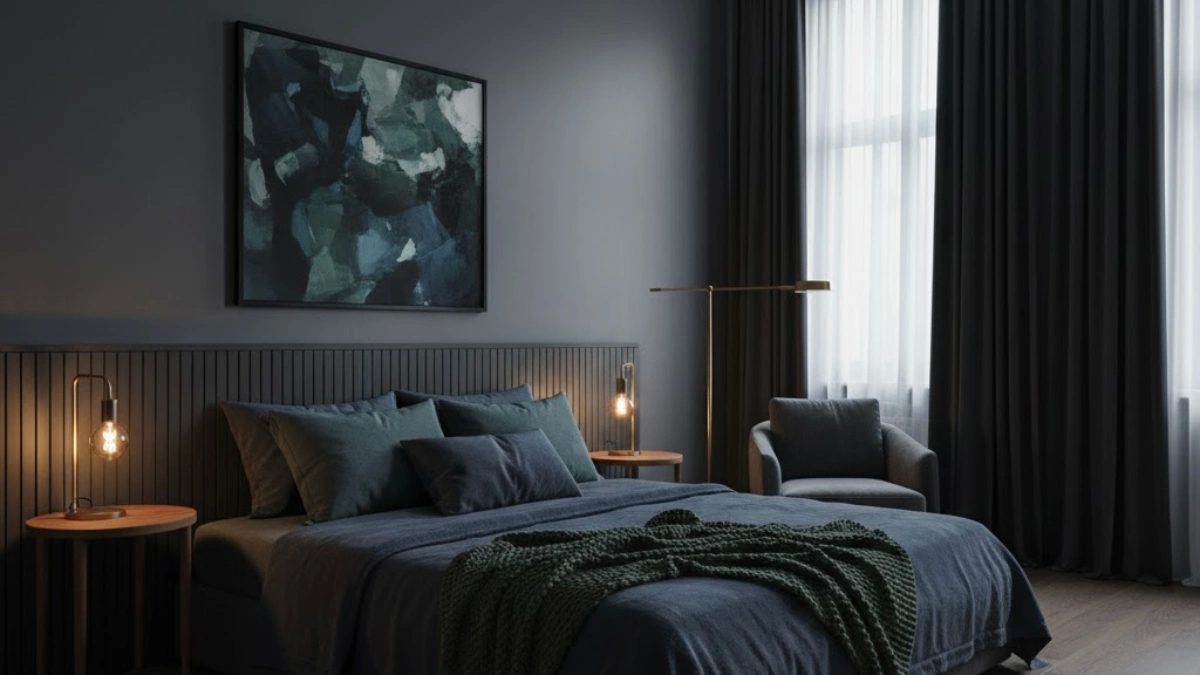
The Dark Embrace A rising trend in 2024-2025 is the “moody bedroom.” Charcoal greys, deep navy, or forest greens can make a room feel like a cocoon. If you have a large room with good natural light, don’t be afraid of the dark—it can be incredibly sophisticated and cozy.
3. Lighting: The Secret Weapon
Lighting in a bedroom must be versatile. You need bright light for dressing and cleaning but soft light for relaxing. The key is layering.

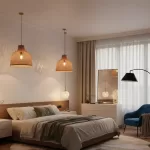
- Ambient Lighting: This is your general overhead light. Avoid harsh fluorescent tubes. A statement chandelier or a flush mount with a dimmer switch is ideal.
- Task Lighting: This is for reading or applying makeup. Sconces mounted on either side of the bed are excellent space-savers that free up your nightstand surface.
- Accent Lighting: LED strip lights under the bed frame or behind a headboard can add a modern, ethereal glow that serves as a perfect nightlight.
Homzinterio Pro Tip: Always install warm-white bulbs in the bedroom. Cool white light mimics daylight and can disrupt your circadian rhythm, making it harder to fall asleep.
4. Furniture Selection: Function Meets Form
The Bed Frame and Headboard Your headboard is a major focal point. An upholstered headboard (velvet, linen) adds softness and is comfortable to lean against while reading. A wooden frame adds warmth and texture. If your room is small, consider a platform bed with built-in drawers underneath to maximize storage without adding bulk.
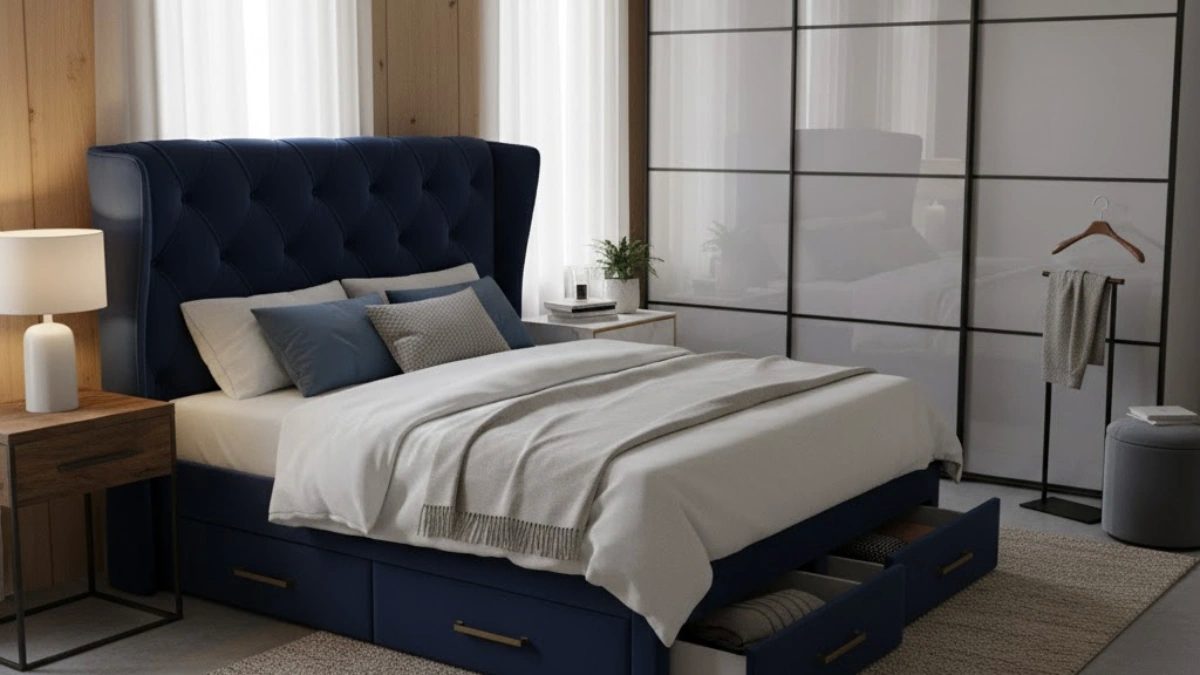
Nightstands Gone are the days when nightstands had to match the bed frame perfectly. Mixing materials creates a more curated, designer look. Just ensure the height of the nightstand is roughly level with the top of your mattress for ergonomic reach.
Storage Solutions Clutter is the enemy of sleep. If your brain sees a pile of clothes, it registers stress.
- Floor-to-Ceiling Wardrobes: These maximize vertical space.
- Sliding Doors: Essential for smaller rooms where swinging doors would block walkways.
- The “Chair”: We all have that one chair where laundry piles up. Replace it with a purposeful valet stand or a lidded ottoman to hide the mess.
5. Textures and Textiles: The Sensory Experience
Because the bedroom is a space of physical comfort, how things feel is just as important as how they look. This is where you add depth to your design.
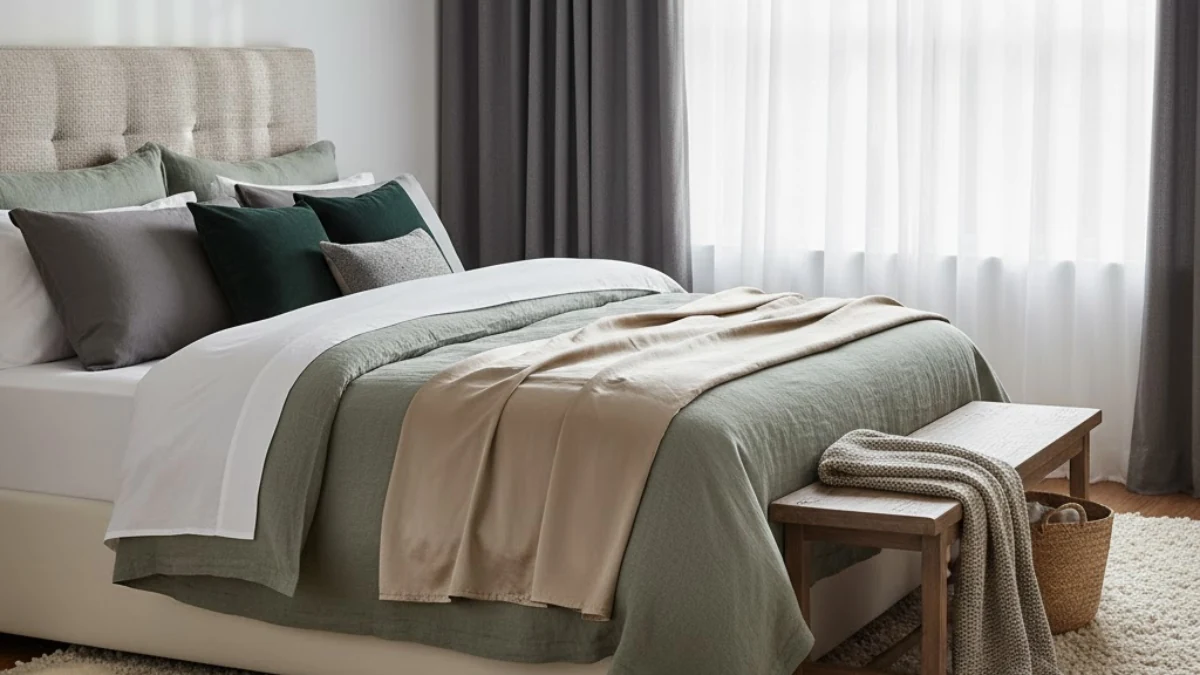
- Bedding: Invest in the best sheets you can afford. Cotton percale is crisp and cool; linen is breathable and textured; silk is luxurious and good for skin.
- Rugs: Stepping onto a cold floor in the morning is jarring. Place a large area rug under the bed (extending 18-24 inches beyond the sides) or sheepskin runners on either side.
- Curtains: Functionality is key here. Blackout curtains are a non-negotiable for quality sleep, but they can be heavy. Layer them with sheer drapes to allow soft daylight in during the afternoon while maintaining privacy.
6. The Personal Touch
While hotel rooms are beautiful, they often lack soul. Your bedroom should reflect you.
- Artwork: Avoid chaotic or aggressive imagery in the bedroom. Choose landscapes, abstracts with soothing flows, or personal photography.
- Biophilia: A touch of green breathes life into the room. Snake plants and peace lilies are excellent bedroom choices, as they purify the air and release oxygen even at night.
7. Homzinterio’s Vision for Your Bedroom
At Homzinterio, we understand that a bedroom renovation is an investment in your well-being. Whether you crave the clean lines of Scandinavian design, the raw edge of industrial style, or the ornate beauty of classic traditionalism, our team is dedicated to balancing aesthetics with ergonomics.
We don’t just design rooms; we design sleep experiences. From custom-built walk-in closets that organize your life to lighting plans that soothe your mind, we handle the details so you can rest easy.
Ready to wake up in the bedroom of your dreams? Contact Homzinterio today for a consultation.
FAQ
1. What is the best color for a bedroom?
The best bedroom colors are calming tones like soft blues, sage greens, warm neutrals, or muted pastels. These shades help create a relaxing atmosphere and promote better sleep.
2. How do I make a small bedroom look bigger?
Use light colors, wall-mounted lighting, multifunctional furniture, and sliding wardrobes. Mirrors also help reflect light and visually expand the space.
3. What is the ideal bedroom layout?
Place the bed in the “command position,” ideally opposite the door but not directly aligned with it. Ensure there is enough walking space on both sides, and create separate zones for sleeping, dressing, and relaxing if space allows.
4. What type of lighting is best for bedrooms?
A layered lighting approach works best—ambient lighting for overall brightness, task lighting for reading or dressing, and soft accent lighting for a cozy feel.
5. How can I improve bedroom storage?
Opt for floor-to-ceiling wardrobes, under-bed storage, built-in units, and multipurpose furniture like ottomans or bedside tables with drawers. Smart storage solutions help reduce clutter.