The Evolution of the Indian Vanity Design: From Royal “Shringar” to Modern Minimalism
The Evolution of the Indian Vanity Design: From Royal “Shringar” to Modern Minimalism
Let’s be honest, how many of us start our day by staring into the bathroom or bedroom mirror, contemplating life while brushing our teeth or applying that winged eyeliner? We often take that counter space for granted, but the “vanity” is easily one of the most hardworking corners of an Indian home.
At Homzinterio, we’ve seen trends come and go, but vanity design remains a sacred space. It’s where you prepare for a high-stakes meeting, where you wind down with a 10-step skincare routine, and where you occasionally have a solo concert with a hairbrush microphone.
But have you ever wondered how we got here? The vanity isn’t just a modern Western import; it has deep roots in Indian history, evolving from ornate, heavy-duty wooden chests to the sleek, floating marble wonders we design today.
A Walk Down Memory Lane: The Legacy of Shringar
In India, the concept of a vanity design is intrinsically tied to Shringar, the art of adornment. If you look back at the Mughal era or the Rajput kingdoms, the “Vanity” wasn’t just a piece of furniture; it was an experience.
The Shringar-daan and Royal Chambers
Centuries ago, Indian royalty used elaborate, hand-carved boxes known as Shringar-daans. These were essentially portable vanities made of rosewood, ivory, or brass, featuring hidden compartments for kohl, perfumes (ittar), and heavy jewelry.
As architecture evolved, these boxes grew into massive, floor-to-ceiling wooden dressing units. Think of the Haveli style: dark teak wood, intricate floral carvings, and mirrors with thick, arched frames. These pieces were built to last generations, often becoming family heirlooms. They were grand, heavy, and demanded a lot of floor space, a far cry from the sleek units we see in modern Mumbai or Pune apartments today!
The Shift: From Grandeur to Functionality
As our lifestyles shifted and urban living became the norm, the “heavy” vanity had to go on a diet. We transitioned from standalone dressing rooms to integrated vanity units within bedrooms and washrooms.
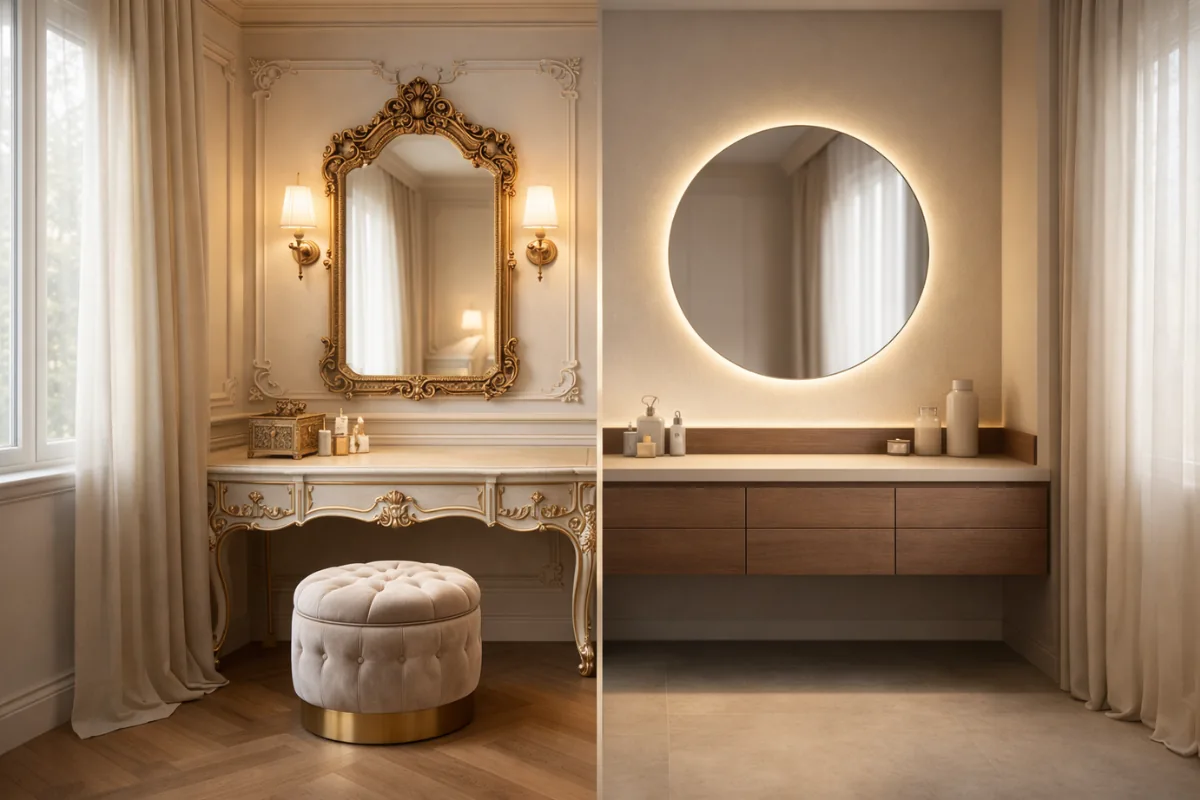
However, even as the designs changed, the Indian soul of the vanity stayed the same. We still need space for our bangles, our specific “puja” kumkum, and a million different hair oils. The modern Indian vanity dsign is a beautiful compromise: it honors the legacy of craftsmanship but embraces the efficiency of 2026 technology.
Check Out Our Related Blog modern washbasin cabinet design
Modern Vanity design Types: Which One Are You?
When we design for homes today, we aren’t just looking at a sink and a mirror. We’re looking at your lifestyle. Here are the top vanity styles currently ruling the Indian interior scene:
1. The Floating (Wall-Mounted) Vanity
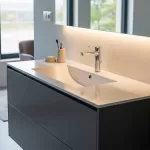
This is the undisputed king of modern apartments. By lifting the unit off the floor, you create an illusion of more space.
- Why it works: It makes cleaning the floor a breeze (no more dust bunnies hiding under the legs!).
- Style tip: Use a “handle-less” design with a push-to-open mechanism for that ultra-clean, seamless look.
2. The Integrated "Tech" Vanity
Since we’re living in a digital-first era, your vanity needs to keep up. We’re seeing a huge demand for units with built-in charging ports for trimmers, blow-dryers, and electric toothbrushes.
- The Hero Feature: The Smart Mirror. These come with built-in LED lighting (perfect for selfies), anti-fog technology, and even Bluetooth speakers.
3. The Neo-Classical Revival
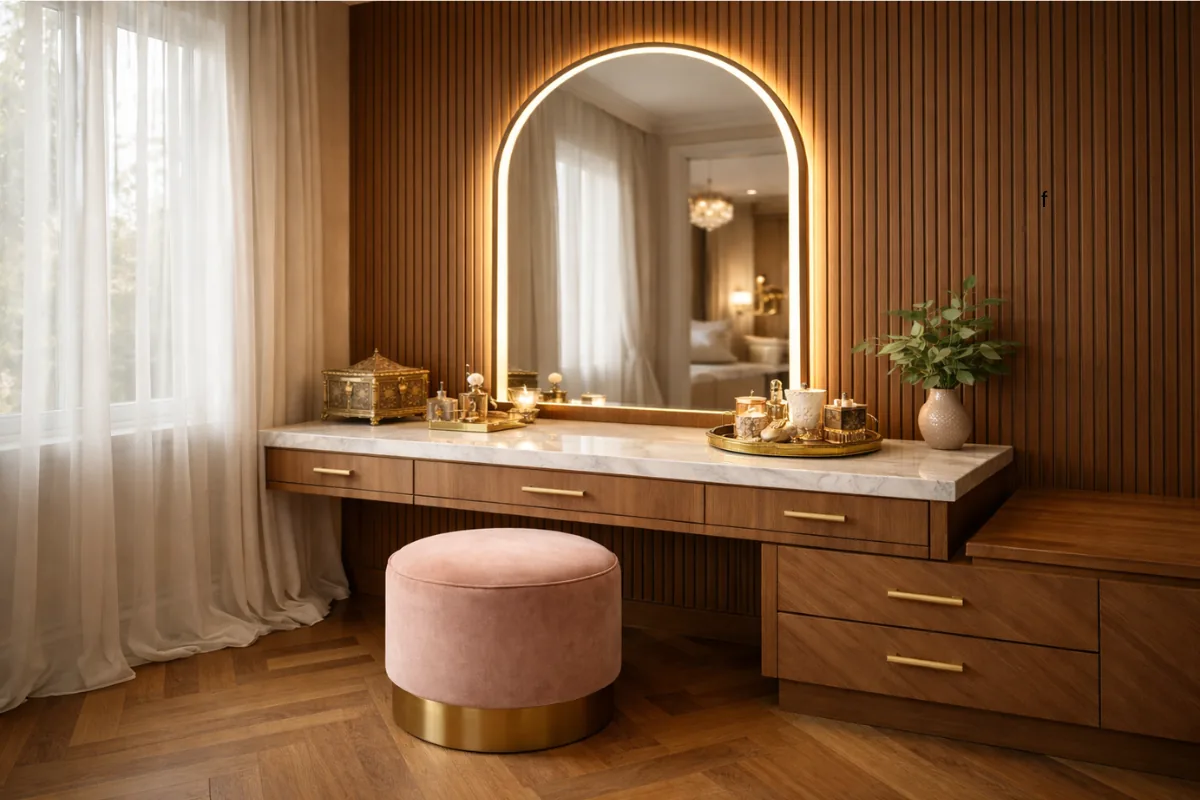
For those who miss the old-world charm but live in a modern flat, this is the “Goldilocks” solution. We use modern materials like MDF or plywood but finish them with traditional fluted panels or brass handles.
- Legacy Touch: Incorporate a small piece of marble or a stone inlay to pay homage to the royal Indian aesthetic.
4. The "His and Her" Twin Vanity
If you’ve ever fought over who gets the sink in the morning, you know why this is trending. Larger master suites are now incorporating double sinks with separate storage, allowing couples their own personal zones.
Material Matters: What Makes an Indian Vanity design Durable?
Indian homes face unique challenges: high humidity, hard water, and… well, we use a lot of water in our bathrooms! At Homzinterio, we prioritize materials that don’t just look good on Day 1 but look great on Day 1000.
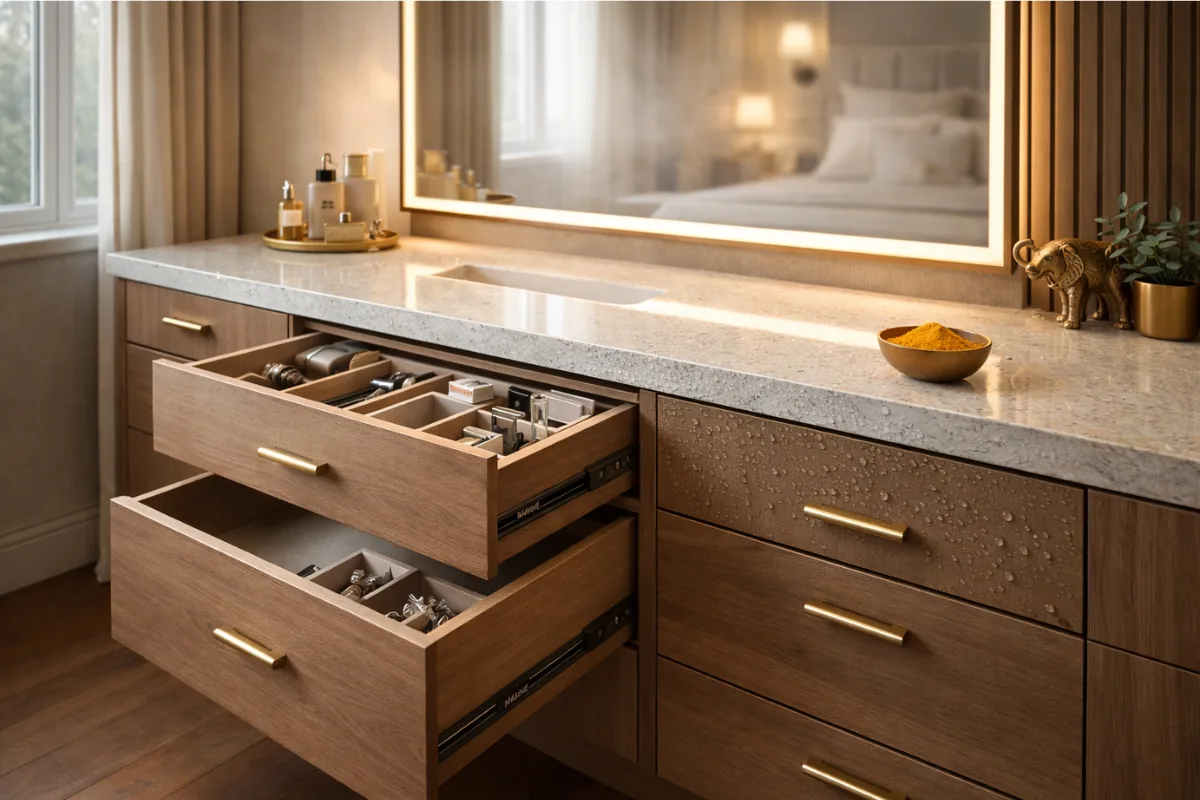
- BWR Plywood: We always recommend Boiling Water Resistant (BWR) or BWP (Boiling Water Proof) grade plywood for vanities. Standard particle board? Avoid it like a bad haircut—it will swell up the moment it touches water.
- Quartz vs. Marble: While marble is classic, Quartz is the modern favorite. It’s non-porous, meaning your turmeric-based face masks or hair dyes won’t leave a permanent stain.
- Nano-Coated Finishes: These are the “magic” finishes that repel water and fingerprints, keeping your vanity looking pristine with minimal wiping.
Check out our most relevant blog about common bathroom concept
Small Space Hacks: Vanity Designs for Compact Homes
Not everyone has a sprawling 4BHK. If you’re working with a compact space in a city like Bangalore or Chennai, you can still have a stunning vanity.
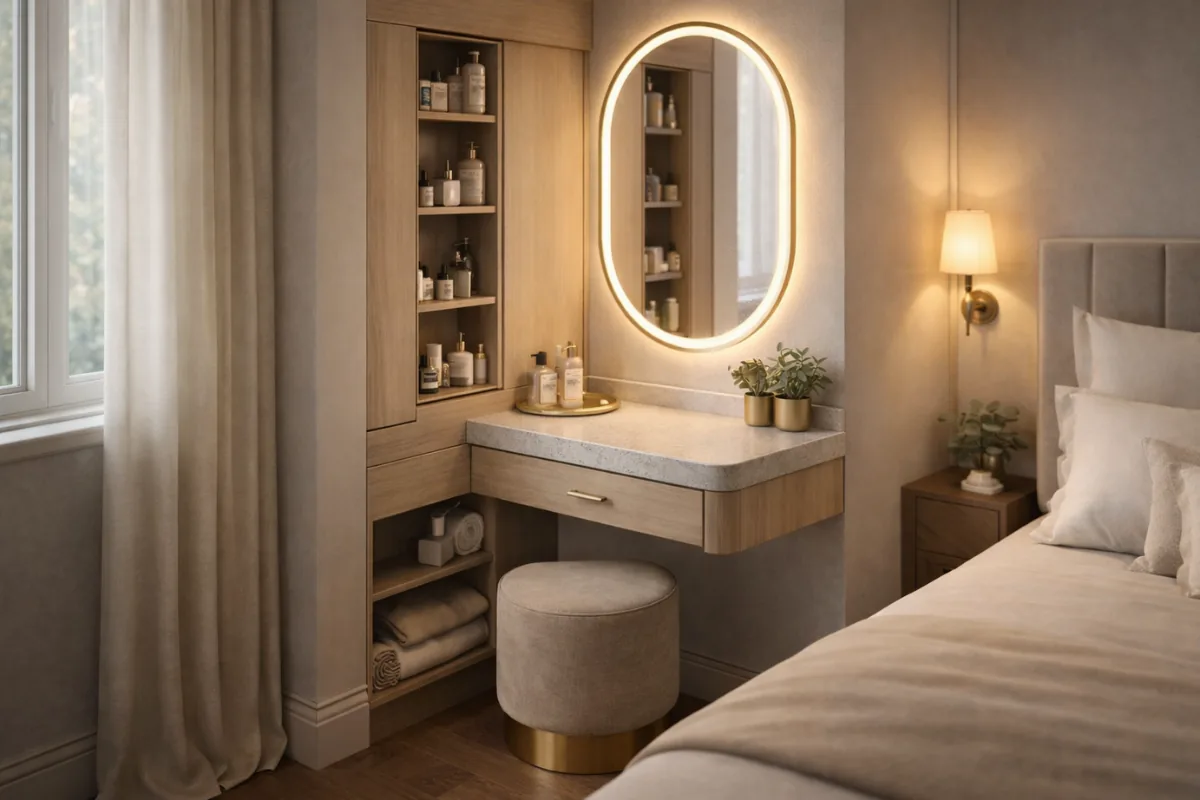
- Corner Units: Don’t let that corner go to waste. A triangular vanity design can fit a surprisingly large sink and provide storage without eating up the walkway.
- Over-the-Toilet Storage: Use the vertical space above the commode for a matching cabinet. It keeps the visual language consistent.
- Mirror Cabinets (The Medicine Cabinet 2.0): Instead of a flat mirror, use a shallow cabinet with a mirrored front. It’s the perfect place to hide all those small bottles that usually clutter the counter.
Continuing the Legacy: How to Style Your Vanity
A modern vanity design shouldn’t feel like a sterile hospital counter. To bring back that “Shringar” vibe, you need to layer it with personality:
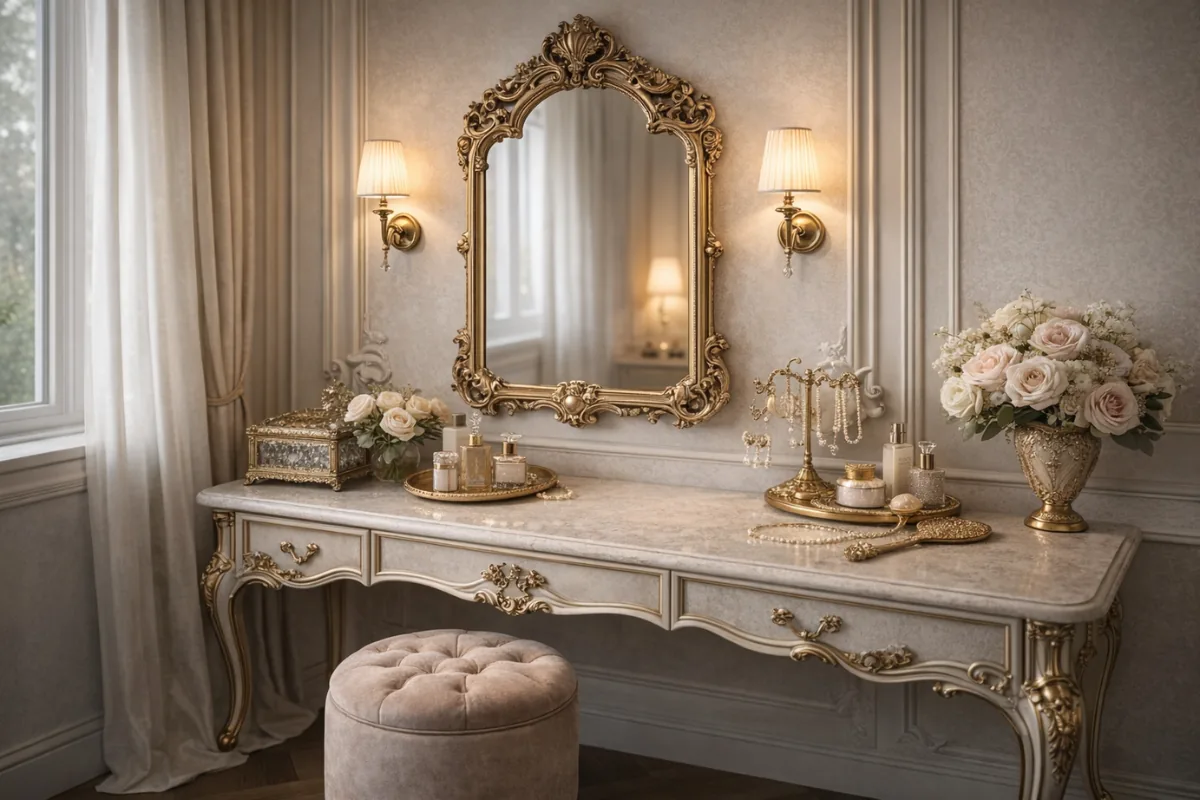
- Bring in the Green: A small humidity-loving plant (like a Snake Plant or Money Plant) adds life to the stone surfaces.
- Organize with Trays: Use a brass or wooden tray to group your daily essentials. It feels intentional rather than messy.
- Lighting is Everything: Never rely on just one overhead bulb. Use “Task Lighting”— lights on either side of the mirror to avoid shadows on your face.
Why Customization is Key
You might find a ready-made vanity at a big-box retailer, but does it fit your specific plumbing? Does it match your height? Does it have a drawer deep enough for your specific hair dryer?
This is where Homzinterio steps in. We believe your vanity should be as unique as your morning routine. Whether you want a piece that whispers “modern minimalist” or one that screams “contemporary royalty,” we bridge the gap between India’s rich design history and today’s functional needs.
Vanity is more than just a piece of furniture; it’s where you prepare to face the world.
Let’s Design Your Dream Vanity design
Ready to upgrade your morning routine? Whether you’re renovating a single bathroom or designing your forever home, our team is here to help you blend legacy with luxury.
All Your Vanity Design Questions Answered
1. What vanity design style is most popular?
Modern minimalist vanity design is the most popular today. Clean lines, floating units, neutral colors, and clutter-free surfaces define this style. It focuses on smart storage, soft lighting, and a sleek, timeless look.
2. What are the latest trends in vanity design?
Trending vanity designs include floating units, LED backlit mirrors, fluted finishes, and matte textures. Natural materials, warm lighting, and built-in organizers are also in demand. Functionality with subtle luxury is the key trend.
3. What are common vanity design mistakes to avoid?
Common mistakes include poor lighting, lack of storage, and ignoring ergonomics. Choosing non-moisture-resistant materials in bathrooms can cause damage. Overly trendy designs without long-term planning should also be avoided.
4. What is the most popular color of bedroom vanity?
White is the most popular bedroom vanity color. It brightens the space and matches any décor style. Soft neutrals like beige, grey, and light wood tones are also widely preferred.
5. What colors make a bathroom look expensive?
Deep navy, charcoal, emerald green, and classic white with gold accents create a luxurious look. Neutral shades like ivory and greige also feel high-end. Rich colors paired with quality materials elevate the space.