Unlocking the Free Spirit: A Comprehensive Guide to Bohemian Interior Design
Unlocking the Free Spirit: A Comprehensive Guide to Bohemian Interior Design
For those who crave a home that is eclectic, vibrant, and entirely unique, bohemian interior design offers a canvas for personal expression like no other style. Born out of the artistic movements of 19th-century France and fueled by the counterculture of the 1960s, “Boho” has evolved from a rebellion against conventional standards into one of the most beloved and versatile design aesthetics today. It’s not just a decorating choice; it’s a celebration of a free-spirited, travel-loving, and artisan-focused lifestyle.
If you are looking to break free from the clean lines of minimalism and inject your home with personality, color, and a sense of effortless global flair, this comprehensive guide will give you all the tools, tips, and inspiration needed to cultivate your own Bohemian sanctuary.
What is Bohemian Style?
Bohemianism theme is defined by its lack of structure. While contemporary and modern design are built on clean lines and function-forward spaces, Bohemian design is built on layers, texture, and a sense of life. A classic Boho home looks as if its occupants have traveled the world, collecting textiles, artwork, and furniture that speak to their experiences.
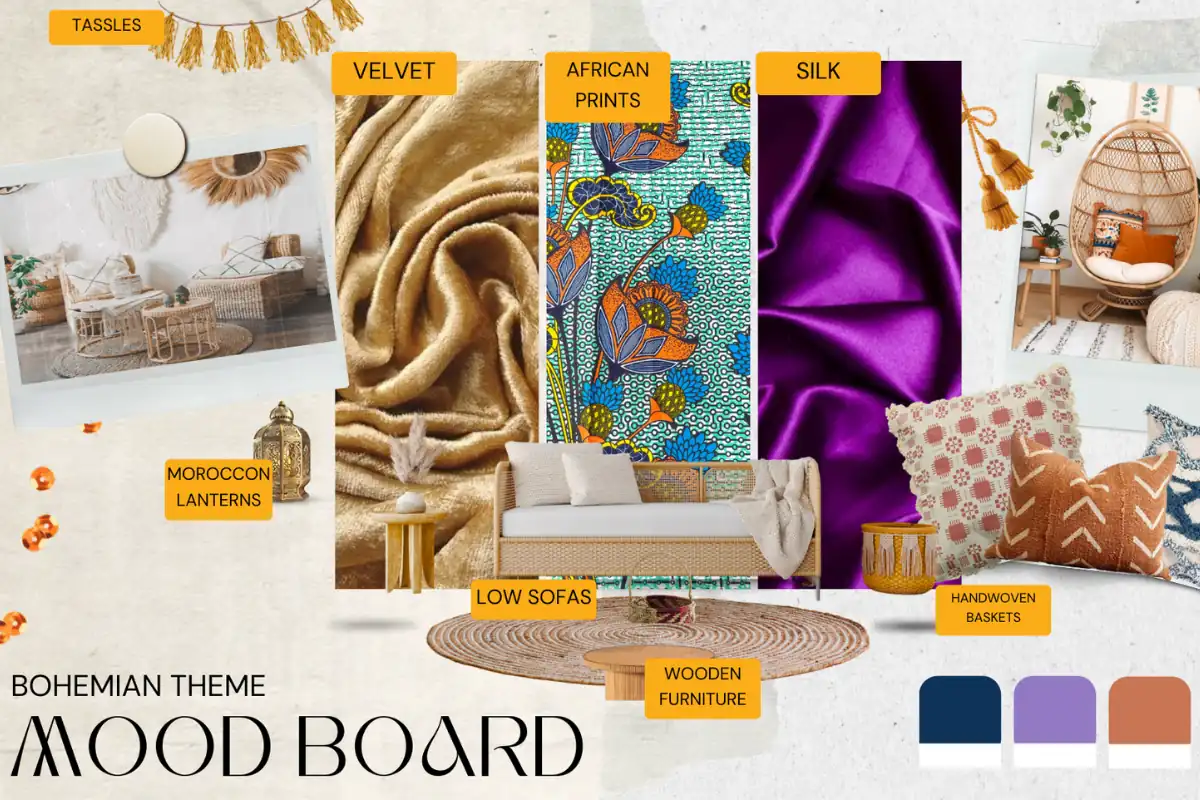
The beauty of Boho lies in its flexibility. There is no right or wrong way to do it. However, the core philosophy can be boiled down to three key principles:
- Eclectic Mix: The successful integration of items from different cultures, eras, and aesthetics.
- Global Inspiration: Using textiles, patterns, and artifacts from countries like Morocco, India, Turkey, and Latin America.
- Emphasis on Comfort: Boho spaces are meant to be lived in. Plump cushions, soft rugs, and inviting seating are essential.
Understanding the Nuances: Classic Boho vs. Modern Boho
It’s important to acknowledge that there are two main branches of the Bohemian family.
- Classic Bohemian (maximalist): This style is for the true collector. It embraces intense, rich color palettes (think jewel tones like ruby red, amethyst purple, and emerald green), heavy layering of fabrics, and wall-to-wall patterns. This approach is maximalist—more is always more.
- Modern Bohemian (the “Jungalow” effect): This style fuses classic Boho elements with more contemporary design. The color palette is often more relaxed, focusing on warm neutrals like cream, beige, and terracotta, but relies heavily on natural materials (wood, rattan, linen) and many plants. Modern Boho feels cleaner, but still retains its global heart.
Throughout this guide, we will cover elements that apply to both, allowing you to choose how bold or subtle you want your transformation to be.
The Color Palette: The Foundation of the Soul
The Boho color palette is perhaps the hardest to define because it is entirely subjective. However, to create that classic Boho depth, you have to be willing to play with color.
1.The Rich & Regal Base (Classic)
If you are aiming for a classic, cozy look, your base colors should be deep and grounded. Think of the tones of a Moroccan souk at sunset.
- Base: Chocolate brown, deep terracotta, warm mustard yellow.
- Accents (Jewel Tones): Ruby red, sapphire blue, emerald green, amethyst purple, and burnt orange.
These colors absorb light, creating a sense of intimacy and history within a room.
2.The Soft & Earthy Base (Modern)
For a Modern Boho look, the palette is lighter and more muted, offering a neutral backdrop for textiles and plants.
- Base: Cream, warm white, light beige, or soft taupe.
- Accents: Terracotta, soft peach, olive green, dusty rose, and muted teal.
This combination keeps the space feeling airy and bright, while still providing the warm, inviting feel that defines the style.
Pattern Play: The Art of Layering
Bohemian interior design style thrives on pattern. The key is knowing how to mix and match different prints without making the room feel chaotic or overwhelming. This is achieved through balance in scale and color.
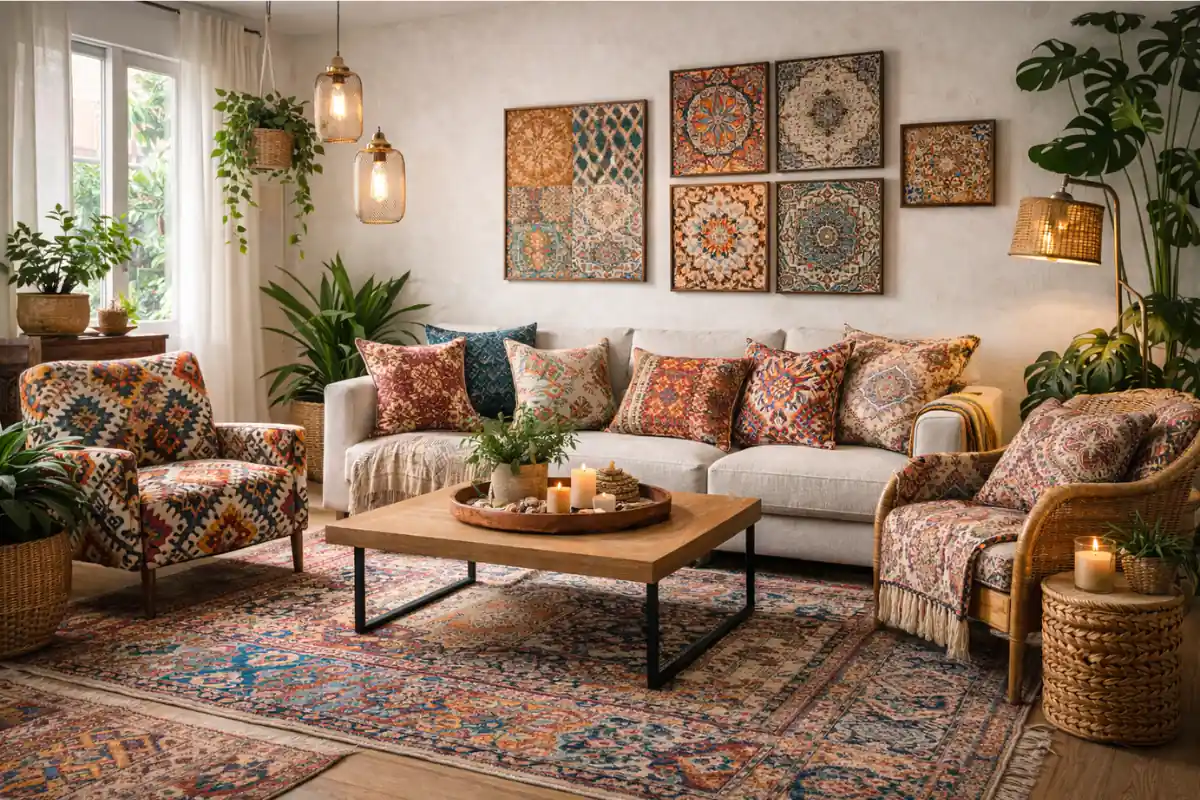
Common Bohemian Patterns
To achieve an authentic look, incorporate textiles featuring traditional motifs from around the world:
- Kilim and Ikat: Geometric and symbolic patterns from Central Asia and Turkey.
- Suzani: Large floral motifs, typically from Uzbekistan.
- Paisley: A classic Persian tear-drop motif.
- Aztec and Tribal Prints: Bold geometric designs from the Americas and Africa.
- Moroccan Trellis: Geometric, interlacing patterns.
How to Mix Patterns Like a Pro
Mixing patterns is essential to Boho, but requires a strategic approach. Follow these rules for a cohesive look:
- Find an Anchor Color: Choose one main color that appears in almost every pattern you are using. This color binds the different prints together, making them feel like they belong in the same room.
- Vary the Scale: Don’t use four different small-scale geometric prints. Instead, mix a large-scale floral (Suzani), a medium-scale stripe or trellis, and a small-scale geometric (like an Ikat or Kilim). This variation creates depth and movement.
- Provide Visual ‘Breath’: Counterbalance busy patterns with solid blocks of color or texture. For instance, if you have patterned curtains and rug, use a solid linen sofa to let the eyes rest.
The Magic of Textiles: Texture, Warmth, and Soul
If there is one non-negotiable element of modern Bohemian design, it is textiles. Textiles are used for everything; upholstery, curtains, wall coverings, and bedding and often several of these items are layered in a single room.
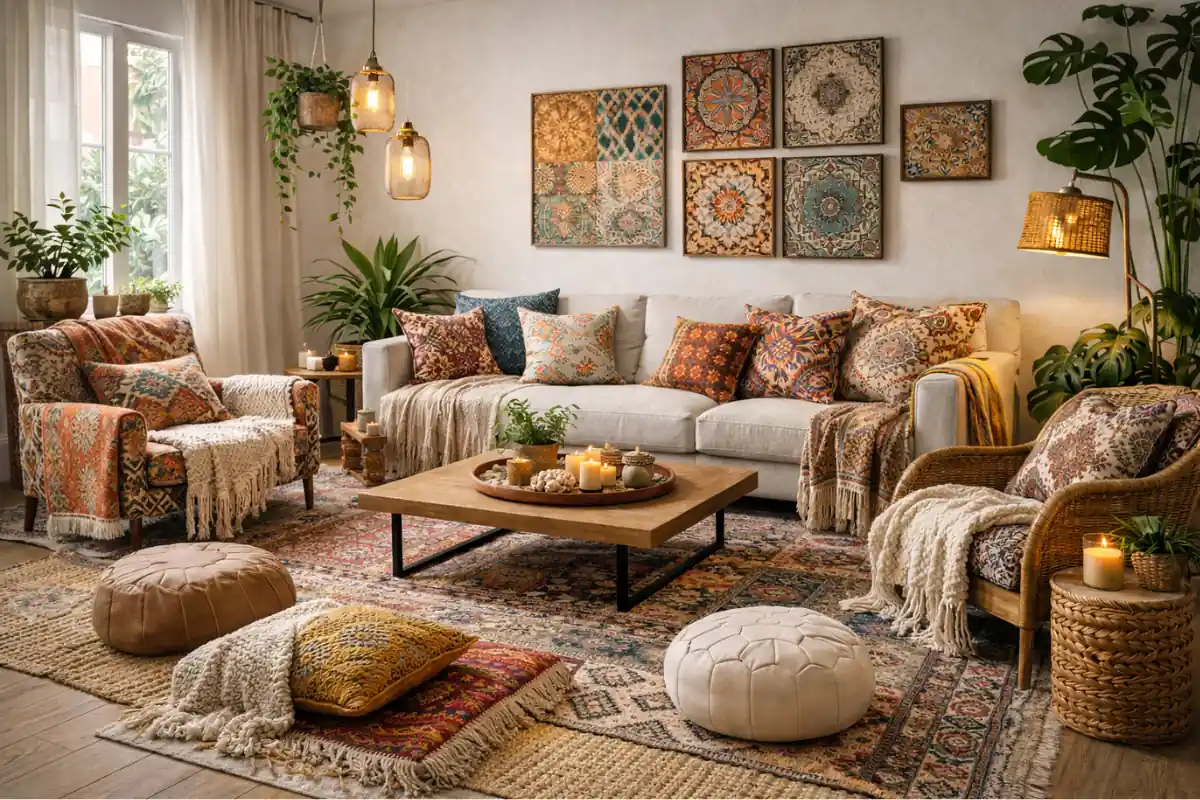
Textural Layering
To create a space that feels lived-in and comfortable, layer textiles on every available surface.
Rugs: This is the most vital step. Start by laying down a large, simple rug (like jute or a worn oriental) to cover the floor. Then, layer a smaller, patterned rug (like a Moroccan shag or Kilim) at an angle over the base rug near the seating area.
Throws & Blankets: Drapes textured throws over sofas, armchairs, and the foot of the bed. Materials like chunky knit wool, soft cotton gauze, or fringed velvet are perfect.
Floor Cushions: To create the low-to-the-ground, communal seating arrangement often found in Boho spaces, ditch traditional chairs and pile up oversized floor cushions and poufs (like Moroccan leather poufs).
The Right Fabrics
Avoid synthetic, shiny fabrics (like cheap polyester) as they clash with the artisanal nature of the Boho style. Opt for:
Velvet: Ideal for sofas and cushions in rich, jewel tones.
Jute, Sisal, and Hemp: Essential for rugs and wall hangings, adding essential earthiness and texture.
Linen and Cotton: The perfect breathable fabrics for bedding, curtains, and throws. Look for variations like distressed linen or soft muslin.
Fringe and Tassels: Always look for textiles that have movement. Fringed throws, tasseled pillows, and macrame wall art are Boho staples.
Furniture: Reclaimed, Vintage, and Comfortable
Bohemian furniture should tell a story. This style is not about buying matching sets from a showroom floor. In fact, matching furniture is a major Boho pitfall.
Your furniture should look collected over time, showcasing different periods and places.
Material Focus: Natural is Key
Embrace materials that feel raw and tactile. The imperfections are what make it beautiful.
- Wood: Choose warm-toned, worn, or distressed wood. Reclaimed barn wood, hand-carved panels, and live-edge tables work beautifully. Avoid dark, sleek, polished wood that looks sterile.
- Rattan, Cane, and Wicker: Nothing says Boho like rattan. Whether it’s a vintage peacock chair, a woven headboard, or a small side table, these lightweight, textural materials add immediate global character.
- Metal: Choose warm metals like brass, bronze, and copper over polished silver or steel. A hammered brass tray or copper lanterns add necessary warmth and reflection.
Sourcing Furniture
Forget “new.” Shop for furniture at flea markets, antique shops, vintage stores, and thrift shops. The piece should have character before it even enters your home.
The Essential Pieces
There are certain furniture pieces that define the style:
- Low Seating: Chaise lounges, floor poufs, and oversized sofas. The philosophy is to create a space that encourages lounging and relaxation.
- The Peacock Chair: The ultimate icon of 1970s Boho. This statement-making cane chair can serve as the centerpiece of a living room or a bedroom reading nook.
- Canopy Beds: Draped with sheer, light fabrics (like cheesecloth or mosquito netting), a canopy bed is a romantic Boho staple.
The Importance of Light and Plants (The Jungalow Vibe)
Lighting and greenery are what bring a Boho space to life, transforming it from a simple eclectic room into a vibrant sanctuary.
Light: Warm and Layered
Ditch the bright, overhead lighting. Boho lighting should be soft, diffuse, and incredibly warm. It should create a mood, not illuminate every corner.
- Ambient Lighting: Use multiple lamps (floor and table) throughout the room.
- Woven Fixtures: Pendant lights and lamp shades made of rattan, bamboo, or basket weave add essential texture and create beautiful shadow patterns.
- Accent Lights: Twinkle lights (fairy lights) are almost mandatory for an authentic Boho space. Drape them over the headboard, around a mirror, or in a plant corner. Lanterns (Moroccan or Indian) are also key for mood.
Plants: The Living Elements
You cannot have a Bohemian home without an abundance of plants. They add the essential color of life and soften the textures of the textiles.
- The Philosophy: More is more. Fill every available surface—corners, shelves, windowsills, with greenery.
- Must-Have Plants: Devil’s Ivy (Pothos) for cascading vines, Snake Plants and ZZ Plants for easy care and verticality, and Monstera or Fiddle Leaf Figs for that large, dramatic “jungle” statement.
- Plant Display: Use baskets, terracotta pots, and macrame hangers to display your plants at various levels, emphasizing an organic, uncontrolled growth.
Art, Decor, and Accessories: The Personal Touches
Accessories are the final layer that truly personalizes your Bohemian space. These should be items that you genuinely love, collected on trips, inherited, or handmade.
What to Display
The rule here is simple: if you love it, display it.
- Handmade Items: Hand-painted pottery, ceramics, sculptures, and artisan-made items of any kind are vital. They respect craftsmanship over mass production.
- Travel Souvenirs: This is the core of the style. The masks from Bali, the beaded jewelry from Morocco, the textiles from India; all should be prominently featured.
- Sentimental Items: Family heirlooms, personal photos, and items from childhood. Boho spaces are not pretentious; they are intimate.
Essential Boho Decor Pieces
- Vintage or Ornately Carved Mirrors: These add light and a sense of old-world charm.
- Crystals, Stones, and Dried Flowers: Bring the elements of nature indoors.
- Books: Piles of books on tables, shelves, and even the floor add a lived-in, intellectual layer.
- Macrame: Macrame wall hangings are the defining accessory of the movement. From small pieces to massive, floor-to-ceiling installations, macrame adds texture and that essential handmade feel.
Wall Art and Gallery Walls
Empty walls have no place in a true Bohemian home.
- Ditch the Minimalism: Opt for large, sweeping gallery walls that display a mix of photographs, paintings, and drawings. The framing should not match; mix vintage gold frames with simple black frames and unframed canvases.
- Alternative Art: Don’t just hang paintings. Use the walls to display vintage maps, woven baskets, or even textiles and tapestries. A beautiful Kilim rug looks just as good hung on the wall as it does on the floor.
Applying Bohemian design Elements, Room by Room
While the overall principles apply universally, here is how to introduce Bohemian charm into specific spaces:
Bohemian Living Room
This is the showstopper. Focus on creating a space for communal gathering.
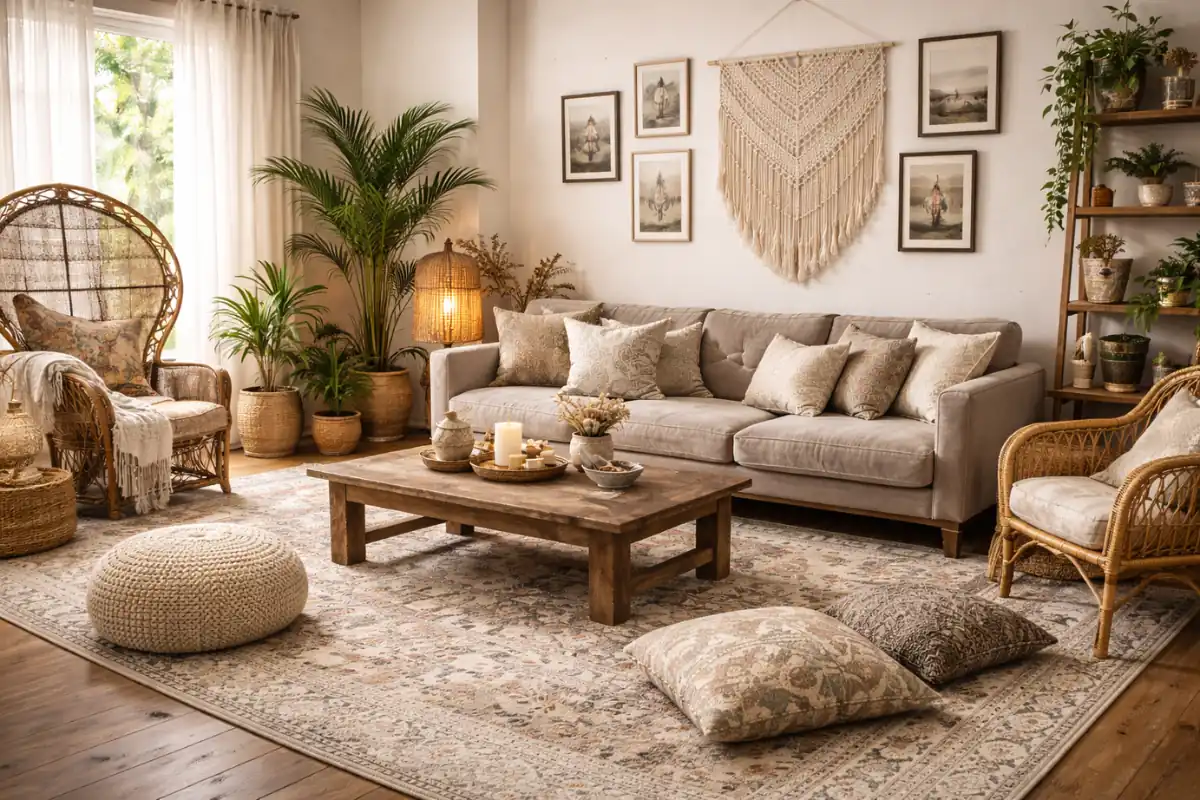
- Floor: Large, layered rugs.
- Seating: A deep, low-slung, velvet sofa in a jewel tone (emerald, rust, ruby).
- Accent: The ultimate accessory: a vintage peacock chair or a cane side chair.
- Layers: Multiple floor cushions (poufs) to allow people to lounge comfortably on the floor.
- Walls: A large gallery wall or a massive macrame hanging above the sofa.
Bohemian Bedroom
The goal here is ultimate coziness and romance.
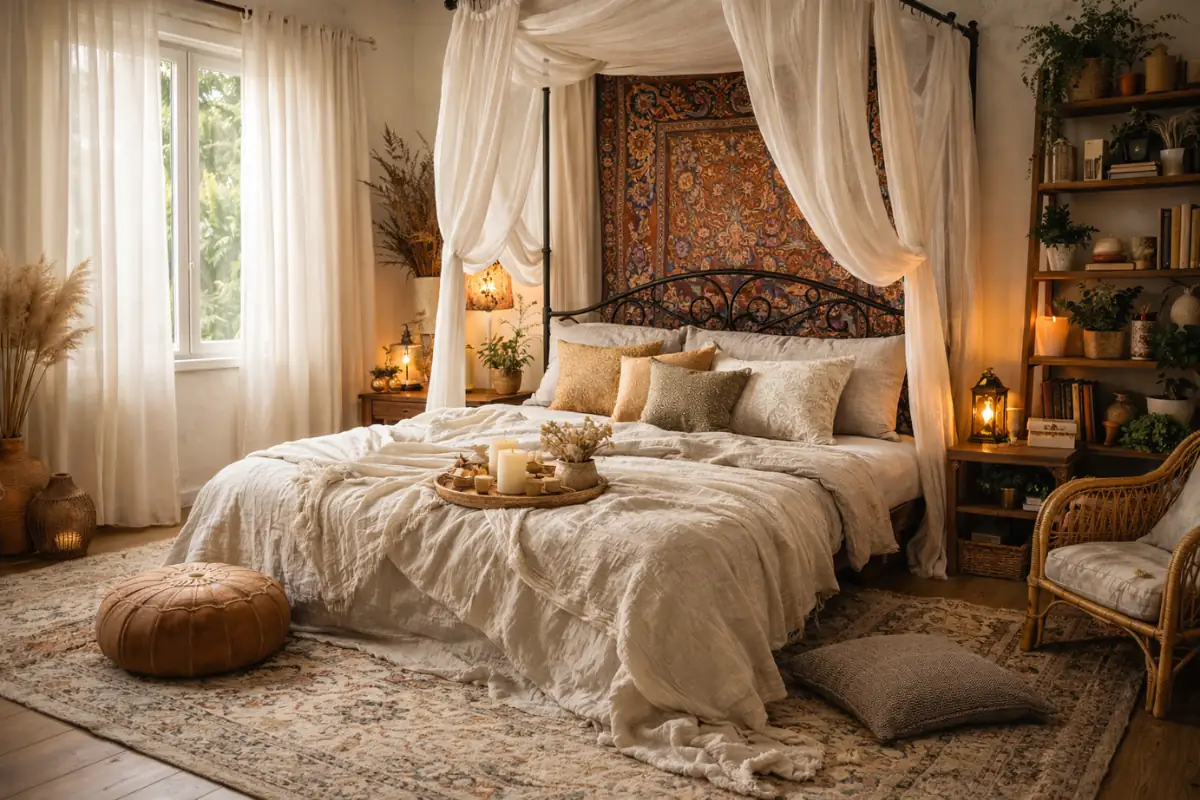
- Bed: Choose a cane or wrought-iron bed.
- Layers: Layer sheer white linen or cotton gauze curtains for privacy and a soft filter for natural light. Use textured linen sheets.
- Statement: If space allows, a canopy frame draped with cheesecloth or a vintage textile. If not, hang a colorful, patterned rug or tapestry behind the headboard.
- Storage: Open shelving for books and personal items, rather than clunky dresser drawers.
Bohemian Dining Room
The dining room should feel welcoming and informal.
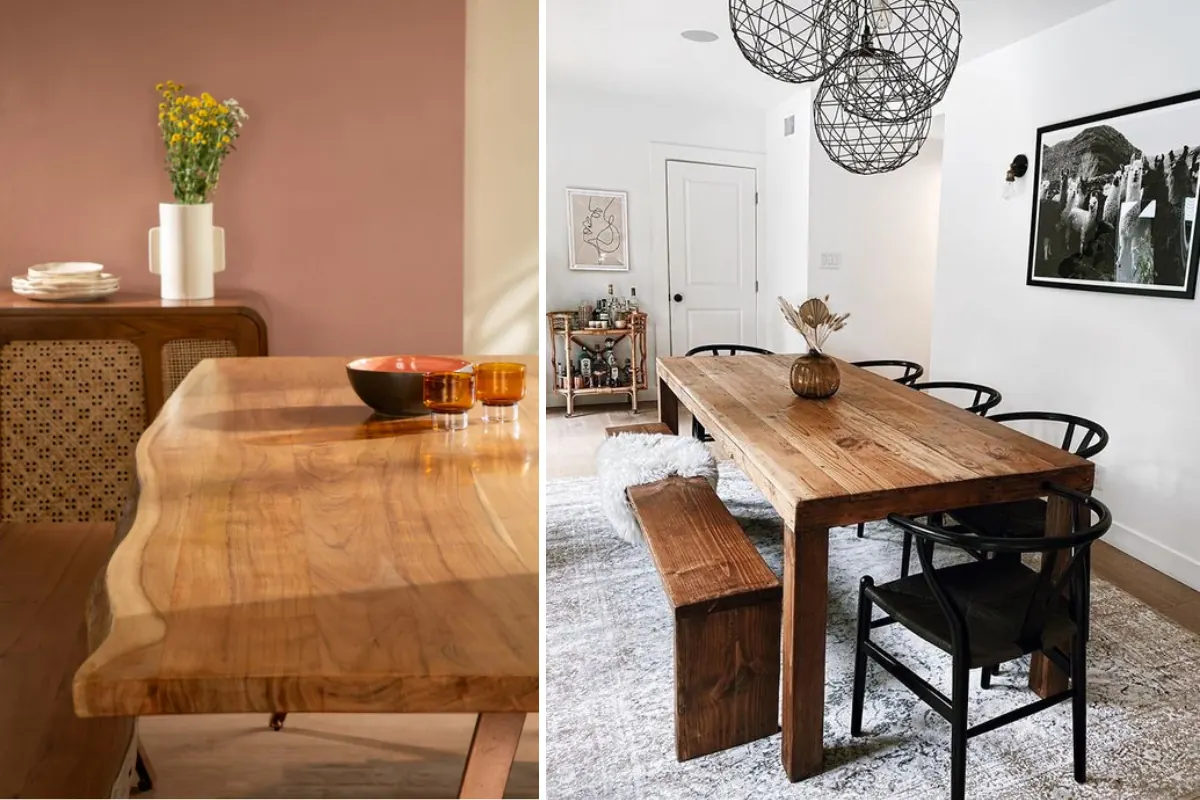
- Table: A worn, rustic wood table (perhaps live-edge).
- Seating: Mismatched vintage dining chairs. Mix cane-back chairs with simple wooden stools.
- Lighting: A large, statement-making woven rattan pendant light hung low over the table.
- Accents: A table runner made of Kilims or embroidered cotton. Centerpieces should be simple, like a vintage ceramic vase with dried wildflowers.
Bohemian Kitchen
You can bring Boho charm even into this functional space.
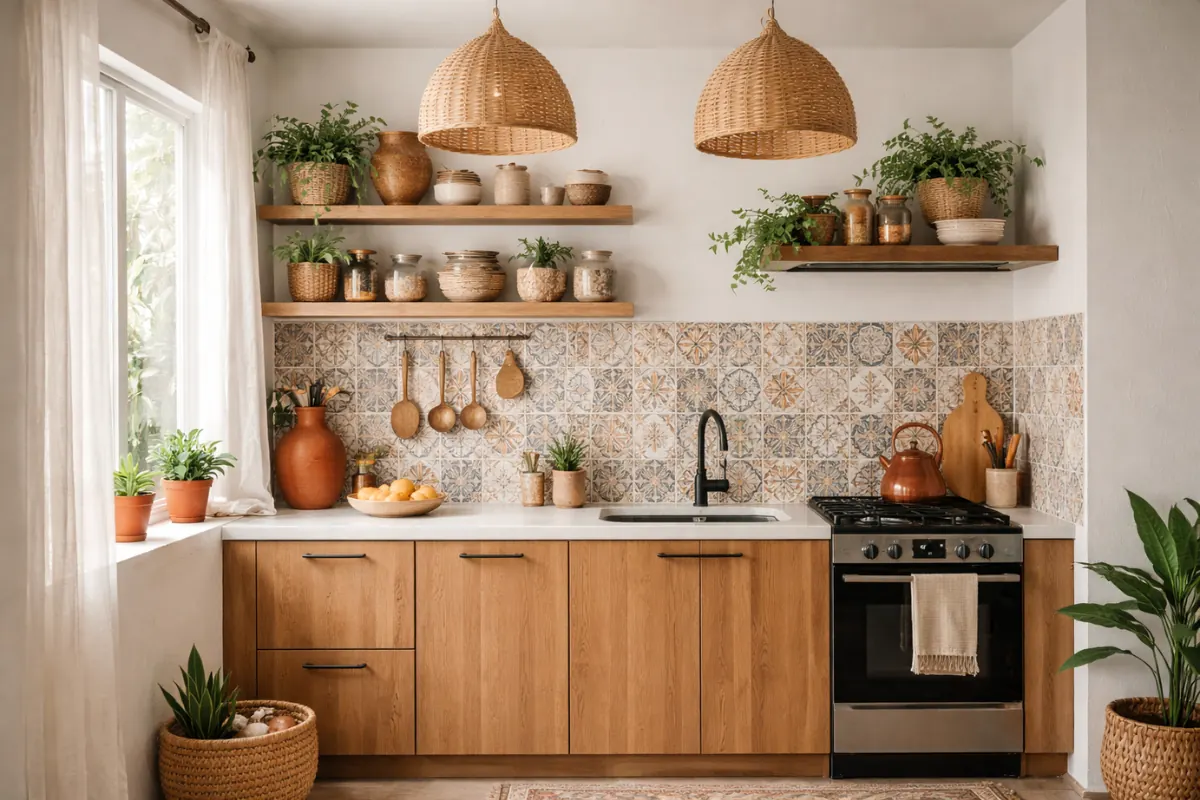
- Display: Swap upper cabinets for open shelving to display colorful artisan pottery and vintage glassware.
- Texture: A runner rug (like a durable Kilim) in front of the sink adds immediate color and softness.
- Greenery: Small potted herbs on the windowsill.
- Hardware: Swap out stark chrome handles for warm brass or bronze hardware.
Bohemian Bathroom
A Bohemian bathroom should feel like a spa or a Moroccan hammam.
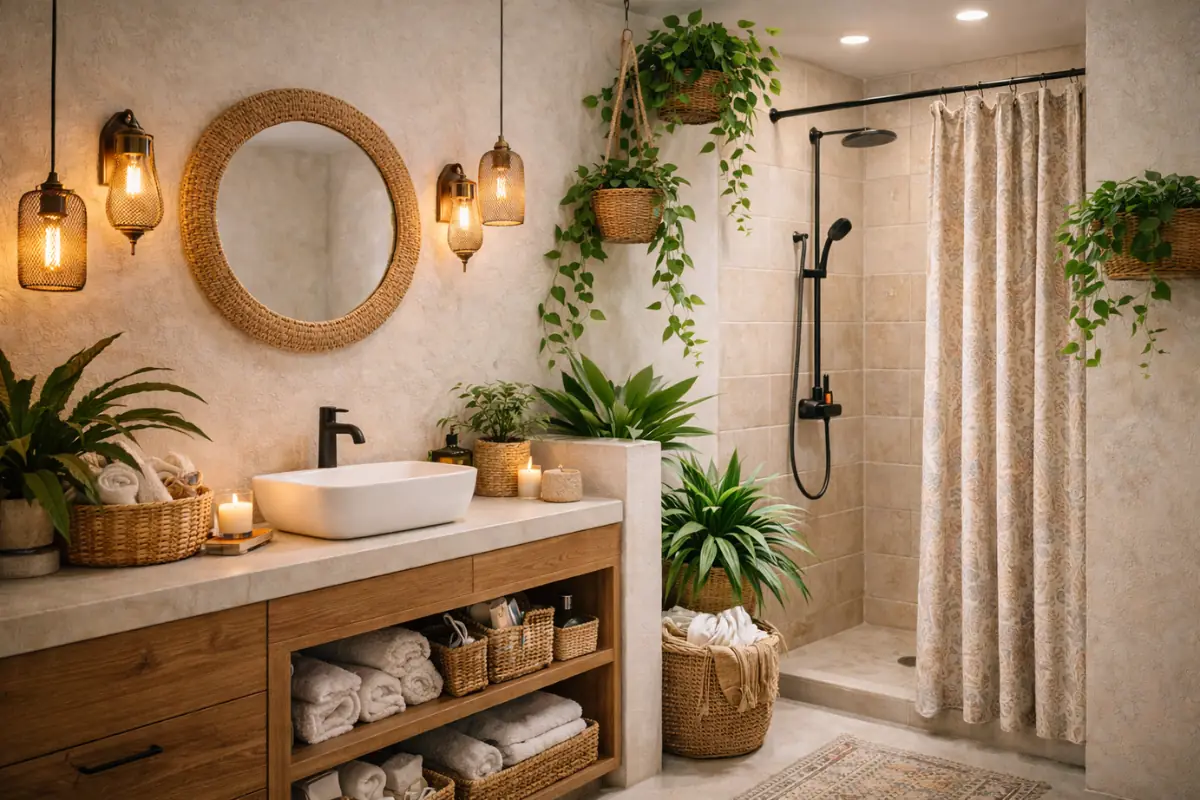
- Greenery: This is the most essential element in a bathroom. Use plants that love humidity (ferns, pothos, ivy) to fill the space.
- Light: Use warm lanterns or Edison bulb fixtures instead of harsh overhead fluorescent lights.
- Accessories: A woven basket for toiletries, a colorful, patterned shower curtain, and a distressed wooden mirror frame.
Common Mistakes and Pitfalls
While Boho is flexible, there are some common mistakes that can prevent your space from achieving that authentic, lived-in feel.
- Everything is “New”: If all your items are from modern retailers, the space will look like an imitation of the style, rather than the true global, eclectic mix that defines it. Embrace the “collected over time” approach and source vintage pieces.
- The Palette is TOO Saturated: While color is key, using only highly saturated jewel tones can make a space feel heavy and dark. Balanced it with the warm, light neutrals (creams, terracottas) used in Modern Boho.
- Clutter vs. Curated: Bohemian spaces are full, but they should never feel cluttered or messy. “Curated collection” is the phrase to remember. Every item displayed should have personal meaning or artisanal value.
- Over-matching: We cannot state this enough: do not buy matching furniture sets. Matching furniture is the enemy of the eclectic Bohemian spirit.
Embracing the Journey: Start Slow
Transforming your home into a Bohemian paradise doesn’t happen overnight. It is a style that is cultivated, not decorated.
Start slow. Focus on one room or even just one corner. Begin with textiles and plants, which offer the most significant impact with the least investment. Add a textured rug, scatter a few vintage-inspired pillows, and hang a macrame plant holder. From there, you can slowly begin to source the vintage furniture, the travel artifacts, and the layered art that will give your space its unique, lived-in soul.
The most important rule of Bohemian interior design is this: rules were meant to be broken. Listen to your intuition. If an object speaks to you, bring it into your home. The resulting space will be more than a house; it will be a reflection of your free spirit, your global heart, and your unique, wonderful life.
We hope this comprehensive guide inspires you to unlock the free spirit within your home and embrace the soulful, eclectic world of modern Bohemian interior design. Share your own Boho transformations with us and continue to build a space that is entirely your own. Happy decorating!
Also ask question about Bohemian style interior design
1. What is Indian Bohemian style?
Indian Bohemian style is a fusion of free-spirited boho design with traditional Indian elements. It combines vibrant textiles like block prints, ikat, and kantha, carved wooden furniture, brass décor, jute rugs, and handcrafted accessories. The look feels artistic, layered, and culturally rich while maintaining a relaxed and cozy atmosphere.
2. What are the characteristics of bohemian style?
Bohemian style is known for layered textures, eclectic décor, global influences, indoor plants, natural materials, and a mix of patterns. It embraces individuality, creative expression, vintage pieces, and a relaxed, lived-in feel rather than a perfectly polished look.
3. What are the five types of bohemian style?
Five popular types include Modern Boho (neutral and minimal), Indian Boho (ethnic and vibrant), Dark or Moody Boho (deep colors and dramatic lighting), Tropical Boho (greenery and airy vibes), and Vintage Boho (antique furniture and retro patterns). Each keeps the boho spirit but with a different mood and color balance.
4. What colors are typically used in bohemian style?
Bohemian interiors usually feature earthy tones like terracotta, rust, mustard, olive green, beige, and brown. They are often combined with rich accent colors such as deep blue, magenta, turquoise, and burnt orange to create warmth and visual depth.
5. What are the rules of bohemian style?
Bohemian style has no strict rules, but key principles include mixing patterns confidently, layering textures, incorporating natural materials, adding personal or handmade décor, and maintaining a cozy, relaxed atmosphere. The main rule is to express personality while keeping the space harmonious and inviting.