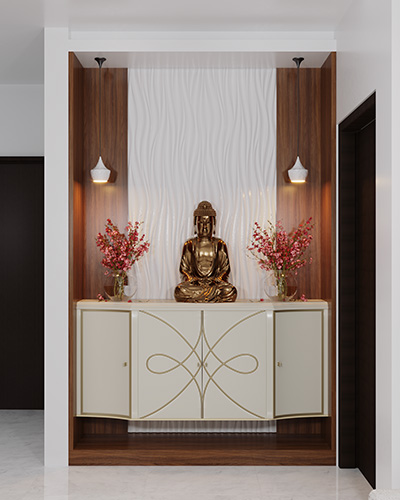
Wall Moulding Design: The Ultimate Guide to Elevating Your Interiors
Wall Moulding Design: The Ultimate Guide to Elevating Your Interiors
Introduction: The Return of Classical Elegance
There is a subtle art to transforming a house into a home, and often, the secret lies not in the furniture you choose, but in the walls that surround you. For years, “minimalism” meant plain, flat walls painted in neutral tones. But as we move further into this decade, the definition of luxury is shifting. Homeowners are craving texture, depth, and character.
Once reserved for Victorian palaces and Parisian apartments, moulding design on walls has made a massive comeback, blending seamlessly with modern, contemporary, and even industrial interior styles. It is the bridge between the old and the new—a design element that adds architectural interest to a plain boxy room without requiring a complete renovation.
At Homzinterio, we believe that walls are your canvas. Whether you are looking to create a regal living room or a cozy, sophisticated bedroom, wall moulding is the most versatile tool in your design arsenal. In this guide, we will explore everything you need to know about wall moulding, from trending styles to material choices, helping you define your space with elegance.
What is Wall Moulding?
Wall moulding (or molding) refers to any decorative trim used to add detail, definition, and structure to walls. Historically, it served a practical purpose—protecting walls from furniture scuffs (hence “chair rails”) or covering the gap between the floor and the wall (skirting). Today, however, its function is primarily aesthetic.
It creates a sense of height, frames focal points, and introduces a play of light and shadow that flat paint simply cannot achieve. By adding these architectural details, you stop seeing the wall as a barrier and start seeing it as a feature.
Check our recent blog about painting ideas for every style
7 Essential Types of Wall Moulding design
Before you start pinning ideas, it is crucial to understand the terminology. Mixing and matching these styles can create entirely different vibes for your home.
1. Wainscoting
This is perhaps the most popular form of wall moulding design. Wainscoting typically covers the lower third or half of a wall. It involves a combination of skirting, chair rails, and panels.

- Best for: Designing Dining rooms and hallways.
- Vibe: Traditional, cozy, and protective.
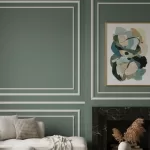
2. Picture Frame Moulding (Box Moulding)
As the name suggests, this involves creating square or rectangular “frames” on the wall using thin strips of moulding. It creates a symmetrical, paneled look that mimics classical architecture.

- Best for: Designing Living rooms and bedrooms behind the bed.
- Vibe: Sophisticated, formal, and Parisian-chic.
3. Crown Moulding (Cornice)
This creates a transition between the wall and the ceiling. It draws the eye upward, making ceilings feel higher and rooms feel grander.
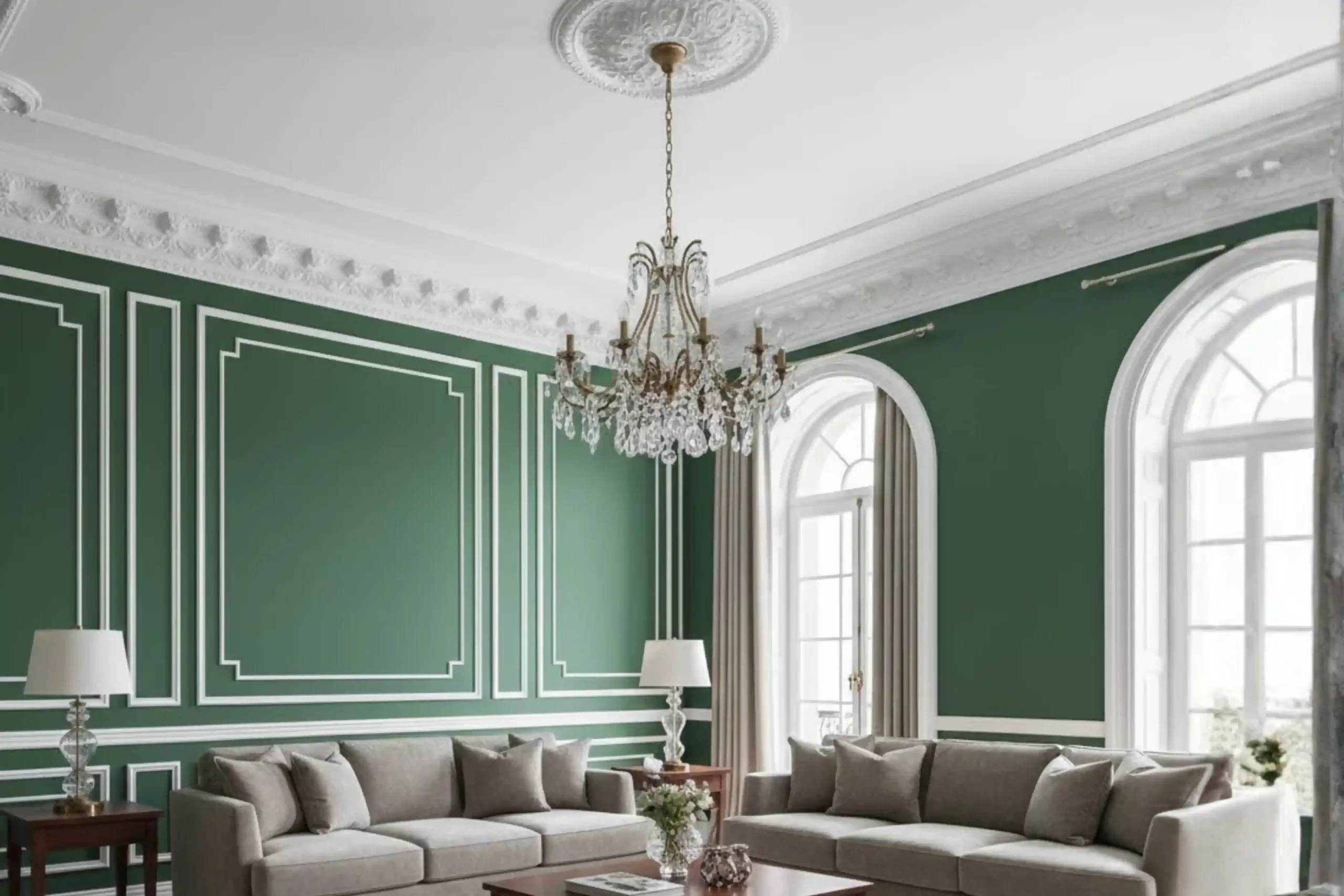
- Best for: Every room, especially those with high ceilings.
- Vibe: Finished and expensive.
4. Chair Rail
A horizontal strip of moulding that runs along the wall at roughly chair-back height (about 32-36 inches from the floor). Originally used to protect plaster walls from chairs, it is now used to break up wall height and allow for two-tone paint schemes.

- Best for: Dining areas.
- Vibe: Classic and structured.
5. Beadboard
A type of wood paneling characterized by vertical grooves (beads). It offers a charming, cottage-core aesthetic.
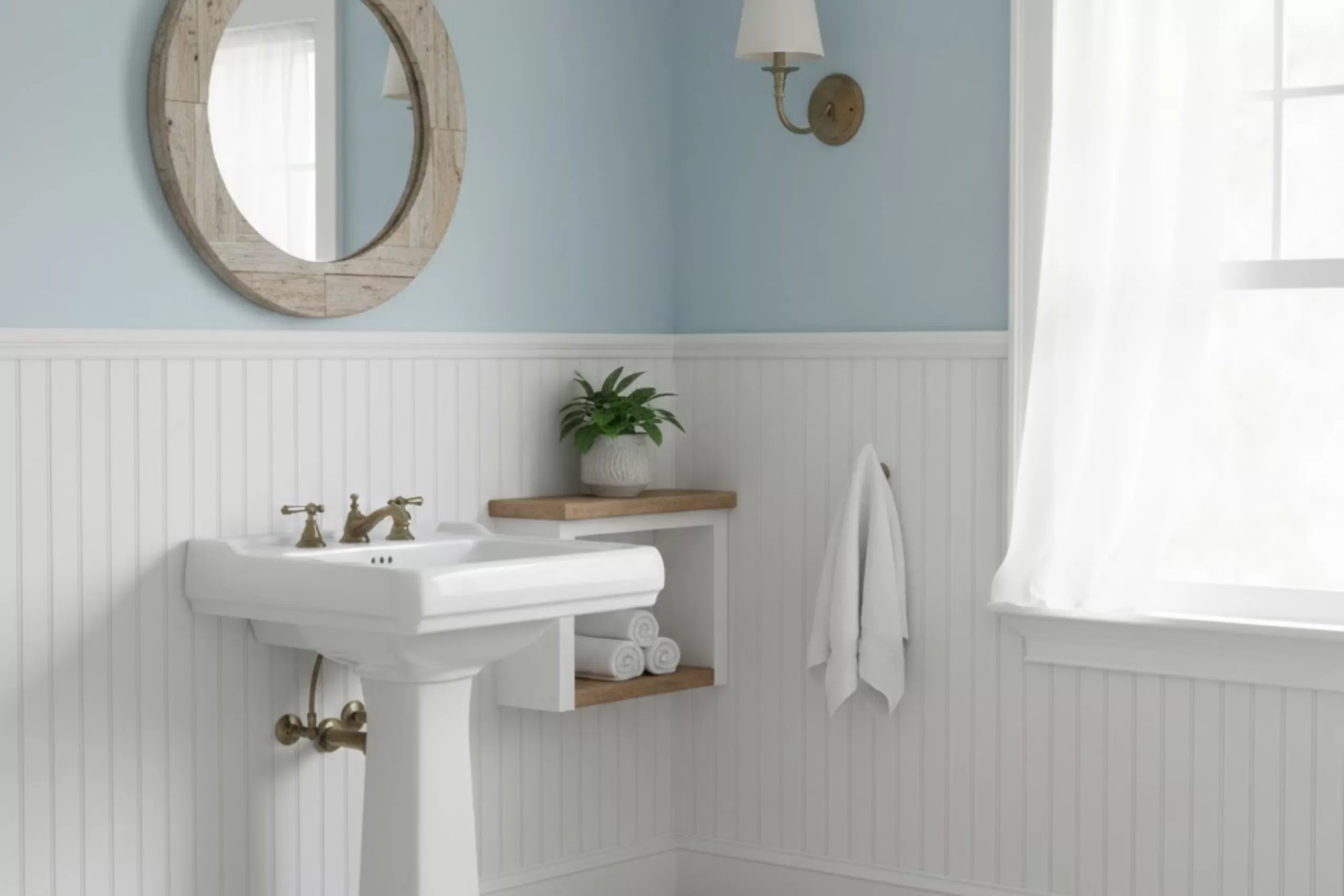
- Best for: Bathrooms, kitchens, and mudrooms.
- Vibe: Rustic, coastal, and relaxed.
6. Baseboard (Skirting)
The trim that runs along the bottom of the wall, meeting the floor. While found in almost every home, upgrading to a taller, more detailed baseboard can instantly make a room look more custom.
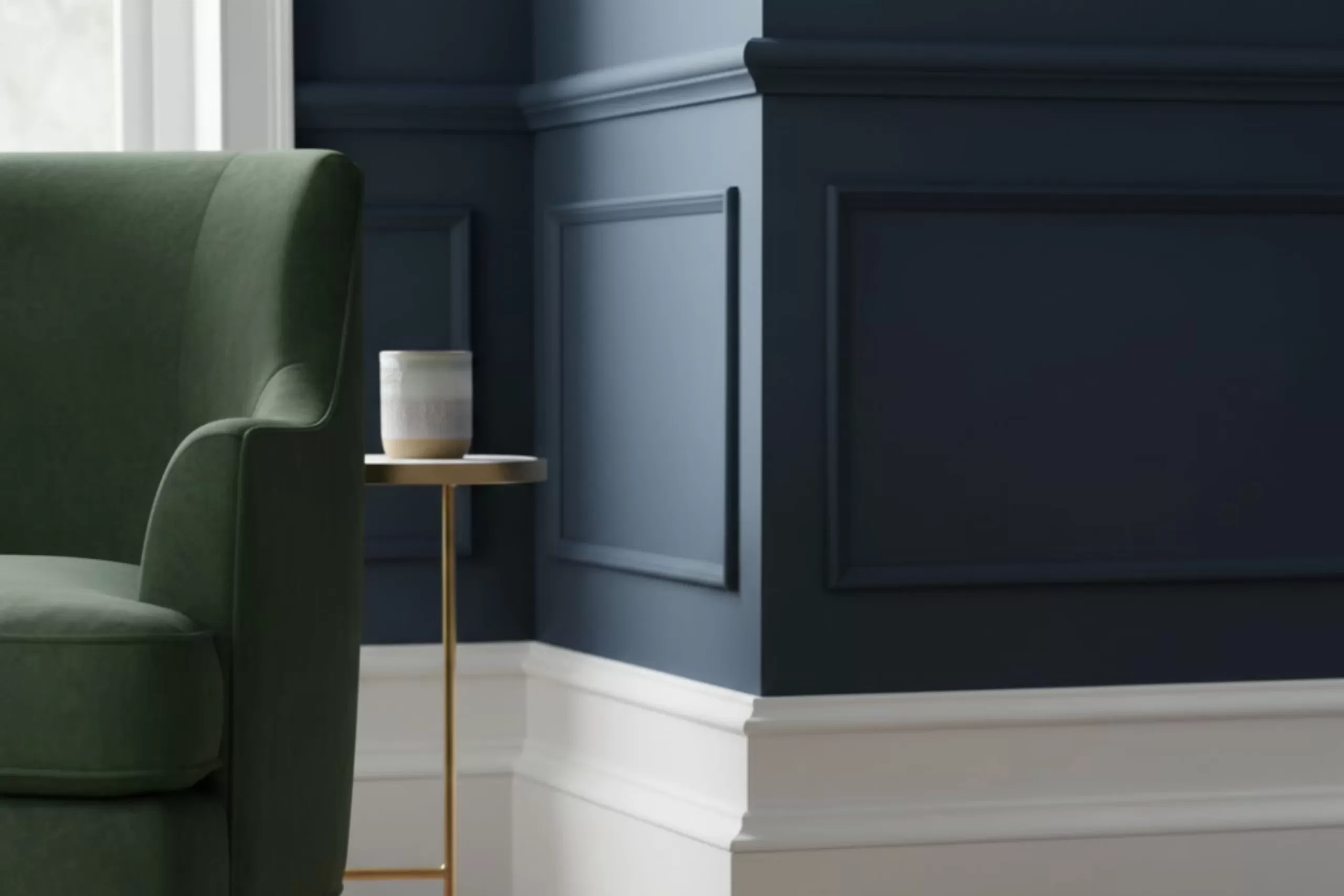
- Best for: Essential for all rooms.
- Vibe: Clean and grounded.
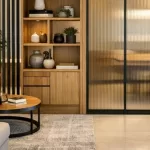
7. Slat Wall (Vertical Battens)
A modern twist on moulding. This involves vertical strips of wood placed at regular intervals from floor to ceiling.
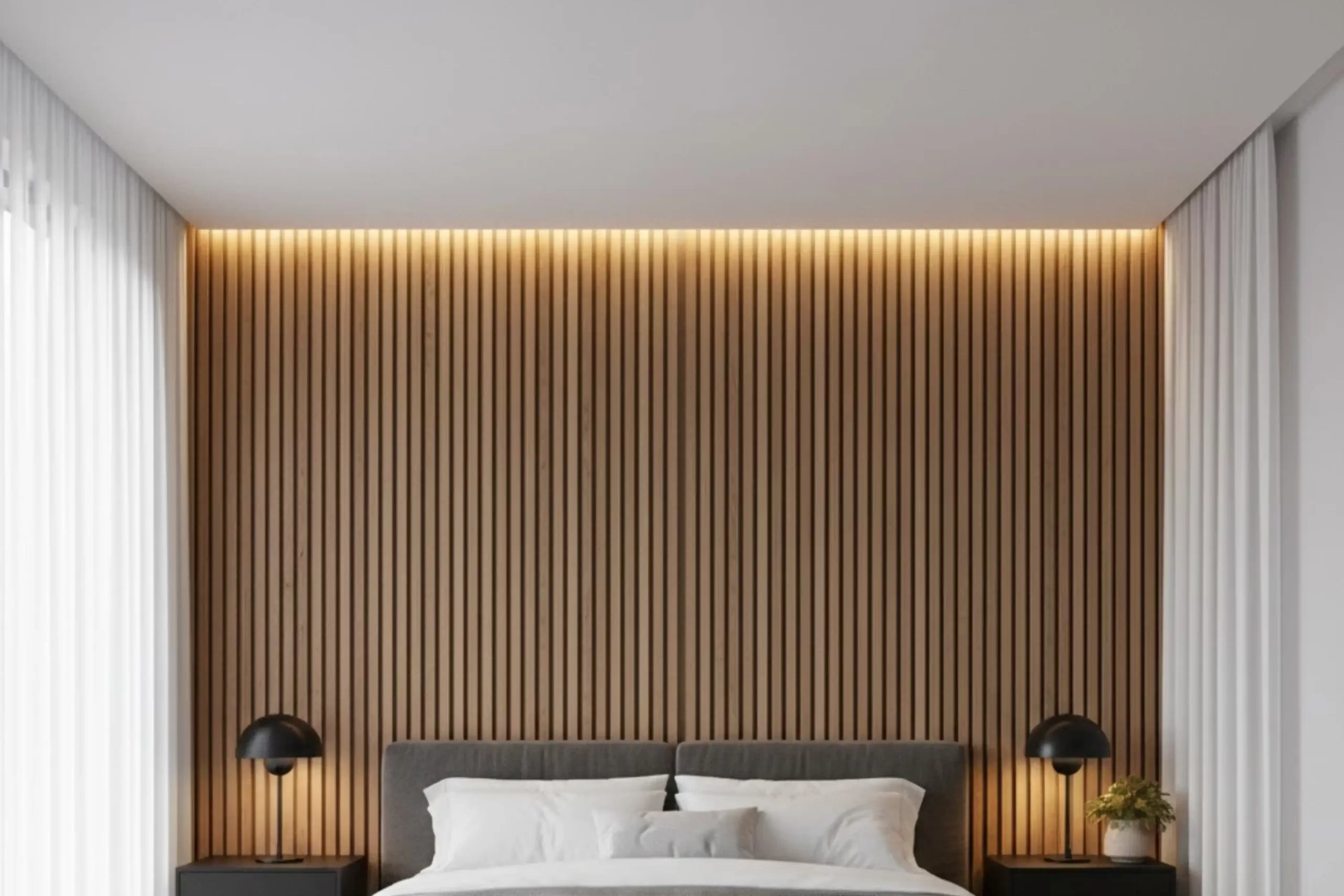
- Best for: TV units and accent walls.
- Vibe: Contemporary, architectural, and edgy.
Top Trends: Wall Moulding Ideas for 2026
Design is never static. Here is how moulding design on walls is evolving this year.
- The “Double Box” Technique
Instead of a single rectangle frame, designers are nesting a smaller rectangle inside a larger one. This adds an extra layer of depth and intricacy. When painted in a monochromatic scheme, the shadows created by the double ridges look stunning.
- 2. Floor-to-Ceiling Grid
Moving away from the traditional lower-half wainscoting, modern homes are embracing full-wall grid panelling. This geometric look works exceptionally well in bold colors like charcoal, navy, or deep emerald green. It turns the entire wall into a statement piece.
- Arch Moulding
Curves are having a moment in interior design. Using flexible moulding to create arched frames on walls adds softness and fluidity to rectangular rooms. An arched moulding frame is the perfect backdrop for a vanity mirror or a piece of art.
- Monochromatic Magic
Gone are the days of painting the trim white and the walls a color. The hottest trend right now is “color drenching”—painting the baseboards, wall moulding, and the wall itself in the exact same color and finish (usually matte or eggshell). This creates a seamless, textural look that makes small rooms feel larger and more unified.
Check our recent blog best wall paint colour combination for modern home
Material Matters: What Should You Use?
When you look at a finished wall, you see paint. But what lies beneath determines the longevity and cost of your project.

- Wood (Solid Timber): The traditional choice. It is durable and crisp but can be expensive and prone to warping with humidity/temperature changes.
- MDF (Medium Density Fiberboard): The most popular choice for interior moulding. It is smooth, affordable, and easy to paint. However, it is not suitable for moisture-prone areas like bathrooms.
- POP (Plaster of Paris): Great for intricate cornices and ceiling designs. It allows for high detail but can be brittle.
- Polystyrene / PU (Polyurethane): Lightweight, waterproof, and easy to install. High-quality PU is becoming a favorite because it mimics wood perfectly but is rot-proof.
- PVC/Charcoal Louvers: Best for the modern fluted/slat wall look. They are pre-finished, waterproof, and termite-proof.
The Power of Lighting and Paint
Moulding is nothing without light. Because moulding is essentially a 3D object on a 2D wall, it relies on shadows to be seen.
- Lighting: Avoid flat, direct lighting that washes out the wall. Instead, use wall washers, track lights, or warm sconces that graze the surface of the wall. This enhances the shadows cast by the moulding profiles, making the design “pop.”
- Paint Finishes:
- Matte/Flat: Hides imperfections in the wall but might make the moulding look a bit dull.
- Satin/Eggshell: The sweet spot. It reflects enough light to show off the curves of the moulding but isn’t too shiny.
- Semi-Gloss: Traditional for trims, but when doing a monochromatic look, sticking to satin for both wall and trim is more contemporary.
DIY vs. Professional Installation: A Word of Caution
With the rise of social media, many homeowners are tempted to glue some strips to the wall themselves. While DIY is possible, wall moulding requires precision.
- The Math: Calculating the spacing between boxes so they are perfectly symmetrical requires careful mathematics. Uneven spacing is instantly noticeable and ruins the effect.
- The Cuts: Corners require “mitre cuts” (45-degree angles). If these aren’t perfect, you will have gaps that look messy even after caulking.
- The Wall Condition: Moulding accentuates the wall. If your walls aren’t perfectly straight (which is common), the moulding will bow. Professionals know how to scribe and fill to hide these imperfections.
At Homzinterio, our design experts ensure that the proportions obey the Golden Ratio, ensuring the final look is pleasing to the eye, not chaotic.
Conclusion: Frame Your Life Beautifully
Wall moulding design is more than just a trend; it is a return to craftsmanship and detail. It proves that you don’t need bold wallpapers or expensive art to make a statement. Sometimes, the play of shadow and line on a beautiful wallpaper is all the luxury you need.
Whether you prefer the ornate detailing of the French Renaissance or the clean, geometric lines of modern minimalism, there is a moulding style for you. It increases the visual value of your property and elevates your everyday living experience.
Ready to transform your plain walls into a masterpiece?
Stop staring at blank spaces. Let the experts at Homzinterio help you design a home that reflects your unique style with precision and elegance.
Contact Homzinterio Today for a Design Consultation
FAQs regarding Wall Moulding Design
1. Is wall moulding expensive?
It is one of the most cost-effective ways to make a home look high-end. The cost depends on the material (MDF is cheaper than wood) and the complexity of the design.
2. Can moulding be installed on textured walls?
It is best installed on smooth walls. If your walls have a heavy texture, they may need to be skim-coated first to ensure the moulding sits flush.
3. Does wall moulding make a room look smaller?
On the contrary! Vertical lines (like slats or tall boxes) draw the eye up, making ceilings feel higher. Horizontal lines (like wainscoting) make a room feel wider.
4. What is the best color for wall moulding?
For 2025, warm neutrals (beige, taupe), moody darks (charcoal, navy), and earthy tones (terracotta, olive) are trending. However, crisp white moulding on a colored wall is a timeless classic.