Design for the Human Form: Why Ergonomics is the Invisible Soul of a Home
Design for the Human Form: Why Ergonomics is the Invisible Soul of a Home
In the world of high-end interior design, we have a saying: A beautiful room you can’t sit comfortably in for an hour is a failed design. For too long, we’ve prioritized the “look” over the “feel.” But in 2026, the trend is shifting toward Ergonomics the invisible layer of design that ensures your home supports your physical health, mental focus, and long-term well-being. It’s not just about a “comfy chair”; it’s about a home that adapts to your body, rather than forcing your body to adapt to the home.
1. The Anatomy of Comfort: Core Principles
Ergonomics is a precise calculation of human movement. Before you pick a color palette, you must master these four pillars:
- The S-Curve Support: Every seated surface should mirror the natural “S-curve” of your spine to prevent fatigue.
- The Comfort Reach Zone: Keep daily essentials between your shoulder and hip height. If you have to overextend or squat repeatedly, the layout is working against you.
- The Power of Adjustability: Human bodies are not “one size fits all.” Modular designs—like height-adjustable desks and lumbar-tuned seating are the future of personalized luxury.
- Flow & Circulation: A room is only ergonomic if you can move through it without “the side-step.” We recommend at least 90cm of clear walking space in all high-traffic zones.
2. The Room-by-Room Blueprint
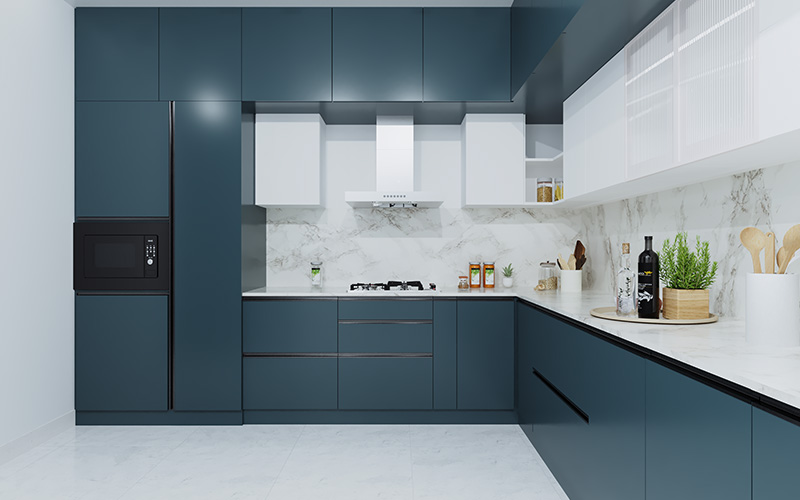
The Kitchen: Mastering the "Work Triangle"
The kitchen is your home’s most physically demanding space. To minimize strain:
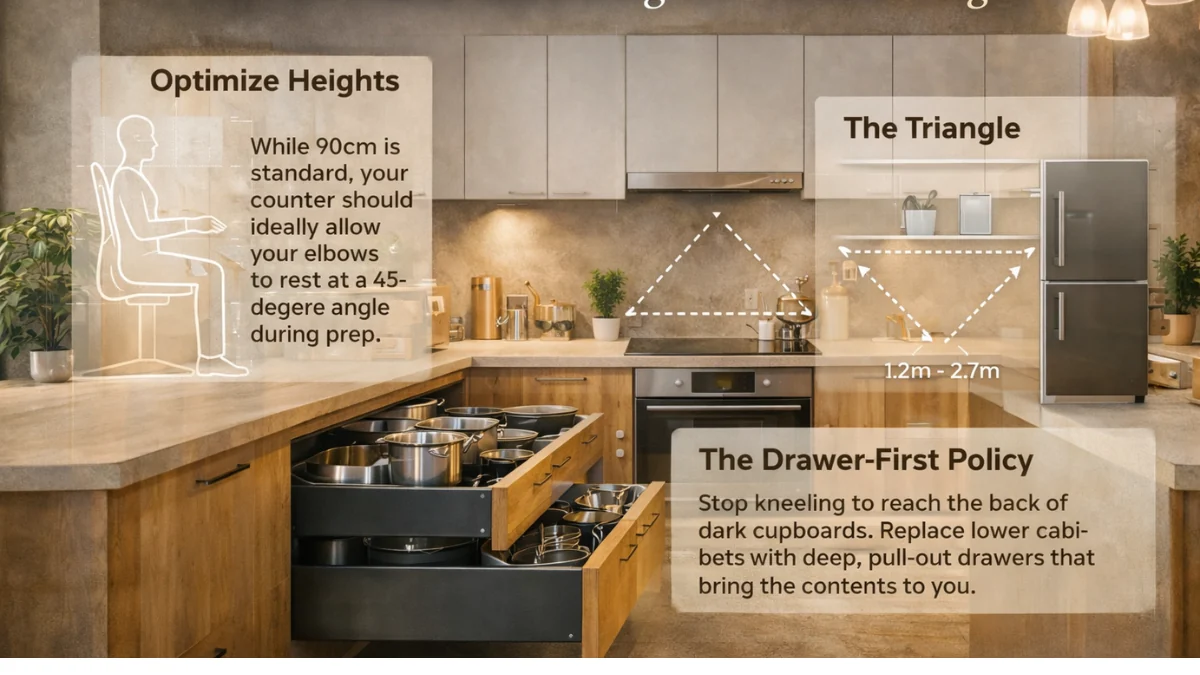
- Optimize Heights: While 90cm is standard, your counter should ideally allow your elbows to rest at a 45-degree angle during prep.
- The Drawer-First Policy: Stop kneeling to reach the back of dark cupboards. Replace lower cabinets with deep, pull-out drawers that bring the contents to you.
- The Triangle: Keep the distance between your sink, stove, and fridge between 1.2m and 2.7m to minimize unnecessary steps.
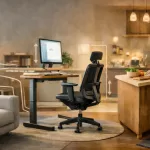
The Home Office: The 90-90-90 Rule
With the “work from home” era now permanent, the kitchen chair setup is a health hazard.
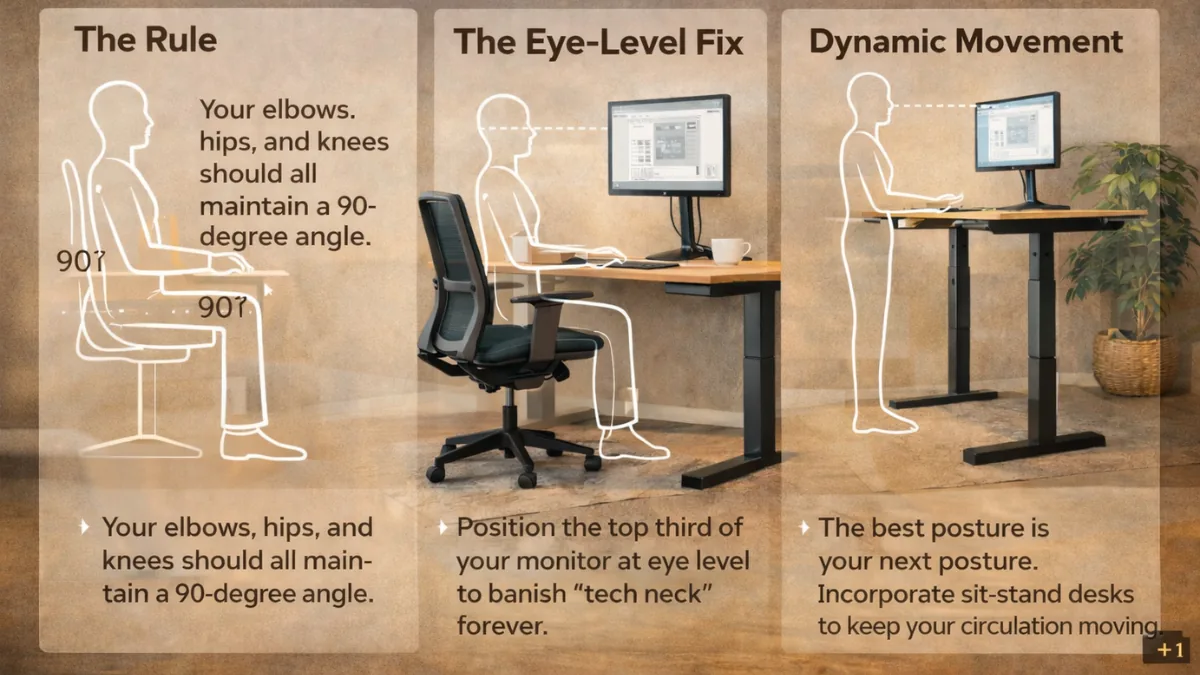
- The Rule: Your elbows, hips, and knees should all maintain a 90-degree angle.
- The Eye-Level Fix: Position the top third of your monitor at eye level to banish “tech neck” forever.
- Dynamic Movement: The best posture is your next posture. Incorporate sit-stand desks to keep your circulation moving.
+1
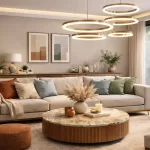
The Living Room: Support over "Sink"
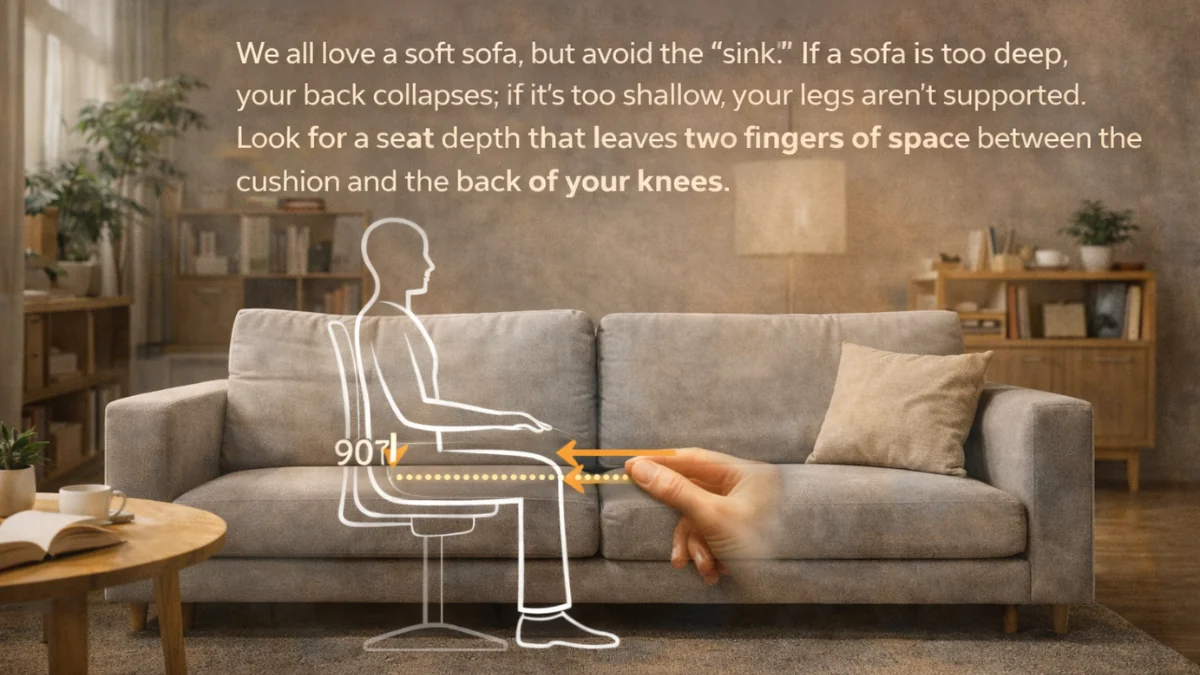
We all love a soft sofa, but avoid the “sink.” If a sofa is too deep, your back collapses; if it’s too shallow, your legs aren’t supported. Look for a seat depth that leaves two fingers of space between the cushion and the back of your knees.
3. The Sensory Layer: Lighting, Sound, and Air
Ergonomics isn’t just physical; it’s sensory.
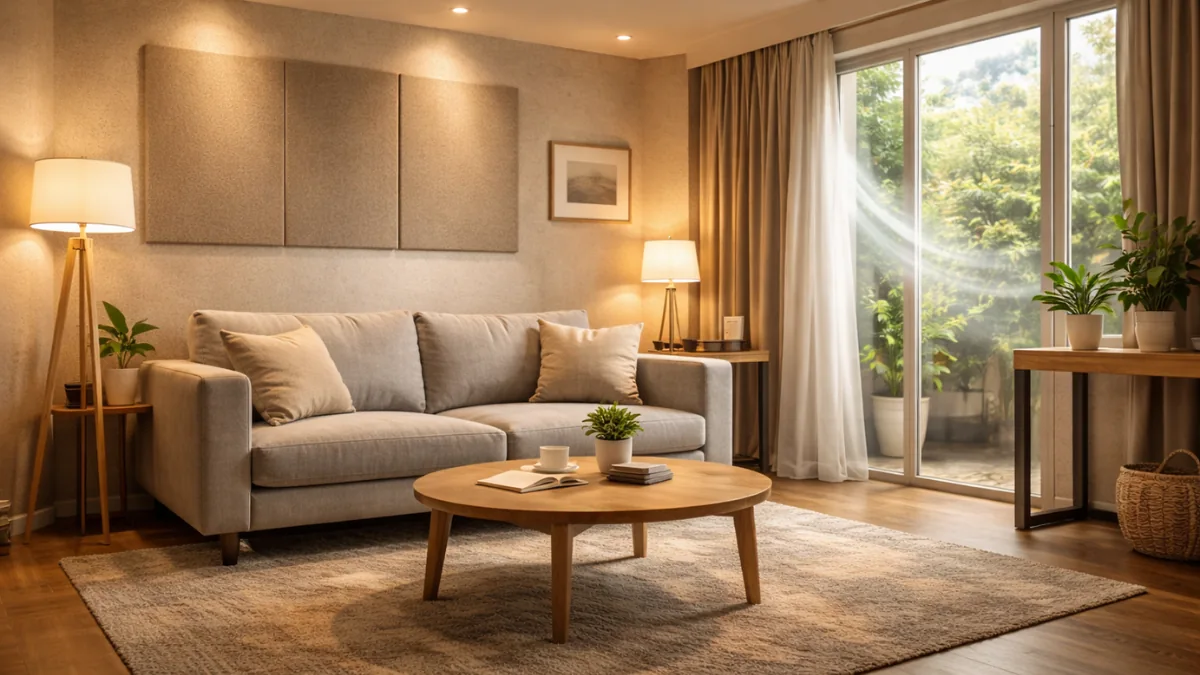
- Layered Lighting: Combine Ambient, Task, and Accent lighting. Proper illumination reduces the eye strain that causes 4:00 PM headaches.
+1 - Acoustic Wellness: Use rugs, heavy drapes, or acoustic panels to absorb sound. “Auditory fatigue” is a real byproduct of modern, hard-surfaced minimalism.
- Thermal Precision: Your body relaxes best between 20°C and 22°C. Proper ventilation is essential for both muscle relaxation and mental clarity.
4. The ROI of Health: Why it Matters
Statistics show that 73% of adults suffer from back pain linked to poor furniture. Investing in ergonomics isn’t an expense it’s preventative healthcare. While the upfront cost may be higher, the “savings” in physical therapy and increased productivity typically pay for themselves within two years.
5. Your 2026 Custom Checklist
Different lives require different ergonomics. Use these targeted checklists for the most vulnerable members of your home:
For the Open Kitchen & Dining
- 1.2m Clearance: Ensure islands don’t create bottlenecks.
- Dual-Height Surfaces: A 75cm section for seated dining and 90cm for prep.
- Under-Cabinet LEDs: Eliminate shadows on your cutting workspace.
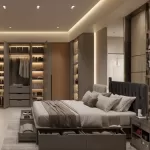
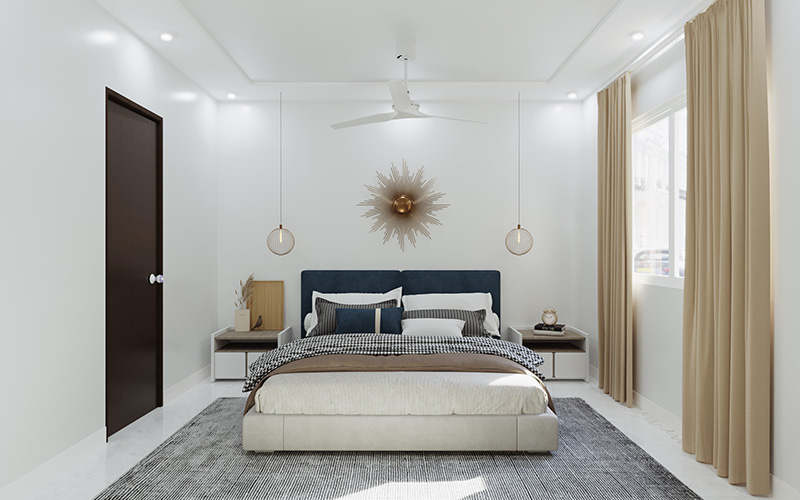
For the Elderly-Friendly Bedroom
- The Golden Bed Height: 45cm to 55cm from the floor feet should be flat when sitting on the edge.
- D-Shape Levers: Replace round knobs with levers for easier grip.
- Visual Contrast: Use contrasting colors (like a dark frame on a light floor) to help with depth perception.
For the Kids’ Bedroom
- The <100cm Zone: Keep toys and books below 1 meter to encourage autonomy without climbing.
- Anti-Slam Hardware: Soft-close hinges are a must for tiny fingers.
- Wall Anchoring: Every tall unit must be tethered to prevent tipping.
Final Thought
As we move into an era of AI-enhanced “Smart Homes,” the fundamental goal remains timeless: The home should adapt to the human, not the other way around. An ergonomic home is your quiet partner in health—supporting you while you work, relaxing you while you rest, and protecting you as you age.