Bring Nature Indoors: A Guide to Biophilic Interior Design for Every Home
Bring Nature Indoors: A Guide to Biophilic Interior Design for Every Home
In our increasingly urbanized world, the longing for nature is more profound than ever. We spend most of our lives indoors, often surrounded by concrete and technology. This disconnect from the natural world can take a toll on our well-being. Enter Biophilic Interior Design a revolutionary approach that seeks to integrate nature into our built environments, enhancing our health, happiness, and productivity.
What is Biophilic Interior Design?
At its core, biophilia means “love of life or living systems.” Biophilic design is an extension of this concept, focusing on creating spaces that satisfy our innate human need to connect with nature. It goes beyond simply adding a few houseplants; it’s about incorporating natural patterns, elements, and processes into our home interiors to foster a sense of harmony and well-being.
Why is Biophilic Design Important?
The benefits of connecting with nature are well-documented and far-reaching:
- Improved Mental Health: Exposure to natural elements has been shown to reduce stress, anxiety, and mental fatigue. Biophilic spaces can promote a sense of calm and rejuvenation.
- Enhanced Physical Health: Natural light can improve sleep patterns and vitamin D synthesis. Certain plants can also improve air quality by filtering toxins.
- Increased Productivity & Creativity: Studies in workplaces and schools have shown that biophilic elements can boost cognitive function, focus, and creative thinking.
- Better Air Quality: Living plants naturally purify the air, removing common indoor pollutants and increasing oxygen levels.
- Aesthetic Appeal: Beyond the health benefits, biophilic design creates beautiful, inviting, and vibrant spaces that feel serene and timeless.
- Sustainability: It encourages the use of natural, sustainable materials and often promotes energy efficiency through optimized natural light and ventilation.
Key Principles of Biophilic Design:
- Direct Connection with Nature: Presence of plants, natural light, fresh air, water features.
- Indirect Connection with Nature: Use of natural materials (wood, stone), natural colors, nature-inspired patterns, views of nature.
- Spatial & Place-Based Relationships: Creating comfortable refuge spaces, fostering a sense of mystery or wonder, varying sensory experiences.
Incorporating Biophilic Design in Your Home: A Room-by-Room Guide
Let’s explore how you can weave the magic of biophilia into different areas of your home, tailored for various living spaces.
Common Elements Across All Homes:
- Plants, Plants, Plants! From small succulents to large potted trees, plants are the cornerstone. Consider vertical gardens, hanging planters, or even a small herb garden in your kitchen.
- Natural Light: Maximize natural light with sheer curtains, strategically placed mirrors, and keeping windows unobstructed.
- Natural Materials: Opt for wood furniture, stone countertops, cotton or linen textiles, and jute rugs.
- Earth-Toned Palette: Use colors inspired by nature – greens, blues, browns, beiges, and soft whites.
- Views of Nature: If you have a window with a pleasant outdoor view, frame it as a living artwork.
1. Biophilic Design for a 1BHK Flat: Maximizing Small Spaces
In a compact 1BHK, every element counts. The goal is to create a sense of openness and freshness without clutter.
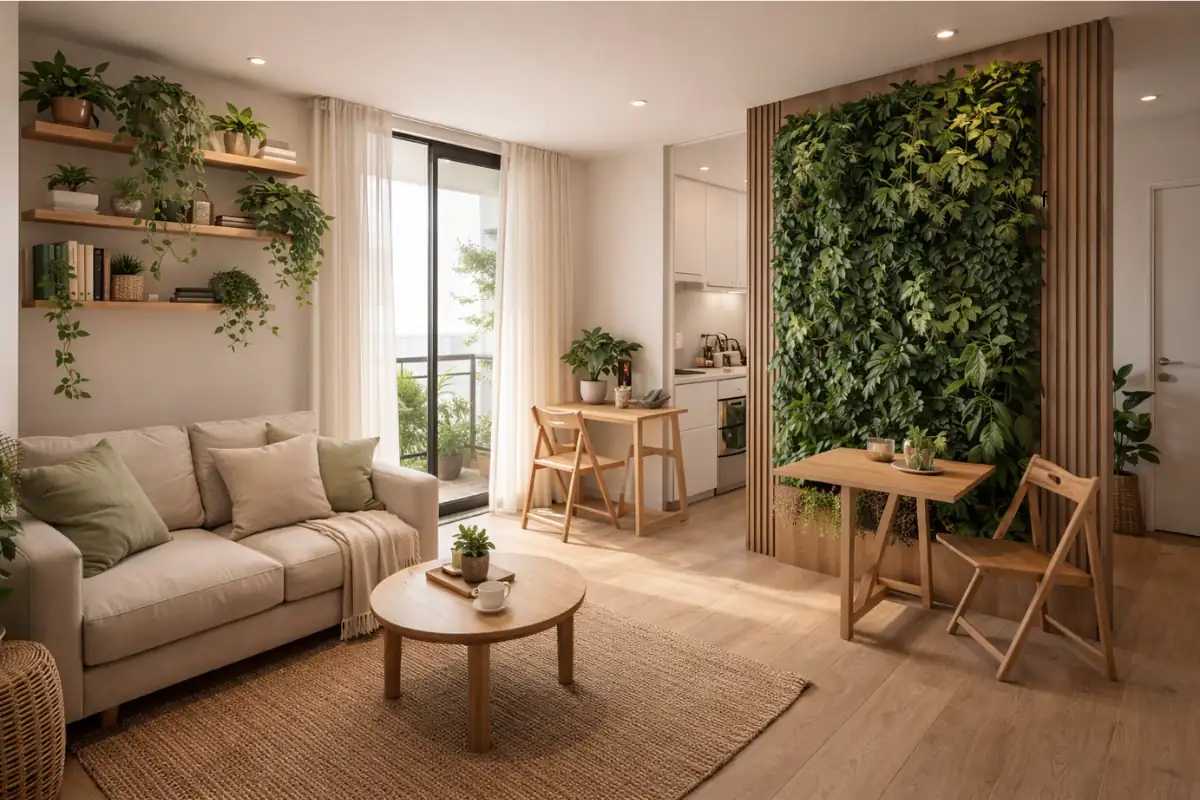
Living Area:
- Vertical Greenery: A small vertical planter on an empty wall or a hanging plant near the window.
- Mirrors: A large mirror opposite a window can amplify natural light and create an illusion of space and bring outdoor reflections inside.
- Light Furniture: Choose furniture made of light-colored wood or rattan.
- Nature-Inspired Art: Minimalist prints of leaves, landscapes, or abstract patterns in calming colors.
- Air-Purifying Plants: Snake plants or ZZ plants are low-maintenance and effective in small spaces.
Kitchen:
- Herb Garden: A window box with fresh herbs (mint, basil, coriander) adds greenery and function.
- Wooden Accents: Wooden cutting boards or utensils displayed.
- Natural Light: Keep window areas clear.
Bedroom:
- Fairy Lights & Plants: Drape string lights around a small plant shelf.
- Soft Linens: Cotton or linen bedding in earthy tones.
- Small Potted Plant: A peace lily or spider plant on the bedside table.
- Window Sill Garden: If your window sill is wide enough, line it with small succulents.
Bathroom:
- Humidity-Loving Plants: A fern or an orchid can thrive in the bathroom’s humidity.
- Pebble Mat: A small mat with natural pebbles or a wooden bath mat.
- Bamboo Accessories: Bamboo toothbrush holders or soap dishes.
2. Biophilic Design for a 2BHK Flat: Expanding Natural Touches
With a bit more space, you can introduce larger elements and more varied textures.
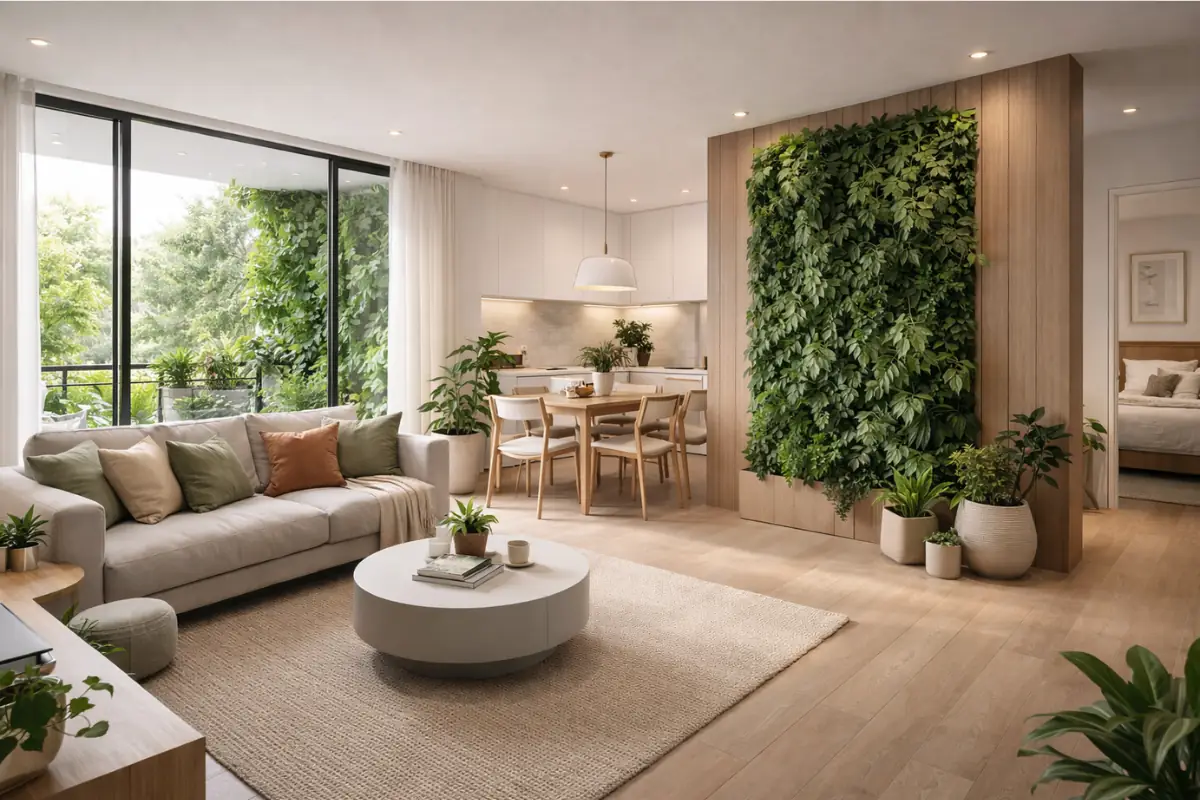
Living & Dining Area:
- Feature Wall: A textured wall incorporating natural materials like wood panels or stone cladding.
- Larger Plants: A medium-sized indoor tree (e.g., Fiddle Leaf Fig, Areca Palm) in a corner.
- Dining Table: A solid wood dining table.
- Water Element: A small tabletop water fountain for soothing sounds.
- Nature-Inspired Textiles: Cushions, throws, and curtains with botanical prints or natural textures.
Kitchen:
- Open Shelving: Displaying ceramic pots, wooden bowls, and a collection of plants.
- Natural Stone Countertop: If renovating, consider granite or marble.
- Woven Baskets: For storage or decor.
Master Bedroom:
- Headboard: A wooden or rattan headboard.
- Reading Nook: A comfortable chair with a floor lamp and a tall plant beside it.
- Botanical Wallpaper: A subtle, nature-themed accent wall.
- Sheer Curtains: To let in maximum daylight.
Second Bedroom/Study:
- Desk Plant: A small, vibrant plant like a Pothos or a Money Plant.
- Cork Board: For notes and photos.
- Terrarium: A self-contained mini-ecosystem.
Bathroom:
- Living Wall Panel: A small, low-maintenance living wall feature if space allows.
- River Rock Flooring (Accent): A small section of river rocks in the shower area for a tactile experience.
3. Biophilic Design for a 3BHK Flat: Creating Natural Sanctuaries
A 3BHK offers more room for dedicated zones and more expansive natural installations.
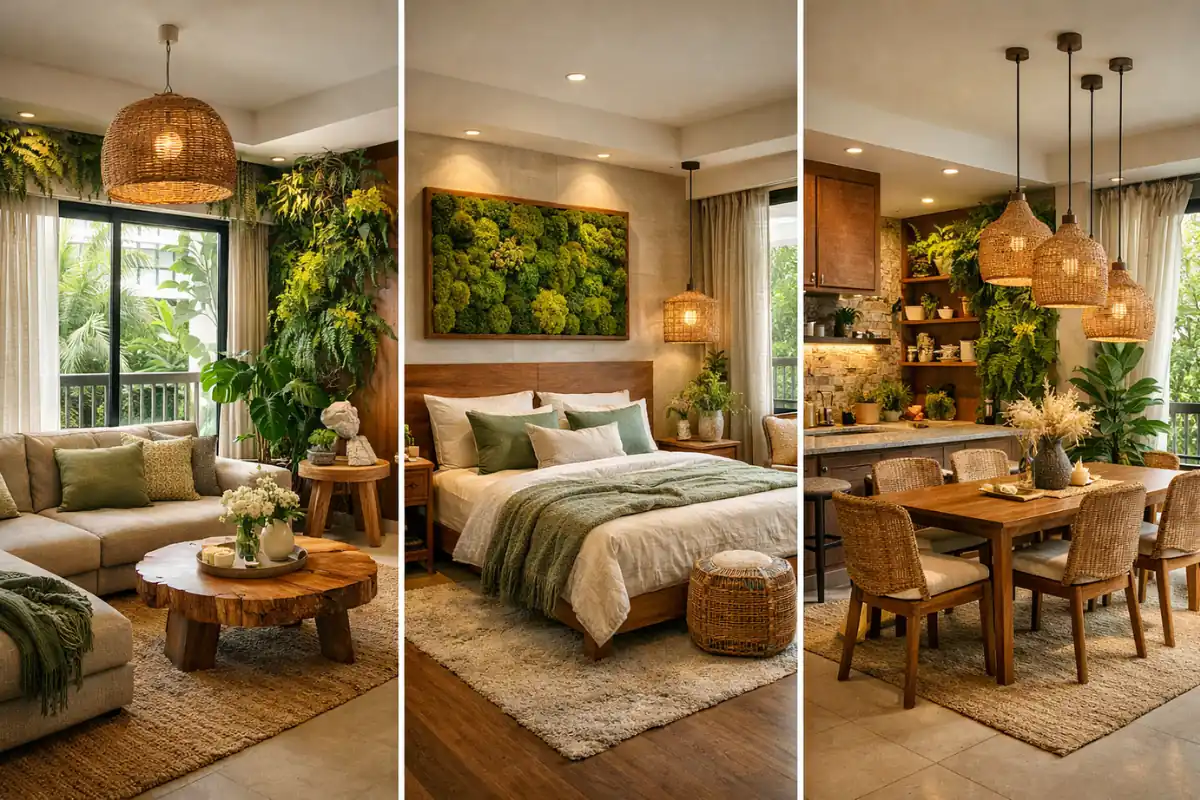
Living Area:
- Indoor Courtyard/Atrium (if architecturally possible): Even a small one with a skylight can be transformative.
- Large Statement Plants: Multiple large plants grouped together.
- Biomorphic Forms: Furniture with organic, curved shapes inspired by nature.
- Acoustic Elements: Sound of running water from a larger indoor fountain.
- Material Richness: Layer different natural textures like stone, wood, and jute.
Dining Area:
- Live-Edge Dining Table: A striking centerpiece made from a single slab of wood.
- Pendant Lighting: Organic-shaped pendant lights made from rattan or wood.
- Large Window View: Ensure the dining area has a clear view to the outside or an indoor green space.
Kitchen:
- Full-Length Window Garden: If space allows, a dedicated plant shelf along a sunny window.
- Natural Stone Backsplash: Travertine, slate, or marble.
- Wooden Cabinetry: Warm wood tones for cabinets.
Bedrooms:
- Each room can have a unique natural theme: One with a forest feel (darker woods, deep greens), another with a coastal vibe (blues, lighter woods).
- Balcony Garden (if applicable): Create a lush green space with potted plants, a small bench, and even a miniature water feature.
Study/Home Office:
- Desk Placement: Position the desk to face a window or a green wall.
- Natural Light Optimization: Use daylight harvesting systems or smart blinds.
- Diffuser with Essential Oils: Scents like pine, cedarwood, or citrus can enhance the natural ambiance.
Bathrooms:
- Skylight: If top-floor, a skylight brings in abundant natural light.
- Indoor Vertical Garden: A more extensive vertical plant installation.
- Spa-like Elements: Natural stone tiles, wooden accents, and an array of humidity-loving plants.
4. Biophilic Design for an Independent House or Villa: Seamless Integration with the Outdoors
With an independent house or villa, the possibilities are virtually limitless, allowing for a seamless blend between indoor and outdoor living.
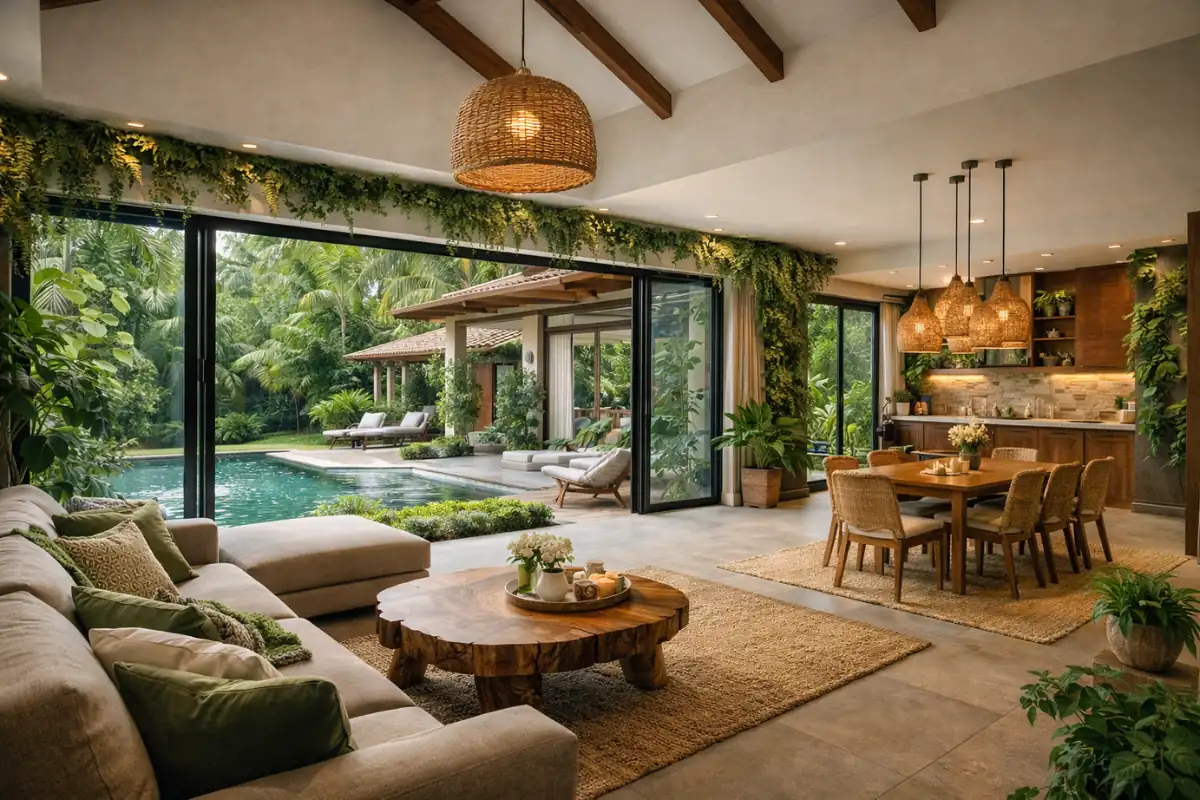
Entrances & Foyers:
- Indoor Water Feature: A grand water wall or a large pond with aquatic plants.
- Living Wall: A spectacular, floor-to-ceiling living wall as a welcoming statement.
- Natural Stone Flooring: For a grounded, earthy feel.
Living & Dining Area:
- Large Glass Doors/Walls: Bi-fold or sliding glass doors that open up completely to a garden or patio.
- Central Courtyard: A true open-to-sky courtyard with a tree, plants, and natural light.
- Stone Fireplace: A natural stone fireplace as a focal point.
- Large-Scale Natural Art: Commissioned artwork inspired by local landscapes.
Kitchen:
- Indoor-Outdoor Kitchen: A kitchen that extends to an outdoor cooking or dining area.
- Abundant Natural Light: Multiple windows or even a glass roof section.
- Farmhouse Sink: Made from natural materials.
Bedrooms:
- Private Balconies/Terraces: Each bedroom can have its own private outdoor retreat.
- Floor-to-Ceiling Windows: Maximizing views of the garden.
- Wood Paneling: Accent walls with rich, natural wood.
- Biomorphic Furniture: Beds, dressers, and seating with organic shapes.
Bathrooms:
- Outdoor Shower/Bathtub: Partially enclosed outdoor bathing experience.
- Large Windows: With privacy landscaping outside.
- Natural Stone Walls & Flooring: Creating a cave-like, natural retreat.
Outdoor Spaces (Integral to Indoor Design):
- Lush Gardens: Designed to be seen and accessed from inside.
- Ponds/Koi Ponds: Creating reflections and sounds.
- Vegetable & Herb Gardens: Bringing edible nature closer to home.
- Outdoor Seating with Natural Materials: Stone benches, wooden pergolas.
- Natural Pathways: Made from pebbles, stepping stones, or gravel.
- Bird Feeders/Houses: Encouraging local wildlife.
Conclusion: Cultivating Your Indoor Oasis
Biophilic interior design is more than just a trend; it’s a mindful approach to living that acknowledges our fundamental connection to the natural world. By thoughtfully incorporating elements of nature into your home, regardless of its size, you can create spaces that not only look beautiful but also actively contribute to your well-being, peace of mind, and overall quality of life. Start small, experiment, and let the calming power of nature transform your living spaces into a rejuvenating sanctuary.
Frequently Asked Questions (FAQ) About Biophilic Interior Design
1. What is Biophilic Interior Design Concept?
Biophilic interior design is a concept that brings nature into indoor spaces to improve well-being. It focuses on natural light, plants, organic materials, and outdoor views to create calm, healthy, and inspiring environments. The idea is based on humans’ natural connection to nature.
2. What Are the Main Elements of Biophilic Design?
The main elements include indoor plants, natural light, ventilation, water features, and natural materials like wood and stone. Earthy colors and organic shapes are also important. These elements work together to create a strong connection between indoors and outdoors.
3. What Are the Five Senses of Biophilic Design?
Biophilic design engages sight through greenery and daylight, sound through water or natural acoustics, touch through textured materials, smell through plants or essential oils, and taste through herb gardens. It creates a complete sensory experience inspired by nature.
4. What Materials Are Used in Biophilic Design?
Common materials include wood, bamboo, rattan, stone, marble, clay, jute, cotton, and linen. Sustainable and natural finishes are preferred. These materials add warmth, texture, and authenticity to the space.
5. What Is the Difference Between Green Building and Biophilic Design?
Green building focuses on sustainability and energy efficiency, while biophilic design focuses on human connection to nature. Green building reduces environmental impact, whereas biophilic design enhances emotional and physical well-being.