The Zen Revolution: Mastering the Asian Theme in Modern Luxury Interiors
The Zen Revolution: Mastering the Asian Theme in Modern Luxury Interiors
In the fast-paced, high-tech landscape of 2026, the home has become more than just a residence; it is a vital refuge for mental clarity and physical restoration. For interior designers who have spent over a decade curating global aesthetics, the Asian Interior Design Theme stands out as the ultimate blueprint for tranquility. Drawing inspiration from the rich traditions of Japan, China, and Southeast Asia, this design philosophy creates harmonious spaces that prioritize balance, natural elements, and a sophisticated minimalism.
Asian design is not a single look, but a collection of cultural wisdoms ranging from the Zen-like simplicity of a Japanese tea room to the opulent symmetry of a Chinese manor. It is a theme that emphasizes a sense of peace, inviting inhabitants to slow down and reconnect with the natural world through deliberate, mindful choices in materiality and layout.
1. The Architectural Soul: Openness, Light, and Zen Influence
A master of Asian design understands that the “energy” of a room is as important as its furniture. This is rooted in the Zen Influence, which seeks to strip away the unnecessary to reveal the essence of a space.
Natural Light and Open Spaces
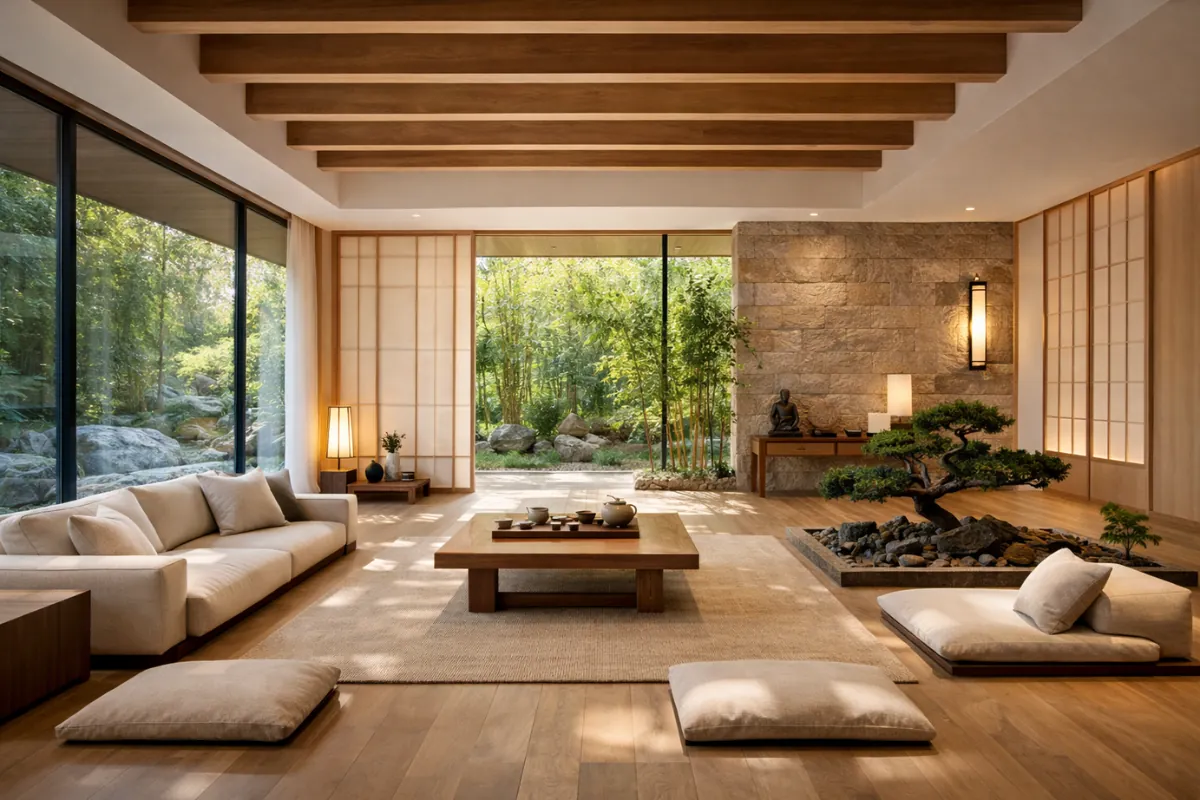
An Asian-inspired home must breathe. Designers prioritize Natural Light and Open Spaces to foster a seamless connection between the interior and the exterior environment. Large floor-to-ceiling windows or sliding glass doors are common, often looking out onto a manicured garden or a simple stone courtyard. This blur between indoors and outdoors is central to the feeling of freedom and serenity.
Symmetry and Balance
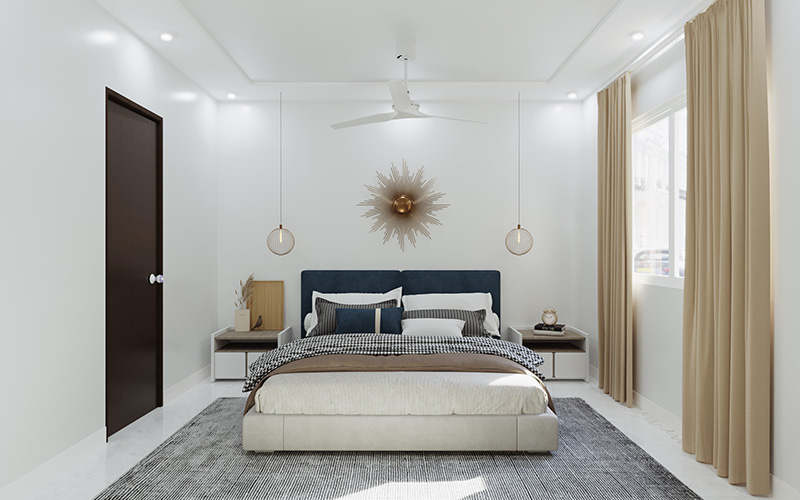
The concept of Symmetry and Balance is non-negotiable. Whether it is the placement of identical bedside lamps or the perfect centering of a low-slung sofa, symmetry provides a visual anchor that calms the mind. In Chinese-inspired interiors, this balance is often used to signify prosperity and stability, while in Japanese design, it reflects the order of the natural world.
Shoji Screens and Flexible Dividers
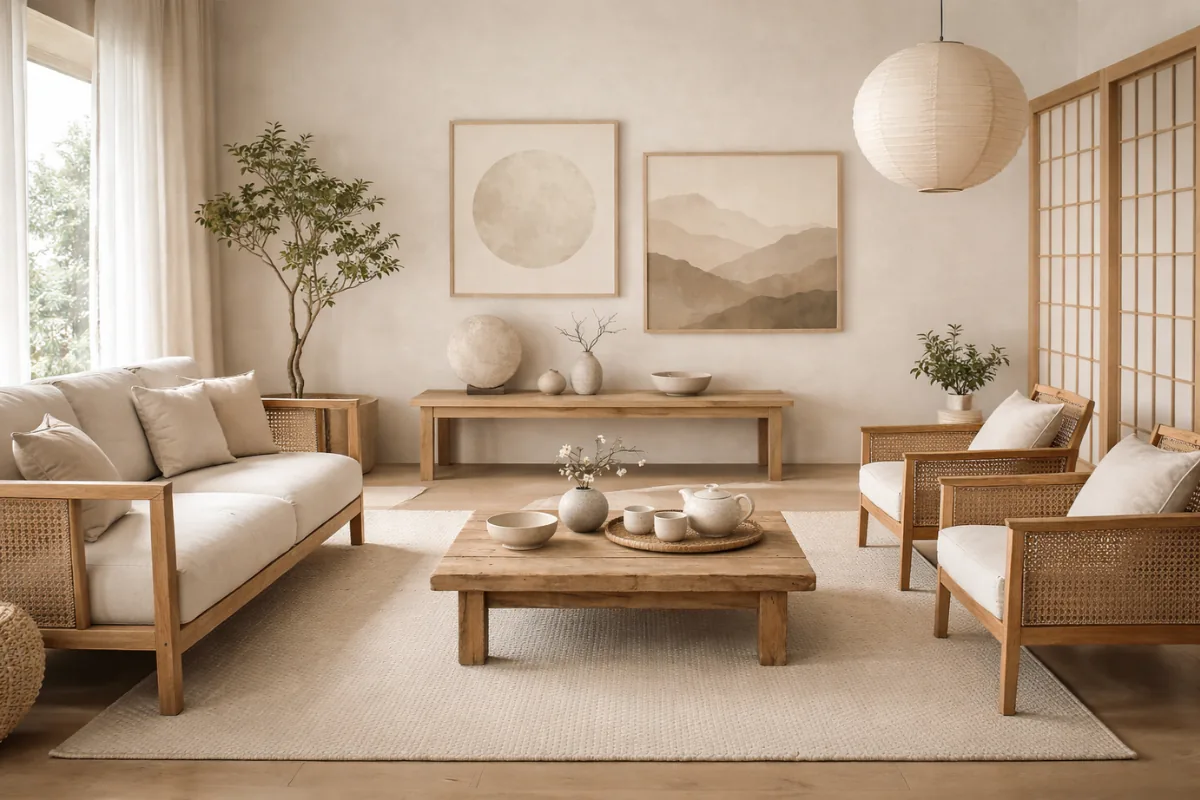
To maintain an open feel while providing privacy, designers frequently employ Shoji Screens. These traditional Japanese partitions, made of translucent Rice Paper and wooden frames, diffuse light softly throughout a room while acting as a lightweight, flexible wall. They allow a space to be reconfigured instantly, embodying the functional minimalism of the theme.
2. Materiality: The Language of Nature
In Asian interior design, materials are never chosen at random. Every texture is a tribute to the earth, chosen for its durability, tactile beauty, and eco-friendly footprint.
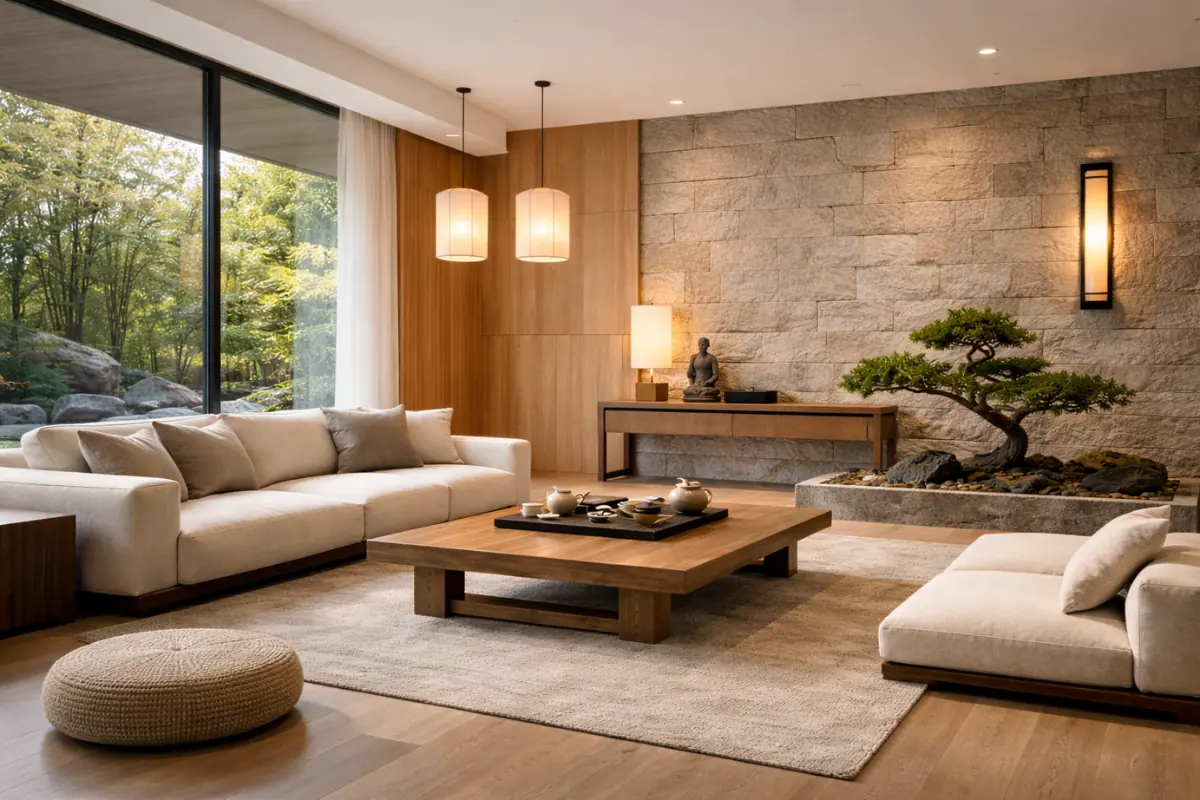
Bamboo: Known as the “friend of the people,” Bamboo is a staple. It is used in everything from flooring to wall cladding and woven blinds. Its rapid growth makes it a sustainable favorite for the modern, eco-conscious homeowner.
Natural Woods: Designers favor dark, rich woods like Cedar or Rosewood for Chinese influence, or light, untreated woods like Hinoki for a Zen look. These Natural Materials provide the grounding “Earth” element required for a balanced room.
Stone and Slate: Rough-cut Stone or smooth river pebbles are used in bathrooms and entryways to introduce a rugged, grounding texture that contrasts with polished wood surfaces.
Rattan and Wicker: Often used in lounge seating and coffee tables, Rattan provides a lightweight, breathable texture that is quintessential to Southeast Asian resort-style luxury.
3. The Palette of Peace: Neutrality and Accent
The Neutral Color Palette of Asian design is designed to be a “canvas for the soul.” It avoids jarring, high-contrast colors in favor of tones that soothe the nervous system.
The Earthy Base
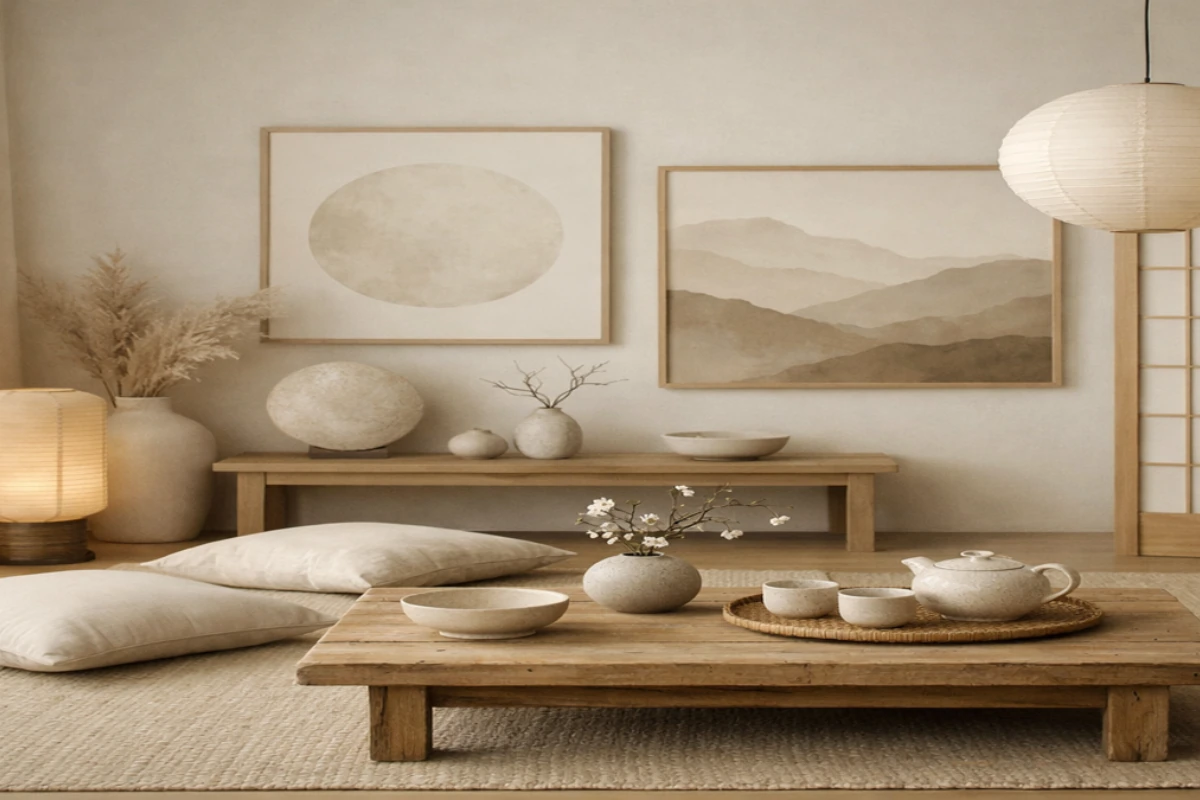
The foundation of the room is typically built on “Quiet” colors: creamy whites, soft beiges, sandy tans, and warm wood tones. These colors reflect natural light efficiently and make even small spaces feel expansive.
Cultural Accents
While the base is neutral, color is used strategically to signify cultural heritage:
- Red and Gold: In Chinese-influenced spaces, bold reds signify good fortune and joy, often appearing on silk pillows or lacquered cabinets.
- Black Ink Tones: Reflecting the art of calligraphy, matte black is used in Furniture with Clean Lines to provide definition and gravity to a room.
- Botanical Greens: The vibrant green of Orchids or bonsai trees provides the only necessary pop of color in a Zen-focused space.
4. Furniture and Flow: Clean Lines and Feng Shu
For a designer with a decade of experience, furniture is not just about seating it is about the “pathway of breath” through a room.
Furniture with Clean Lines
Asian furniture is famously low-profile. By keeping furniture close to the floor such as Tatami Mats and low platform beds the room feels taller and airier. Pieces are characterized by Clean Lines, devoid of unnecessary ornamentation or ornate carvings, ensuring that the silhouette of the piece remains the focus.
Feng Shui and Placement
Feng Shui is the ancient Chinese practice of arranging spaces to optimize the flow of “Qi” (energy). Designers use these principles to ensure that:
The “Command Position” (facing the door) is used for beds and desks.
Corners are kept clear to prevent energy from stagnating.
Water elements (like small indoor fountains) are placed to invite wealth and calm.
5. Curating the Minimal: Decor and Geometric Patterns
The motto of Asian design is “quality over quantity.” Minimal Decor ensures that every object in the room has a purpose or a deep personal meaning.
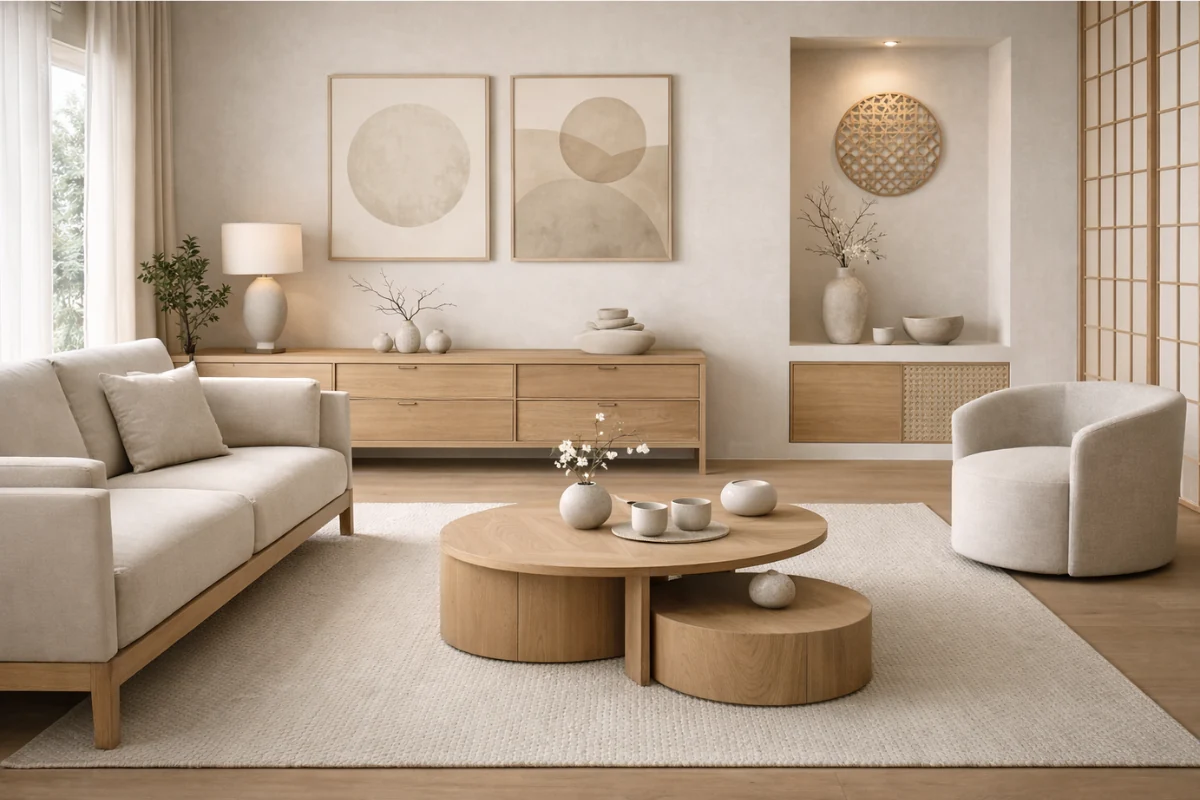
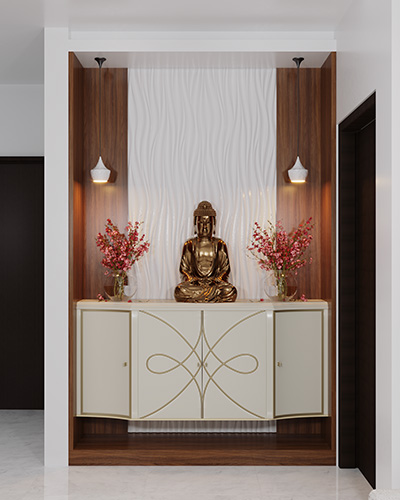
Eastern Influences: A single, high-quality Buddha bust, a set of hand-painted porcelain vases, or a silk wall scroll acts as the room’s heartbeat.
Geometric Patterns: Subtle Geometric Patterns are often found in the “lattice-work” of wooden screens or the weave of a silk rug. These patterns provide visual interest without the chaos of busy floral prints.
Cherry Blossom Motifs: Delicate Cherry Blossom Motifs may appear on European Inspired upholstery or rice paper screens, providing a soft, feminine touch that celebrates the fleeting beauty of life.
Final Professional Perspective: The Luxury of Silence
The Asian Interior Design Theme is more than an “aesthetic”; it is a lifestyle choice. In an era where our attention is constantly fractured by screens and noise, a home designed with Zen Influence and Symmetry offers the rarest of luxuries: silence. By embracing Natural Materials, Minimalism, and the wisdom of Feng Shui, designers create more than just a house—they create a harmonious sanctuary where the modern world can, for a moment, be left at the door.