Rooted in Comfort: Why the Country Theme is the Soul of Modern Living
Rooted in Comfort: Why the Country Theme is the Soul of Modern Living
In the fast-moving landscape of 2026, where technology permeates every corner of our lives, the home has taken on a new role: it is no longer just a place to live, but a sanctuary for the soul. Interior designers with over a decade of experience have observed a profound shift toward the Country Interior Design Theme. This style is not a mere trend; it is an emotional response to our digital age, a design language rooted in warmth, nostalgia, and a profound, unapologetic connection to the natural world.
A Country-themed home does not aim for the sterile perfection of a showroom. Instead, it prioritizes the human experience, cultivating a welcoming, down-to-earth vibe that invites residents and guests alike to kick off their shoes and stay a while. It celebrates the “imperfect”—the scratch on a wooden table, the patina on a copper sink, and the history found in vintage accents.
1. The Architectural Foundation: Raw, Honest, and Timeless
The beauty of a country home begins with its “bones”. In this theme, structural elements are not hidden behind drywall; they are highlighted to tell a story of craftsmanship and strength.
The Power of Exposed Beams
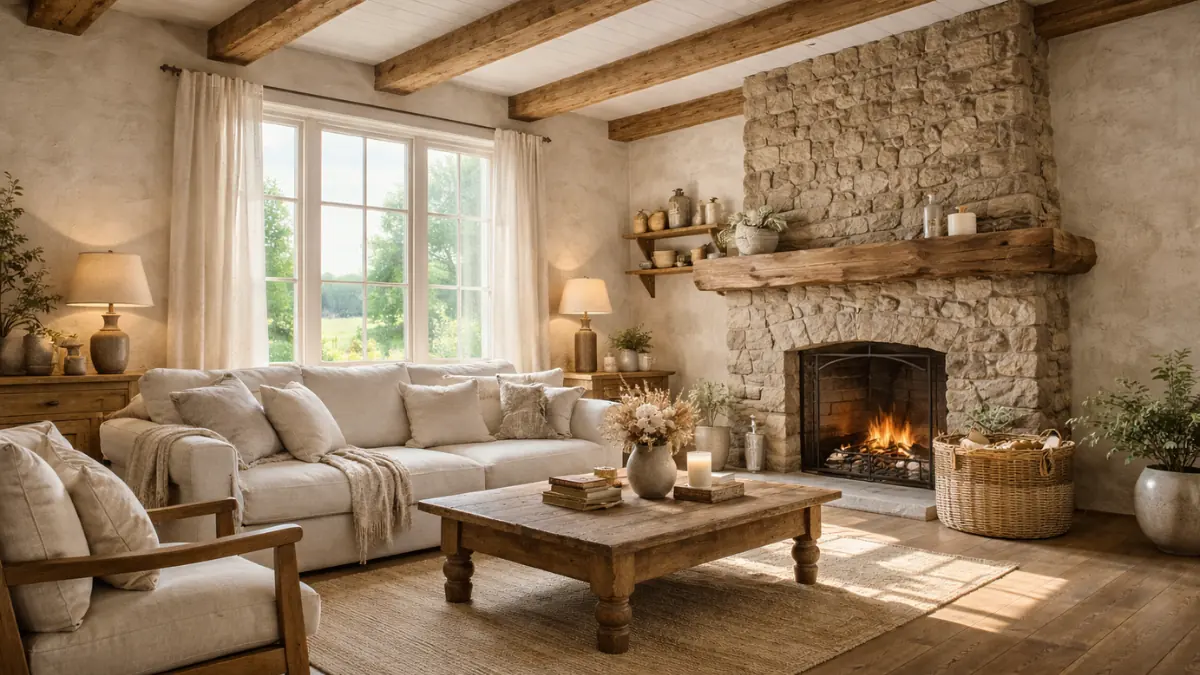
Nothing anchors a room with as much authority as raw or reclaimed wood beams stretching across a ceiling. They provide an immediate sense of history and architectural weight. In a modern context, these beams act as a visual bridge between the past and the present, offering a rustic contrast to smooth, plastered walls.
Stone and Brick: The Earthly Anchors
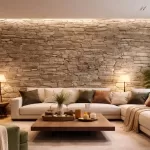
Whether it is an original brick accent wall in a kitchen or a floor-to-ceiling stone fireplace in the living room, these raw materials bring an earthy, grounding element to the living space. Stone and brick provide a tactile richness that synthetic materials cannot replicate, ensuring the home feels connected to the land it sits upon.
2. Materials That Tell a Story: Tactile Richness
In Country design, the chosen materials are as much about their tactile quality as their visual appeal. Every surface should invite touch and evoke a sense of organic warmth.
The Warmth of Natural Wood
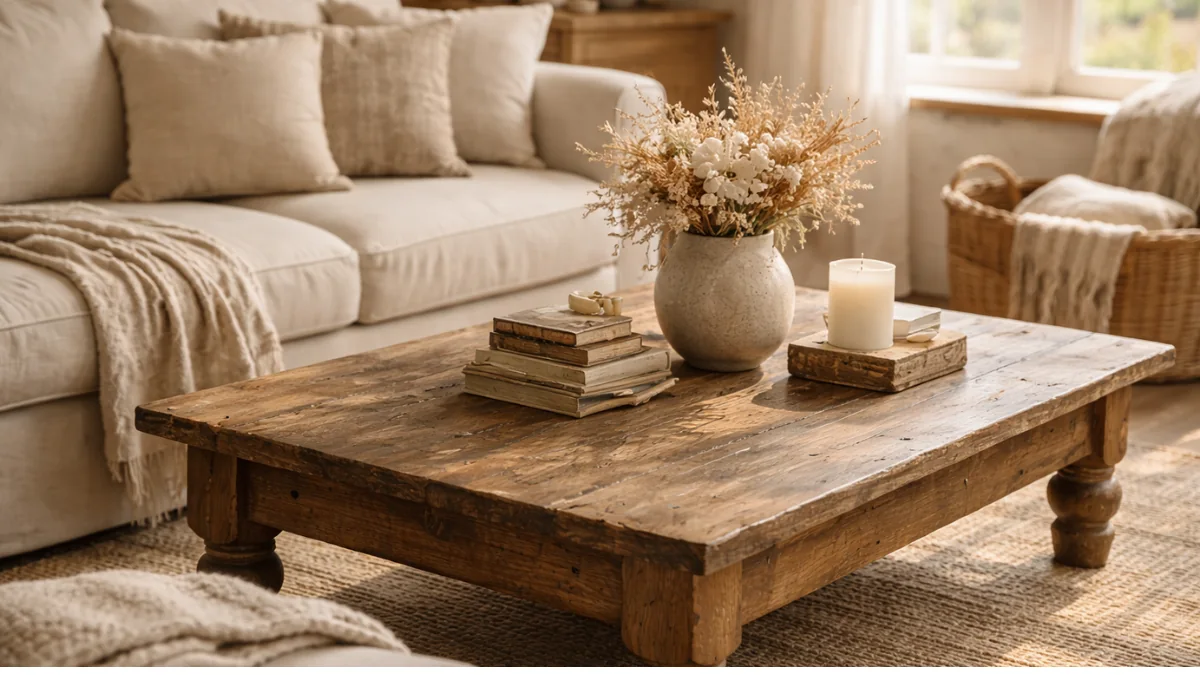
Wood is the primary character in the Country design narrative. Designers favor wide-plank oak flooring, chunky hand-finished dining tables, and reclaimed timber accents. Wood adds an immediate sense of comfort and age, making even a new build feel as though it has stood for generations.
Artisanal Metals and Clay
The “hard” accents in a Country home are derived directly from the earth.
- Farmhouse Sinks: Traditional farmhouse sinks, often in deep white porcelain or hand-hammered copper, serve as functional centerpieces in the kitchen.
- Pottery: Hand-thrown clay pottery, displayed on open shelving, adds a layer of rustic, human-centric detail.
- Vintage Hardware: Aged brass or wrought iron hardware on doors and cabinetry provides a subtle, historic touch that enhances the overall “gathered-over-time” feel.
3. Textiles: The Layered "Soft Landing"
If the architecture provides the bones and the materials provide the skin, the textiles provide the heart. Country design is defined by a “soft landing”—a layering of fabrics that prioritize comfort above all else.
High-Quality Natural Fibers
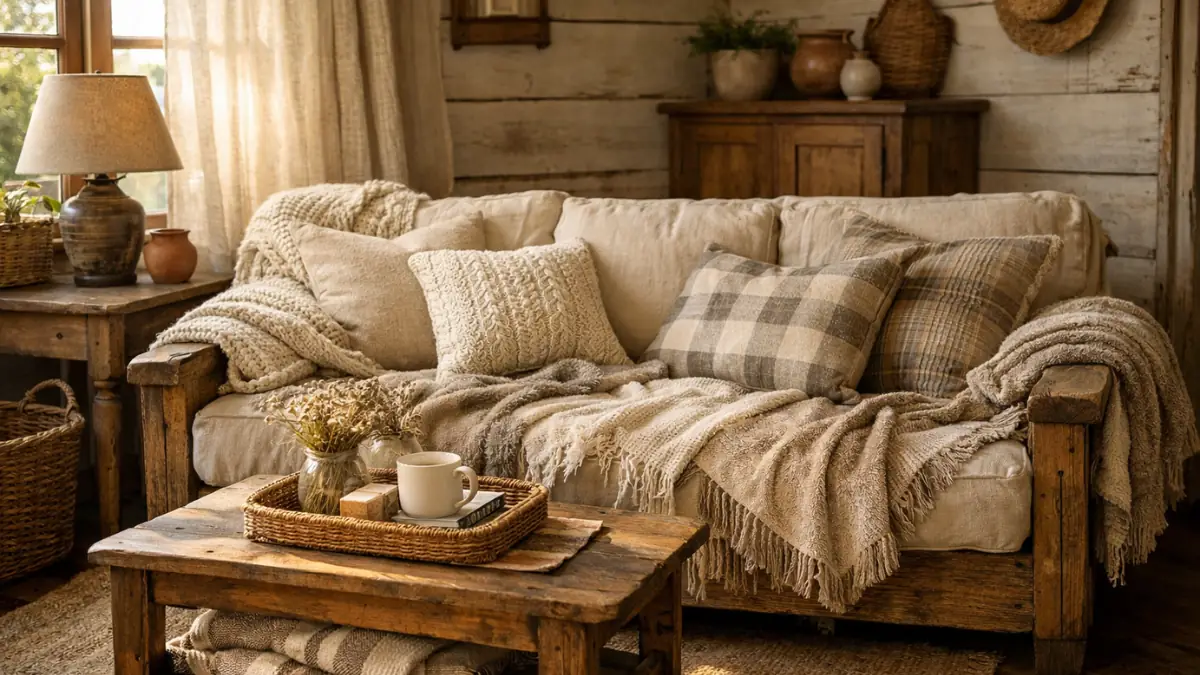
Designers lean heavily on cotton, wool, and linen. These fibers are chosen for their breathability, durability, and the way they improve with age.
- Linen: Used for curtains and slipcovers, linen provides a relaxed, slightly wrinkled elegance that fits perfectly with the theme’s informal nature.
- Wool: Wool rugs and heavy blankets provide essential warmth and acoustic dampening in rooms with hard flooring.
Timeless Patterns and Cozy Layers
Visual rhythm is introduced through classic patterns that feel familiar and comforting.
- Patterns: Stripes, plaids, and subtle chevrons are staples of the Country look, offering interest without breaking the serene atmosphere.
- The Quilt Factor: A country home is rarely complete without a hand-stitched quilt or a heavy knit throw draped over a sofa or the foot of a bed. These layers aren’t just decorative; they are an invitation to rest.
4. A Palette Borrowed from the Landscape
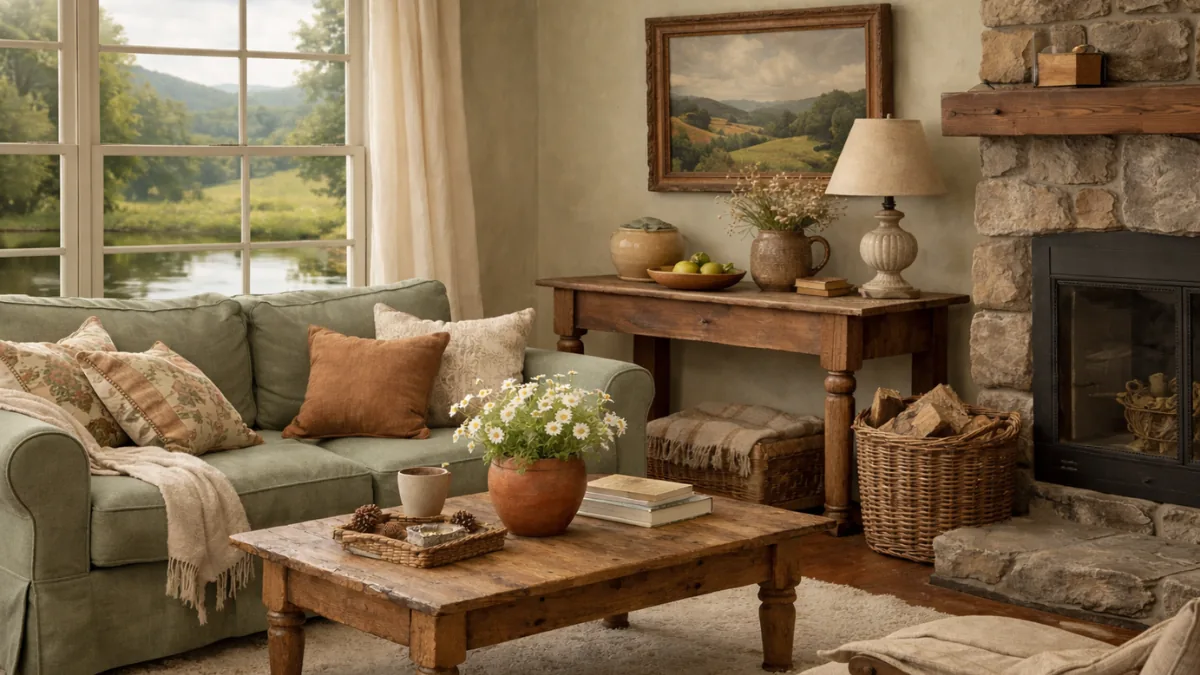
The color story of a Country home is never jarring; it is a direct reflection of the natural world outside the window.
Warm Neutrals as a Canvas
The base of the palette is built with warm, inviting neutrals. Creams, soft beiges, tans, and vanillas create a serene backdrop that enhances the natural light in a room.
Muted, Nature-Inspired Accents
For pops of color, designers look to the muted tones of the countryside.
- Sage Green: Evokes the feeling of foliage and herbs.
- Dusty Blue: Reflects the sky and water.
- Terracotta Orange: Brings in the warmth of sun-baked earth and pottery. These colors are chosen specifically for their ability to soothe the nervous system and maintain a grounded, peaceful environment.
5. Furniture and Accents: Curated and Functional
In a Country-themed interior, furniture is chosen for its simplicity, sturdiness, and comfort. The goal is a space that feels curated over a lifetime rather than purchased in a single day.
Simple Silhouettes
Furniture pieces typically feature straightforward lines that prioritize function. Whether it’s a sturdy wooden bench in an entryway or a deep, slipcovered sofa in the living room, the focus remains on “down-to-earth” utility.
The Art of the Vintage Find
Accessories are the final layer of storytelling. Designers often source:
- Antique Milk Jugs: Used as rustic vases for fresh-cut wildflowers.
- Wooden Crates: Repurposed as unique side tables or storage solutions.
- Open Shelving: Instead of hiding everything behind cabinet doors, open shelving is used to display mismatched porcelain, vintage glassware, and artisanal kitchen tools, keeping the room feeling airy and accessible.
The Designer’s Final Word: An Authentic Sanctuary
The true magic of the Country theme lies in its authenticity. It is a design style that celebrates life as it is actually lived. It does not demand perfection; it demands presence. By focusing on natural materials, warm colors, and cozy textiles, the Country theme creates a home that does not just look beautiful in a photograph but feels like a warm hug the moment one walks through the door.