Beyond the Black Screen: How to Setup the Perfect TV Cabinet Design for Your Living Room
Beyond the Black Screen: How to setup the Perfect TV Cabinet design for Your Living Room
From Minimalist Mounts to Grand Entertainment Walls, Find the Unit That Anchors Your Space
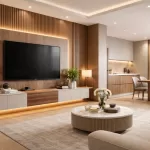
The living room is the command center of the home. It’s where we relax, entertain, connect, and unwind. And in the vast majority of living rooms, there is one undisputed focal point: the television.
For decades, designers and homeowners have wrestled with the “big black box.” How do we integrate this essential piece of technology without letting it dictate our entire design scheme? How do we tame the jungle of wires, remotes, gaming consoles, and soundbars that come with it?
The answer is not to hide it or to just tolerate it, but to celebrate it with a design solution that is as functional as it is beautiful.
Enter the TV cabinet.
At Homzinterio, we believe the TV unit is the most hard-working piece of furniture in the living room. It’s not just a stand; it’s the anchor for your room’s entire layout. It’s a storage powerhouse, a display for your personality, and a logistical wizard that makes modern life seamless.
Forget the wobbly, uninspired stands of the past. Today’s TV cabinet is a sophisticated piece of design. This is your ultimate guide to choosing, or designing, the perfect one for your home.
The New Role of the TV Unit
The humble “TV stand” has evolved. In the 90s, we had massive armoires designed to hide bulky CRT televisions. Today, with razor-thin TVs, the cabinet’s role has shifted from concealment to curation.
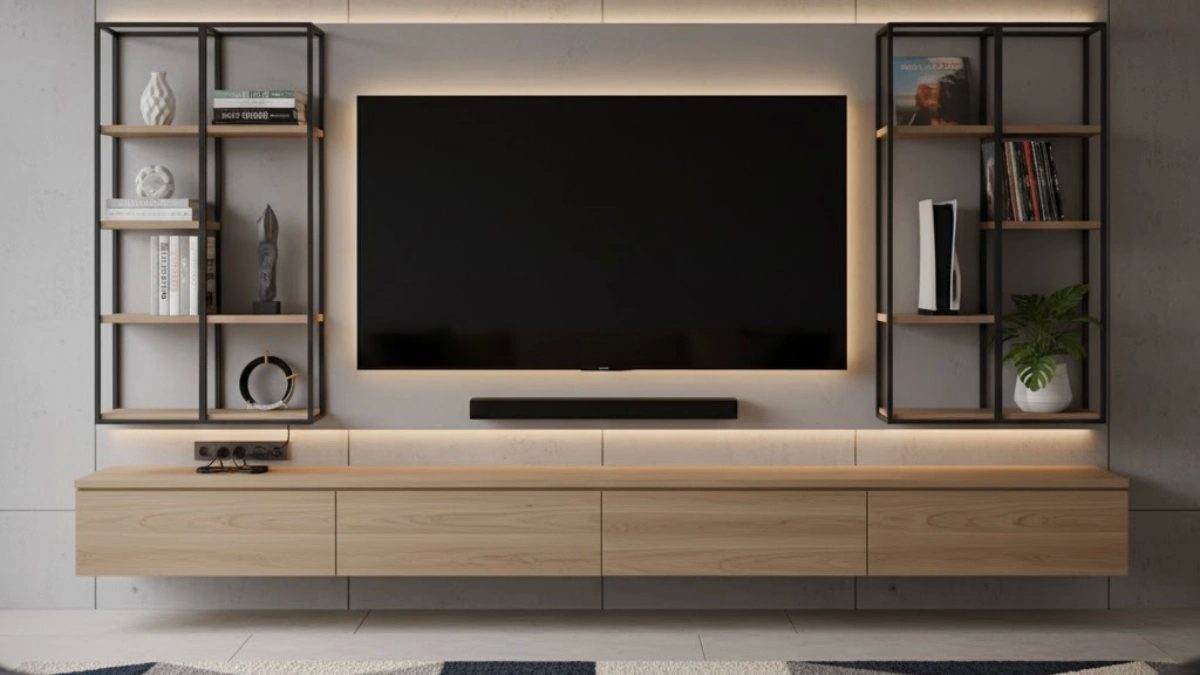
The modern TV unit design has three primary jobs:
- To Position: It places the TV at the correct viewing height (protip: the center of the screen should be at or just below eye level when you’re seated).
- To Store: It houses all the necessary “inputs and outputs” from your streaming box and gaming console to your sound system and (gasp) even your collection of physical media.
- To Anchor: It provides visual weight and balance to the wall, turning the TV from an “interruption” into an “integration.”
What's Your Style? 5 Popular TV Cabinet Designs
The right design depends entirely on your space, your storage needs, and your aesthetic. Let’s explore the most popular options we design for our clients.
1. The Floating Unit (The Minimalist's Dream)
This is the darling of modern and contemporary interiors. A floating TV unit is wall-mounted, “floating” off the floor.
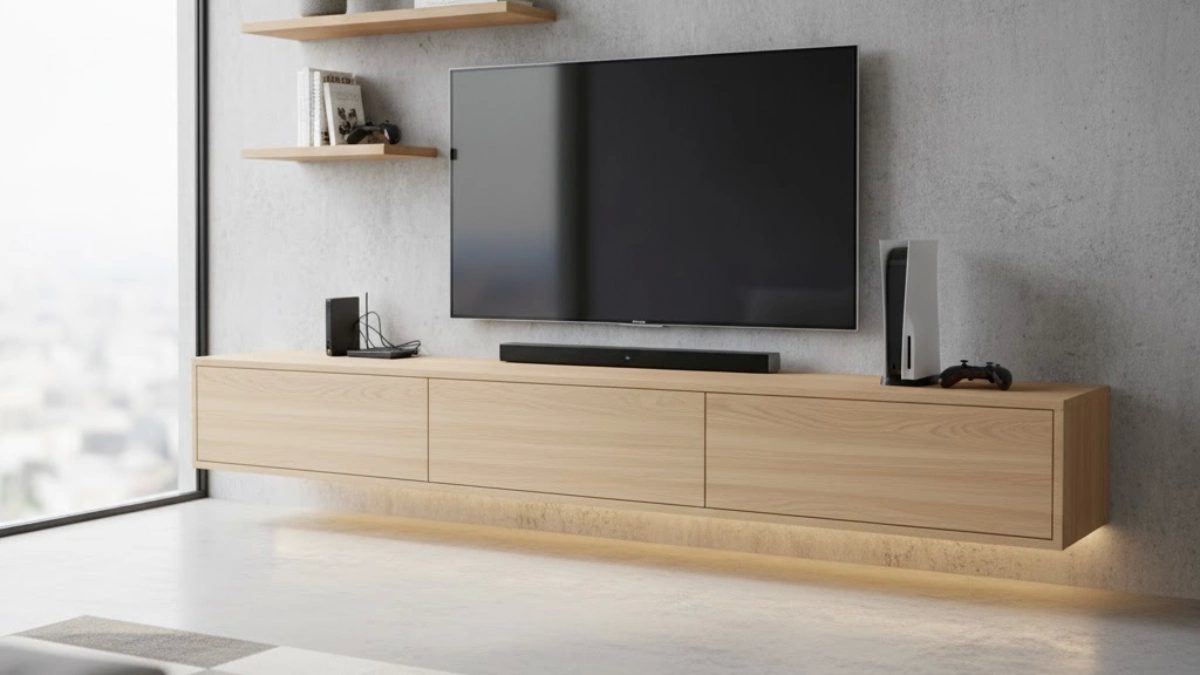
- Best For: Small spaces, minimalist homes, and anyone who loves a clean, airy feel.
- Design: Typically a long, linear cabinet with push-to-open doors or drawers for a handle-less, ultra-sleek look. It draws the eye horizontally, making the room feel wider.
- Pros:
- Space-Saving: Frees up floor space, making the room feel larger.
- Easy to Clean: You can vacuum and mop right underneath.
- Modern Aesthetic: It’s sharp, sophisticated, and clean.
- Cons:
- Installation: Requires professional installation to be securely mounted to the wall.
- Storage: Offers less storage volume than a full-size unit.
- Wires: Wire management must be planned in advance, often by running cables inside the wall.
2. The Freestanding Console (The Classic All-Rounder)
This is the most common and versatile option. A freestanding console is a standalone piece of furniture that sits on the floor, either on legs or a solid base.
- Best For: Renters, flexible homeowners, and almost any design style, from Mid-Century Modern to Farmhouse.
- Design: The sky’s the limit. It can be a low-profile media cabinet, a warm wood console with slatted doors, or a high-gloss unit with metal legs.
- Pros:
- Versatility: Easy to move, available in endless styles and price points.
- No Installation: Just place it and go.
- Good Storage: Often combines open shelves (for soundbars) with closed cabinets (for clutter).
- Cons:
- Visual Weight: Can feel “heavier” in a small room compared to a floating unit.
- Cleaning: You’ll need to clean under and behind it.
3. The Full Entertainment Wall (The Storage Powerhouse)
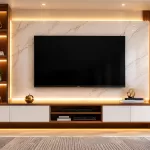
This is the “go big or go home” option. A full entertainment wall, or a media built-in, is a custom solution that surrounds the TV.
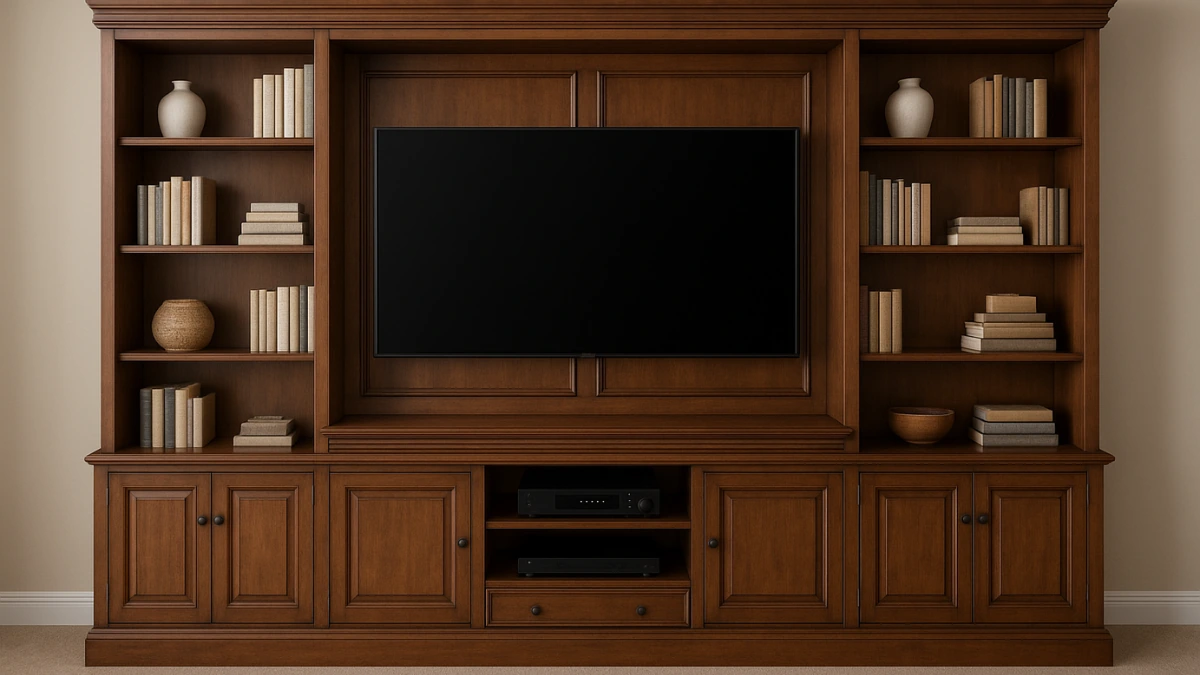
- Best For: Large living rooms, families, and anyone who needs to maximize storage (think books, photo albums, board games, and decor).
- Design: This is a floor-to-ceiling solution that often integrates bookshelves, display niches, closed storage, and a dedicated space for the TV. It becomes the architectural focal point of the room.
- Pros:
- Maximum Storage: The absolute best way to add storage to a living room.
- Custom Fit: Designed precisely for your wall and your needs.
- High-End Feel: Looks incredibly polished, professional, and “finished.”
- Cons:
- Cost: This is a significant investment.
- Permanent: It’s a permanent fixture, not something you can easily change or take with you.
- Dominant: It will be the defining feature of the room, so you have to love it.
4. The Modular System (The Flexible Futurist)
Modular units are a modern, adaptable solution. They consist of separate, individual components like small cabinets, open shelves, and floating boxes that you can arrange and combine to fit your space.

- Best For: Contemporary homes, creative individuals, and oddly-shaped spaces.
- Design: Often asymmetrical, with a playful mix of open and closed elements. It’s less of a single “unit” and more of a “composition.”
- Pros:
- Flexible: You can add, subtract, or rearrange pieces as your needs change.
- Unique Look: Creates a custom, high-design look without being a full built-in.
- Balances Storage & Display: Perfect for showing off art and decor alongside your tech.
- Cons:
- Cohesion: Can look cluttered or disjointed if not balanced correctly.
- Installation: May require multiple wall-mounted points.
5. The "Hidden" TV (The Chameleon)
For the true design purist who believes the TV should only be seen when it’s on.
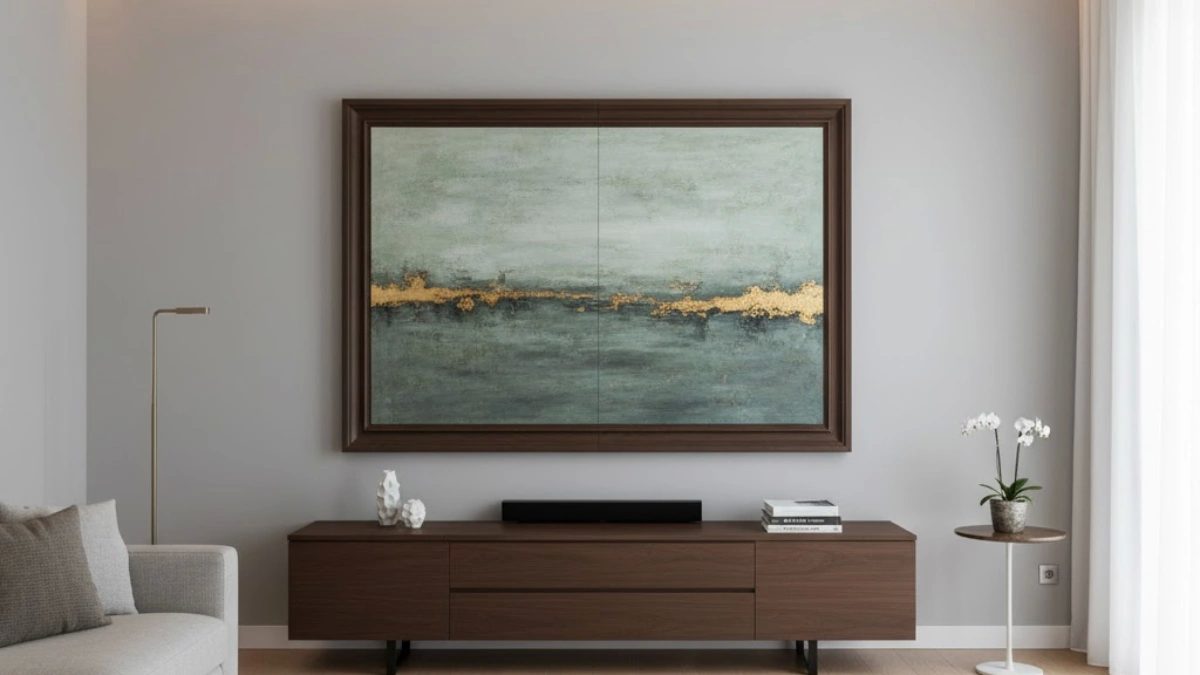
- Best For: Formal living rooms, multi-purpose spaces, and traditional or minimalist homes where a black screen feels like an eyesore.
- Design: This is all about clever mechanics.
- Sliding Panels: A cabinet with doors that slide or fold away (like pocket doors).
- Art Lifts: A piece of art slides up to reveal the TV.
- TV Lifts: The TV retracts into a low-profile console on a motorized lift.
- TV Mirrors: The TV is the mirror when turned off.
- Pros:
- The Ultimate Disguise: Technology completely disappears.
- “Wow” Factor: A sophisticated and impressive solution.
- Cons:
- Cost & Complexity: This is the most expensive and mechanically complex option.
- Accessibility: Can be cumbersome to access the TV for daily use.
TV Cabinet Designs for Different Room Sizes
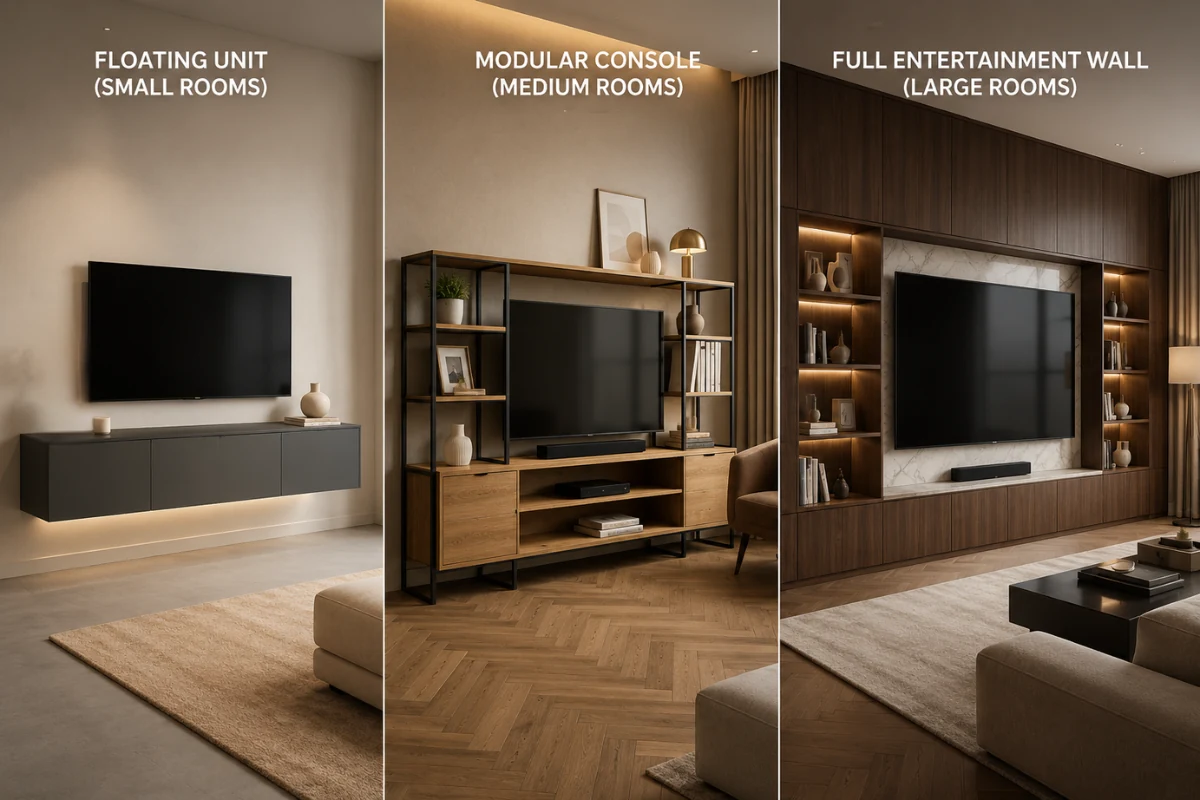
There’s no one size fits all when it comes to TV cabinets for living rooms. The best design is one that will work with rather than go against your space.
Floating TV units are a great option for smaller TV rooms. They leave the floor visible, which makes the room more open and yet offers ample storage for all the day to day needs. Using lighter shades and minimalistic designs can help expand the space when it’s small.
Medium size living rooms are more flexible. If you’re looking for the perfect combination of storage and style, you might prefer a freestanding console or a modular TV unit. Open shelving or sections can even be added without filling up the room.
A full entertainment wall can be a great thing to have in the living room, and be a beautiful centerpiece as long as you have enough space in your living room. It integrates storage, display and your TV in an all-in-one design to provide the room a polished, well planned appearance.
The Homzinterio Checklist: Function & Features
A beautiful cabinet is useless if it doesn’t work. Before you fall in love with a style, run it through this practical checklist.
1. Size & Scale
This is the #1 mistake we see.
- The Unit vs. The TV: Your TV cabinet should always be wider than your TV. A unit that’s too small makes the TV look top-heavy and unstable. As a rule, aim for the unit to be at least 6-12 inches wider than the TV on each side.
- The Unit vs. The Room: A massive built-in will overwhelm a small room. A tiny console will get lost on a large wall. Measure your wall and use masking tape on the floor to mock up the unit’s “footprint” before you buy.
- Viewing Height: The center of your screen should be at eye level when you’re sitting on your sofa. This means most TV units are “low-profile” (between 16-24 inches high).
2. Wire Management: The Unsung Hero
Nothing ruins a beautiful setup faster than a “rat’s nest” of wires. A great TV cabinet plans for wires.
- Cable Cutouts: Look for large, discreet holes in the back panel to feed wires to the outlet.
- Hollow Backing: A removable or hollow back panel makes accessing cables a breeze.
- Internal Channels: High-end units have built-in channels to route wires inside the cabinet, from one component to another.
- Built-in Power: The ultimate luxury is a unit with a built-in power strip, so you only have one cable running to the wall.
3. Ventilation: Don't Cook Your Tech
Gaming consoles, Wi-Fi routers, and media boxes generate heat. If they are trapped in a sealed cabinet, they will overheat and have a shorter lifespan.
- Open Shelves: The easiest solution.
- Slatted Doors: Doors with a “slat” design (like tambour) look beautiful and allow air (and remote signals!) to pass through.
- Ventilation Grills: Look for discreet vents cut into the top, bottom, or back of the cabinet.
- Open Backs: A cabinet that is open at the back provides the best airflow.
4. Storage: The "Hide & Seek" Strategy
A good TV unit is a master of “hide and seek.”
- Hide: Use deep drawers or solid doors for the “ugly” stuff: remotes, game controllers, DVDs, and messy cables.
- Seek (Display): Use open shelves for the items you need to access or want to display: a sleek soundbar, a beautiful speaker, a few art books, or your favorite decor.
Common TV Cabinet Design Mistakes to Avoid
While a beautiful TV cabinet may look good at first, there are a number of practical details that can detract from its beauty.
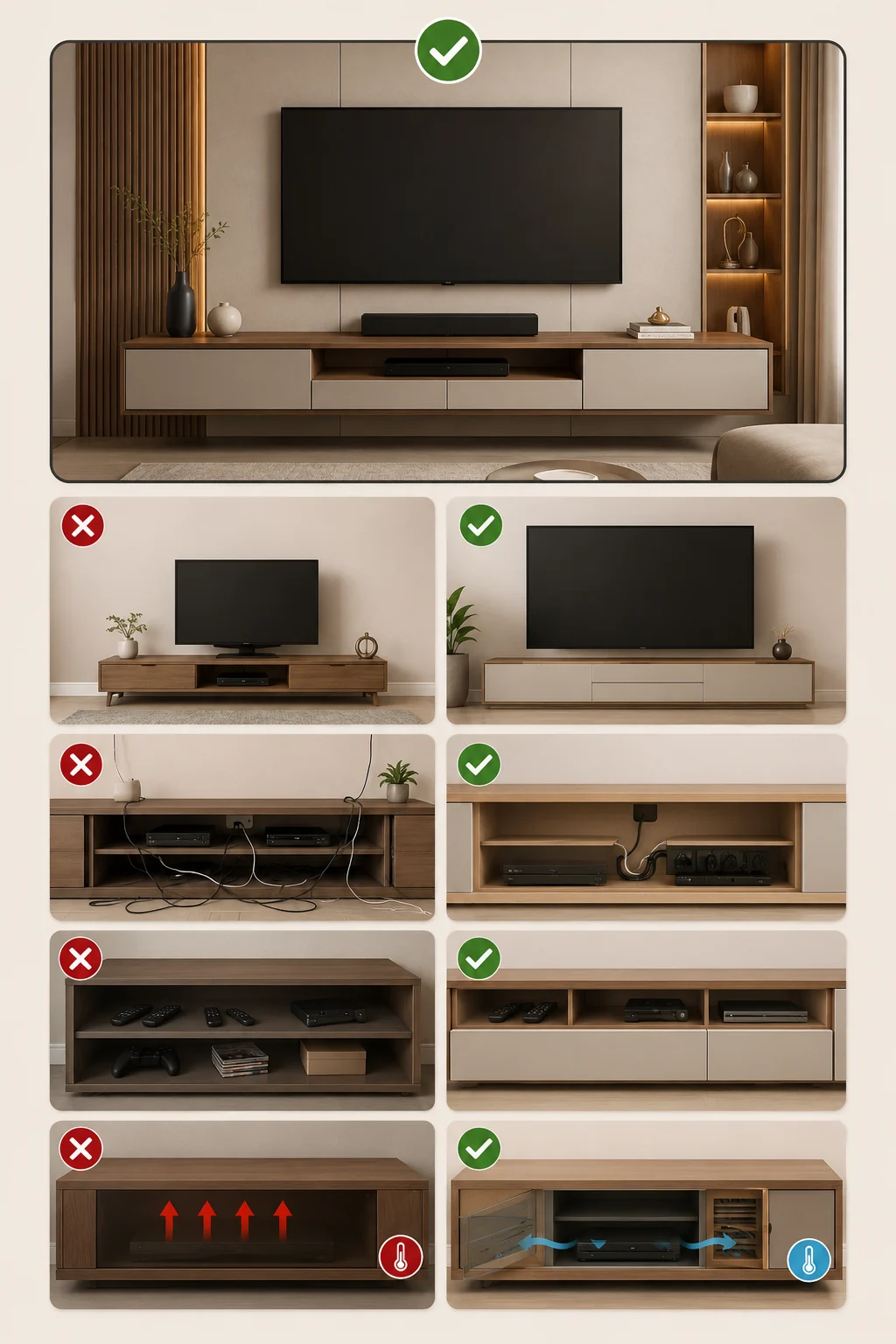
A typical error is to select a cabinet which is smaller than the TV, thus giving the impression of unbalance. Another problem that usually occurs is the poor usage of cables, which is a definite visual nuisance in even a well-designed room.
Many homeowners will overlook space for remotes, the console and media devices and create a lot of clutter. Lastly, complete enclosure of electronic equipment in totally sealed enclosures with no ventilation may cause overheating and shorten the life of the equipment.
When designing the details from the start, it will result in a purposeful and attractive TV unit.
Styling Your Unit
Your TV cabinet is finished… now what?
- Materials: The material defines the mood.
- Wood (Veneer/Solid): Adds warmth, texture. Perfect for Mid-Century, Scandinavian, or Farmhouse.
- High-Gloss/Laminate: Sleek, modern, and reflective. Great for contemporary spaces.
- Matte Finish (PU/Laminate): The modern trend. It’s sophisticated, hides fingerprints, and feels very “now.”
- Balance the “Black Hole”: The TV is a big black rectangle. Your job is to balance it.
- Asymmetry: The most popular method. Place a tall plant on one side and a stack of books and a small lamp on the other. This breaks up the “shrine” effect.
- Symmetry: For a formal, traditional look, place identical lamps or speakers on either side.
- The Gallery Wall: Absorb the TV into a larger gallery wall. When the TV is off, it just looks like another “frame” in your art collection.
Best Materials for TV Cabinets
Your choices of materials greatly affect how your TV cabinet will look, work and hold up the longer you have it.
It is still the most popular option, as laminate is easy to maintain, durable and comes in an array of colours and textures. For luxury finishes, PU coated cabinets offer a soft, alluring look ideal for contemporary residences.Wood veneer should have the warmth and richness of natural timber though it’s less expensive than solid wood. Solid wood is a classic home investment and has the most character of any investment variety to homeowners who like old fashioned craftsmanship.
It is important to consider your budget, lifestyle and overall interior theme when choosing a material for your door.
Why Choose a Custom TV Cabinet ?
A custom TV cabinet is customized for your own home, rather than the other way round. It is just right for your space, fits your interior design and offers storage to suit your daily requirements.
If you’re looking for some hidden cable management, additional display shelves, or even a full entertainment wall, there is a customized solution that will make sure that every inch is used efficiently. It also provides you with the freedom of what finishes, materials and layout you desire and what you want your living room to look and feel like, as it will be organised, functional and be uniquely yours.
Conclusion: The Anchor of Your Living Room
Your TV cabinet is more than just a piece of furniture. It’s the functional and aesthetic anchor that pulls your entire living room together. It organizes your technology, stores your essentials, and sets the stylistic tone for your most-used space.
By prioritizing smart design, practical features like wire management, and a style that speaks to you, you can transform the “TV wall” from a source of clutter into a source of pride.
Feeling overwhelmed by the options?
You don’t have to do it alone. The expert design team at Homzinterio specializes in creating custom media units that are beautiful, functional, and built perfectly for your life and your living room.
Contact us today for a free design consultation, and let’s create the living room you’ve always dream of.
Frequently Asked Questions (FAQs)
1. How much wider should the TV cabinet be than the television?
The TV cabinet should be at least 6-12 inches wider than your television on each side.
For example, for a 60-inch TV, the unit should ideally be between 72 and 84 inches wide. This ratio ensures the unit provides proper visual balance and prevents the TV from looking top-heavy or unstable.
2. What is the ideal viewing height for a TV mounted above a cabinet?
The ideal viewing height is when the center of the screen is at or just below your eye level when you are comfortably seated on your sofa.
This generally means most TV cabinets are low-profile, typically between 16 and 24 inches high, to keep the screen from being mounted too high, which can cause neck strain.
What is the main benefit of a Full Entertainment Wall built-in versus a freestanding cabinet?
The main benefit of a Full Entertainment Wall is Maximum Storage and a Custom Fit. It is a floor-to-ceiling solution that maximizes every inch of space for books, games, decor, and closed storage, giving your room an incredibly polished, custom-designed, and “finished” look.